
Reviewed · HISTORICAL TOURS
Experience Split History Walking Tour With Local Historian
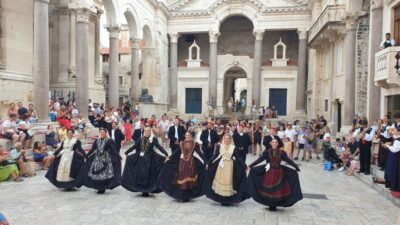
Diocletian’s Palace is not a fenced-off ruin. It is the center of Split, with homes, shops, cafés, churches, and daily life threaded through its Roman walls. This two-hour walk uses that living setting well, taking you from the Golden Gate to the medieval squares while a local historian explains what you are seeing.
I like the small group, limited to 12, and the way the guide connects Roman, medieval, and modern Split instead of treating the palace as a single ancient monument. I also like the visual aid of 3D reconstruction images, which helps you picture buildings that now survive only in fragments. The main drawback is the pace: two hours is enough for a sharp introduction, but not enough to explore every major interior in detail. The route also includes uneven historic streets and is not suited to wheelchair users or people with mobility impairments.
Key points to know before you book
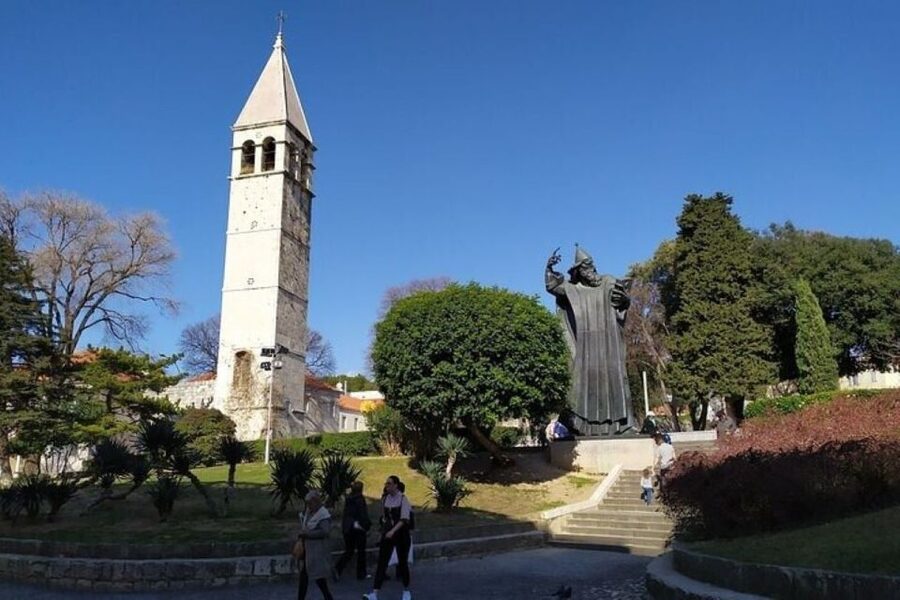
- Enter through the Golden Gate: Begin at Split’s grand northern entrance, beside the eight-meter statue of Gregory of Nin.
- See the palace as a living neighborhood: Roman walls now frame homes, businesses, churches, and everyday city life.
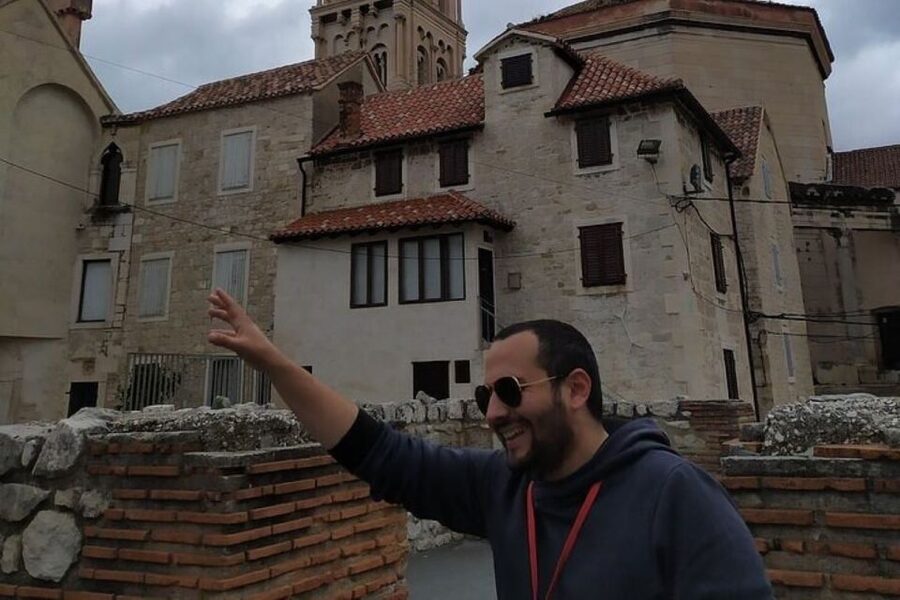
- Follow a historian’s route: Guide Boris, who has a master’s degree in history, explains the palace through facts, legends, and changing use.
- Cover more than Roman ruins: The walk reaches Riva, Fruit Square, and People’s Square, linking ancient Split with its later centuries.
- Expect a compact group: A maximum of 12 people makes questions and conversation easier than on a large coach-style tour.
- Bring sensible gear: Comfortable shoes are important, and water or a hat helps on sunny days.
Why the Golden Gate is the right place to start
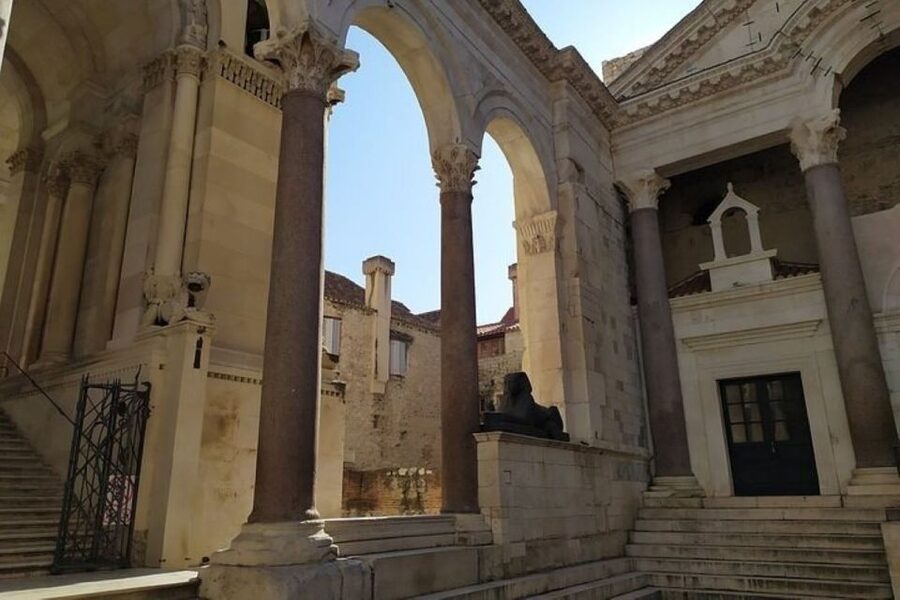
The meeting point is the Golden Gate, the northern entrance to Diocletian’s Palace. It is easy to identify because the eight-meter statue of Gregory of Nin stands opposite it. That pairing gives you a useful first lesson in Split: Roman imperial power and Croatian religious and cultural memory share the same small patch of ground.
Your guide begins with general information about Split and Croatia, then explains the gate’s name, purpose, and importance. You will enter through the same side of the palace used by the emperor and empress, at least in the broad ceremonial sense. That detail helps turn a plain stone passage into part of the original design.
The first stop lasts about 15 minutes, followed by roughly eight minutes with Gregory of Nin. The statue is also a practical meeting landmark, so take a moment to fix its position in your mind if you plan to return to the palace on your own.
Other guided walks in Split:
- Split: Old Town and Diocletian Palace Walking Tour
★ 4.9 · 4,727 reviews - Walking Tour of Split and Diocletian’s Palace
★ 5.0 · 2,588 reviews - Krka Waterfalls tour with Trogir Walking tour and Krka panoramic boat cruise
★ 5.0 · 1,659 reviews
Diocletian’s Palace, built for an emperor’s retirement
The palace section is the heart of the experience. Diocletian was a Roman emperor who retired from power and built this large complex beside the sea. The tour focuses on his life inside and outside the palace, and on the reasons the building was made in the first place.
That context matters. Without it, the palace can look like a collection of columns, arches, and stone lanes. With it, you begin to see a planned imperial residence, military stronghold, ceremonial center, and later urban neighborhood all occupying the same footprint.
A short secret stop comes next, lasting about five minutes. The precise detail is not specified in advance, which is part of its appeal. You should expect a small feature or story that is easy to miss when walking through Split alone, rather than a long formal visit.
Peristil, the palace’s grand central square
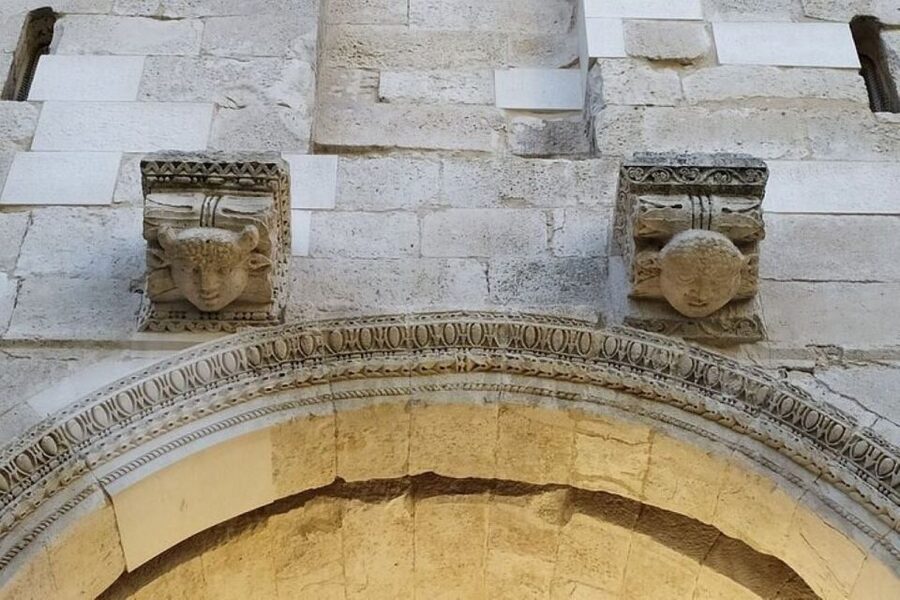
Peristil is the visual center of the Roman palace and receives about 15 minutes of attention. This monumental square gives you the clearest sense of imperial theater, with its surrounding stone architecture and strong formal layout.
The guide uses Peristil to explain how power was displayed. It is also a good place to use the 3D images and pictures supplied during the tour. Seeing a reconstruction beside the surviving stone can help you understand missing walls, original proportions, and how the space may have worked when the palace was new.
I would pay close attention here, even if the square is busy. Peristil is one of the places where a guide’s explanation changes what you notice. Look beyond the obvious columns and think about movement, ceremony, and the way the square links to the rest of the palace.
Jupiter’s Temple and the palace’s religious world
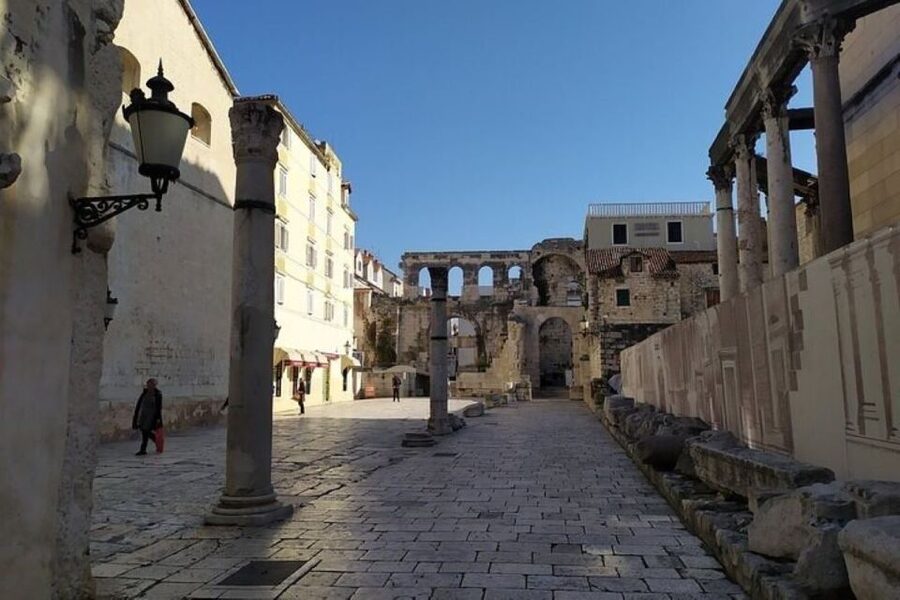
The tour spends about 10 minutes at Jupiter’s Temple. This stop adds the religious side of Roman Split to the political story you heard at the Golden Gate and Peristil.
The walk does not treat the palace as frozen in its Roman form. Its buildings were adapted over many centuries, and the guide explains how local people reused the complex. That changing use is one of the most useful ideas to carry with you: Split’s old stones are not simply preserved objects. They remain part of the city’s structure.
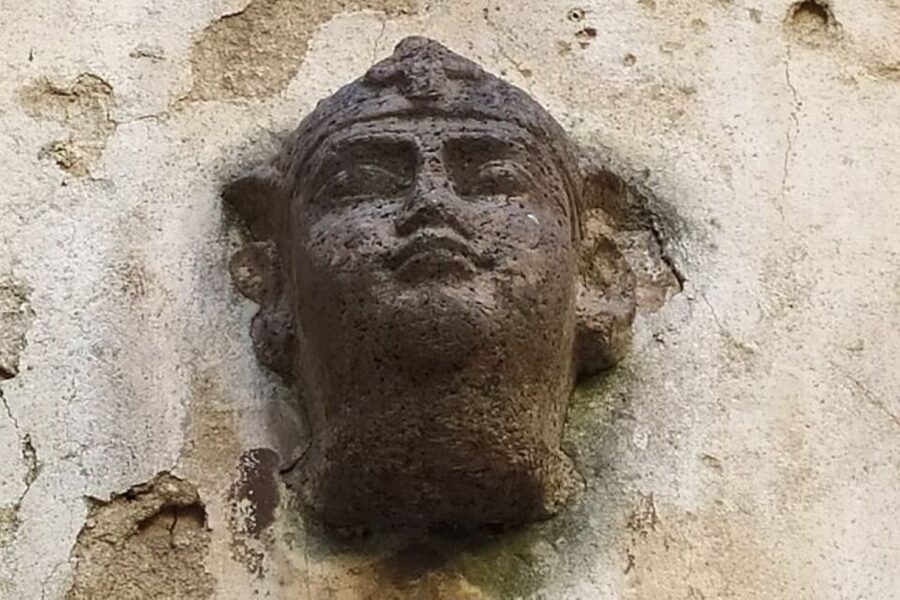
There is also a very brief two-minute stop at another tucked-away feature. Because the tour includes a narrow church, a narrow street, a lost sphinx head, and a secret garden among its lesser-known sights, this is likely the sort of quick detail that rewards close attention. The exact order can vary, so do not expect every unusual corner to receive a long explanation.
Same base, a different kind of day out:
- Split: Krka Waterfalls Trip with Boat Cruise and Swimming
★ 4.8 · 10,519 reviews - From Split: Krka Waterfalls, Food & Wine Tasting Tour
★ 5.0 · 9,326 reviews - Blue cave, Mamma Mia and Hvar, 5 islands speedboat tour
★ 5.0 · 7,150 reviews - From Split: Krka Waterfalls, Food & Wine Tasting Tour
★ 4.9 · 6,598 reviews
Saint Domnius Cathedral and the former mausoleum
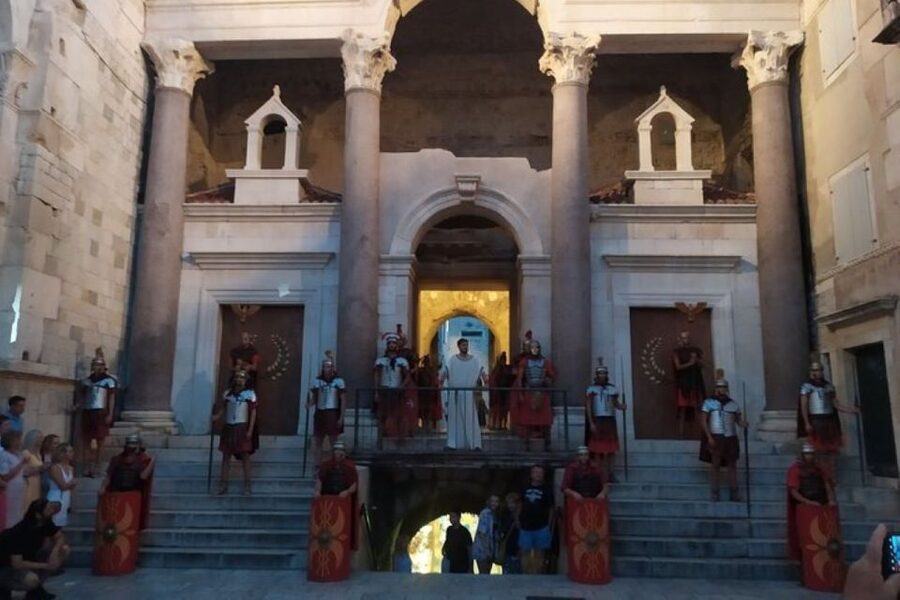
The next major stop is the Cathedral of Saint Domnius, with about 10 minutes of guided time. The building is important because it occupies the former mausoleum of Diocletian. That change from imperial tomb to Christian cathedral captures the larger story of Split in one place.
You will hear about the connection between the Roman structure and its later religious role. The tour includes the mausoleum-cathedral as part of the palace route, but food, drinks, and other possible entrance fees are not included in the stated price. Ask your guide if you want to return later for a closer interior visit.
The short timing here is useful for orientation, not exhaustive study. If you care deeply about church architecture, sculpture, or the cathedral interior, set aside extra time after the walk.
Vestibul, Triclinium, and the palace beneath your feet
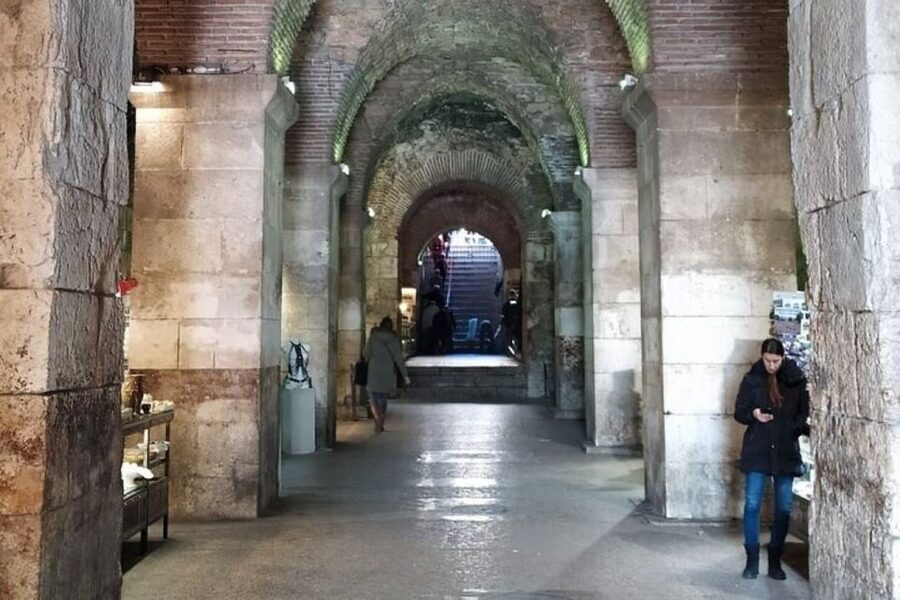
The Vestibul receives about 10 minutes. This round ceremonial space once formed part of the route into the emperor’s private quarters. Its shape and acoustics make it one of the more memorable places in the palace, even when you have only a short time to look around.
The wider route also refers to the Triclinium, a formal dining area, and the central substructures, often called the cellars. Not every named architectural feature has a separate timed stop, so think of the walk as a connected explanation of the palace rather than a series of full museum visits.
The Diocletian’s Cellars receive another 10 minutes. These underground rooms are especially valuable because their layout preserves the shape of the rooms above. They also show how the palace changed over time and how archaeology is being made more accessible to the public.
One useful piece of practical advice is to note the places you want to revisit. The cellars, cathedral, and other palace areas can reward a slower second look after you understand their purpose.
Riva and the local pomalo way of life
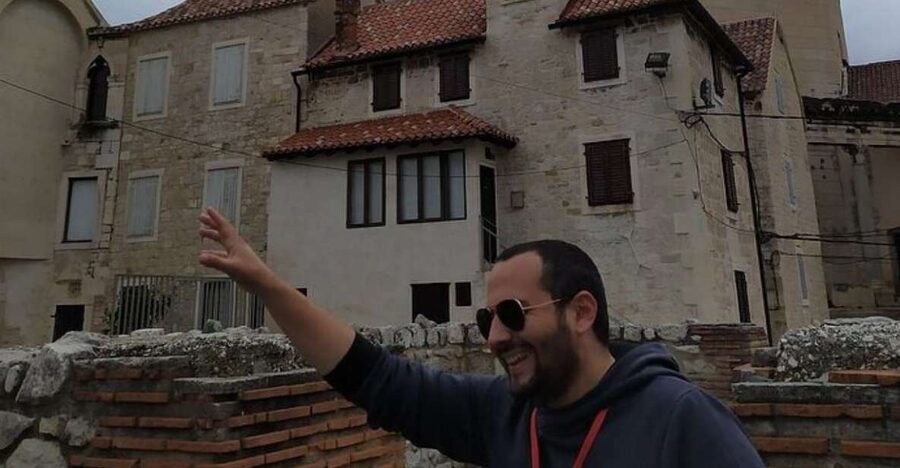
After the palace, the route reaches Riva, Split’s waterfront promenade, for about five minutes. This is where the walk shifts from imperial history to the city you see today.
The guide introduces the local pomalo attitude, a relaxed way of approaching daily life. It is not just a slogan for visitors. It helps explain why Split feels shaped by conversation, lingering, and social routines as much as by monuments.
Riva is also where the tour makes a useful connection between the Roman and medieval periods. The palace did not disappear when the Roman era ended. The city grew around and within it, changing the meaning of its spaces without wiping away the earlier structure.
Do not expect a long waterfront stop. Five minutes is enough to understand the setting and hear the local-life explanation, but you will want to return later if you want a slower walk along the promenade.
Fruit Square and People’s Square
The walk then moves to Fruit Square, with about 10 minutes of guided time. Its name reflects the former market activity associated with the area. The square gives you a different view of Split from the highly formal Roman spaces inside the palace.
The guide points out architectural details and stories from later centuries. This is a good moment to notice how medieval Split used existing Roman remains rather than building an entirely separate city elsewhere.
People’s Square follows, with another 10 minutes. Together, these two squares give the tour a strong medieval and modern counterweight to Diocletian’s Palace. You see how public life moved beyond the palace’s original ceremonial core.
The walk finishes at Narodni trg, the Croatian name for People’s Square. Ending here is practical: you are left in a central part of town, close to places where you can continue exploring or stop for food.
What Boris’s style adds to the walk
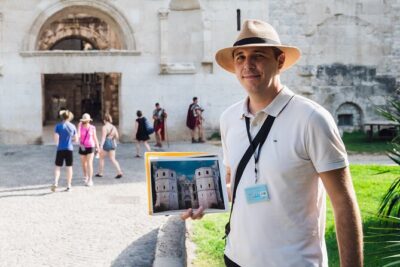
The guide is a licensed local professional with a master’s degree in history. Boris is the guide named in the supplied experience information, and his approach combines historical explanation with questions, local customs, food suggestions, and everyday life.
That mix matters. A palace tour can become a lecture if it focuses only on dates and emperors. Here, the aim is to explain how Croats adapted the complex, how religion shaped its later use, and how Split still lives inside the old walls.
The strongest guide moments are likely to come when you ask questions. Boris has been praised for answering openly and for explaining Croatian culture, religion, and community life alongside the palace itself. Ask about anything you do not understand, especially the transition from Roman residence to medieval town.
The included 3D reconstruction images and pictures are another useful tool. They are not a replacement for seeing the stone in front of you, but they give your eyes a reference point. The experience is designed around seeing, hearing, and feeling the city rather than only memorizing facts.
Group size, price, and overall value
At $37 per person, the tour is priced as a focused introduction rather than a full-day archaeological program. For two hours with a professional historian and a maximum of 12 participants, I consider the price fair if you want orientation, context, and local recommendations in one sitting.
The value comes from the route. You cover the Golden Gate, Gregory of Nin, Diocletian’s Palace, Peristil, Jupiter’s Temple, the cathedral, Vestibul, the cellars, Riva, Fruit Square, and People’s Square. You also hear about lesser-known corners that you could easily walk past.
The limitation is just as clear. Several stops last only a few minutes, and the tour does not include food or drinks. If you want long interior visits, detailed archaeology, or plenty of time for photographs, you will need to return independently.
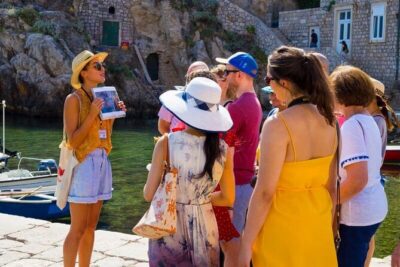
A group of five can feel almost like a private walk, while the maximum group of 12 remains small enough for questions. The experience has received a five-star rating from 28 reviews, and the strongest praise centers on the guide’s clear historical explanations, friendly manner, useful answers, and practical recommendations such as where to find good ice cream.
Who should book this Split history walk?
I would choose this tour early in a Split visit, especially if you are staying in the old center or arriving for a short visit. It gives you a map in your head and helps you understand why the palace, cathedral, waterfront, and medieval squares belong to one connected story.
It suits you if you enjoy history but do not want a dry lecture. It also works well if you value local context, want to ask questions, and prefer a group smaller than a standard city tour.
You should think twice if stairs, uneven paving, or extended walking are difficult. The experience is not suitable for wheelchair users or people with mobility impairments. Comfortable shoes are essential, and a hat or cap plus water is sensible on sunny days.
The advertised languages are English and Croatian. Hotel pickup and drop-off are not included, so you need to reach the Golden Gate yourself. You can cancel up to 24 hours before the start for a full refund, and the reserve-now, pay-later option gives you some flexibility.
Should you book it?
Book this walk if you want Split’s main sights explained as parts of one living city, not as isolated ruins. The combination of a small group, a historian guide, visual reconstructions, local-life details, and a route that reaches both Roman and medieval Split gives you good value for two hours.
Skip it if you already know Diocletian’s Palace well or want a slow, specialist visit inside every major building. For most first-time visitors, though, this is a smart way to get oriented, spot details you might miss, and collect ideas for exploring the palace on your own afterward.
FAQ
Where does the Split history walking tour begin?
The tour begins at the Golden Gate, the northern gate of Diocletian’s Palace. It is opposite the eight-meter statue of Gregory of Nin.
Where does the tour finish?
The walk finishes at Narodni trg, also known as People’s Square.
How long does the tour last?
The experience lasts two hours.
How large is the group?
The group is limited to a maximum of 12 participants.
Which languages are available?
The tour is offered in English and Croatian.
Who guides the experience?
The tour is led by a local professional guide with a master’s degree in history. Boris is the guide named in the supplied experience information.
What sights are included?
The route includes the Golden Gate, Gregory of Nin, Diocletian’s Palace, Peristil, Jupiter’s Temple, a cathedral visit, Vestibul, Diocletian’s Cellars, Riva, Fruit Square, and People’s Square. It also includes stories about lesser-known spots.
Are food and drinks included?
No. Food and drinks are not included.
Is the tour suitable for wheelchair users?
No. The experience is not suitable for wheelchair users or people with mobility impairments. Comfortable shoes are recommended, and water or a hat is advised on sunny days.
More Historical Tours in Split
- Walking Tour of Split with a ‘Magister’ of History
★ 5.0 · 1,122 reviews - Split Walking Tour with Professor of History
★ 5.0 · 926 reviews - Split: History and Heritage Walking Tour
★ 4.9 · 650 reviews - Split History and Gastro Small-Group Tour with Food and Drinks
★ 5.0 · 375 reviews
Just added in Split
- From Trogir, Seget, Okrug: Krka Waterfalls & Šibenik Culture Tour★ 5.0 · 10 reviews
- Krka Waterfalls & Primošten from Trogir, Seget, Čiovo & Kaštela★ 5.0 · 18 reviews
- Slatine – Island Hopping Excursion (Trogir/Blue Lagoon/Shipwreck)★ 4.0 · 24 reviews
- Island Hopping Boat Excursion with Lunch (Trogir,Blue Lagoon, Šolta)★ 3.5 · 6 reviews
- From Split & Trogir: ATV Quad Tour on Island Čiovo★ 5.0 · 21 reviews
- Split: Sunset Guided Kayaking Tour★ 4.8 · 71 reviews
- Split Sunset Stand Up Paddle Tour★ 5.0 · 16 reviews
- Stand Up Paddle Tour in Split★ 4.7 · 17 reviews
Historical Tours, compared.
Walking Tour of Split with a ‘Magister’ of History
Read our review →
Split History and Gastro Small-Group Tour with Food and Drinks
Read our review →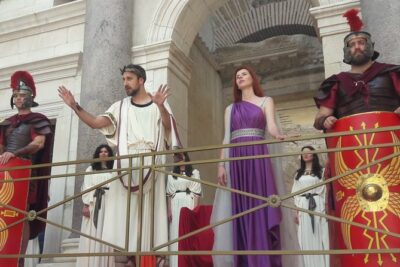
PREMIUM Emperor’s Walking Tour for History Lovers + Museum
Read our review →
Browse the lists this tour appears in