
Reviewed · HISTORICAL TOURS
Split: History and Heritage Walking Tour
Split’s old center is not a museum behind ropes. It is a living city built inside and around Diocletian’s 1,700-year-old palace, where Roman columns, medieval churches, Gothic palaces, cafés, and modern shops share the same tight lanes. This walking tour helps you make sense of that jumble instead of simply wandering past it.
I like the storytelling, especially the rise of Diocletian from obscurity to the most powerful man in the Roman world. I also like the local point of view, with guides such as Antonella, Antonela, Nikolas, Doris, and Antonia adding Croatian history and personal context. The main caution is group size: although sold as a small-group tour, one outing reached nearly 30 people, which meant waiting for the back of the group in crowded streets.
Key points to know before booking
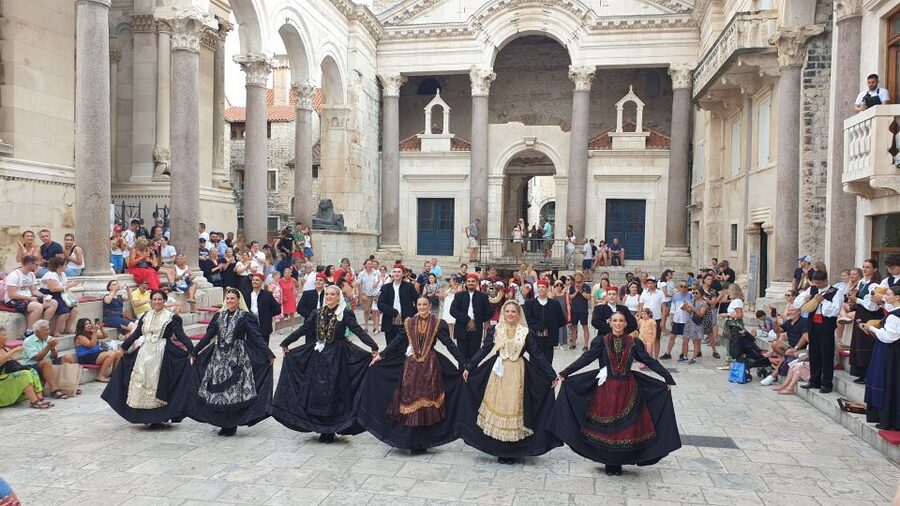
- A Roman palace became a modern neighborhood: See ancient architecture used alongside shops, homes, and cafés.
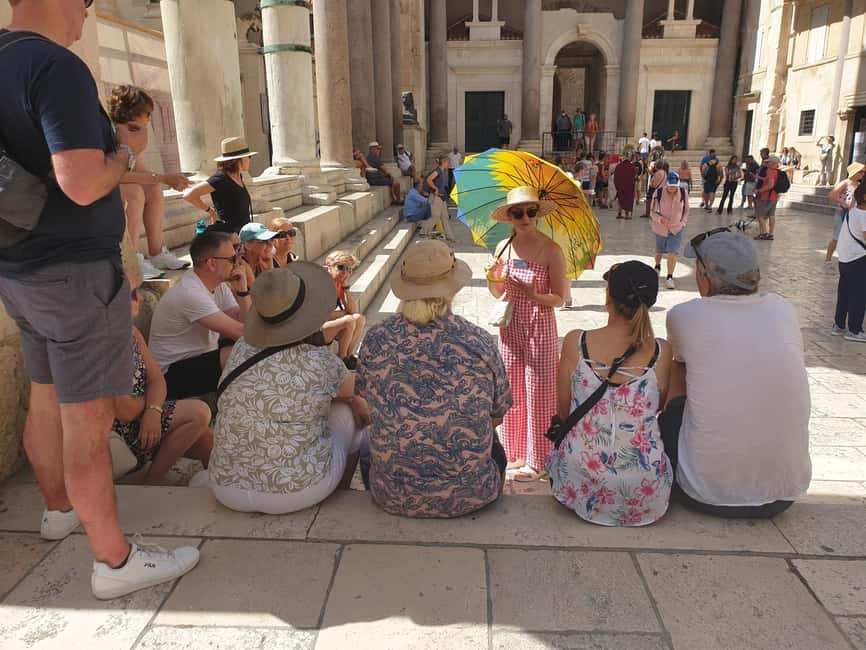
- Meet at Peristil Square: Look for the yellow T-shirt or yellow umbrella under the old Roman arch near the Tourist Information Office.
- Storytelling is the main attraction: The tour links Diocletian, Rome, the Croats, Venetians, and modern Split.
- The route includes more than Roman ruins: Expect Romanesque churches, medieval fortifications, Gothic palaces, and present-day city life.
- Game of Thrones facts are optional: Fans get location-related information as a bonus, but the tour is centered on history.
- Bring practical gear: Wear comfortable shoes and a hat, and be ready to walk in sun or rain.
Why Split’s palace is best understood on foot
The first surprise is the palace itself. Diocletian’s Palace is not an isolated ruin outside town. Its walls and surviving rooms form the core of central Split, with daily life continuing around them.
That makes a guided walk useful. Without context, a Roman arch may look like one more old stone feature. With a guide, you can begin to see how an imperial residence changed over time, how later buildings fitted into the Roman plan, and why Split feels like several centuries occupying the same few streets.
The setting also keeps the tour grounded in real city life. You may pass modern shops and busy lanes while looking at masonry that began in the Roman period. That contrast is one of the best reasons to choose a walking tour here rather than treating the palace as a quick photo stop.
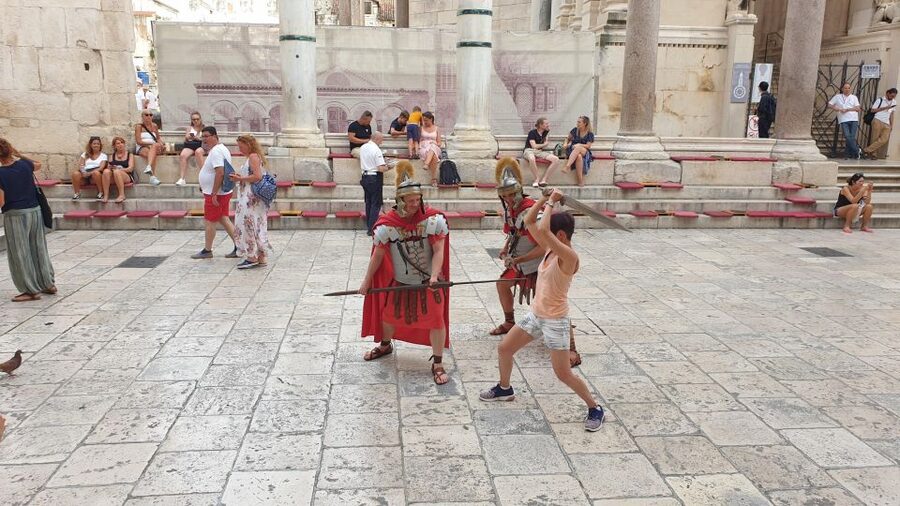
The route focuses on the major sights in and around the palace complex. You will see ancient Roman architecture, Romanesque churches, medieval defensive features, Gothic palaces, and later urban additions. The guide’s job is to connect those pieces so the city’s changes become easier to follow.
Other guided walks in Split:
- Split: Old Town and Diocletian Palace Walking Tour
★ 4.9 · 4,727 reviews - Walking Tour of Split and Diocletian’s Palace
★ 5.0 · 2,588 reviews - Krka Waterfalls tour with Trogir Walking tour and Krka panoramic boat cruise
★ 5.0 · 1,659 reviews
Meeting at Peristil Square and the old Roman entrance
The tour begins on Peristil Square, under the old Roman arch at the north side of the square, close to the Tourist Information Office. Look for a yellow T-shirt or yellow umbrella.
Peristil is a strong starting point because it gives you an immediate sense of the palace’s scale and importance. Rather than meeting on an anonymous street, you begin in one of the central spaces of the Roman complex. It also gives the guide a natural place to explain what the palace was, what remains, and how later residents adapted it.
Take a moment to look around before the walk starts. The square is one of those places where the past is not separated from the present. Stonework from the Roman era sits beside buildings and activity from much later periods.
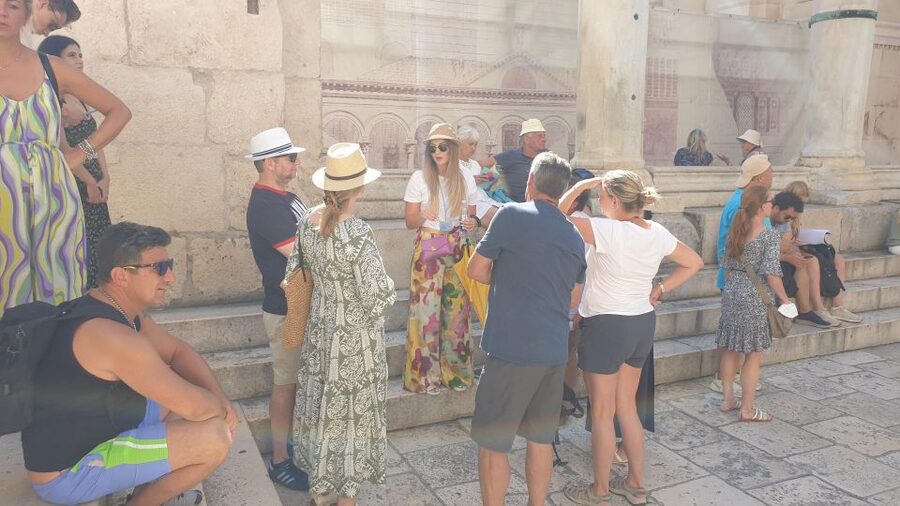
This is also the point where practical organization matters. Stay close to the guide, particularly when the square and nearby lanes are crowded. A yellow umbrella or shirt helps, but it does not remove the need to keep an eye on the group.
Diocletian’s rise from obscurity to imperial power
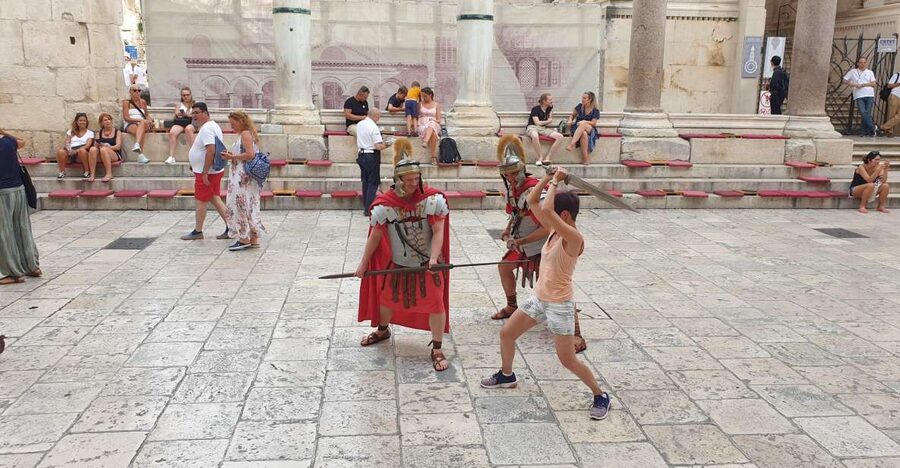
One of the strongest parts of the tour is the story of Diocletian himself. The guide explains how he went from an unknown beginning to becoming the most powerful man in the Roman world.
That personal arc gives the palace more meaning. You are not simply looking at stones built by a famous emperor. You are learning why this particular ruler had the authority and resources to create such a grand residence, and why his retirement palace became the foundation of modern Split.
The explanation also gives you a way to read the remains. The palace was built for an emperor, yet its later life is just as important. Roman structures did not remain frozen in their original purpose. They were reused, built over, and absorbed into the city.
Guides are encouraged to explain both what used to be here and what survives now. That distinction matters. Some features are preserved in a striking form, while other parts are visible only through fragments, walls, or the shape of later buildings.
Romanesque churches, medieval walls, and Gothic palaces
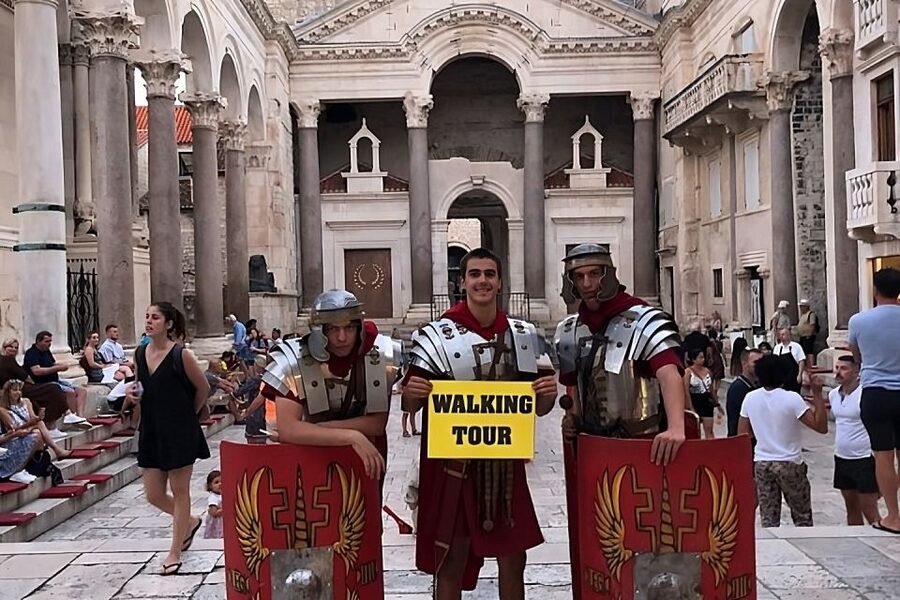
The tour moves beyond the Roman period to show how Split developed after the empire changed. Romanesque churches, medieval fortifications, and Gothic palaces reveal the city’s later chapters.
This is where a guide can save you from seeing the old town as a collection of unrelated façades. The churches show changing religious and architectural styles. The fortifications point to the city’s need for defense. Gothic palaces reflect a later urban society with different tastes, wealth, and political influences.
You will also hear about the arrival of the Croats and the influence of Venice. Those subjects help explain why Split does not look purely Roman. Its identity was shaped over many centuries, and the walk gives those layers a clear sequence.
I particularly value this wider view because a tour focused only on Diocletian would leave out much of what makes Split distinctive. The palace is the anchor, but the medieval and Venetian periods explain why the center feels like a city rather than an archaeological site.
Same base, a different kind of day out:
- Split: Krka Waterfalls Trip with Boat Cruise and Swimming
★ 4.8 · 10,519 reviews - From Split: Krka Waterfalls, Food & Wine Tasting Tour
★ 5.0 · 9,326 reviews - Blue cave, Mamma Mia and Hvar, 5 islands speedboat tour
★ 5.0 · 7,150 reviews - From Split: Krka Waterfalls, Food & Wine Tasting Tour
★ 4.9 · 6,598 reviews
How the old town works as a living city
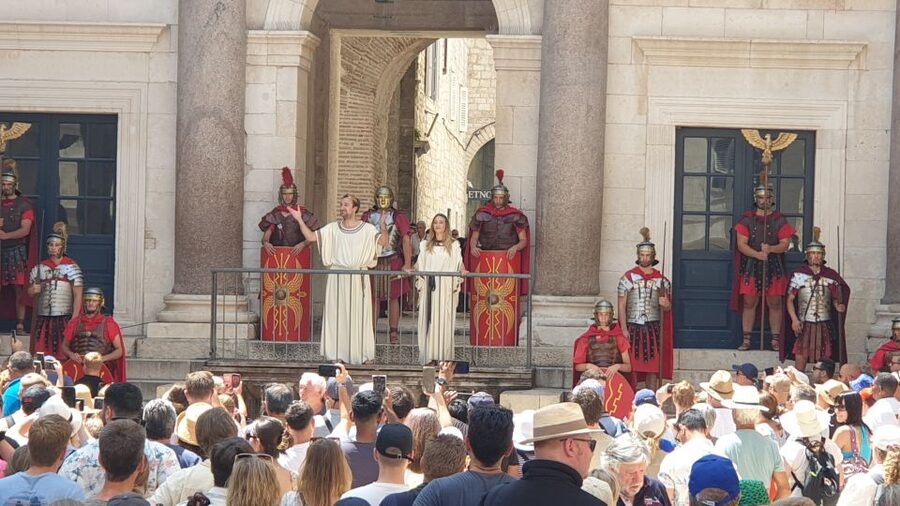
The most authentic feature of this walk is the mixture of old and ordinary. Ancient stonework appears beside modern stores and everyday city activity.
You are not being led through a perfectly preserved Roman set. You are walking through a functioning part of Split where people live, work, shop, and meet. That can make the route less orderly than a purpose-built attraction, but it also makes the experience more honest.
The guide points out how the ancient palace and later city grew together. In practical terms, this means the route may include narrow passages and crowded areas. Comfortable shoes are important, and a hat helps in strong sun.
The tour is suitable for all ages, but it is still a walking tour through an old urban center. People with high blood pressure are advised not to take it, and it is not suitable for people with hearing impairments. Those limits are worth taking seriously because the tour depends on following spoken explanations in changing outdoor conditions.
Local guides and the value of good storytelling
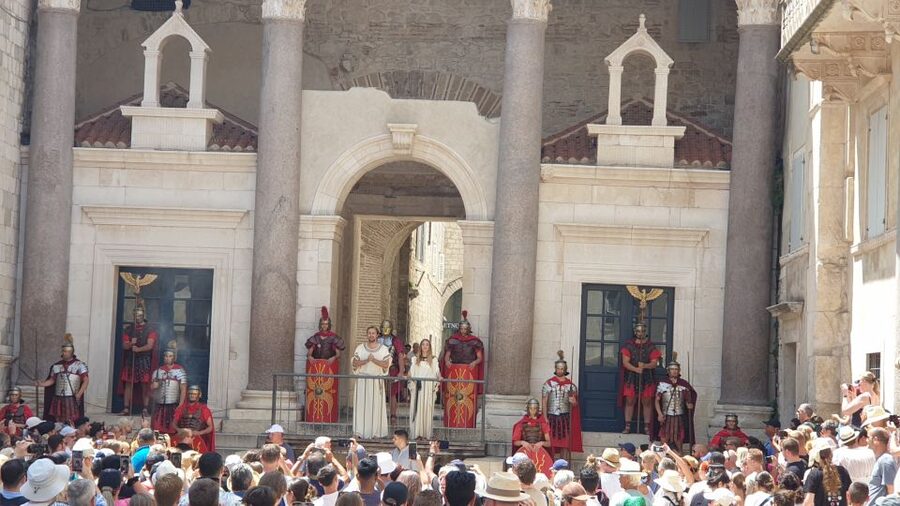
The guide can make or break a history walk, and this experience places real weight on presentation. Antonella and Antonela are repeatedly praised for making complicated subjects easy to follow, while Nikolas is noted for explaining the city’s Roman and Venetian influences and adding personal links to Split.
Doris is remembered for helping keep people comfortable in the rain, including providing an umbrella. Antonia is described as having the natural manner of a teacher. Those details point to the kind of guiding you can expect: explanations are meant to be clear, lively, and accessible rather than academic lectures.
Several guides are described as enthusiastic and entertaining, with stories that bring the past into the present. The emphasis is not only on dates and names. You will hear factoids, local details, and stories about the drama of Rome, the arrival of the Croats, and the long Venetian influence.
That approach suits mixed groups. If you love history, you get useful context. If someone in your party is less interested in history, the storytelling and humor may keep the walk enjoyable. It is also a good choice if you want a local introduction before exploring the old town on your own.
The available languages are English, German, French, and Russian. At least some tours may include a moment of traditional singing along the route, though that should not be treated as a guaranteed part of every outing.
Game of Thrones information as a bonus
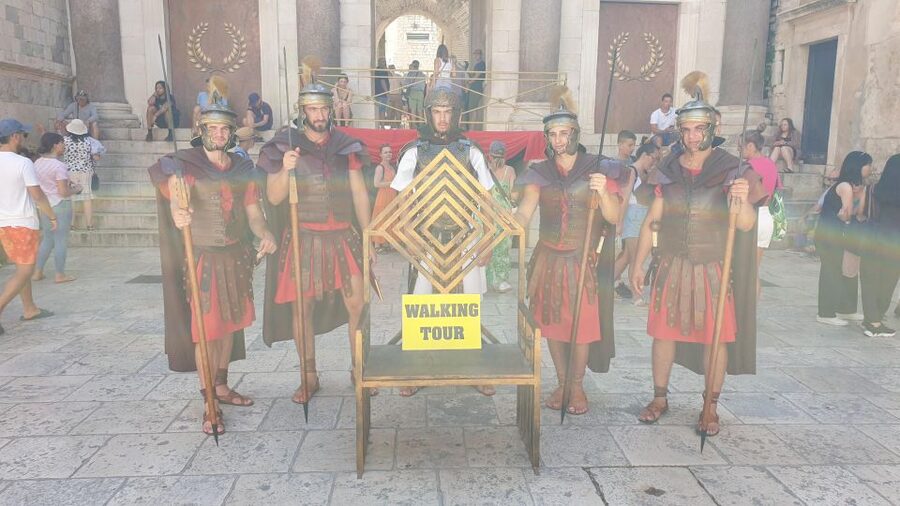
Game of Thrones fans receive location-related information during the walk. This is a useful extra, but it is not the central purpose of the tour.
If you are booking mainly for the show, check your expectations. The route is built around the history of Split, Diocletian’s Palace, and the city’s architectural layers. The television connection adds a modern reference point, especially for people who recognize scenes from the series, but it does not replace the historical explanation.
For most people, that balance is sensible. You get a stronger understanding of the actual city, with filming information added where it fits.
Group size, pace, and what the price buys you
At $18 per person, this is a reasonably priced introduction to central Split. You are paying for a guided walk rather than entry to a paid attraction, so the value depends mainly on how much context you want.
The price is especially fair if you have only a short stay. One person with just 48 hours in Split found the tour useful as a fast way to learn the city before exploring further. It can also be a good first activity because the guide points out areas you might miss while wandering without a plan.
The small-group description needs a little caution. One group grew to almost 30 people, and the guide acknowledged the size. That does not make the tour unusable, but it can affect the pace. In crowded lanes, the guide may need to pause while everyone catches up, and people at the back may have a harder time hearing.
If you value close conversation and plenty of questions, ask about the group size before booking if that information is available at the time. If the group is large, stay near the guide and avoid drifting behind for photographs. The route covers compact streets, but city crowds can quickly stretch a group.
There are no hotel transfers, food, drinks, or admission tickets included. The experience is a walking tour, and the meeting point is also the end point. That keeps the cost low, but you should plan your own way to Peristil Square.
Weather, clothing, and a few practical limits
The tour operates in rain or sunshine. Wear comfortable shoes and clothes that suit the forecast, and bring a hat for sunny days. An umbrella or rain layer is sensible because the walk continues in wet weather.
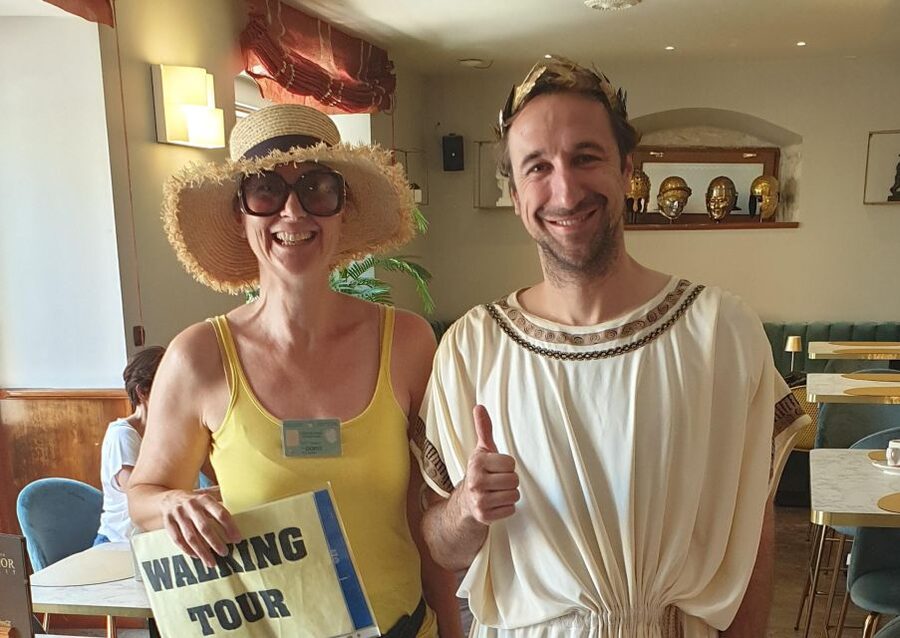
You are not allowed to wear a costume. That rule may matter to visitors thinking about themed photographs or historical dress, especially because of the Roman setting.
The route is suitable for all ages, but the practical demands remain those of an outdoor walking tour. You will be on your feet, moving through old streets, and listening to a guide in an active city center. People with high blood pressure should choose another activity, and people with hearing impairments may find the format difficult.
Cancellation is flexible up to 24 hours before the tour for a full refund. You can also reserve now and pay later, which helps if your Split plans are still shifting.
Who will get the most from this Split walking tour?
I would choose this tour if you want a clear introduction to the old city without paying for a large attraction package. It suits first-time visitors, history fans, short-stay visitors, and anyone who wants local explanations before exploring alone.
It is also a good fit for mixed-interest groups. The story of Diocletian, the city’s later rulers, local culture, and Game of Thrones references give the guide several ways to keep the walk engaging.
You may want something else if you dislike guided groups, need a very quiet pace, or want a tightly private experience. The possibility of a group approaching 30 people is the main concern. The route also offers no hotel pickup and no included food or drinks, so it is a focused history walk rather than a full-day outing.
Should you book the History and Heritage Walking Tour?
Yes, if you want to understand why Split’s center feels so unusual. The strongest reason to book is not simply the Roman palace. It is the way the guide connects Diocletian’s rule with the Roman remains, medieval churches, Gothic buildings, Venetian influence, Croatian identity, and modern city life.
At $18, the tour offers good value for a first look at Split, especially if you have limited time. Book it early in your stay, wear good shoes, and stay close to the guide if the group is large. If your ideal tour means a private conversation in a tiny group, confirm the expected size first. For most visitors who want history explained in plain language, this is a smart way to begin.
FAQ
Where does the tour begin?
It begins on Peristil Square under the old Roman arch on the north side of the square, next to the Tourist Information Office. Look for a yellow T-shirt or yellow umbrella.
Where does the tour end?
The activity ends back at the meeting point on Peristil Square.
What languages are available?
The tour is offered in English, German, French, and Russian.
Is the tour suitable for children and older participants?
The tour is described as appropriate for all ages. It is still a walking tour, so comfortable shoes and suitable clothing are important.
Are admission tickets included?
No. Admission tickets, food, drinks, hotel pickup, and hotel drop-off are not included.
Does the tour operate in bad weather?
Yes. The tour operates in rain and sunshine, so bring clothing suited to the forecast.
Can I cancel for a refund?
Yes. You can cancel up to 24 hours in advance for a full refund. You can also reserve and pay later.
More Historical Tours in Split
- Walking Tour of Split with a ‘Magister’ of History
★ 5.0 · 1,122 reviews - Split Walking Tour with Professor of History
★ 5.0 · 926 reviews - Split History and Gastro Small-Group Tour with Food and Drinks
★ 5.0 · 375 reviews - SPLIT-PREMIUM Emperor’s Walking Tour for History Lovers + Museum
★ 5.0 · 333 reviews
Just added in Split
- Discover The Old Town Split 1.5h walking Small group tour★ 4.8 · 93 reviews
- From Split: Zagreb Transfer & Plitvice Lakes Tour★ 4.7 · 131 reviews
- Blue Cave, Komiža, Stiniva Bay, Budikovac, Hvar Split Island Boat Tour★ 5.0 · 53 reviews
- Split to Dubrovnik Private transfer 1-8 pax (Door to Door any location)★ 5.0 · 118 reviews
- From Sinj: 1.5-Hour Private Flight over Kornati & Šibenik★ 4.1 · 11 reviews
- From Sinj: Panoramic Flight over Split★ 5.0 · 14 reviews
- **Private Door to Door Airport Split Transfer up to 15 People**★ 5.0 · 136 reviews
- Sinj: Panoramic Flight over Peruca Lake and Dinara mountain★ 5.0 · 9 reviews
Historical Tours, compared.
Walking Tour of Split with a ‘Magister’ of History
Read our review →

Split History and Gastro Small-Group Tour with Food and Drinks
Read our review →
PREMIUM Emperor’s Walking Tour for History Lovers + Museum
Read our review →
Local History and Culture 90-Minute Walking Tour
Read our review →Browse the lists this tour appears in