
Reviewed · DIOCLETIAN PALACE TOURS
Split: Old Town and Diocletian Palace Walking Tour
Split’s Old Town is not a museum sealed behind glass. It is a living city built inside and around a Roman emperor’s retirement palace. This tour helps you see the difference between ancient stone and modern life, from the Golden Gate and Peristyle to laundry lines, cafés, shops, and homes tucked into the old walls.
I like the strong local angle, especially when guides such as Mia, Slavko, Antonia, or Ivana add family stories and practical advice about food and sightseeing. I also like the route’s variety: Roman ruins, a working cathedral, Gregory of Nin’s statue, and sea views along the Riva all fit into one walk. The main drawback is that the duration and meeting point vary by option, so check your booking carefully. Parts of the Old Town are also uneven and crowded, and the tour is not suitable for wheelchair users.
Key points to know before you book
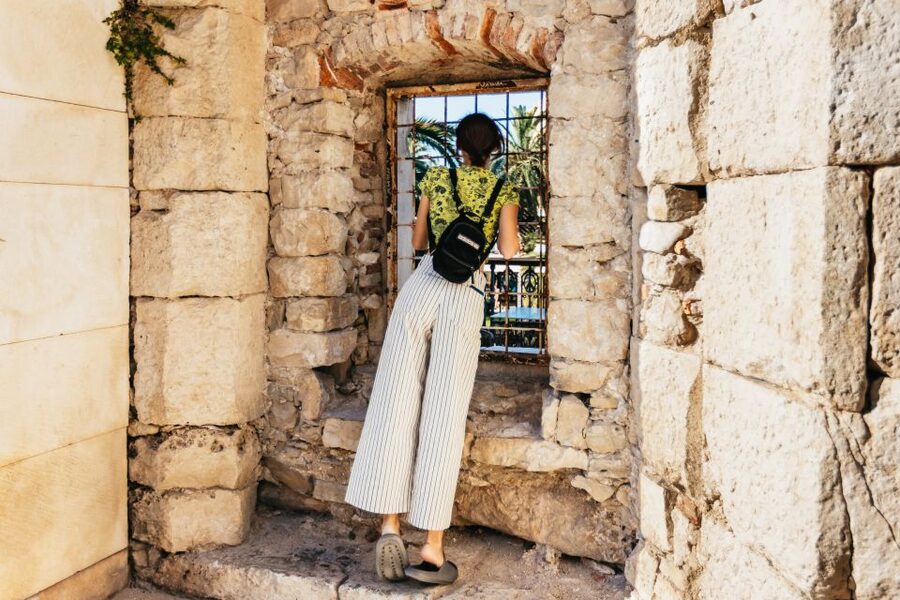
- The palace is the main event: You walk through a Roman complex that now forms much of Split’s Old Town.
- Local guides make the difference: Mia, Slavko, Antonia, Ivana, Ante, and other guides are praised for clear explanations, humor, and personal stories.
- The 90-minute route covers the essentials: You see the Golden Gate, Peristyle, Saint Domnius Cathedral, Gregory of Nin’s statue, and the Riva.
- It is a useful first-day tour: You get your bearings and receive suggestions for restaurants, sights, and tourist traps to avoid.
- Longer options add more: Depending on the package, you may have food or wine tasting, or an excursion to Trogir.
- The price is modest: At $17 per person, the standard walk offers a strong introduction to Split for little money.
Why Diocletian’s Palace feels different from other ruins
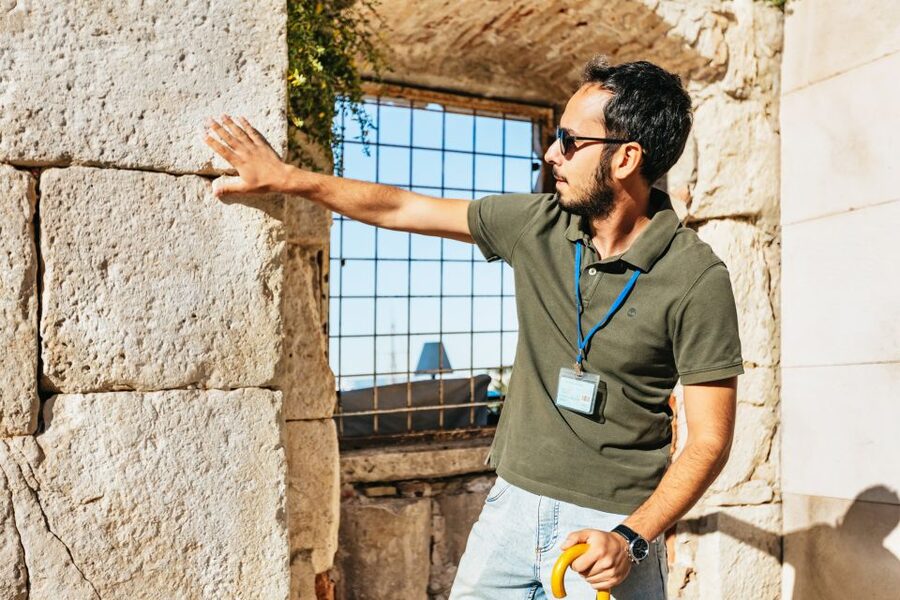
Diocletian’s Palace is not simply a set of columns with a rope around them. Roman Emperor Diocletian built the complex in 305 CE as a fortified residence for his retirement. Over the centuries, Split grew inside its walls, adapting old chambers, gates, courtyards, and passageways for daily use.
That makes the first part of this walk especially useful. Without a guide, you can wander through the Old Town and see beautiful stonework, but it is easy to miss the original plan. A guide points out what belonged to the Roman palace, what was changed later, and how the old structure became the center of present-day Split.
The palace now accounts for roughly half of the Old Town. You are not walking from one isolated monument to another. You are moving through the city’s main streets, squares, and lanes, with ancient construction appearing around you in ordinary settings.
This is why I would take the tour early in your stay. After the walk, you can return on your own and recognize the gates, walls, and palace sections instead of treating the Old Town as a maze of attractive stone.
Other guided walks in Split:
- Walking Tour of Split and Diocletian’s Palace
★ 5.0 · 2,588 reviews - Krka Waterfalls tour with Trogir Walking tour and Krka panoramic boat cruise
★ 5.0 · 1,659 reviews - Split & Diocletian’s Palace Walking Tour
★ 5.0 · 1,125 reviews
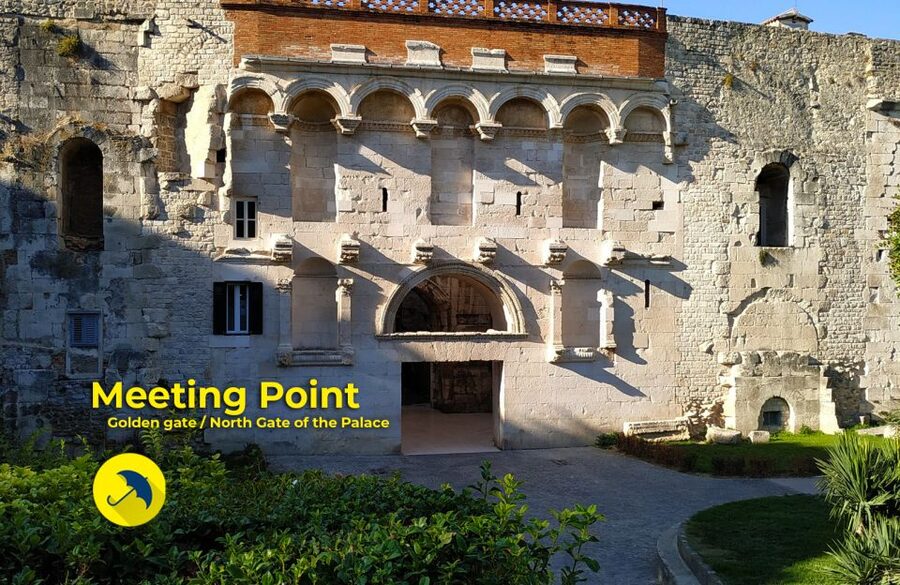
Starting at the Golden Gate
The usual meeting point is the Golden Gate, the grand northern entrance to Diocletian’s Palace. The exact meeting place can vary with the option you select, so read the booking details rather than assuming every version begins in the same spot.
The gate gives your guide a natural place to set the scene. You begin with the palace as a Roman project, then follow its long change from imperial residence to a city where people still live, work, shop, and eat.
The opening stop also helps you understand Split’s scale. The complex was designed with defensive walls and formal entrances, but modern life has softened the strict Roman layout. You will see how the ancient structure has been absorbed into the city rather than preserved as a frozen monument.
Guides are an important part of this experience. Several guide names appear repeatedly in the tour details, including Mia, Slavko, Antonia, Ivana, Ante, Tino, and Frane. The strongest pattern is clear communication, humor, and a willingness to answer questions. Slavko is often singled out for his lively stories about the palace and Croatian history, while Mia is praised for dry humor, local advice, and an ability to keep the group moving.
That variety matters. A walking tour can become a string of dates and architectural terms. The better guides connect the facts to people, family stories, food, and modern Croatian life.
The Peristyle, where Roman ceremony meets daily life
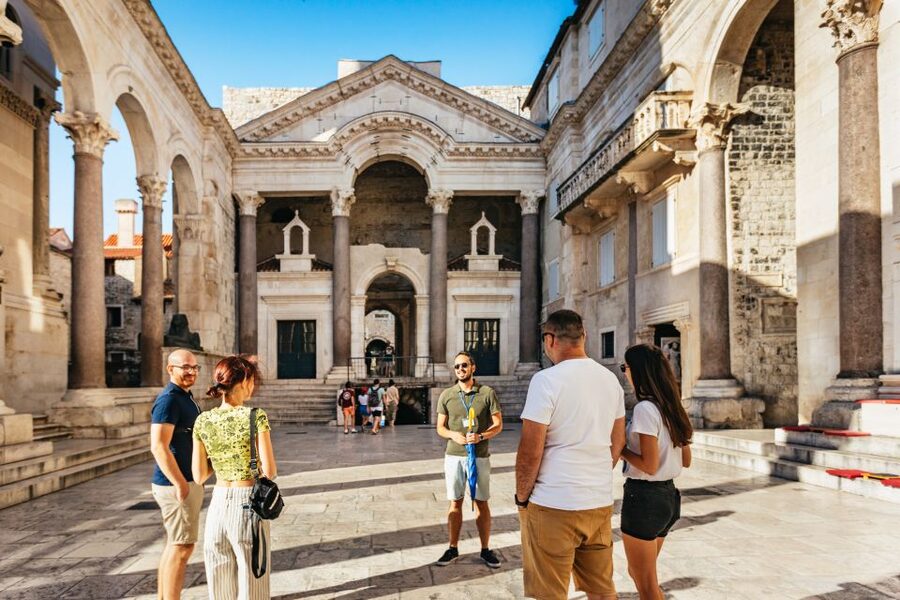
The route continues to the Peristyle, the palace’s central square. Its open colonnades are among the most impressive surviving parts of the Roman complex, and this is usually the point where the palace’s original purpose becomes easiest to picture.
The square was designed for imperial ceremony, not casual sightseeing. Your guide explains how the open space, columns, and surrounding buildings worked together. You also get a useful sense of how much of the original plan remains, even though later generations have changed the buildings around it.
Expect people moving through the square as part of their normal day. That is part of the appeal, but it can also make it harder to hear during busy periods. Stay close to the guide and position yourself where you can see the columns and the person explaining them.
One advantage of joining a small group is that questions are easier to ask. Several bookings describe groups of around six people, and the private option gives you more control over the pace and conversation. A larger group may cost less per person, but it can be harder to hear in an open square.
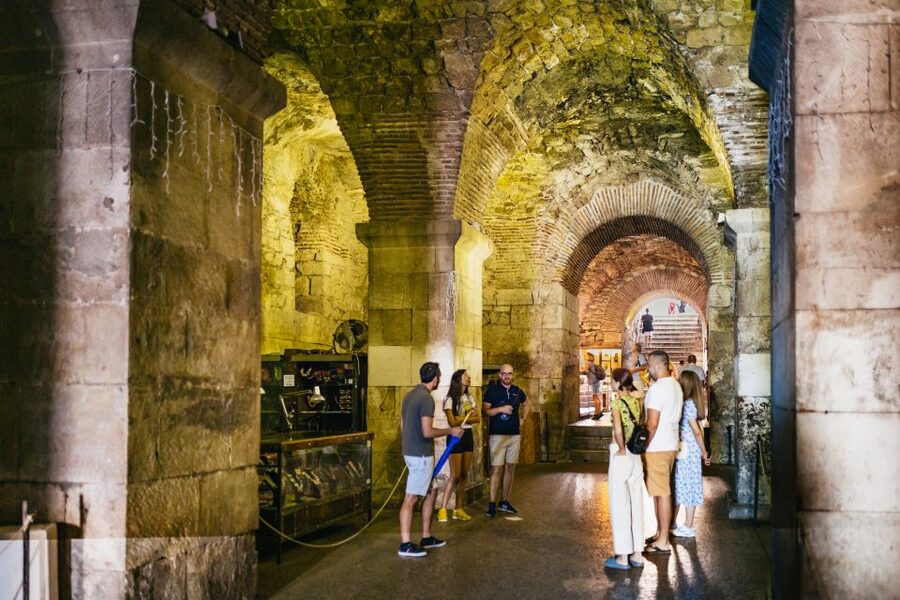
The basement areas may be included in the walk depending on the route. One guide used them to explain where visitors were within the palace and how the rooms may have been used. If your option includes this section, it adds another layer because you see the physical remains below the modern street level rather than only the grand public spaces above.
Saint Domnius Cathedral and the palace after Rome
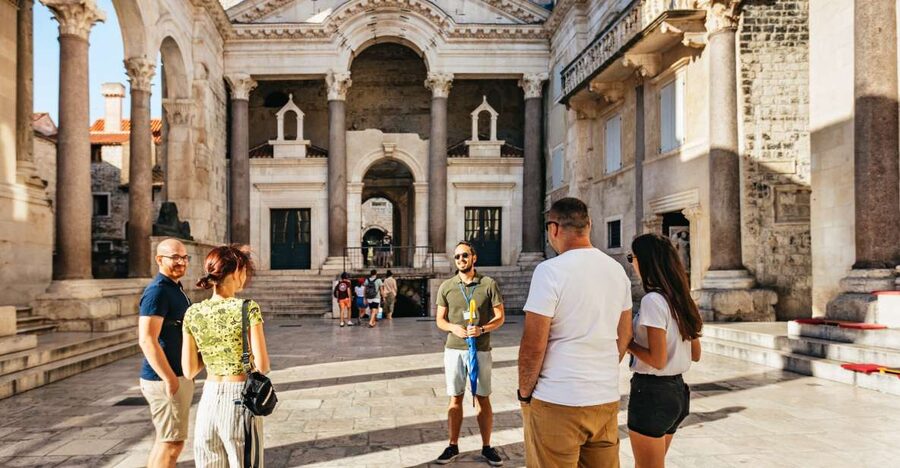
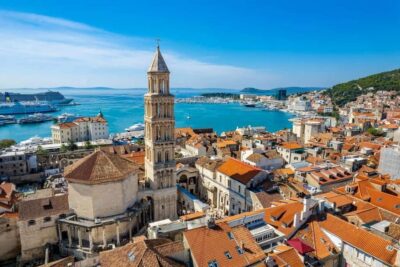
Saint Domnius Cathedral is one of the tour’s most striking contrasts. The building occupies part of Diocletian’s mausoleum, linking the emperor’s Roman world with the later Christian city. It is described as the oldest Catholic cathedral still in use in its original form, a claim that gives this stop real weight.
The important point is not simply the age of the building. It is the way one structure has served very different purposes over time. A guide can show you how Roman and Christian layers overlap, helping you read the building as part of Split’s long development rather than as a single-period monument.
The standard walk appears designed to explain the cathedral from the outside and place it within the palace complex. Admission to interior areas is not listed as included, so do not assume that the tour price covers every paid section or tower visit. The value here is the context, especially if you plan to return later for a closer look.
This part of the walk suits visitors who like architecture but do not want a lecture. The guides praised most highly use stories and humor to make the details easier to follow. They also answer questions about Croatia beyond Split, which helps put the city in a wider setting.
Same base, a different kind of day out:
- Split: Krka Waterfalls Trip with Boat Cruise and Swimming
★ 4.8 · 10,519 reviews - From Split: Krka Waterfalls, Food & Wine Tasting Tour
★ 5.0 · 9,326 reviews - Blue cave, Mamma Mia and Hvar, 5 islands speedboat tour
★ 5.0 · 7,150 reviews - From Split: Krka Waterfalls, Food & Wine Tasting Tour
★ 4.9 · 6,598 reviews
Gregory of Nin in Giardin Park
The stop at Gregory of Nin’s statue in Giardin Park shifts the focus from Roman imperial power to Croatian identity. The statue commemorates Gregory of Nin, a medieval bishop, and it has become one of Split’s best-known public landmarks.
Your guide explains the story behind the bishop and the meaning of the statue. You may also hear why the statue’s toe has become a familiar point of contact for people passing by. The provided tour information specifically highlights the bishopric of Gregory of Nin, so this is more than a quick photo stop.
I like this part because it broadens the tour. If the walk only covered Diocletian, it would tell you about the palace but not enough about the city that grew around it. Gregory of Nin brings in medieval Croatia and local tradition, giving the Old Town a human and national dimension.
Giardin Park also gives the group a change of pace after the denser palace streets. On a hot day, shade is valuable. One guide was specifically praised for finding shady places for explanations, a small detail that can make a major difference in summer.
Along the Riva to Marjan Hill views

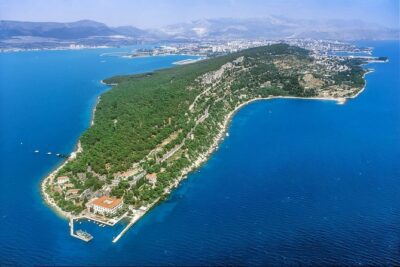
The walk finishes along the Riva promenade, Split’s broad waterfront. This is where you trade enclosed stone lanes for open views toward the Adriatic Sea and Marjan Hill.
The Riva is a good ending because it shows the city beyond the palace walls. You have learned how Split developed around Roman foundations, then you step out to the waterfront where modern life, ferries, cafés, and public space shape the city today.
The route finishes back at the Golden Gate, according to the standard description. That makes the tour simple to follow, especially if you are still learning the Old Town. You can then choose to continue exploring, return to a place your guide recommended, or walk back toward the waterfront.
The sunset option can be appealing if you are not arriving by cruise ship. One booking specifically recommended sunset because the area was less crowded. Timing is not guaranteed to mean quiet streets, but an evening start may offer softer light and a cooler walk.
What the $17 price really gets you
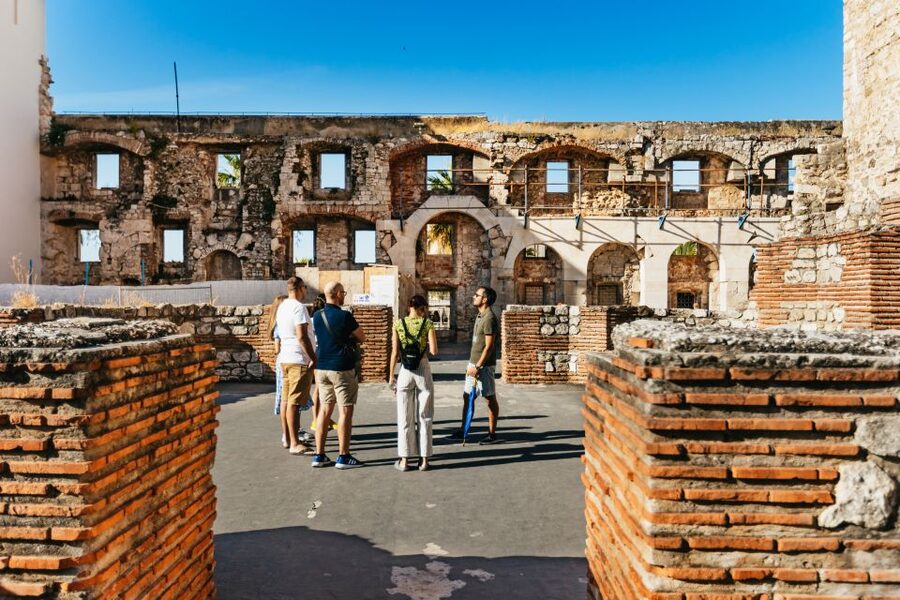
At $17 per person, this is a good-value introduction to Split. The fee covers a local guide and walking tour, with food or wine tasting included only if you choose an option that lists it. Hotel pickup is not included, which is normal for a central walking tour and keeps the price down.
The best value comes from the explanation. You can walk through the Old Town for free, but the palace’s layers are not always obvious. The guide helps you understand why a wall is important, how the Peristyle functioned, and why the cathedral belongs in the story.
You also receive practical help for the rest of your stay. Guides regularly offer suggestions for restaurants, additional sights, and places to avoid as tourist traps. That advice can be worth nearly as much as the formal sightseeing, especially if you take the tour on your first day.
Longer options can last from 90 minutes up to six hours. The extended versions may include food tasting, wine tasting, or a trip to Trogir. Trogir requires about a 40-minute drive, according to the tour information, and gives you a different town atmosphere from Split. It is a sensible add-on if you want more than a city introduction and have limited time to arrange another outing.
Still, do not buy the longest option automatically. If your main goal is to understand Diocletian’s Palace, the 90-minute route may be enough. If you want tastings or Trogir, compare the extra cost, time, and transport details before booking.
The guides and the tone of the walk
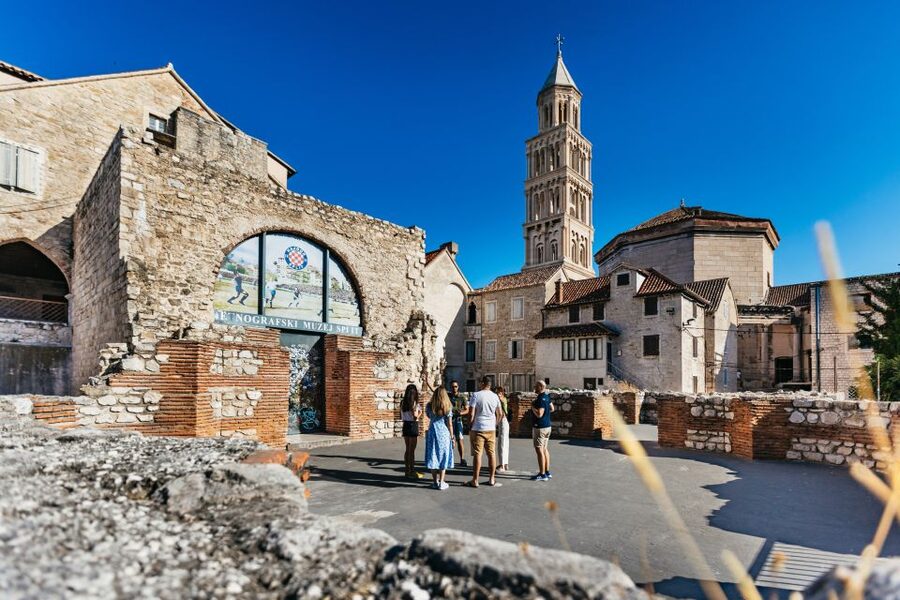
The strongest part of this experience is the guide-to-group connection. Mia is described as funny, friendly, and well prepared, with a gift for dry humor and useful city advice. Slavko is praised for clear English, strong knowledge of the palace, and stories that connect Split with wider Croatian history.
Antonia is noted for her storytelling, humor, and restaurant suggestions. Ivana receives praise for local information about Split and Trogir. Other guides, including Ante, Tino, Martha, Frane, and a young guide named Anthony or possibly Atie, are also described as engaging and easy to understand.
Guide assignments can change, so you should not book on the assumption that one specific person will lead your group. What you can reasonably expect is a local guide speaking English, Italian, Spanish, German, or French, depending on the option and availability.
The tone is informal rather than academic. You will hear historical facts, but also personal experiences, cultural details, and answers to questions. That makes the tour a good fit if you want a clear story with room for humor, not a formal university lecture.
Who should take this walk
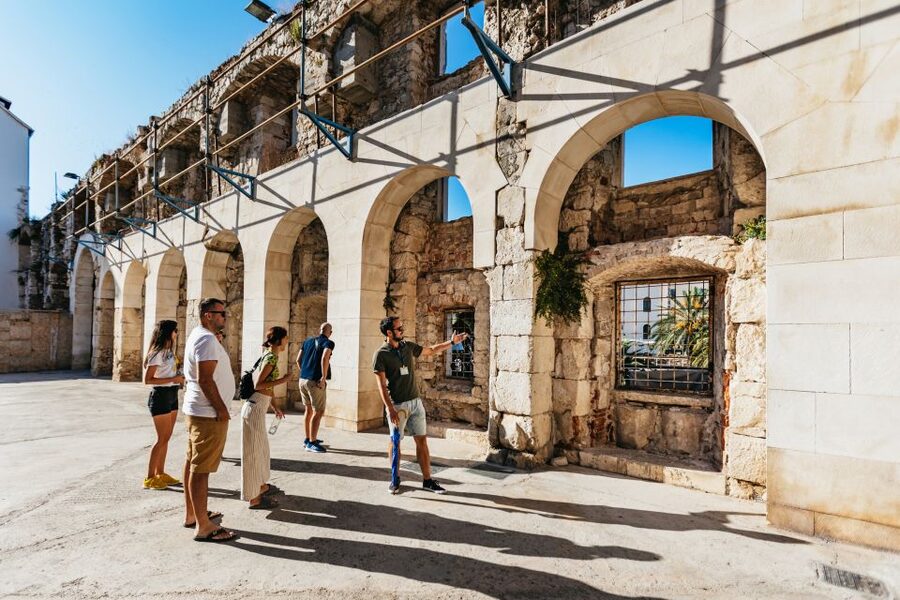
I would recommend it to first-time visitors, couples, families, and anyone arriving in Split from a cruise or short city break. The route covers the essential sights without requiring a full day, and the historical framework makes later wandering much more rewarding.
It also suits people who usually skip guided tours because they prefer independence. You still have plenty of time to explore alone afterward, but you avoid spending your first hours wondering what you are looking at.
Families can join because the activity is listed as suitable for all ages. Comfortable clothing is the only stated item to bring, but sensible walking shoes are a practical choice for old streets and uneven surfaces.
The main caution concerns mobility. The tour is not suitable for wheelchair users, and the combination of historic lanes, steps, crowded squares, and possible basement sections may be difficult for anyone who needs smooth, level access.
You can cancel up to 24 hours ahead for a full refund, and reserve now while paying later. Those terms are useful if your schedule is still shifting, but the key decision is choosing the right duration and any optional tasting or Trogir package.
Should you book the Split Old Town tour?
Book it if you want the palace to make sense rather than simply look impressive. The $17 standard option offers a lot for a short walk: Roman remains, a cathedral with an unusual past, Gregory of Nin, the Riva, and views toward Marjan Hill.
I would choose the standard route for a first morning or afternoon in Split. Pick a longer version if you want food or wine tasting, or if the Trogir add-on fits your plans. Check the meeting point, duration, and inclusions before paying, since those details vary.
Skip it only if you already have a strong guidebook plan and prefer to explore every street without a set pace. For most visitors, though, a local guide gives the Old Town a clear shape and saves you from seeing a remarkable palace as merely a pretty collection of old stones.
FAQ
How long does the Split Old Town and Diocletian Palace tour last?
The available options range from 90 minutes to six hours. Check the starting time and duration for the specific option you select.
What sights are included on the standard walking route?
The route includes the Golden Gate, Diocletian’s Palace, the Peristyle, Saint Domnius Cathedral, Gregory of Nin’s statue in Giardin Park, and the Riva promenade. It finishes at the Golden Gate.
Is hotel pickup included?
No. Hotel pickup is not included. The tour is a walking experience, and the meeting point may vary depending on the option booked.
Which languages are available?
Live guides are available in English, Italian, Spanish, German, and French.
Are food and wine tastings included?
Food tasting and wine tasting are included only if you select an option that offers them. They are not part of every tour version.
Is the tour suitable for wheelchair users?
No. The tour is listed as not suitable for wheelchair users. It is otherwise described as appropriate for all ages.
More Diocletian's Palace tours in Split
- Split: Diocletian Palace & Old Town Guided Walking Tour
★ 4.7 · 882 reviews - Split: Game of Thrones Tour with Diocletian’s Palace Cellar
★ 4.8 · 545 reviews - Diocletian’s Palace and Old Town SMALL GROUP Walking Tour
★ 5.0 · 502 reviews - SPLIT-PRIVATE Walking Tour of Diocletian’s Palace & Old Town
★ 5.0 · 467 reviews
Just added in Split
- Discover The Old Town Split 1.5h walking Small group tour★ 4.8 · 93 reviews
- From Split: Zagreb Transfer & Plitvice Lakes Tour★ 4.7 · 131 reviews
- Blue Cave, Komiža, Stiniva Bay, Budikovac, Hvar Split Island Boat Tour★ 5.0 · 53 reviews
- Split to Dubrovnik Private transfer 1-8 pax (Door to Door any location)★ 5.0 · 118 reviews
- From Sinj: 1.5-Hour Private Flight over Kornati & Šibenik★ 4.1 · 11 reviews
- From Sinj: Panoramic Flight over Split★ 5.0 · 14 reviews
- **Private Door to Door Airport Split Transfer up to 15 People**★ 5.0 · 136 reviews
- Sinj: Panoramic Flight over Peruca Lake and Dinara mountain★ 5.0 · 9 reviews
Diocletian Palace Tours, compared.
Walking Tour of Split and Diocletian’s Palace
Read our review →
Diocletian Palace & Old Town Guided Walking Tour
Read our review →
Game of Thrones Tour with Diocletian’s Palace Cellar
Read our review →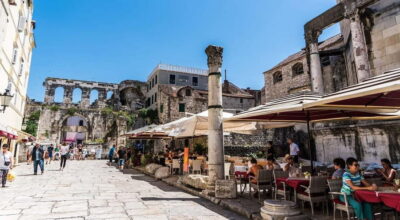
Diocletian’s Palace and Old Town SMALL GROUP Walking Tour
Read our review →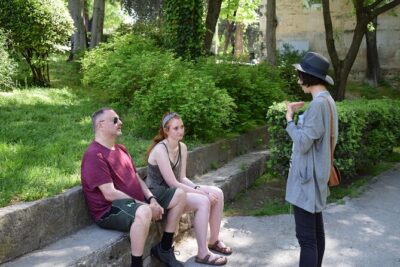

Browse the lists this tour appears in