
Reviewed · HISTORICAL TOURS
Split Walking Tour: History, Legends & Tales
Split is one of those cities where the past is not fenced off behind museum glass. It is built into apartment walls, cafés, church towers, and narrow lanes. This 90-minute walking tour takes you through the heart of that story, from the Roman palace of Emperor Diocletian to the squares and streets used by modern residents.
I like the personal touch of a local English-speaking guide, especially Lucija, who was born and raised in Split and can explain more than dates and stonework. I also like the route’s useful shape: you see the major sights early in your visit, then have time to return later on your own. The main drawback is that entrance tickets are not included, so you will see and hear about cultural and religious sites without necessarily going inside.
Key points to know before booking
- A local view of Diocletian’s Palace: Learn how a Roman emperor’s residence became the center of a living city.
- A compact first look at Split: The route covers the Riva, Palace, Vestibul, Peristil, Golden Gate, People’s Square, and Fruit Square.
- Lucija brings everyday context: She can answer questions about modern life in Split as well as ancient history.
- Small-group format: A smaller group makes it easier to hear the guide and ask questions along the way.
- Good value at $28: You pay for a guided introduction to Split’s central sights, not admission to individual monuments.
- Come prepared to walk: Comfortable shoes matter, and the tour is not suitable for wheelchair users.
Begin beside the Split model on the Riva
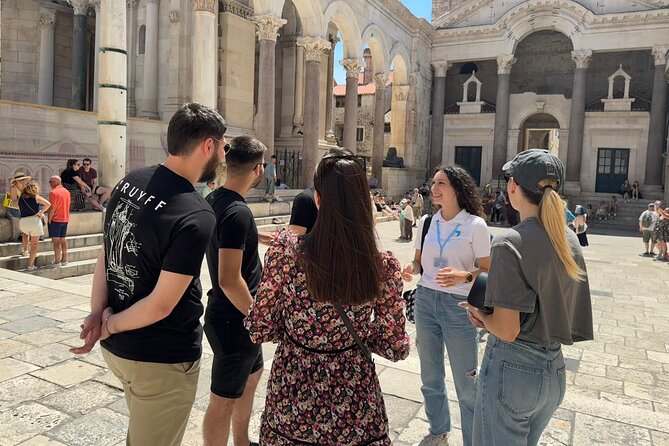
The meeting point is at Obala Hrvatskog narodnog preporoda 22, beside a model of Split. Look for the guide holding a Tour4You sign. This is a sensible starting point because the Riva gives you an immediate sense of Split’s setting and its role as the city’s public front porch.
The Riva is Split’s waterfront promenade, and the tour uses it as an introduction rather than rushing straight into the old lanes. From here, you begin to understand how close everything is. The palace, old town, harbor, and main squares sit within an easy walking area, so a short orientation can save you plenty of wandering later.
I like meeting here because the location is easy to identify. Still, arrive with enough time to find the model and guide, especially if you are visiting during a busy period. The tour ends at the same spot, which makes it convenient if you want to continue along the waterfront, return to your hotel, or meet your next appointment.
Other guided walks in Split:
- Split: Old Town and Diocletian Palace Walking Tour
★ 4.9 · 4,727 reviews - Walking Tour of Split and Diocletian’s Palace
★ 5.0 · 2,588 reviews - Krka Waterfalls tour with Trogir Walking tour and Krka panoramic boat cruise
★ 5.0 · 1,659 reviews
See how the Riva frames old and new Split
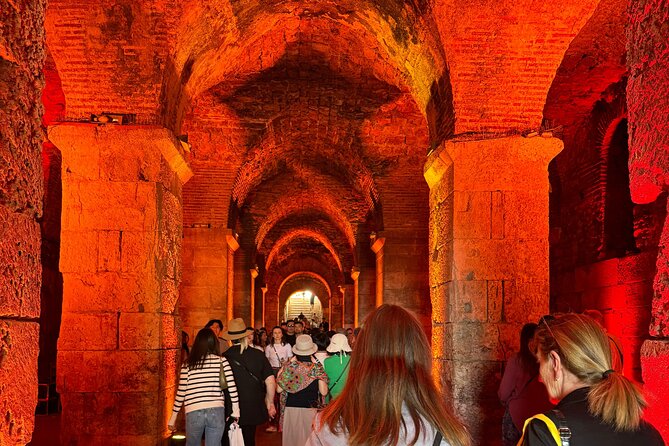
The guided walk along the Riva helps connect the ancient city to present-day Split. You are not simply looking at an isolated Roman ruin. The palace area has been absorbed into the working city, and the tour’s main idea is this long transformation from Diocletian’s residence to a place where people live, shop, worship, and meet friends.
This is where a local guide can add something a map cannot. Lucija’s role is not limited to reciting dates. She has also been able to answer questions about life in Split beyond the historical story, giving you a better sense of the city as a home rather than only a sightseeing stop.
The route is short enough to hold your attention but broad enough to give you a useful mental map. If you have only one day in Split, that matters. You will know where the main Palace entrances and central squares are before you set off alone.
Walk through Diocletian’s Palace
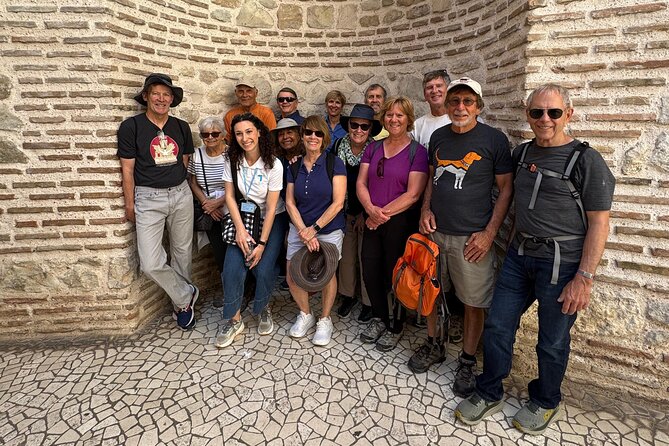
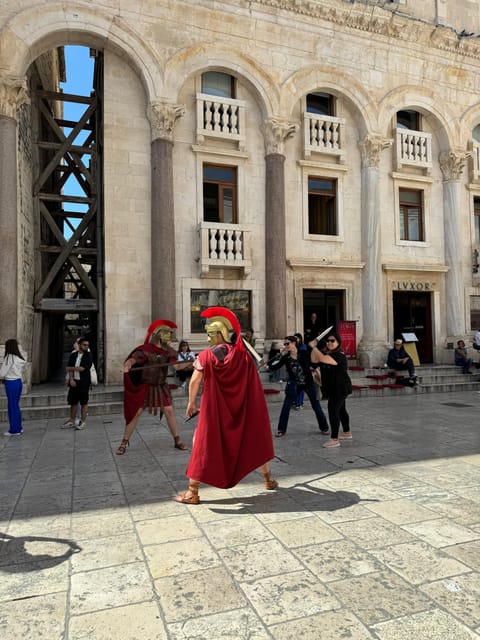
The Palace is the center of the tour and the reason this experience works best near the start of your stay. Diocletian chose Split as the site of his luxurious residence, and the complex has remained part of the city for more than 1,700 years.
The important point is that this is not just one grand building. It is a large historic complex with walls, gates, passageways, courtyards, and later changes layered onto the Roman plan. You walk through streets where the original purpose can be difficult to spot at first. The guide helps you read the remains and understand how the palace shaped the city that followed.
I appreciate tours that explain a place’s development instead of treating history as a list of rulers. Here, you can follow the shift from imperial residence to medieval and modern town. The stonework gives you the setting, while the stories help explain why the old center feels both ancient and ordinary at the same time.
The tour does not include admission to cultural or religious sites. That keeps the $28 price down, but it also means you should not expect a museum-style visit to every interior. The guide gives you information so you can decide what deserves a separate visit later.
Hear the story beneath the Vestibul
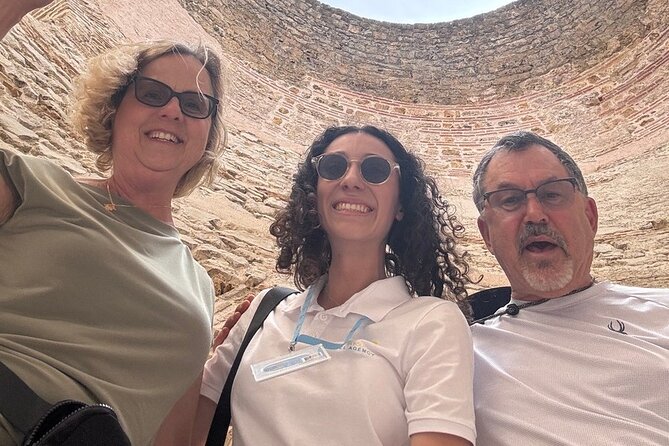
The Vestibul is one of the Palace’s most memorable spaces. Its shape and position make it a natural place to pause while the guide explains how people moved through the imperial complex.
A stop here is valuable because architectural details can seem confusing without context. You may see a grand entrance space, but the guide can explain how it fitted into the larger residence and how the building’s function changed over time. This is the kind of stop where a local explanation turns a quick photograph into a clearer picture of the original plan.
The Vestibul can also be a busy place, so group size matters. A small group should make it easier to stay close and hear the explanation. You will still need to pay attention to where you are walking, since the historic center uses uneven stone surfaces and active public paths.
Same base, a different kind of day out:
- Split: Krka Waterfalls Trip with Boat Cruise and Swimming
★ 4.8 · 10,519 reviews - From Split: Krka Waterfalls, Food & Wine Tasting Tour
★ 5.0 · 9,326 reviews - Blue cave, Mamma Mia and Hvar, 5 islands speedboat tour
★ 5.0 · 7,150 reviews - From Split: Krka Waterfalls, Food & Wine Tasting Tour
★ 4.9 · 6,598 reviews
Stand in the Peristil, the Palace’s great court
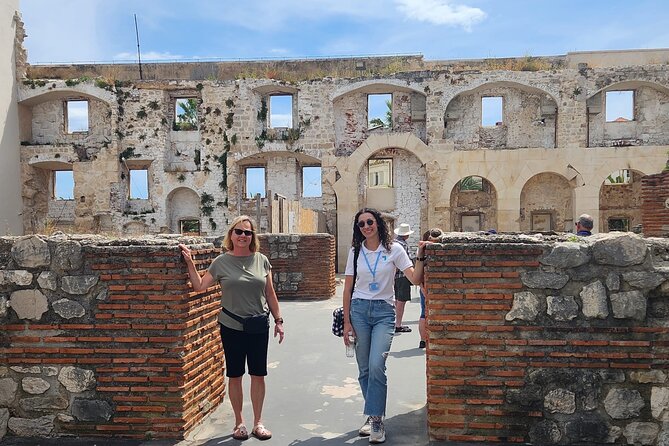
Peristil is one of the key stops on the route. This open court gives you a strong sense of the Palace’s scale and ceremonial purpose. It is also one of the places where the ancient setting and modern city meet most clearly.
The guide’s job here is to help you understand what you are seeing rather than simply point out impressive columns. The court connects several major parts of the Palace, making it an ideal place to explain how the complex was organized.
This is also a good point to ask questions. The tour is conducted in English, and the small-group setting should allow more room for curiosity than a large procession. If you want to know how the Palace changed after Diocletian’s time, ask while you are here, when the physical layout is directly in front of you.
As with the Vestibul, the stop is primarily outside unless you later choose to pay for an interior visit. That is worth remembering if your priority is seeing specific religious or cultural collections rather than receiving a broad introduction.
Find the Golden Gate and the Palace’s outer edge
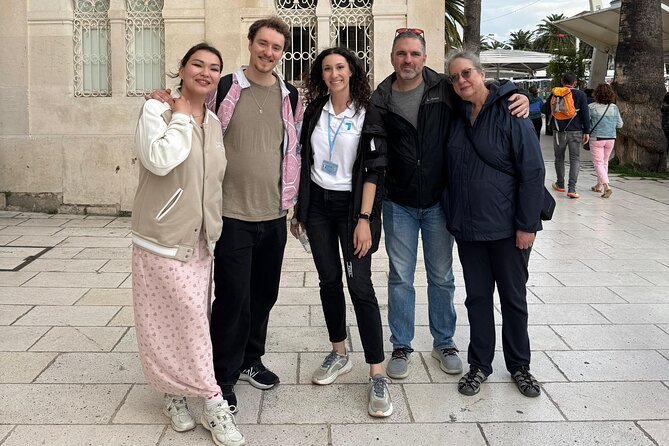
The Golden Gate shows how the Palace connected to the world beyond its walls. The stop adds useful scale to the tour because you are no longer looking only at inner courtyards. You begin to see the Palace as a fortified complex with planned entrances and a clear relationship to the surrounding city.
The guide can explain the gate’s place in the larger design and point out details you might walk past alone. This is one of the reasons I would take the tour early rather than after several unstructured hours in Split. Once you know the basic layout, you can recognize the main entrances and orient yourself more quickly.
The route includes cobbled streets and hard walking surfaces, so wear comfortable shoes. The tour is suitable for most visitors, but it is not suitable for wheelchair users. Anyone with limited mobility should consider that the historic center may present practical difficulties beyond the stated route.
Move from Roman planning to People’s Square
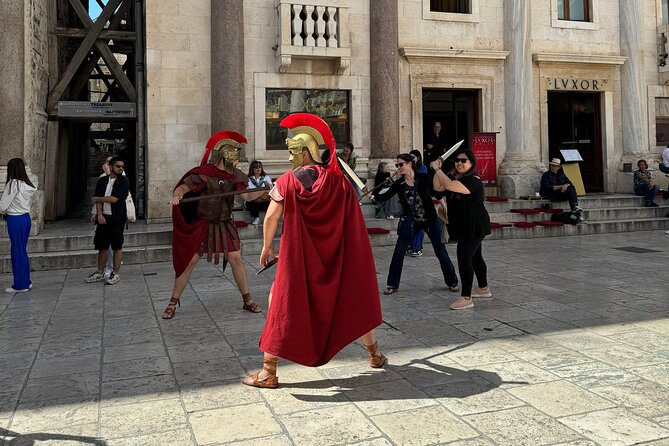
People’s Square shifts the story away from the Palace itself and toward the later city. The stop helps show how Split grew around and within the old Roman complex.
This is a useful change of scene during a 90-minute walk. You get more than a sequence of imperial remains, and the guide can connect the square to the city’s later civic life. That broader view is one of the tour’s strengths. You are learning how Split developed, not just collecting names for a list.
I also like that the route includes ordinary public spaces. These are places where you can pause later for a coffee, find your bearings, or continue exploring without a guide. A good orientation tour should leave you more confident about what to do next, and People’s Square helps provide that bridge between guided sightseeing and independent wandering.
Finish at Fruit Square with a practical view of Split
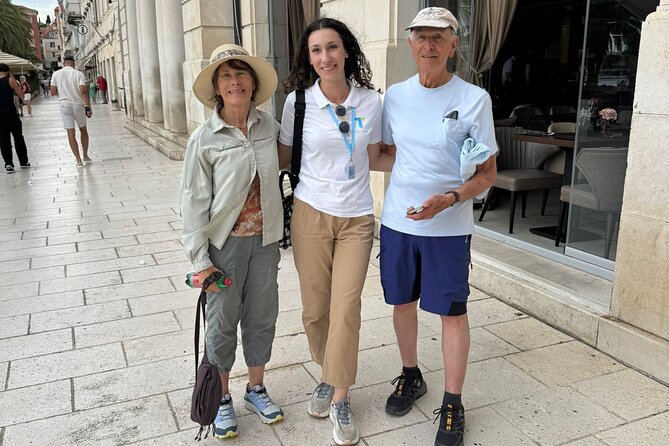
Fruit Square is the final major stop before you return to the meeting point. Its inclusion gives the route another look at Split’s daily city center and helps round out the progression from the waterfront to the Palace and into later urban spaces.
The final stretch is useful because you can compare the different parts of the old center. The Riva feels open and maritime. The Palace feels enclosed and layered. The central squares offer a more civic, everyday setting. Within a short distance, you see how several eras share the same compact area.
After Fruit Square, you return to Obala Hrvatskog narodnog preporoda 22. That same-point finish is practical, particularly if you are meeting someone, catching a boat, or planning to continue along the waterfront.
What the $28 price really covers

At $28 per person, this is a reasonably priced introduction to Split’s central sights. The value comes from the licensed guide, the local perspective, and the time saved figuring out the Palace’s layout by yourself.
You are paying for interpretation, not admission. Entrance tickets to cultural and religious sites are extra, so budget separately if you want to go inside places discussed during the walk. That arrangement can actually suit independent visitors. You first learn what you are looking at, then choose which interiors deserve your own time and money.
The 90-minute length also affects the value. This is not an all-day history program, and it should not be judged as one. It is a focused first walk that gives you the basic story and key locations without taking over your schedule.
The small-group format adds value as well. You can hear the guide more easily, ask questions, and avoid the impersonal feel that often comes with a large city tour. Group size is not specified, so you should not assume it will be private, but the experience is described as a small-group walk.
Who will get the most from this walk
I would recommend this tour most strongly to first-time visitors who want a clear start in Split. The route covers the main landmarks and gives you enough context to explore independently afterward.
It also suits anyone who prefers local stories to a strictly academic lecture. Lucija’s ability to discuss present-day life in Split, as well as the city’s past, makes the experience more personal. If you are curious about how people live in the old center today, ask questions during the walk.
Families can join, but children must remain with an adult throughout the tour. The pace is short enough to be manageable for many families, although cobbled streets and a 90-minute walk may still be tiring for young children.
This is less suitable if you want extensive interior access, a private guide, or a long specialist tour focused on Roman architecture. It is also a poor fit for wheelchair users because the activity is not listed as accessible.
Timing, weather, and simple preparation
Wear comfortable shoes. That is the one packing tip you should take seriously, since the route uses cobbled streets and historic surfaces.
The tour operates in English, with starting times shown when you check availability. Since the walk is only 90 minutes, it is easy to place near the beginning of a Split visit. Morning or later-day timing may suit different schedules, but the exact start times are not fixed in the information provided.
Weather can affect the activity. If poor weather causes a cancellation, you can reschedule or receive a full refund. You can also cancel up to 24 hours in advance for a full refund, and the reserve-now, pay-later option gives you some flexibility while your plans are still changing.
Should you book the Split Walking Tour?
Book it if you want a short, well-shaped introduction to Split led by someone who knows the city personally. The combination of the Riva, Diocletian’s Palace, Vestibul, Peristil, Golden Gate, People’s Square, and Fruit Square gives you a strong first map of the old center.
The best reason to choose it is the local angle. Lucija’s warm manner and ability to answer questions about modern Split add something beyond a standard monument tour. The main limitation is the lack of included entrance tickets, so plan to explore interiors separately if that is important to you.
At $28, I see this as good value for a first visit, especially if you take it early and use the rest of your time to return to the places that catch your interest. If you prefer to wander without a schedule, you can skip it. If you want the old city to make sense quickly, this is a practical choice.
FAQ
How long does the Split walking tour last?
The tour lasts 1.5 hours. Starting times vary, so check availability when booking.
Where does the tour begin?
It begins at Obala Hrvatskog narodnog preporoda 22, beside the model of Split. The guide will hold a Tour4You sign.
Where does the tour end?
The activity ends back at the same meeting point on Obala Hrvatskog narodnog preporoda 22.
What language is the tour conducted in?
The tour is conducted in English with a live English-speaking guide.
Are entrance tickets included?
No. Entrance tickets to cultural and religious sites are not included. The guide provides information so you can decide what to visit later at your own pace.
Is the tour suitable for wheelchair users?
No. The activity is not suitable for wheelchair users. Comfortable shoes are recommended for the walking route.
More Historical Tours in Split
- Walking Tour of Split with a ‘Magister’ of History
★ 5.0 · 1,122 reviews - Split Walking Tour with Professor of History
★ 5.0 · 926 reviews - Split: History and Heritage Walking Tour
★ 4.9 · 650 reviews - Split History and Gastro Small-Group Tour with Food and Drinks
★ 5.0 · 375 reviews
Just added in Split
- From Trogir, Seget, Okrug: Krka Waterfalls & Šibenik Culture Tour★ 5.0 · 10 reviews
- Krka Waterfalls & Primošten from Trogir, Seget, Čiovo & Kaštela★ 5.0 · 18 reviews
- Slatine – Island Hopping Excursion (Trogir/Blue Lagoon/Shipwreck)★ 4.0 · 24 reviews
- Island Hopping Boat Excursion with Lunch (Trogir,Blue Lagoon, Šolta)★ 3.5 · 6 reviews
- From Split & Trogir: ATV Quad Tour on Island Čiovo★ 5.0 · 21 reviews
- Split: Sunset Guided Kayaking Tour★ 4.8 · 71 reviews
- Split Sunset Stand Up Paddle Tour★ 5.0 · 16 reviews
- Stand Up Paddle Tour in Split★ 4.7 · 17 reviews
Historical Tours, compared.
Walking Tour of Split with a ‘Magister’ of History
Read our review →

Split History and Gastro Small-Group Tour with Food and Drinks
Read our review →
PREMIUM Emperor’s Walking Tour for History Lovers + Museum
Read our review →
Browse the lists this tour appears in