
Reviewed · WALKING TOURS
Romantic Rovinj – a private walking tour
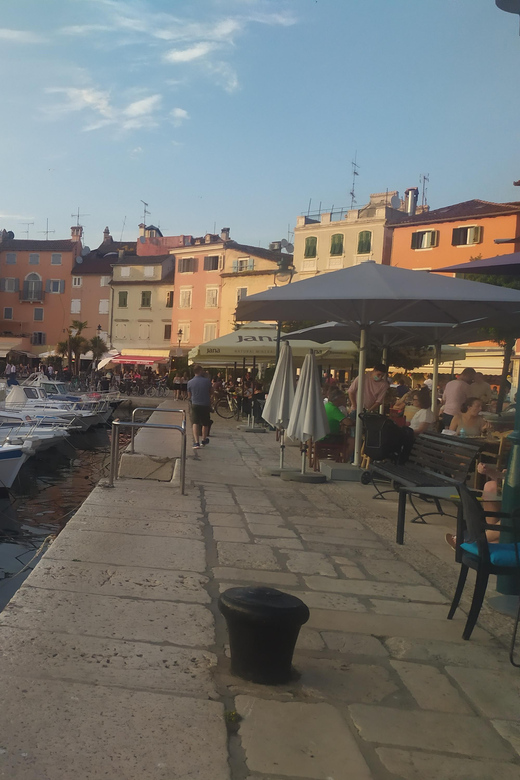
Rovinj’s real appeal appears when you leave the waterfront and enter its old lanes. This private walk with Romina turns a pretty Croatian town into a personal story, linking its former island setting, Italian influence, Istrian identity, and everyday life.
I like the small private group, which lets the guide adjust the pace and answer questions. I also like the mix of places: Saint Euphemia’s Church gives the walk a clear historic focus, while a local bar and Carrera Street bring you back to present-day Rovinj.
The main consideration is the terrain. Narrow medieval streets and uneven walking can be hard for anyone with mobility or breathing concerns, and this is not suitable for wheelchair users or babies under one year.
Key points to know before you book
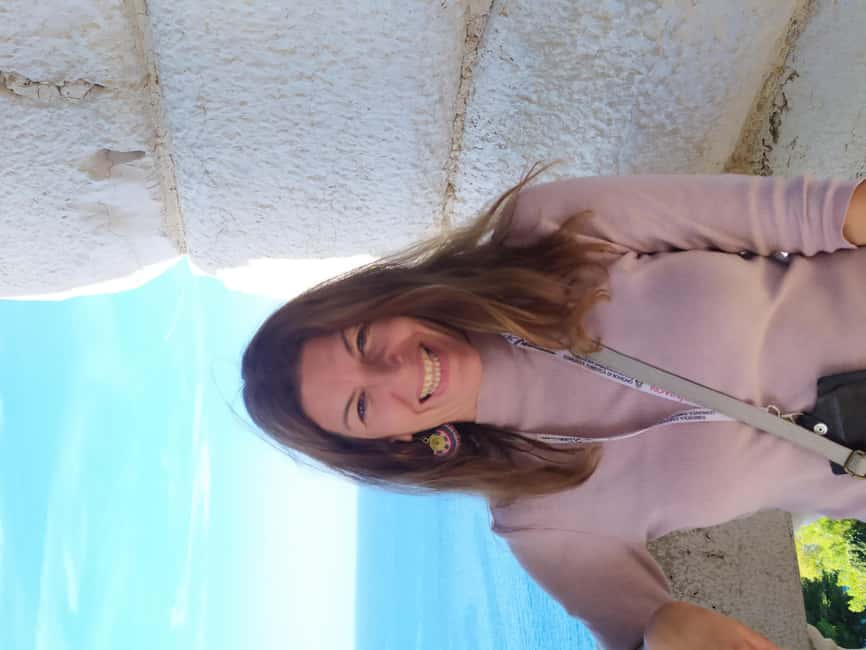
- Romina leads a personal, story-driven walk: She combines local history with her own connection to Rovinj.
- The route covers the town’s main historic sights: Expect the former bridge area, Carrera Street, Maršal Tito Square, Balbi’s Arch, the Old Town, and Saint Euphemia’s Church.
- The $170 rate covers up to six people: For a full group, that works out to about $28 per person.
- A local bar adds an everyday Rovinj stop: You can pause for a photo and scenic views, but food and drinks cost extra.
- The church visit is included: The Batana Museum is not part of the tour.
- You can choose among five languages: Romina guides in English, German, Italian, Spanish, and Portuguese.
Why this two-hour Rovinj walk works
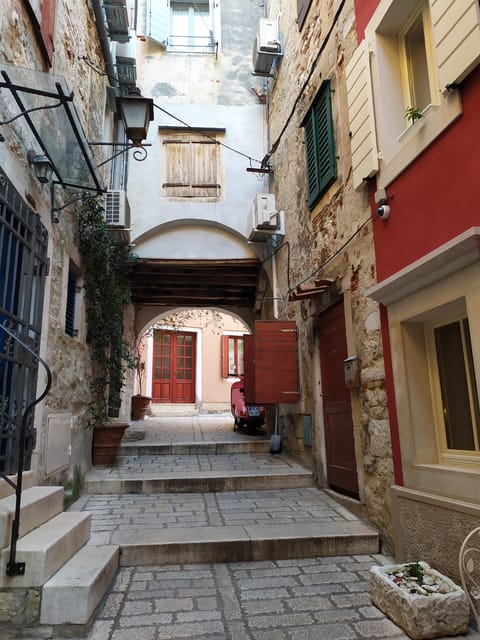
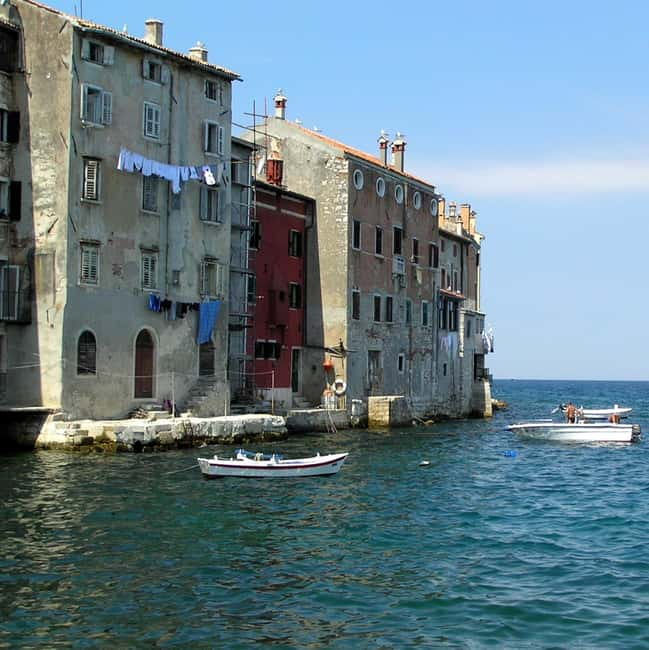
Rovinj can look simple at first: colorful houses, sea views, a church tower, and a few inviting streets. The pleasure comes from understanding how those pieces fit together. The town feels Croatian and Italian, but its strongest identity is Istrian, shaped by its location, local customs, and layered past.
That is where Romina’s approach matters. You are not only moving from one photo stop to the next. You are hearing how places connect to local life, with personal details woven into the broader story. One especially strong aspect of the experience is the balance between historic facts and the guide’s own view of her hometown.
The pace also suits a first visit. Two hours is enough to get a clear sense of the Old Town without turning the walk into an all-day commitment. You can use the tour early in your stay to find your bearings, then return to the streets, restaurants, or waterfront areas that caught your attention.
The walk begins and ends at Trg na mostu, the square by the Tourist Board Information Office. That makes the meeting point fairly easy to identify, and you finish close to where you started rather than having to arrange a ride across town.
Other guided walks in Rovinj:
- Rovinj: Guided Walking Tour
★ 4.8 · 113 reviews - Dubrovnik: Old Town Walking Tour
★ 4.8 · 5,174 reviews - Split: Old Town and Diocletian Palace Walking Tour
★ 4.9 · 4,727 reviews
Starting at the old bridge square
The opening stop is a small square where a bridge once separated the former island from the mainland. That detail gives you a useful key to Rovinj. The Old Town was not always connected to the rest of the city in the way you see it today.
This is the kind of brief historical explanation that makes the streets ahead more meaningful. Instead of seeing the Old Town as a random maze, you begin to understand why its position and shape matter. Romina uses this early point to introduce Rovinj as a place formed by both geography and human activity.
I like this start because it is not just a convenient meeting point. It immediately gives the walk a sense of place. You also get a chance to meet your guide, check the walking pace, and ask for help with pronunciation or local recommendations before the route becomes more enclosed.
Since the group is private, you can make your interests clear at the beginning. If you care about architecture, local life, or the town’s religious traditions, say so. Romina’s format leaves more room for that kind of exchange than a large group walk usually allows.
Carrera Street and the modern town
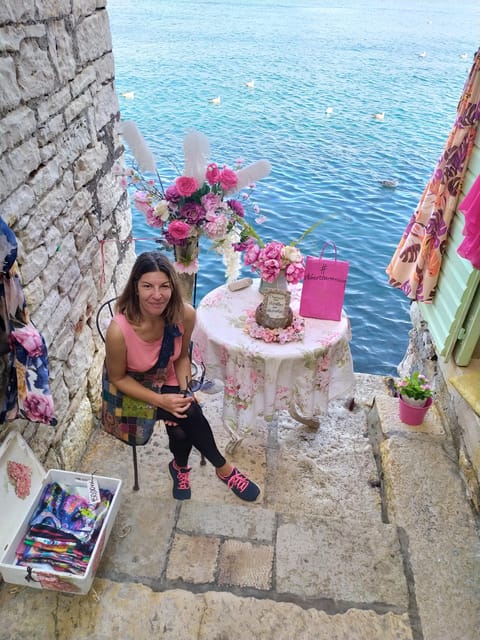
Carrera Street is described as Rovinj’s shopping area, so this part of the walk provides a useful contrast with the older lanes. You see how the town functions today, not only how it looked in earlier centuries.
That contrast is important. Rovinj is not a preserved stage set. People shop, work, meet, and move through these streets. A guide who connects the old town to its economic and social life gives you more than a list of buildings.
One particularly useful account of Romina’s guiding describes her explanations as covering historic, economic, demographic, and personal angles. That range is worth noting. You are likely to get a broader picture of Rovinj than you would from a route focused only on monuments.
Carrera Street is also a practical place to make a note of shops or areas you might want to revisit. The tour does not include food, drinks, or souvenirs, so you will have to pay separately if you stop to buy something. Still, learning where the commercial center sits can help you plan the rest of your day.
Maršal Tito Square and Balbi’s Arch
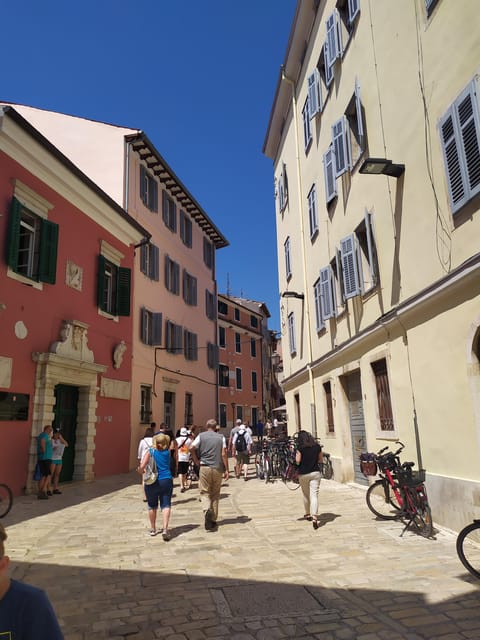
Maršal Tito Square is Rovinj’s main square and one of the natural anchors of the walk. It gives you a wider public space after the narrow streets, with a better sense of how the Old Town opens toward the rest of the city.
From there, the route continues to Balbi’s Arch. This is one of the points where the town’s past becomes visible in a compact way. An arch is easy to pass in a hurry, but a local guide can explain why it matters and how it fits into the old entrance to Rovinj.
I find stops like this especially useful on a private walk because you can pause without worrying about holding up a large group. You can ask Romina to point out details you might miss on your own, then take a photograph before moving on.
The route is also designed for atmosphere. Scenic views appear along the way, and the old streets provide plenty of visual interest. But you should not expect a long sightseeing stop at every location. The strength of this experience is the connected story, not a series of extended visits inside museums or major monuments.
A few more things to do in Rovinj worth a look
- Dolphin private sunset tour Rovinj
★ 5.0 · 4 reviews - Mostar and Kravice Waterfalls Tour from Dubrovnik (Semi-Private)
★ 5.0 · 3,125 reviews - Dubrovnik: Blue & Green Caves Private Boat Tour with Drinks
★ 4.7 · 814 reviews - Dubrovnik Private Speedboat Tour to Elaphite Islands with Drinks
★ 5.0 · 660 reviews
The Old Town’s narrow streets
The Old Town is the heart of the experience. Its narrow streets create the medieval feel promised by the tour, but they also require a little care. You should wear comfortable shoes and expect a walking route that is not designed for wheelchairs or people who have trouble with uneven ground.
Rovinj’s lanes can feel intimate and slightly mysterious, especially when the route moves away from the main square. Romina’s storytelling gives those spaces context. She presents the town as a place where old stories and ordinary life occupy the same streets.
This is also where the private format has its clearest value. A group of up to six people can stay together easily, and you can stop for photographs without the awkwardness of a large crowd. If you are visiting as a couple, the walk should feel personal without being limited to romantic scenery alone. If you are with family or friends, the guide can keep the outing social and flexible.
The tour’s title focuses on romance, but you do not need to be on a honeymoon to enjoy it. The romantic side comes from the town’s appearance, its sea-facing setting, and its old lanes. The content itself is broader, with history, local identity, and daily life at its center.
Saint Euphemia’s Church and La Colonna
The visit to the Church of Saint Euphemia is included in the price. This is the main interior sight on the route and gives the walk a clear destination near the top of the Old Town.
The church is tied to Saint Euphemia, whose sarcophagus was found at La Colonna. That connection adds a memorable local story to the religious and historic side of the tour. Rather than treating the church as a quick photo background, you get a link between the building, the saint, and a specific place in Rovinj.
The church visit must match the tour time you choose. That is a small but important planning point. When booking, check the available starting times carefully so the included entrance fits the selected schedule.
You should also keep your expectations practical. The provided details confirm a visit to the church, but they do not promise access to every part of the building or a climb up the tower. Book this for the guided visit and the story, not on the assumption that it includes an additional tower experience.
The local bar and a pause in the route
A local bar appears as a stop for a photo, guided explanation, and scenic views. This is a nice change of rhythm after the historic lanes. It brings the walk into a more relaxed, everyday setting and gives you a chance to watch the town around you.
Food and drinks are not included. That is worth remembering if you are comparing the total cost with other city tours. You can treat the stop as a chance to buy something, but the tour price itself covers the guiding rather than refreshments.
The bar stop also helps explain the tour’s wider approach. Romina is not presenting Rovinj only through formal landmarks. She is showing you places connected to how people experience the town now. That local feel is one of the strongest reasons to choose this walk instead of relying only on a self-guided route.
What the price means for your group
The cost is $170 per private group of up to six people. For two people, that is $85 each. For six, it works out to roughly $28 per person, before any separate food, drinks, souvenirs, or tips.
That price makes the most sense for a family or group of friends who want a private guide. You are paying for personal attention, a flexible conversation, and a tour that can include your own questions. For a solo visitor or couple, the cost is higher per person, so you should value the private format before booking.
The tour also includes the Church of Saint Euphemia, which adds something concrete to the fee. The Batana Museum is not included, so anyone interested in Rovinj’s maritime heritage should plan that as a separate visit if it fits the schedule.
The two-hour length is another part of the value. You get a focused introduction without giving up an entire morning or afternoon. One group’s walk lasted more than two hours, so you should allow a little flexibility if the conversation continues or the route runs long.
Romina’s guiding style
Romina is the named guide and provider behind the experience. Her strongest feature is the personal connection she brings to Rovinj. She presents herself as a local friend, and the available feedback points to warmth, passion, professionalism, and entertaining storytelling.
I would choose this tour if you prefer a guide who talks with you rather than simply reciting dates. One account specifically praised the way Romina painted a picture of Rovinj through history, economics, population changes, and personal experience. That suggests a useful level of context for anyone who wants to understand the town instead of only photographing it.
She also gave one group a dinner suggestion that they used later that evening. That is a small detail, but it shows why a local guide can be valuable beyond the official route. You can ask for practical ideas while you are together, though meals themselves are not part of the tour.
The tour is available in English, German, Italian, Spanish, and Portuguese. Choose the language in which you can comfortably follow stories and ask questions, since the conversation is central to the experience.
Weather, walking, and who should book
The tour operates in most weather, except during heavy showers. That means you should bring suitable clothing rather than assume a little rain will cancel the walk. The church visit must also line up with the time you select.
This is not a suitable choice for people with mobility impairments, wheelchair users, or people with respiratory issues. It is also not suitable for babies under one year or people over 95. Those limits are important because the route moves through an old town with narrow streets, and the tour is built around walking rather than transport.
I think the experience suits:
- Couples who want a personal introduction to Rovinj
- Families or friends who can share the private-group price
- First-time visitors who want local context before exploring alone
- People interested in history, town life, and personal stories
- Visitors who can walk comfortably for two hours
It is less suitable if you want a museum-heavy outing, a food tour, or a fully accessible route. It also may not be the best match if you prefer to explore silently at your own pace.
Should you book Romantic Rovinj?
Book it if you want Rovinj explained by someone with a personal connection to the town. The best parts are the private format, Romina’s broad storytelling, the Old Town route, and the included visit to Saint Euphemia’s Church.
I would be most likely to recommend it to a group of up to six, since the $170 price becomes better value as more people join. Couples should book when the personal guide relationship matters more than keeping the per-person cost low.
Skip it if uneven streets are a serious problem, if you need wheelchair access, or if you are mainly looking for food and drinks. For everyone else, this is a focused way to meet Rovinj through its streets, stories, and local character before setting off on your own.
FAQ
How long is the Romantic Rovinj walking tour?
The tour is scheduled for two hours. One group’s walk lasted a little more than two hours, so it is sensible to leave some flexibility afterward.
How much does the private tour cost?
The price is $170 per private group of up to six people. Food, drinks, souvenirs, and tips are not included.
Where does the tour begin?
The meeting point is at the Tourist Board Information Office on Trg na mostu.
Where does the tour finish?
The route returns to Trg na mostu, the same square where it begins.
Which languages are available?
Romina can guide the tour in English, German, Italian, Spanish, or Portuguese.
Is Saint Euphemia’s Church included?
Yes. A visit to the Church of Saint Euphemia is included, and the entrance must match the tour time you select.
Is the Batana Museum included?
No. The Batana Museum is not included in this walking tour.
Does the tour operate in bad weather?
The tour operates in all weather conditions except heavy showers. You should dress for the forecast.
Is the tour suitable for wheelchair users?
No. The tour is not suitable for wheelchair users or people with mobility impairments. It is also not suitable for people with respiratory issues, babies under one year, or people over 95.
Just added in Rovinj
- Rovinj: Shared Dolphin and Sunset Tour with Drinks★ 4.9 · 18 reviews
- Rovinj Sunset kayaking tour★ 4.9 · 8 reviews
- Rovinj: Sunrise Dolphins & Fishermen at Work Speedboat Tour★ 4.8 · 32 reviews
- Rovinj: Luxury Island Hopping with Swimming & Snorkeling★ 4.8 · 25 reviews
- Rovinj: Red Island and Pirate Cave speedboat tour★ 4.7 · 85 reviews
- Rovinj: Lim Fjord and Pirate Cave Boat Tour★ 4.5 · 133 reviews
- Rovinj or Vrsar: Lim Fjord & Rovinj islands Speedboat Tour★ 4.9 · 10 reviews
- Rovinj: Rovinj Archipelago and South Coves Speedboat Tour★ 5.0 · 7 reviews
Walking Tours, compared.
Walking Tour of Split and Diocletian’s Palace
Read our review →
Krka Waterfalls tour with Trogir Walking tour and Krka panoramic boat cruise
Read our review →
City Walls Early Morning or Sunset Walking Tour
Read our review →
Browse the lists this tour appears in