
Reviewed · WALKING TOURS
Rovinj: Guided Walking Tour
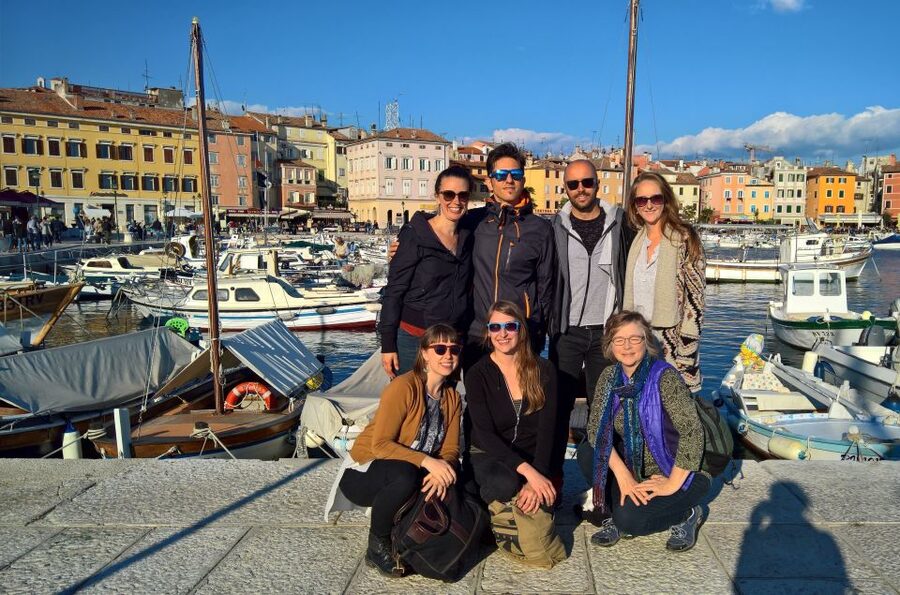
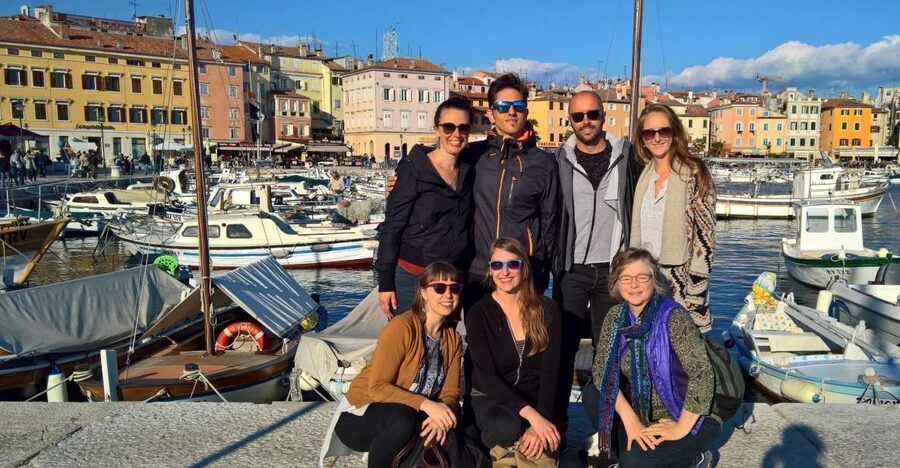
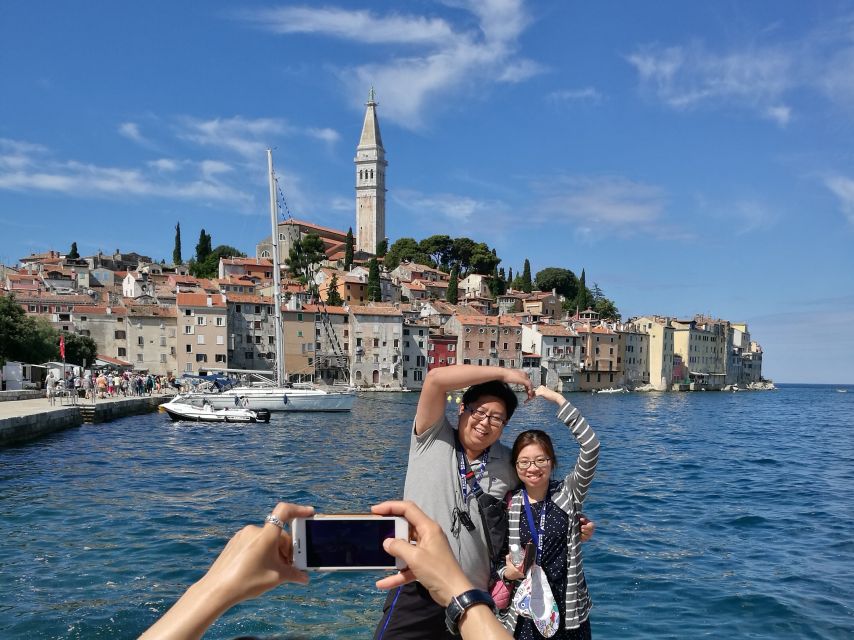
Rovinj makes a strong first impression from the north, where the old town rises above the Adriatic in a tight cluster of red roofs, church towers, and stone lanes. This walk explains the oddest part of that view: why a city once separated by water no longer has the channel or bridge shown on old maps. The story of Rovinj becoming an island, then being joined to the mainland, gives the town a clear shape in your mind.
I like the way the tour mixes major sights with useful local advice. You get the old Jewish Ghetto, Carera Street, the waterfront, and St. Euphemia, but also tips on coffee, gelato, restaurants, markets, and beach areas. Guides such as Goran add humor and personal stories, and several guests found his English easy to follow. The main drawback is the footing: half the walk uses cobblestones, and the uphill route to the church may be hard for anyone with limited mobility.
Key points to know before walking Rovinj
- Start by the farmers market: Meet at the white World War II memorial on Pietra Ive Street, in front of the Auro Domus ATM.
- Hear the bridge story: At Valdibora Square, you learn where the former channel and bridge were located and how the channel was filled.
- Follow trade-era Rovinj: Carera Street connects the town’s stone lanes with the wealth once made from olive oil, fish, and wine.
- Explore less obvious corners: The route reaches the old Jewish Ghetto and the former stables area near the Arch of the Bearded.
- Finish above the rooftops: The walk ends at St. Euphemia Church, a prime place for sunset over the Adriatic.
- Plan for uneven ground: Cobblestones cover much of the old town, and the final climb is manageable for many people but not suitable for those with mobility impairments.
Why this 90-minute walk is useful in Rovinj
Rovinj is easy to admire and surprisingly easy to misunderstand. You see a compact old town on a peninsula, but its shape reflects centuries of change. A good guide helps you connect the waterfront, lanes, gates, market, and hilltop church instead of treating them as separate photo stops.
This tour lasts 90 minutes, which is long enough to cover the city’s main structure without taking over your day. I see it as a smart first activity, especially if you are staying in Rovinj for several days. You get your bearings, hear the local version of the city’s past, and finish with a list of places to eat, drink coffee, buy produce, and find gelato.
The walk is led in English, Italian, Portuguese, French, or Croatian. Goran is the guide most often named in the available comments. His approach combines clear explanations with humor, and the strongest praise centers on his ability to keep historical details lively rather than turning the walk into a lecture.
Other guided walks in Rovinj:
- Romantic Rovinj – a private walking tour
★ 5.0 · 8 reviews - Dubrovnik: Old Town Walking Tour
★ 4.8 · 5,174 reviews - Split: Old Town and Diocletian Palace Walking Tour
★ 4.9 · 4,727 reviews
Finding the meeting point near the farmers market
The meeting point is in the lower town, just off the farmers market. Look for the large, rectangular, whitewashed World War II memorial on Pietra Ive Street, in front of the Auro Domus ATM. This is more precise than simply being told to meet at the market, so take a moment to locate the memorial before the start time.
Beginning here is practical. You are not dropped straight into the steepest old-town lanes. Instead, the tour starts in the part of Rovinj that people approaching from the north would see first. That gives your guide room to explain the city’s position and its former relationship with the mainland.
The market also helps you understand daily life before entering the old center. By the end of the walk, you should know where locals buy fruits and vegetables, not just where visitors take pictures. If you want to return for supplies, the opening location makes that easy to remember.
Valdibora Square and the lost channel
The first major stop is Valdibora Square, the northern approach to Rovinj. Here, the guide points out exactly where the channel and bridge once were. The question behind the stop is simple: if Rovinj was an island, why does it now appear connected to the mainland?
The channel was filled roughly 1,000 years ago. That one fact changes the way you read the town. The old center was not merely built on a convenient hill beside the water. It developed as a compact island community, with homes, work, trade, and public life packed into a small space.
I like this opening because it explains the city physically before moving into dates and names. Once you understand the former waterway, the narrow approach and dense old town make more sense. You are also less likely to miss the importance of Bridge Square, where the name preserves a clue to what used to be there.
The stop is short, about 15 minutes in the timed route, but it does useful work. It also sets up the central question of the walk: how did thousands of people live on such a small island for centuries?
Carera Street and the money behind Rovinj’s old houses
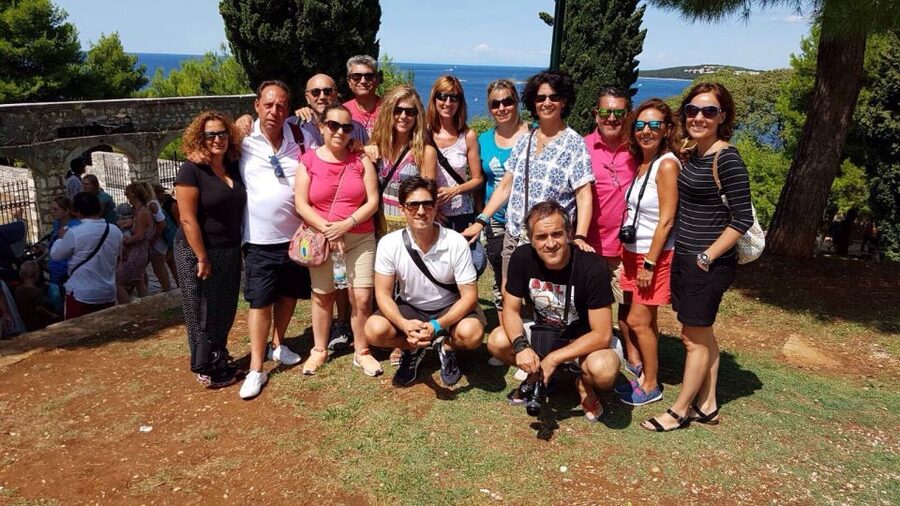
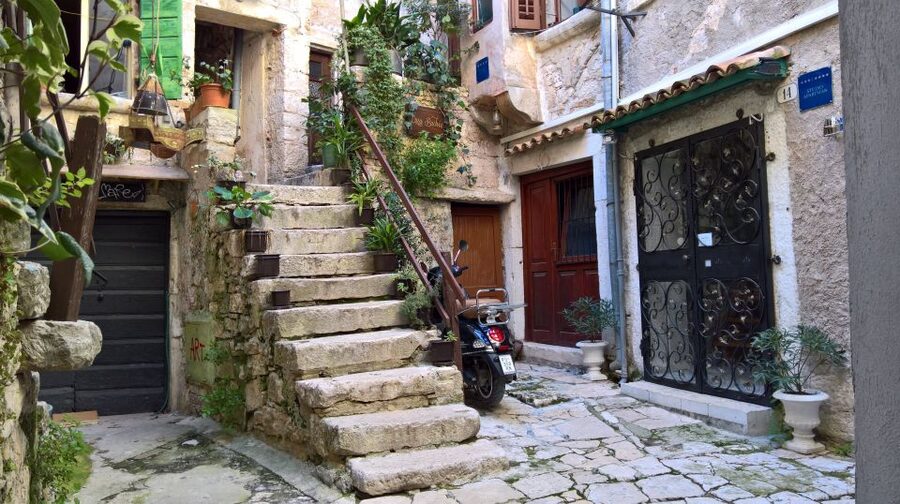
From the northern area, the walk continues along Carera Street. This is one of the best places to see that Rovinj was not only a fishing village or a postcard town. Its old prosperity came through trade in olive oil, fish, and wine, especially during the 18th century.
Your guide uses the street to explain how wealth accumulated and how that wealth shaped the town. Look beyond the paving and facades. The point is not simply that the street is old, but that commerce gave certain parts of Rovinj their scale and character.
The route allows about 15 minutes here. That is enough for context without making you inspect every doorway. If architecture is your main interest, you may wish the tour paused longer at individual buildings. The tradeoff is sensible, since the walk still needs to reach the waterfront, the older lanes, and the hilltop church within 90 minutes.
Carera Street is also a useful orientation line. You can return later without a guide, and you will already know why it matters. That is one of the quiet strengths of a local walk: it leaves you with places you can recognize and revisit.
A few more things to do in Rovinj worth a look
- Zadar: Plitvice Lakes Guided Day Tour with Tickets
★ 4.9 · 3,148 reviews - From Split: Plitvice Lakes National Park Guided Tour
★ 5.0 · 3,002 reviews - From Zagreb: Plitvice & Rastoke Guided Day Trip with Ticket
★ 4.9 · 2,955 reviews - From Split: Plitvice Lakes Guided Tour with Entry Tickets
★ 4.9 · 2,468 reviews
The waterfront, where history turns into an evening plan
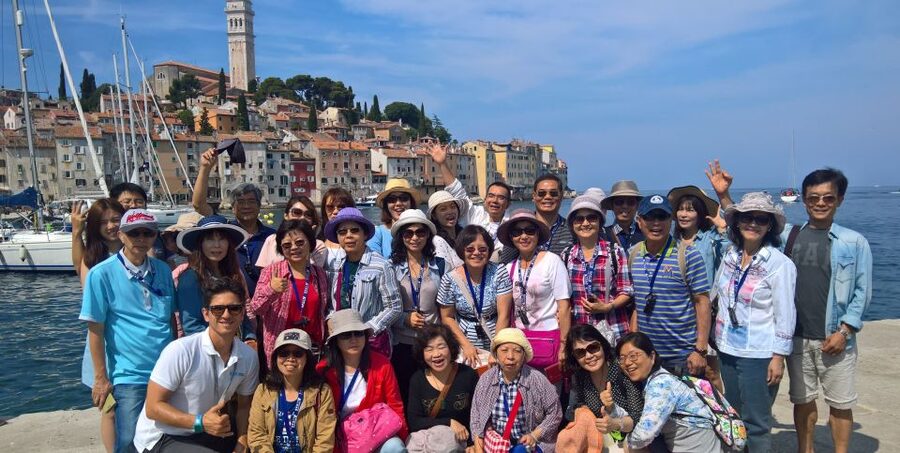
The waterfront is a natural pause. It is a must-see part of Rovinj, but the guide adds a practical touch by pointing out that it is a good place for an Aperol Spritz. Personal expenses are not included, so you pay for drinks yourself, but the suggestion helps you decide how to use the area after the walk.
I like this part because it shifts the tour from past to present. Rovinj is not a museum. Its harbor edge is somewhere to sit, watch the water, and plan the rest of the day. Your guide can also point you toward the best coffee, restaurants, cakes, and gelato, which is often more useful than another list of monuments.
The waterfront stop lasts about 10 minutes in the planned timing. That is brief, but the route does not pretend to be a food tour or a drinks tour. You get orientation and recommendations, then continue into the lanes where the city’s older character is strongest.
The cobbled maze near the former Jewish Ghetto
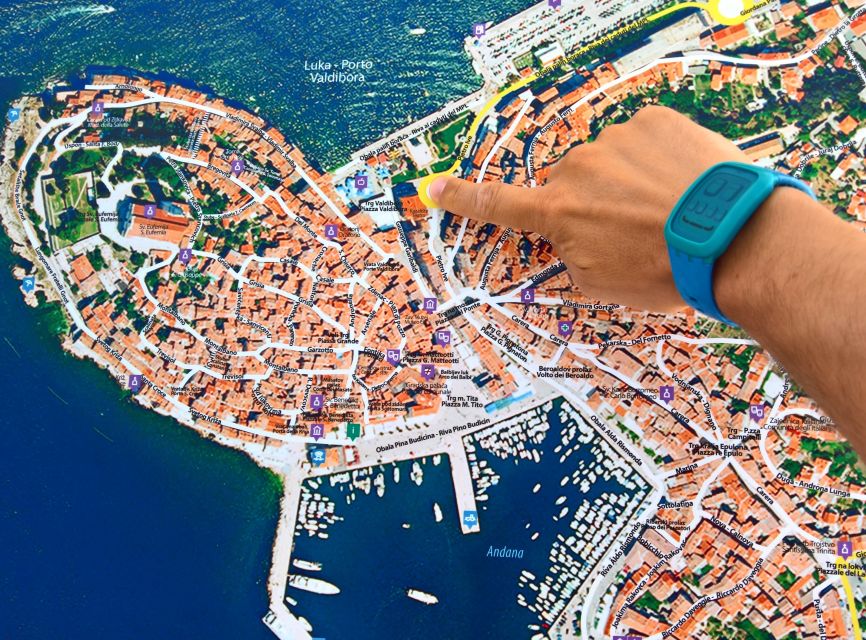
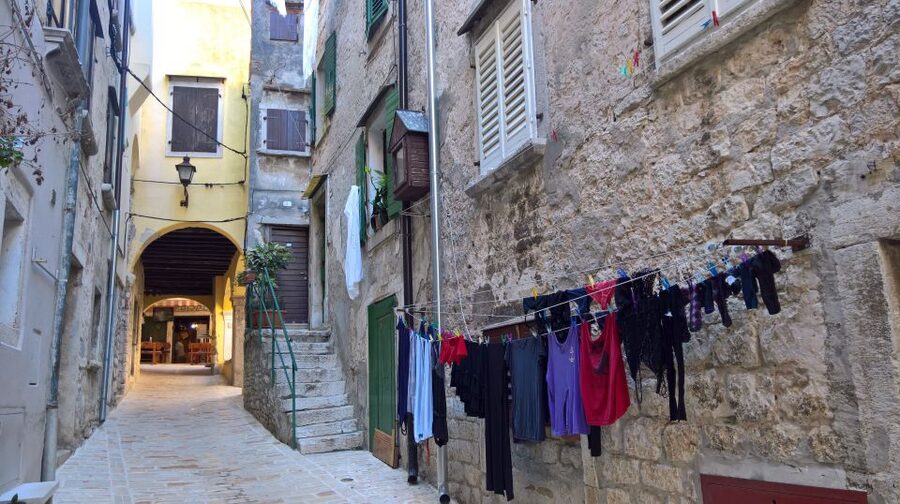
After the waterfront, the route turns into the maze of cobbled streets around the old Jewish Ghetto and the former stables area. This is where Rovinj feels most compact. The lanes show how a large population could live for centuries within a limited island footprint.
The area lies just off the Arch of the Bearded, a detail that gives you a fixed point to remember. A guide’s local perspective matters here because narrow lanes can blur together when you explore alone. You learn not only where you are, but how different parts of the old town were used.
This is also the section where you should pay attention to your feet. Half of the walk takes place in the historic center, where the streets are covered with cobblestones. Wear shoes with a firm sole, and take your time on uneven surfaces. The route is described as fairly easy overall, but people with mobility limitations may find the old lanes and uphill section difficult.
The former Ghetto and stables area are valuable precisely because they are not just the obvious postcard stops. You see a side of Rovinj shaped by residents, work, and neighborhood life. The tour’s cultural details, including information about how people lived and how the town functioned, are among its strongest features.
Along the walls toward St. Euphemia Church
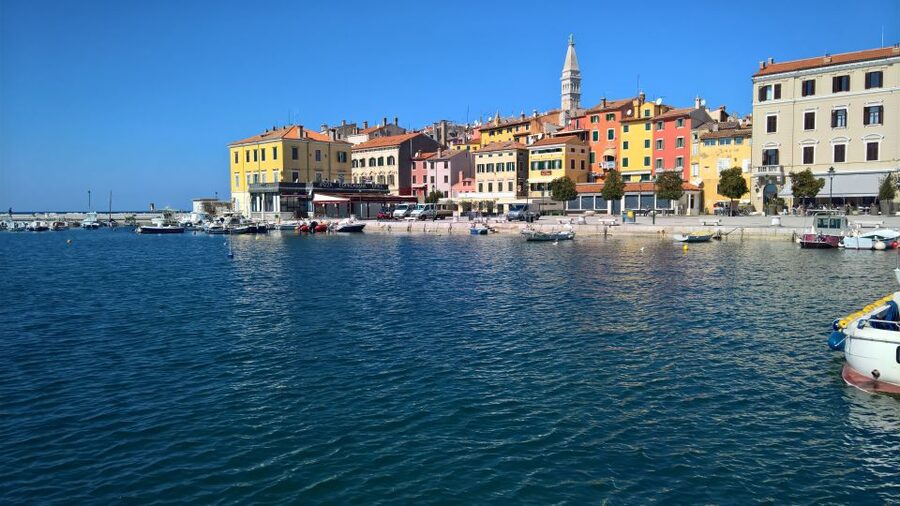
The final 30 minutes follow the ancient city walls uphill to the Church of St. Euphemia. This is the longest part of the route and the section with the clearest payoff. The church watches over the city from the top of the hill, with rooftops and the Adriatic spreading out below.
The climb is described as fairly easy, but do not read that as fully accessible. The combination of rising streets, stone paving, and old-town surfaces makes this unsuitable for people with mobility impairments. If you walk comfortably on uneven ground, the ascent should be manageable, but allow yourself room to stop and look back.
At the top, the guide finishes the tour in one of Rovinj’s best viewing places. The church area is especially well suited to sunset, so check the starting time if that view matters to you. The tour is not listed as a dedicated sunset outing, and starting times vary, but ending here gives you the option of staying on for the evening light.
St. Euphemia also provides the clearest overall view of the city. From above, the tight old center, the water, and the northern approach come together. The opening explanation about the former channel now has a visual answer.
What Goran adds to the walk
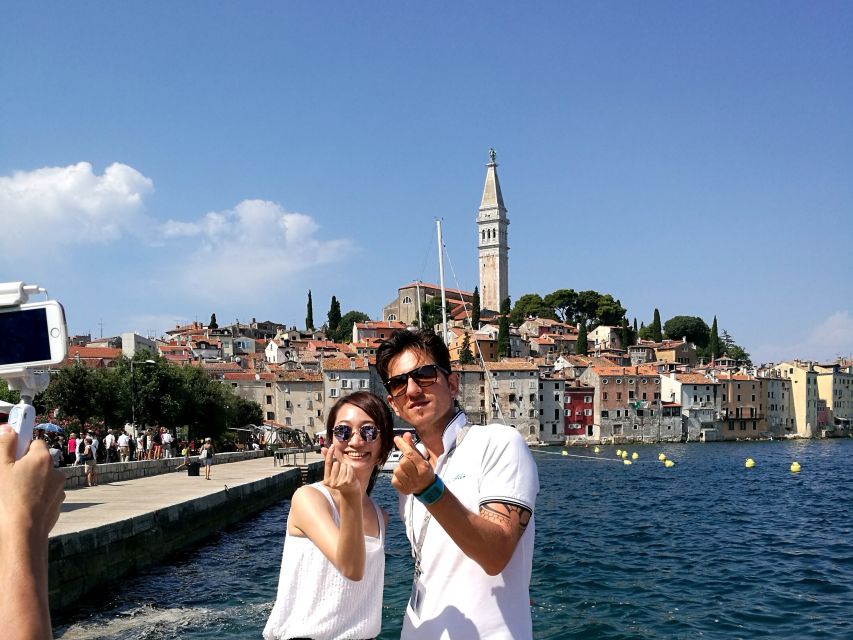
A local guide is the main reason to choose this tour over a self-guided stroll. Goran was born in Rovinj, and his style comes across as animated, friendly, and humorous. He is also willing to answer questions, which matters when you want to go beyond a memorized list of dates.
The strongest recurring praise concerns his delivery. He explains the city’s past in clear English, keeps the conversation moving, and adds details about Croatian culture and recent life. Several people found that his humor made the information easier to remember, while others valued his recommendations for restaurants, coffee houses, traditional food, cakes, and ice cream.
That local advice is practical rather than decorative. You can ask where to drink coffee with a view, where to find better beach areas, or which places to consider for dessert. These suggestions are not included as meals or tastings, but they can save you from choosing a place at random after the tour.
Guide quality can vary on any walking tour, but the named feedback here is unusually consistent about Goran’s communication and personal connection to Rovinj. If he is leading your departure, expect a talkative, engaged style rather than a quiet route with only brief explanations.
Is $32 good value for 90 minutes?
At $32 per person, this is not the cheapest way to walk through Rovinj. You can enter the old town for free and see many of the same streets without paying for a guide. The value comes from the explanation: the missing bridge, the filled channel, trade along Carera Street, neighborhood history, and the way people lived on the former island.
I would consider the price fair if you are new to Rovinj and want a fast, reliable introduction. It also makes sense if you have only one day in town, because the route covers the main shape of the center and ends at a major viewpoint. The included licensed local guide is the central product, not admission to a monument or a meal.
The calculation is less favorable if you prefer wandering alone, already know the town well, or mainly want a food tasting. Personal expenses are not included, so plan separately for an Aperol Spritz, coffee, cake, gelato, or dinner.
Free cancellation up to 24 hours before the start and the option to reserve now and pay later make the booking less rigid. Those policies are useful if your Istrian plans are still shifting, but they do not change the basic question: will local context improve your time in Rovinj? For most first-time visitors, I think it will.
Who should book this Rovinj walk?
I would choose this tour for first-time visitors, couples, solo visitors, and families with older children who can handle cobblestones. It suits people who want history but also care about everyday details, such as where to buy produce, find good coffee, or choose a beach.
It is especially useful before an independent meal or evening walk. You finish with a working map of the center and several ideas for what to do next. The 90-minute length also leaves plenty of time for your own exploring.
I would not choose it for anyone with serious mobility limitations. The old town’s paving and the climb to St. Euphemia are the main concerns. I would also skip it if you need a fully indoor activity during hot or unsettled weather, since the route is outdoors and includes exposed walking areas.
Should you book it?
Book this walk if you want Rovinj to make sense, not just look pretty. The best parts are the explanation of the former island and channel, the less obvious streets near the old Ghetto, and Goran’s mix of local stories and useful food advice.
Skip it if you prefer a quiet, self-guided wander or need an accessible route. For most visitors who can manage cobblestones and a modest climb, $32 buys a practical introduction to Rovinj that can improve every meal, viewpoint, and old-town walk that follows.
FAQ
How long does the Rovinj walking tour last?
The tour lasts 90 minutes.
Where does the tour meet?
Meet in front of the large white World War II memorial on Pietra Ive Street, just off the farmers market and near the Auro Domus ATM.
Where does the tour finish?
The tour finishes at the Church of St. Euphemia at the top of Rovinj’s old town.
Which languages are available?
The live guide can conduct the tour in English, Italian, Portuguese, French, or Croatian.
Is food or drink included?
No. Personal expenses, including food and drinks, are not included.
Is the tour suitable for people with mobility impairments?
No. Half of the walk uses cobblestone streets, and the route climbs toward the Church of St. Euphemia. People with mobility impairments may find it challenging.
Can I cancel for a full refund?
Yes. You can cancel up to 24 hours in advance for a full refund. You can also reserve now and pay later.
Just added in Rovinj
- Rovinj: Shared Dolphin and Sunset Tour with Drinks★ 4.9 · 18 reviews
- Rovinj Sunset kayaking tour★ 4.9 · 8 reviews
- Rovinj: Sunrise Dolphins & Fishermen at Work Speedboat Tour★ 4.8 · 32 reviews
- Rovinj: Luxury Island Hopping with Swimming & Snorkeling★ 4.8 · 25 reviews
- Rovinj: Red Island and Pirate Cave speedboat tour★ 4.7 · 85 reviews
- Rovinj: Lim Fjord and Pirate Cave Boat Tour★ 4.5 · 133 reviews
- Rovinj or Vrsar: Lim Fjord & Rovinj islands Speedboat Tour★ 4.9 · 10 reviews
- Rovinj: Rovinj Archipelago and South Coves Speedboat Tour★ 5.0 · 7 reviews
Walking Tours, compared.
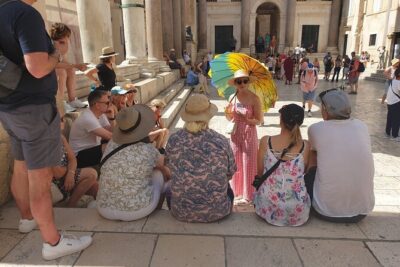
Walking Tour of Split and Diocletian’s Palace
Read our review →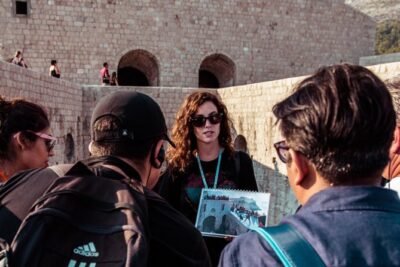
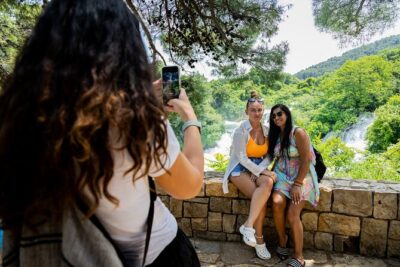
Krka Waterfalls tour with Trogir Walking tour and Krka panoramic boat cruise
Read our review →
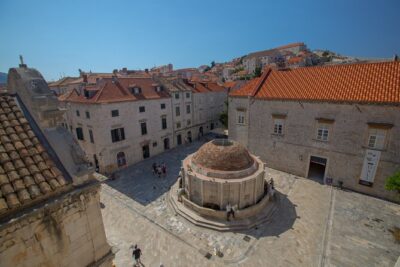
City Walls Early Morning or Sunset Walking Tour
Read our review →
Browse the lists this tour appears in