
Reviewed · HISTORICAL TOURS
Split: Historical Tour of Salona, Klis Fortress and Trogir
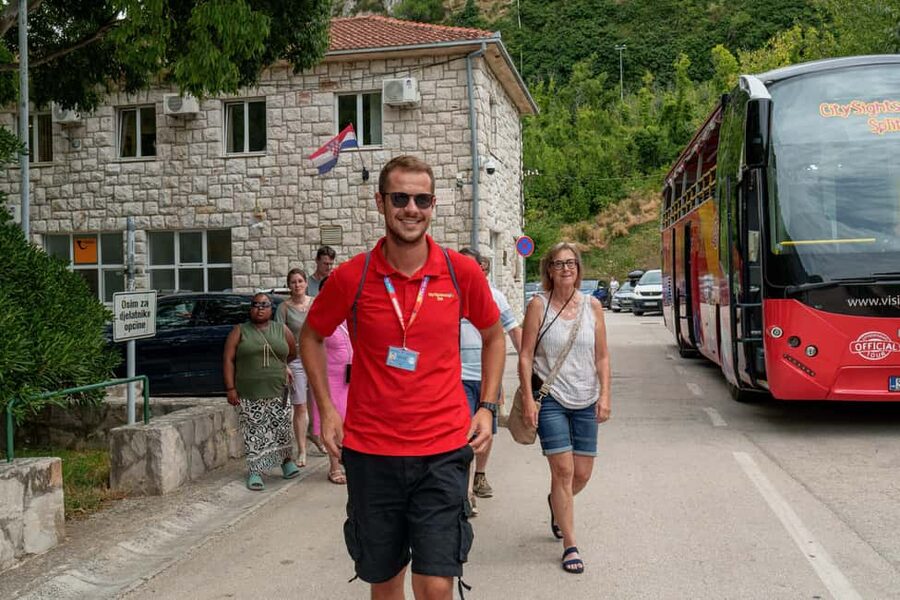
Trogir’s medieval lanes, Salona’s Roman ruins, and Klis Fortress give this day trip a strong sense of place. You move from an island town to an ancient capital, then up to a mountain stronghold above Split. The variety is the main attraction.
I like the excellent guide-led storytelling, with guides such as Darko, Duje, Miron, and Hana praised for making the past clear and the day easygoing. I also like the chance to taste olive oil, figs, and other local products at Stella Croatica, rather than spending the whole day looking at stones. The catch is simple: eight hours is a lot of ground to cover, and there is no proper lunch break.
Key points to know
- Trogir comes first: Spend about an hour in this UNESCO-listed town, including the Cathedral of St. Lawrence and the historic central square.
- Salona shows Roman Dalmatia: The ancient site near Solin adds an amphitheater and archaeological remains to the day.
- Klis requires a climb: The fortress has wonderful views, but the approach includes a steep incline and uneven walking.
- Stella Croatica adds flavor: The stop lasts about 105 minutes and includes a culinary tasting, with olive oil and fig products among the highlights.
- Extra cash is essential: Entrance fees can total €20 per person, depending on the exact charges applied at each stop.
- The pace is brisk: You see a great deal in one day, but some people will want more time in Trogir, Salona, or Klis.
Why this Split day trip works
Split is a fine base for seeing Dalmatia, but it can be easy to spend your entire stay inside the old palace. This tour gets you beyond the city without the hassle of arranging several short trips. Roundtrip transport, a live English-speaking guide, and a culinary tasting are included for $28 per person.
That headline price looks excellent, but you need to budget for entrance fees. The listed charges are €9 for Klis Fortress and Stella Croatica together, €5 for the Secret Dalmatia Museum, and €6 for the Ancient Salona Archaeological Site. That adds up to €20 in cash if you enter everything. Food and drinks are extra, and the tour does not include hotel drop-off.
I see this as a good value for someone who wants a packed introduction to the area. You get ancient ruins, medieval architecture, military history, local food, and nature displays in one day. If you prefer long museum visits and slow café stops, the schedule may feel tight.
A few more things to do in Split worth a look
- Walking Tour of Split with a ‘Magister’ of History
★ 5.0 · 1,122 reviews - Split Walking Tour with Professor of History
★ 5.0 · 926 reviews - Split: History and Heritage Walking Tour
★ 4.9 · 650 reviews
Meeting the red bus in central Split
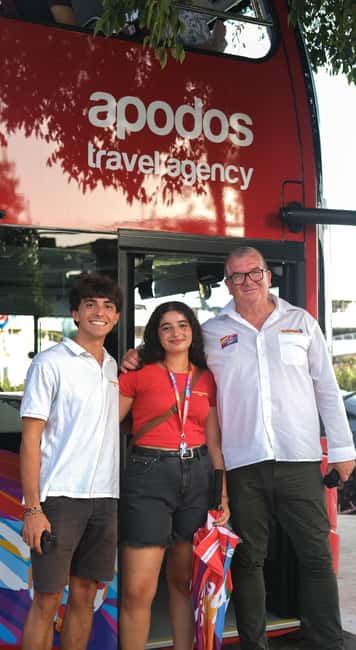
The tour begins at Apodos Travel Agency. Look for an open-top red bus with the tour team nearby. Staff wear red or white shirts, which should make the meeting point easier to spot.
The activity ends back at the same meeting point. That matters if you are staying in central Split or need to plan an evening reservation. It does not include hotel pickup or drop-off, so allow time to reach the agency at the start and return to your accommodation afterward.
The exact departure time depends on availability. Since the full experience lasts eight hours, treat it as a full-day outing rather than a casual half-day excursion. If you have a cruise departure or another fixed appointment, check the timing carefully. One guide and driver made a special effort to get a cruise passenger back on time, but you should not build a tight schedule around traffic or delays.
Trogir: one hour in a medieval island town
Trogir is the prettiest early stop because the setting and architecture work together. The old town sits on a small island, and its narrow lanes lead between stone buildings, courtyards, and historic squares. You get an hour here, enough to see the main sights and get a feel for the place, but not enough for a relaxed exploration of every lane.
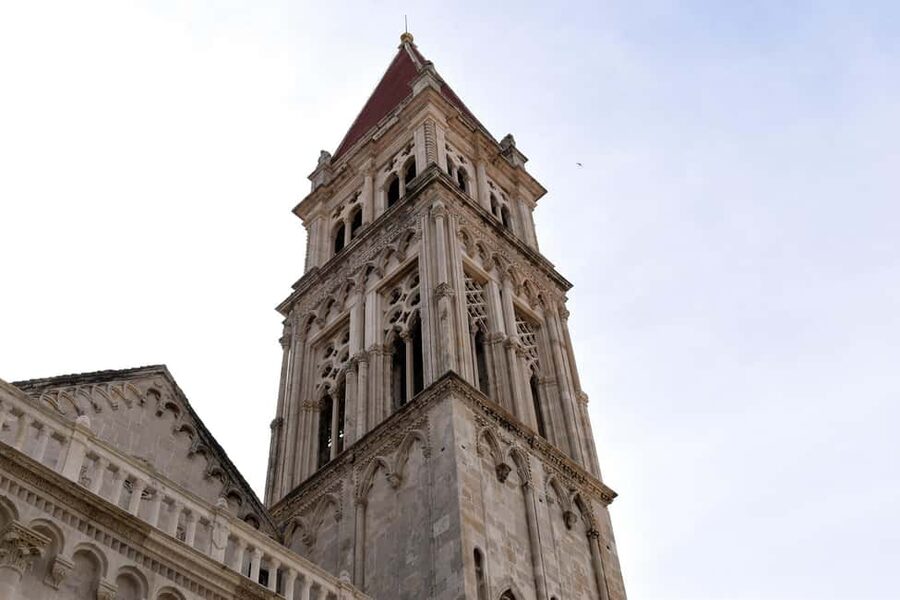
The Cathedral of St. Lawrence is the key sight. Its Romanesque and Gothic details show how the town changed over several periods, and the surrounding square brings together the layers of Trogir’s past. Your guide can give the buildings a useful context instead of leaving you to identify them from a map.
I would keep your camera ready and your walking shoes on. Trogir is not a place to rush through without looking up, but the schedule means you need to stay with the group and follow the guide’s instructions. Several people felt that Trogir deserved more time, and I agree. If medieval streets and historic churches are your priority, this may be the stop you wish you could extend.
There is also a practical issue: public toilets are not available in Trogir during the visit. Plan ahead at the start of the day and use facilities when they are offered at other stops.
Salona: Roman remains near modern Solin
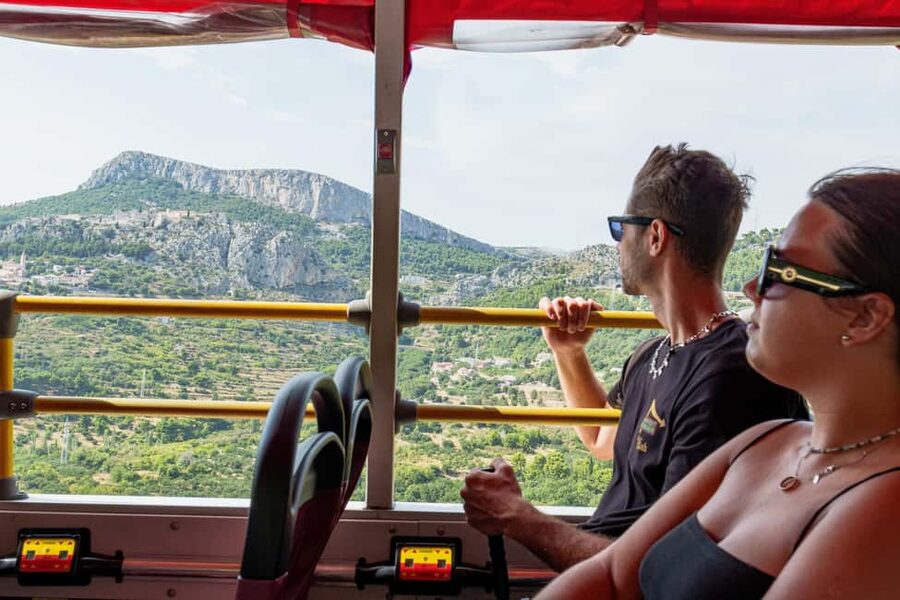
The next major history stop is Salona, near Solin. This was once the capital of the Roman province of Dalmatia, so it gives you a much wider view of the region than Split’s palace alone. Here, the remains spread through an open archaeological site, including an amphitheater and other traces of the ancient city.
You receive about an hour at Salona. That is enough to see important remains and understand the site’s scale, but it is not a full archaeological study. The open setting also means the quality of your visit depends on how much explanation the guide provides. With a strong guide, scattered stones and partial walls begin to make sense as parts of a former city.
The entrance fee is listed at €6, payable in cash on site. I would consider it worthwhile if Roman history interests you. If your main goal is atmospheric streets, cafés, and intact buildings, Salona can feel less immediately rewarding than Trogir.
This is one place where the tour’s balance may not suit everyone. Some people will want more time among the Roman remains. Others will be ready to move on after an hour. The benefit is that you see Salona without giving up a full day to a single archaeological site.
Same base, a different kind of day out:
- Split: Krka Waterfalls Trip with Boat Cruise and Swimming
★ 4.8 · 10,519 reviews - From Split: Krka Waterfalls, Food & Wine Tasting Tour
★ 5.0 · 9,326 reviews - Blue cave, Mamma Mia and Hvar, 5 islands speedboat tour
★ 5.0 · 7,150 reviews - From Split: Krka Waterfalls, Food & Wine Tasting Tour
★ 4.9 · 6,598 reviews
Stella Croatica: local flavors and a needed pause
Stella Croatica gives the day a change of rhythm. After the stonework and ruins, you visit an estate connected with Dalmatian food traditions. The stop lasts about 105 minutes, making it one of the longer visits on the schedule.
The culinary tasting is included, while the entrance charge is listed together with Klis Fortress at €9. Keep cash ready. The tasting focuses on local products such as olive oil and figs, and the gardens provide a calmer setting than the historical stops.
I like this part because food explains a place in a direct way. Olive oil, dried or sweet fig products, and other regional flavors connect Dalmatia to its dry Mediterranean climate and farming traditions. You do not just hear about local life, you get a small taste of it.
Do not mistake the tasting for lunch. Food and drinks beyond the included tasting are not included, and the schedule has no proper lunch break. One practical suggestion is to eat a solid breakfast and carry a snack. Quick food is the sensible choice if you want to keep up with the program.
Some people would prefer more time here, enough to sit down for lunch and explore the estate at their own pace. If that sounds like you, the 105-minute stop may feel too structured. If you enjoy sampling regional products and want a break from ruins, it is one of the day’s most pleasant changes.
Hidden Dalmatia: nature in a digital format
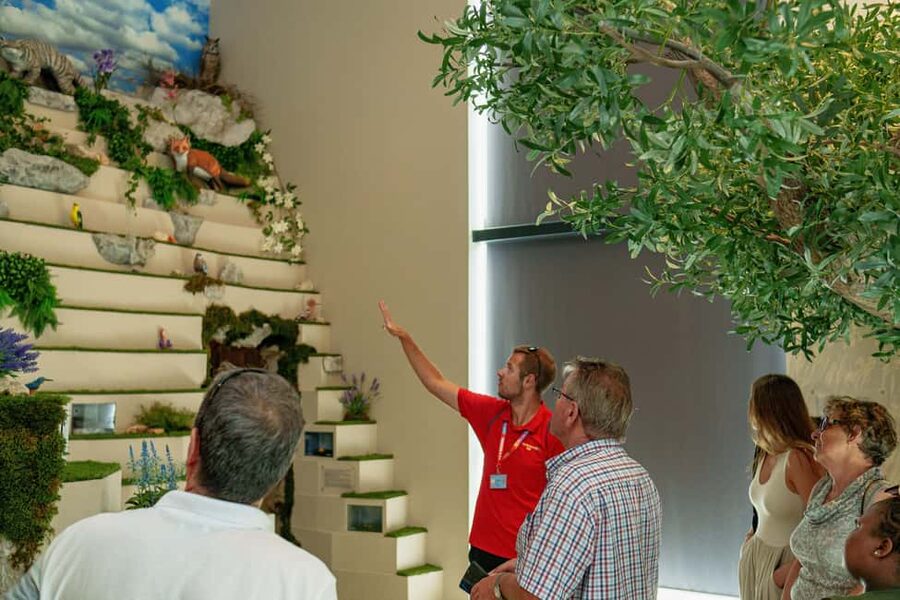
The Hidden Dalmatia Visitor Center shifts the subject from archaeology to the natural world. The exhibits use interactive displays to explain local ecosystems, native species, and conservation work. A digital or VR experience may also be part of the visit, depending on the day’s arrangement.
The stop lasts about 30 minutes. That is long enough for a quick look at the displays, but not enough for an extended museum visit. The center may appeal most to families, younger visitors, or anyone who wants a break from historical sites.
I would set your expectations correctly. The center is educational and modern, but it may feel less essential than Trogir, Salona, or Klis if your main interest is architecture and military history. Some people found it more like a school visit than a major cultural stop. Others enjoyed the VR presentation and the added view of Dalmatia’s plants, animals, and conservation work.
The entrance fee is listed at €5. Since this is an optional paid entry, you can weigh it against your own interests. If you are already paying for all the historical sites, this is the easiest admission to skip if you need to control costs.
Klis Fortress: the day’s big view
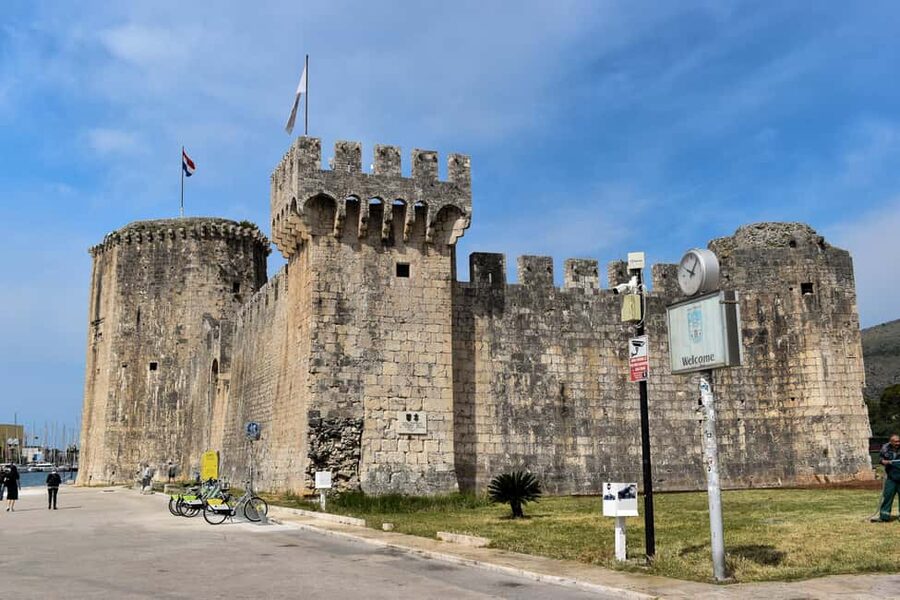
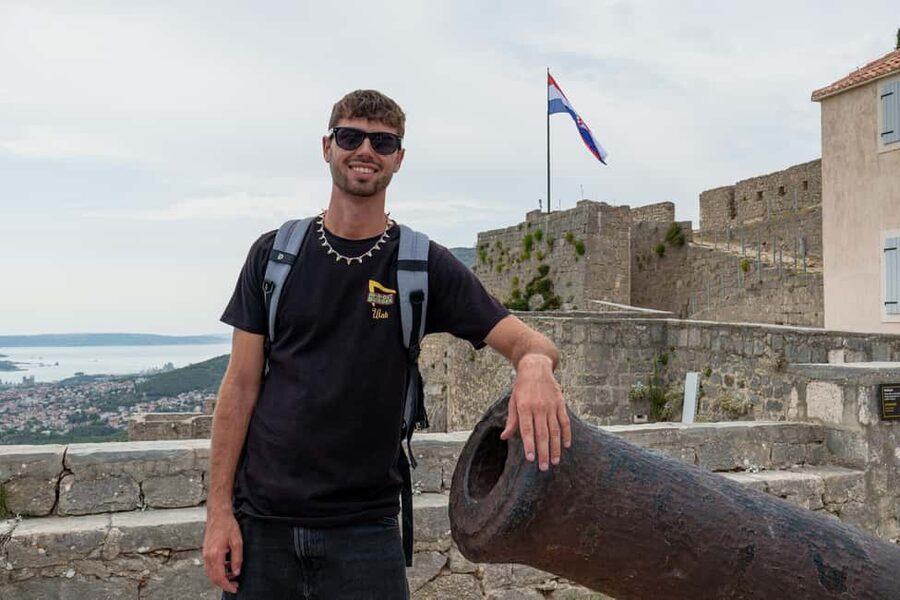
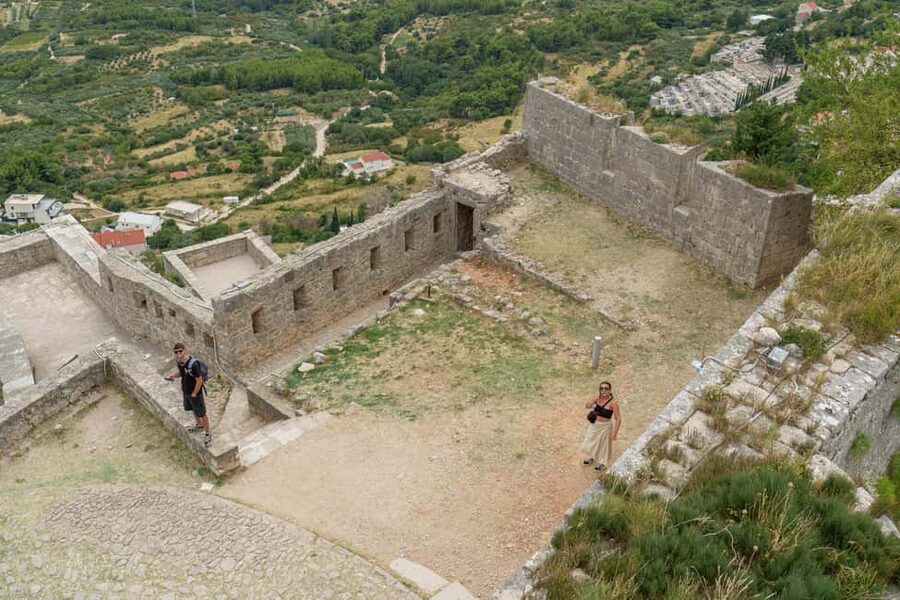
Klis Fortress is the strongest finish to the historical part of the tour. The stronghold rises above Split and the surrounding area, using its high position to control the routes through the mountains toward the coast. It has served as a defensive site for centuries, and the walls, chapel, and elevated position help explain why it mattered.
Allow about an hour here. The views are the main reward, stretching toward Split and the Adriatic. The fortress itself is atmospheric, with stone passages, defensive walls, and open viewpoints. Your guide can connect the structure to Dalmatian conflicts and the region’s long struggle to protect its settlements.
Bring shoes with a firm grip. The approach includes a noticeable incline, and the site is not suitable for people with mobility impairments or wheelchair users. It is also not recommended for people with back problems. Even if you are generally fit, take your time on the steps and uneven surfaces.
Klis is a place where a short visit works well. You do not need half a day to understand its position or enjoy the view. Still, you may wish for another few minutes if the weather is clear and you want photographs. The fortress is also likely to be the most memorable stop for anyone who enjoys military sites and broad views.
The guide can make or break the day
This tour covers a lot, so the guide matters. The best guides named in the feedback included Darko, Duje, Miron, and Hana. They were praised for humor, patience, clear explanations, and a strong connection to Croatian history and culture.
One guide described himself as a history teacher, which fits the kind of presentation this route needs. A simple list of dates would make Salona and Klis feel dry. Good storytelling gives the ruins a reason to matter and helps you see how Trogir, Salona, Split, and Klis fit into the same regional story.
The live tour is in English. Audio guides are also listed in English, French, Galician, German, Croatian, Italian, Portuguese, Russian, and Spanish. Confirm the setup you need when booking, since the live guide language is English.
The day is also praised for being relaxed in tone despite the packed schedule. That is useful when a tour includes several transfers and entrance points. You are still moving at a steady pace, but the experience is not designed to feel formal or stiff.
What to pack, and what to budget
Bring cash. The optional admissions are paid on site, and the supplied fee list totals €20 if you enter Klis Fortress, Stella Croatica, the Secret Dalmatia Museum, and Salona. The exact payment arrangement for Klis and Stella is listed as €9 together.
Also bring:
- Comfortable walking shoes for Trogir’s stone lanes and Klis’s incline
- Water and a snack, since there is no full lunch break
- Sun protection for open archaeological and fortress areas
- A little extra money for food or drinks beyond the tasting
Alcohol and drugs are not allowed. The tour is not suitable for people over 130 kilograms, people over 95 years old, or anyone with serious mobility limitations. Those restrictions are worth taking seriously because the day includes walking, slopes, uneven surfaces, and several transitions between sites.
The tour allows free cancellation up to 24 hours before departure for a full refund. You can also reserve and pay later, which helps if your Split plans may change.
Who should book this experience?
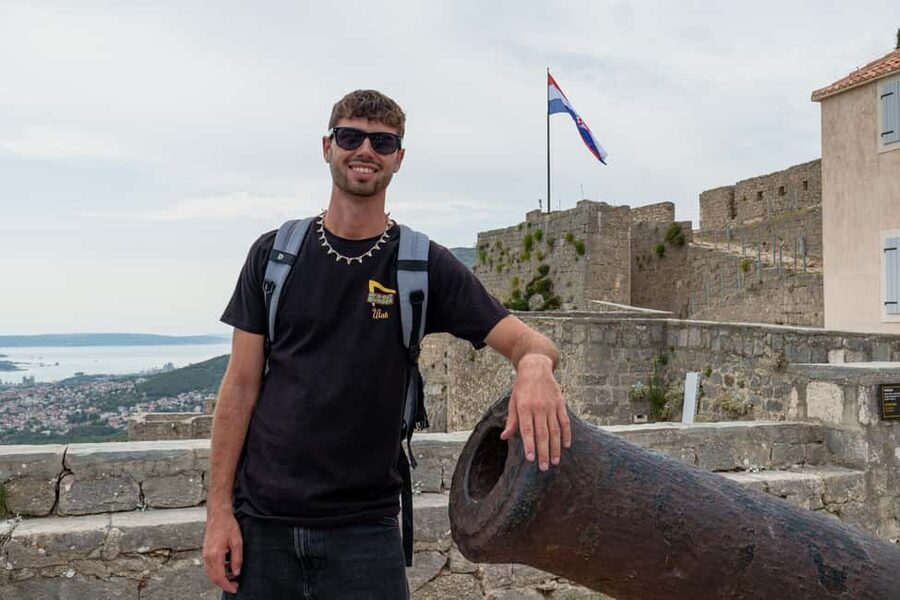
I would choose this tour if you want to see several important places outside Split but do not want to rent a car or organize regional transport. It suits first-time visitors who want a broad introduction to Dalmatian culture, especially if you enjoy ancient ruins, fortified sites, local food, and guided explanation.
It is also a good fit for cruise passengers with a suitable amount of time in port, though you should check the return schedule carefully. The full eight-hour duration leaves little room for a late start or an independent detour.
I would hesitate if you want a slow day. Trogir could use more than an hour, Salona may deserve extra time for serious archaeology fans, and Stella Croatica would be better with enough time for lunch. The visitor center may also feel less important than the major historic sites.
Should you book it?
Book it if your ideal day includes a little of everything: medieval streets, Roman ruins, fortress views, interactive nature exhibits, and Dalmatian tasting. At $28 before admissions, transport and guiding make the base price strong, even after you add up to €20 for optional entries.
Skip it if you would rather choose one place and explore it slowly. For most people, though, this is an efficient and enjoyable way to widen your view of Dalmatia from Split. Start with breakfast, carry cash and a snack, wear sensible shoes, and give yourself permission to enjoy the changing pace from Trogir’s lanes to Klis’s high walls.
FAQ
How long does the tour last?
The tour lasts eight hours, with starting times available when you check the booking schedule.
Where does the tour start?
It starts at Apodos Travel Agency in Split. Look for an open-top red bus and staff wearing red or white shirts.
Where does the tour end?
The activity ends back at the original meeting point at Apodos Travel Agency.
Is transportation included?
Yes. Roundtrip transportation from the meeting point is included. Hotel drop-off is not included.
Is food included?
A culinary tasting is included at Stella Croatica. Food and drinks beyond the tasting are not included, and there is no proper lunch break.
How much are the entrance fees?
The listed cash fees are €9 for Klis Fortress and Stella Croatica together, €5 for the Secret Dalmatia Museum, and €6 for the Ancient Salona Archaeological Site.
Is the tour suitable for wheelchair users?
No. The activity is not suitable for wheelchair users, people with mobility impairments, or people with back problems. Klis Fortress also involves a steep incline.
Just added in Split
- From Trogir, Seget, Okrug: Krka Waterfalls & Šibenik Culture Tour★ 5.0 · 10 reviews
- Krka Waterfalls & Primošten from Trogir, Seget, Čiovo & Kaštela★ 5.0 · 18 reviews
- Slatine – Island Hopping Excursion (Trogir/Blue Lagoon/Shipwreck)★ 4.0 · 24 reviews
- Island Hopping Boat Excursion with Lunch (Trogir,Blue Lagoon, Šolta)★ 3.5 · 6 reviews
- From Split & Trogir: ATV Quad Tour on Island Čiovo★ 5.0 · 21 reviews
- Split: Sunset Guided Kayaking Tour★ 4.8 · 71 reviews
- Split Sunset Stand Up Paddle Tour★ 5.0 · 16 reviews
- Stand Up Paddle Tour in Split★ 4.7 · 17 reviews
Historical Tours, compared.
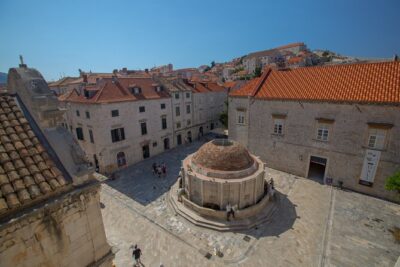
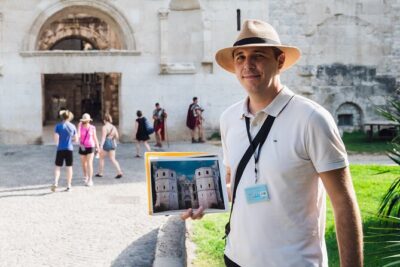
Walking Tour of Split with a ‘Magister’ of History
Read our review →
Split History and Gastro Small-Group Tour with Food and Drinks
Read our review →
PREMIUM Emperor’s Walking Tour for History Lovers + Museum
Read our review →
Browse the lists this tour appears in