
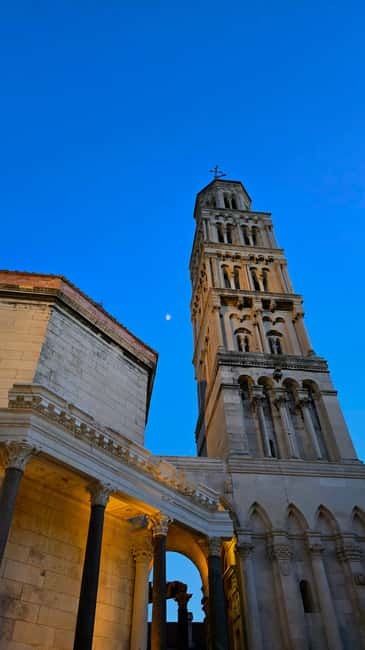
Reviewed · DIOCLETIAN PALACE TOURS
Split and Diocletian’s Palace walking tour with a local guid
Split’s old center is not a museum behind glass. It is a living city built into a 1,700-year-old Roman palace, with people passing through ancient gates on the way to cafés, shops, and the market. This 75-minute walking tour gives you a clear route through that wonderfully odd mix, led by a local guide from Split.
I like the early-morning option, when the palace lanes are quieter, and I like the personal touch of guides such as Tomislav, also called Toma or Tom, who can lead tours in several languages. The main caution is simple: the price covers the guide and walk, not entry to the Cathedral of Saint Domnius, the Temple of Jupiter, or other paid sites.
Key points to know before you book
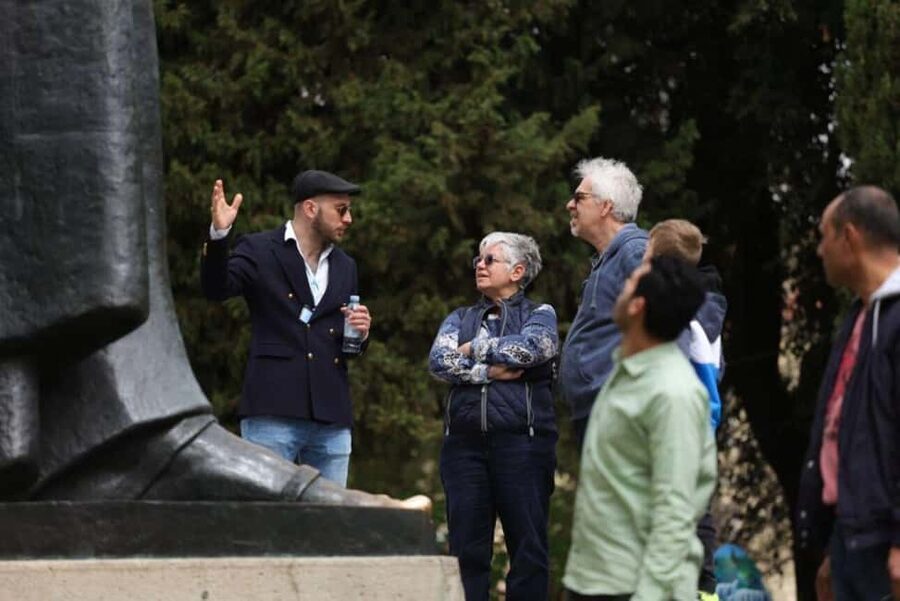
- The palace is still part of everyday Split: You walk through streets, squares, shops, and market areas rather than touring an isolated ruin.
- A local guide gives the stones a timeline: The tour connects Roman construction, later changes, and modern city life across roughly 1,700 years.
- Morning departures can be a smart choice: The palace area is likely to feel calmer before the day’s crowds build.
- Tomislav, Toma, and Tom are names to watch for: The guide has led tours in German, Italian, Spanish, and English, with a calm, friendly style.
- The $47 price is for orientation, not admission: You get the walking tour and guide, but paid monuments and museum tickets cost extra.
- The route is not suitable for wheelchair users: Expect an old-city walk through historic streets and uneven areas.
Why Diocletian’s Palace feels different from a normal ruin
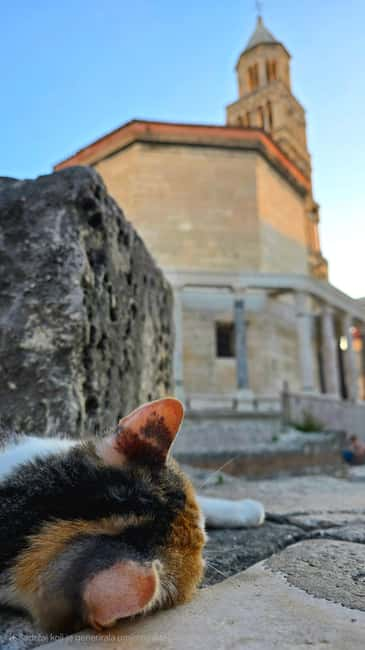
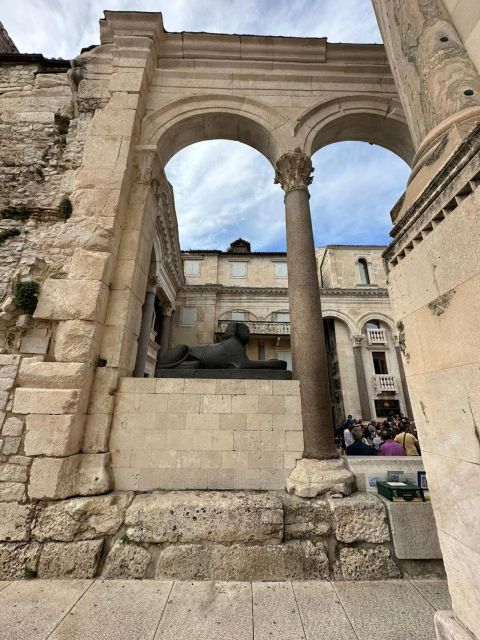
Diocletian’s Palace is the central reason to book this tour. It was built for the Roman emperor Diocletian, but it did not remain frozen in the fourth century. Over time, later residents built into its walls, reused its rooms, and turned parts of the complex into ordinary city streets.
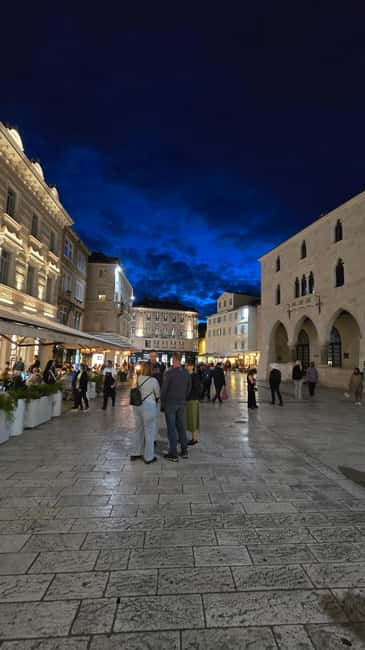
That gives Split its special character. You can look at an ancient column, turn into a narrow lane, and find a café or shop occupying a space that once served the imperial household. The tour helps you understand this mixture instead of seeing disconnected old stones.
I find a local guide especially useful here because the palace is not laid out like a simple attraction with one obvious entrance and one marked route. Its surviving gates, basements, lanes, squares, and religious buildings fit into the working center of Split. Without context, you could walk through much of it and miss what you are seeing.
The tour also puts the city’s age into manageable terms. Rather than giving you a pile of dates, the guide can show how Roman planning shaped the center you see today. That is valuable for first-time visitors, especially if you are trying to get your bearings before exploring on your own.
Other guided walks in Split:
- Split: Old Town and Diocletian Palace Walking Tour
★ 4.9 · 4,727 reviews - Walking Tour of Split and Diocletian’s Palace
★ 5.0 · 2,588 reviews - Krka Waterfalls tour with Trogir Walking tour and Krka panoramic boat cruise
★ 5.0 · 1,659 reviews
Starting at the Riva and the southern palace entrance
The meeting point is at the southern seaside entrance from Split’s Riva promenade into the cellars of Diocletian’s Palace. Use the address Obala hrvatskog narodnog preporoda 22 when checking your directions. The guide waits at the entrance.
This is a practical meeting point because the Riva is one of the easiest places in central Split to identify. Still, allow a little time to find the correct southern entrance. The palace has several access points, and the old center can feel confusing when you are looking for a particular doorway.
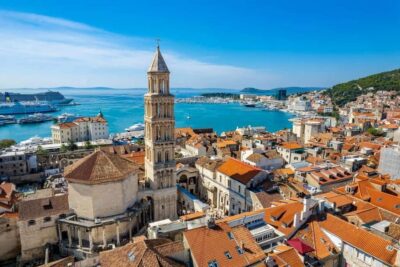
The starting location also gives you an immediate sense of how Split works. The seafront promenade sits directly beside the ancient palace, so the transition from modern public space to Roman remains is quick. You do not need a separate transfer, shuttle, or hotel pickup to reach the tour if you are already in central Split.
Hotel pickup is not included in the tour price, and the fixed meeting point matters. If you are staying outside the center, plan your own way to the Riva. The activity information lists pickup as available, but it also lists it among services not included, so confirm the arrangement before relying on it.
Walking through 1,700 years of city life
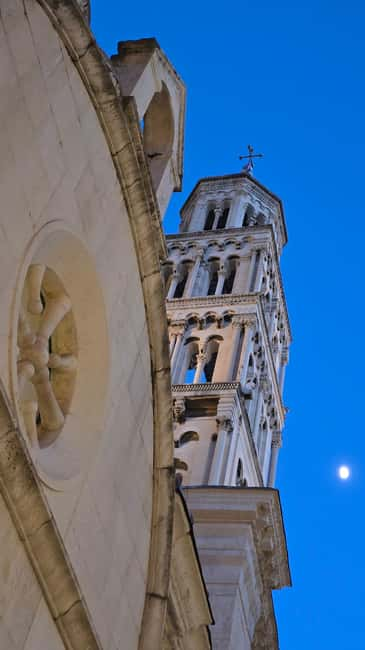
Once the tour begins, expect a guided walk through the palace and the old center rather than a series of formal indoor visits. You will see streets, smaller squares, and parts of the city where ancient construction and present-day life overlap.
The guide’s job here is to explain what you are looking at and why it matters. A stone wall is not just a wall when it formed part of an emperor’s residence. A narrow passage is easier to picture when you know it relates to the original palace plan. A busy city square becomes more interesting when you understand how it grew out of the Roman complex.
The tour also covers Split beyond the palace’s headline monuments. You are promised charming streets, less obvious squares, and local market areas, along with explanations of customs and daily life. That broader view keeps the experience from becoming a lecture focused only on Emperor Diocletian.
You should expect a fairly brisk overview because 75 minutes is short for a site with so many layers. The advantage is that you get a focused introduction without giving up half a day. The tradeoff is that the guide cannot spend long at every corner or take you through every museum and monument.
The palace cellars and the value of a guided route
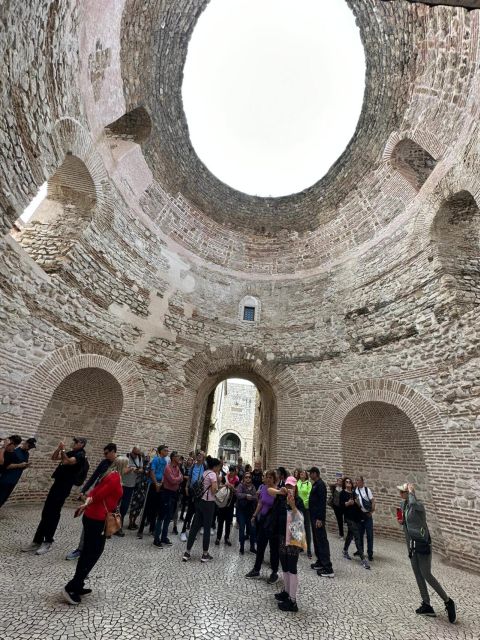
The southern entrance leads toward the cellars of Diocletian’s Palace, an important part of the setting even when you are not buying a separate cellar ticket. The underground spaces help show how the palace was organized and how much construction survives below the modern streets.
A guide can point out the relationship between the lower structures and the spaces above. That connection is useful because the palace is easy to read incorrectly if you treat every wall as a separate object. The tour helps you see the site as a planned imperial complex that later became the core of Split.
Do not assume the tour includes a full visit to every cellar area. The information provided says no admission tickets are included and no paid sites are entered as part of the price. Ask your guide what you may visit independently after the walk if the underground sections are high on your list.
This is one reason I see the tour as a starting point rather than a complete palace ticket. It gives you the story and orientation first. You can then decide if you want to spend more money on a paid monument, museum, or cellar visit.
Same base, a different kind of day out:
- Split: Krka Waterfalls Trip with Boat Cruise and Swimming
★ 4.8 · 10,519 reviews - From Split: Krka Waterfalls, Food & Wine Tasting Tour
★ 5.0 · 9,326 reviews - Blue cave, Mamma Mia and Hvar, 5 islands speedboat tour
★ 5.0 · 7,150 reviews - From Split: Krka Waterfalls, Food & Wine Tasting Tour
★ 4.9 · 6,598 reviews
Cathedral of Saint Domnius and the Temple of Jupiter
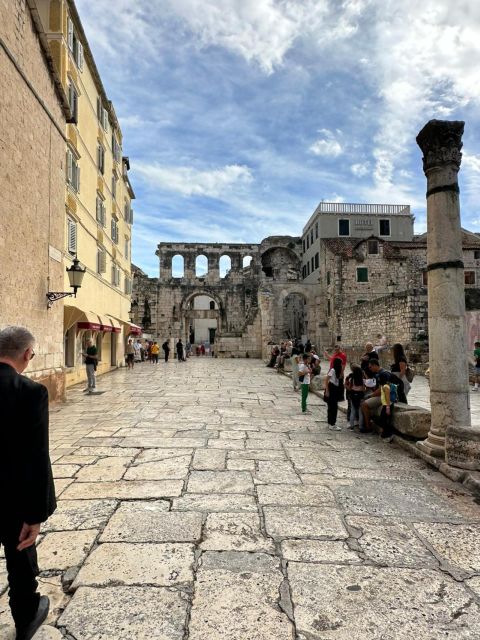
The Cathedral of Saint Domnius and the Temple of Jupiter are named specifically as excluded sites. That is not a flaw, but it is an important budget detail. If you want to go inside either one, you will need to pay separately.
The tour can still explain their place in the palace complex and show you where they fit into the old center. The Cathedral occupies a building with Roman origins, while the Temple of Jupiter represents another part of the palace’s original religious and imperial setting. Their later use is part of the larger story of how Split changed over time.
You should think of these buildings as possible follow-up visits. The walking tour gives you the framework first, then you can decide which interiors deserve extra time. That approach suits people who want to avoid paying for every attraction before knowing what interests them.
It also keeps the advertised price relatively clear. At $47 per person, you are paying for a guided introduction in a central historic area, not for a bundled pass to all of Split’s sights.
Local streets, squares, and the market side of Split
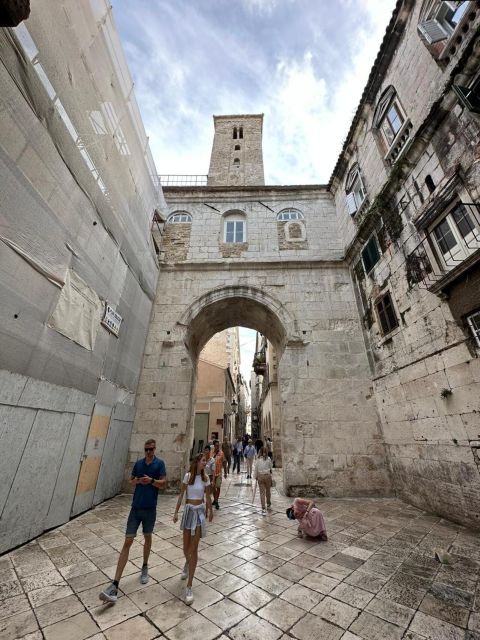
A major strength of this experience is that it does not stop at the most famous Roman remains. The route includes streets, smaller squares, and market areas, where you get a look at Split as a functioning coastal city.
That local angle matters because the palace can otherwise feel like a single grand monument. In practice, it is woven into ordinary routines. People use its lanes to reach work, meet friends, shop, and move between the seafront and the old center.
The market portion may appeal to you if you want more than architecture. A guide can explain local habits, food traditions, or the role of the market in city life, though the supplied details do not promise tastings or food stops. Food and drinks are not included unless specifically stated, so bring your own spending money if you want to buy something along the way.
I would not book this tour expecting a market meal or a shopping excursion. Book it to connect the famous palace with the everyday city around it.
The guides: Tomislav, Toma, and a multilingual approach
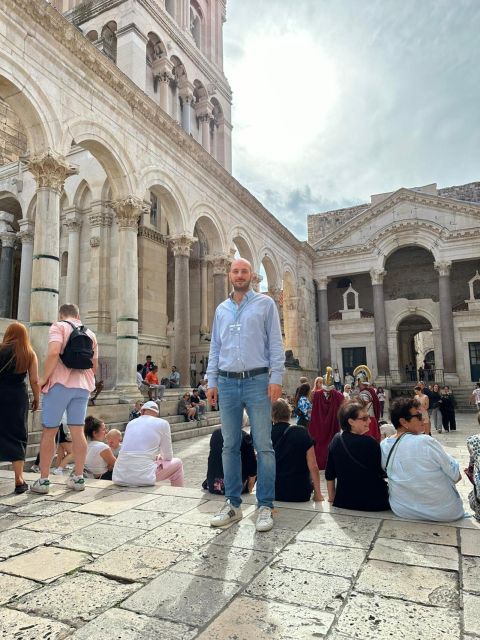
The strongest personal detail attached to this tour is the guide. Tomislav is also referred to as Toma and Tom in the supplied feedback, so you may encounter one of those names when booking or meeting your guide.
His tours have been conducted in German, Italian, and Spanish, as well as English. German-speaking visitors found the explanations clear and the pace calm, while Italian-speaking visitors valued having a guide who could explain Split in Italian. That makes the language choice more than a small booking detail. Complex sites are easier to follow when you are not working hard to translate every sentence.
The guide is described as friendly, patient, and willing to answer specific questions. That style works well in a place like Diocletian’s Palace, where your questions may change as you notice details. A fixed speech can give you dates, but a good guide can explain why a certain wall, lane, or building matters to you.
The tour provider is Black Apple d.o.o. The activity lists live guiding in English, German, Italian, and Spanish. Check the available language and start time when booking, since not every departure may offer every language.
Is $47 a fair price for 75 minutes?
At $47 per person, this is not the cheapest way to walk around Split. You can enter the old center on your own for free, and the Riva and many streets around the palace cost nothing to explore.
The value comes from the explanation and the efficient route. If you arrive without preparation, the palace can seem like a maze of impressive but unrelated remains. A guide gives you a basic map in your head, explains the main historical turns, and helps you spend your limited time well.
I think the price makes the most sense for first-time visitors, history fans, cruise passengers, and anyone with only a short window in Split. It is also useful if you prefer a personal guide to a large group audio system.
The value is weaker if you have already studied the palace, plan to visit several paid sites independently, or want a long, slow architecture tour. Seventy-five minutes gives you a useful introduction, but not a complete archaeological visit.
The free cancellation policy, with cancellation up to 24 hours in advance for a full refund, reduces some booking risk. Reserve now and pay later is also available, which helps if your Croatian schedule is still shifting.
Timing, comfort, and practical limits
Wear comfortable clothes and bring a sun hat. Split can be hot, and this is a walking activity with little reason to dress formally. Water is sensible, though food and drinks are not part of the tour.
The tour is suitable for all ages, but it is not suitable for wheelchair users. Historic lanes and palace structures can be difficult to navigate, and the activity does not offer wheelchair access.
The included free Wi-Fi hotspot may be handy if you need to check directions, coordinate plans, or stay connected during the walk. It should be viewed as a useful extra, not the main reason to book.
Because the tour lasts only 75 minutes, you should arrive ready to walk and listen. There is no need to pack much, but you should not expect a long break or a slow café stop unless the guide’s route allows for it.
Who will enjoy this Split walking tour?
I would recommend this experience most strongly to:
- First-time visitors who want a clear introduction to Split
- History fans interested in Roman architecture and later city life
- Cruise passengers with limited time in the center
- Families who prefer a guided walk to a long museum visit
- German, Italian, Spanish, or English speakers who want live explanations
- Visitors who want local context, not just a list of Roman dates
You may want something else if you require wheelchair access, want every paid monument included, or prefer to explore entirely at your own pace. The tour is also less suitable if you are seeking a food tour, since no food or drinks are included.
Should you book the Diocletian’s Palace tour?
Book it if you want the palace to make sense quickly. The local guide, multilingual options, compact route, and mix of Roman remains with present-day Split give you a useful first look at the city.
The best strategy is to choose a morning departure if available, especially during a busy season. Then use the remaining day to revisit the Cathedral of Saint Domnius, Temple of Jupiter, cellars, or other paid sites that catch your interest.
At $47, it is a guided orientation rather than a full palace pass. For many first-time visitors, that is exactly the point. You pay for a clear story, a local perspective, and a better sense of where to go next.
FAQ
How long does the Split and Diocletian’s Palace tour last?
The walking tour lasts 75 minutes.
Where is the meeting point?
Meet at the southern seaside entrance from the Riva promenade to the cellars of Diocletian’s Palace. The address is Obala hrvatskog narodnog preporoda 22.
Which languages are available?
The tour is offered in English, German, Italian, and Spanish.
Are admission tickets included?
No. Admission tickets, museum entry, the Cathedral of Saint Domnius, and the Temple of Jupiter are not included.
Is the tour suitable for all ages?
Yes. The activity is listed as suitable for all ages.
Is the tour suitable for wheelchair users?
No. The activity is not suitable for wheelchair users.
Can I cancel the booking?
Yes. You can cancel up to 24 hours before the tour for a full refund. Reserve now and pay later is also available.
More Diocletian's Palace tours in Split
- Split & Diocletian’s Palace Walking Tour
★ 5.0 · 1,125 reviews - Split: Diocletian Palace & Old Town Guided Walking Tour
★ 4.7 · 882 reviews - Split: Game of Thrones Tour with Diocletian’s Palace Cellar
★ 4.8 · 545 reviews - Diocletian’s Palace and Old Town SMALL GROUP Walking Tour
★ 5.0 · 502 reviews
Just added in Split
- From Trogir, Seget, Okrug: Krka Waterfalls & Šibenik Culture Tour★ 5.0 · 10 reviews
- Krka Waterfalls & Primošten from Trogir, Seget, Čiovo & Kaštela★ 5.0 · 18 reviews
- Slatine – Island Hopping Excursion (Trogir/Blue Lagoon/Shipwreck)★ 4.0 · 24 reviews
- Island Hopping Boat Excursion with Lunch (Trogir,Blue Lagoon, Šolta)★ 3.5 · 6 reviews
- From Split & Trogir: ATV Quad Tour on Island Čiovo★ 5.0 · 21 reviews
- Split: Sunset Guided Kayaking Tour★ 4.8 · 71 reviews
- Split Sunset Stand Up Paddle Tour★ 5.0 · 16 reviews
- Stand Up Paddle Tour in Split★ 4.7 · 17 reviews
Diocletian Palace Tours, compared.
Walking Tour of Split and Diocletian’s Palace
Read our review →
Diocletian Palace & Old Town Guided Walking Tour
Read our review →
Game of Thrones Tour with Diocletian’s Palace Cellar
Read our review →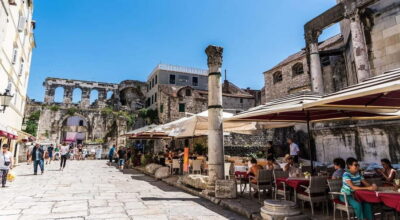
Diocletian’s Palace and Old Town SMALL GROUP Walking Tour
Read our review →


Evening Group Walking Tour – Split Old City Diocletian’s Pal
Read our review →Browse the lists this tour appears in