
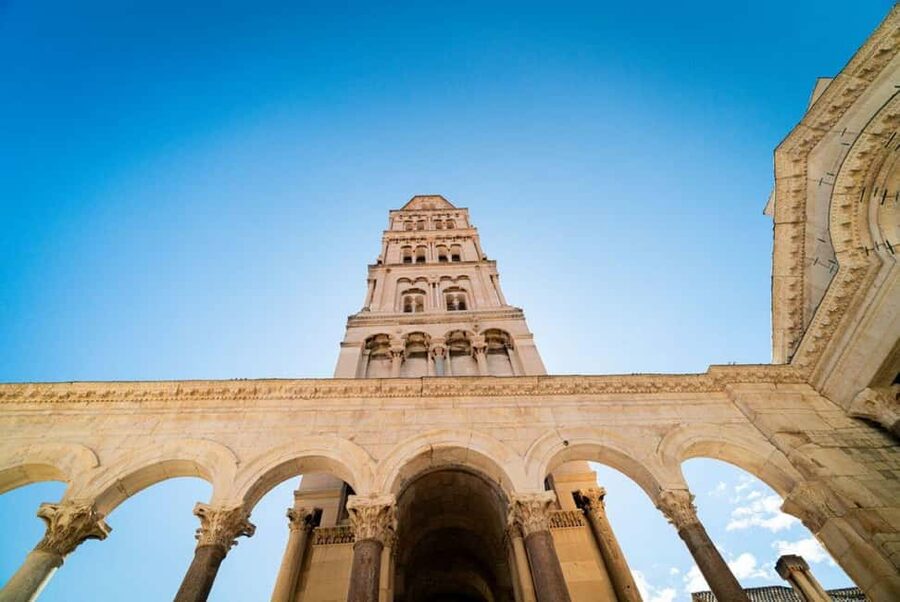
Reviewed · HISTORICAL TOURS
Split: Private Roman History & Market Tour
Split’s Roman palace is not a museum behind ropes. It is the old center of town, filled with homes, shops, cafés, and daily life. This private tour brings you through that living monument, then adds a stop at the Green Market, where local food helps explain how Dalmatian families connect, celebrate, and welcome people.
I like the way the tour joins ancient stone with ordinary local life, and I like that a private guide can adjust the pace and explain small details you might otherwise miss. The main drawback is the price: at $280 per person for two hours, this is a costly introduction unless your group values private guiding and personal attention.
Key points to know before you book
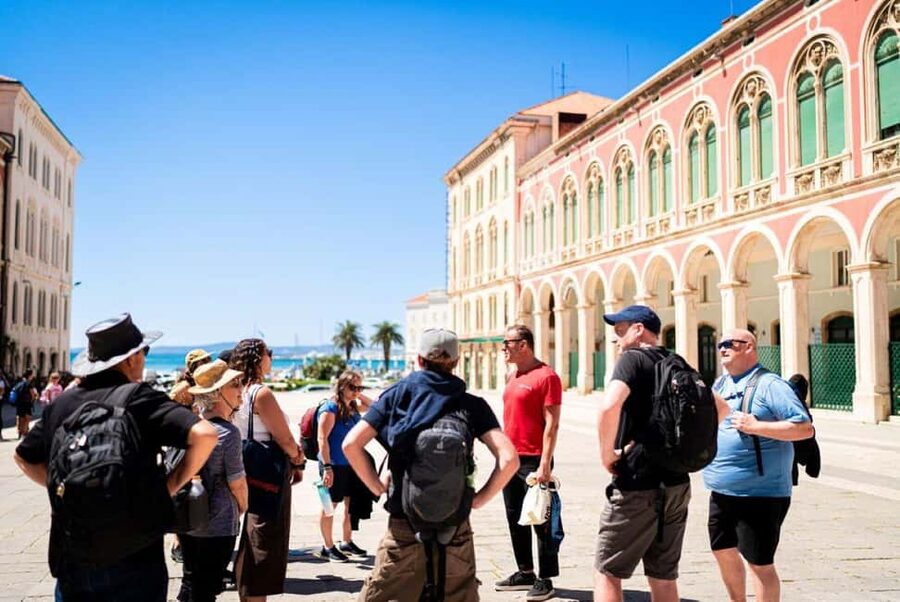
- The Roman palace is still part of Split’s daily life, not a separate archaeological site outside town.
- Green Market tastings may include seasonal fruit and vegetables, olive oil, cheese, dry figs, and rakija.
- Local customs reach back to Illyrian times, with stories about rituals and food traditions still respected in Dalmatia.
- The route includes Peristil, the Vestibule, Golden Gate, and a private palace section, but not the cathedral, cellars, museums, Temple of Jupiter, or Bell Tower interiors.
- Guides have included Ted and Ivan, with past feedback especially praising the clear pacing, English, and local anecdotes.
- The private format and carbon-neutral operation suit visitors who want a focused introduction with a lighter environmental footprint.
Why Diocletian’s Palace makes such a good walking tour
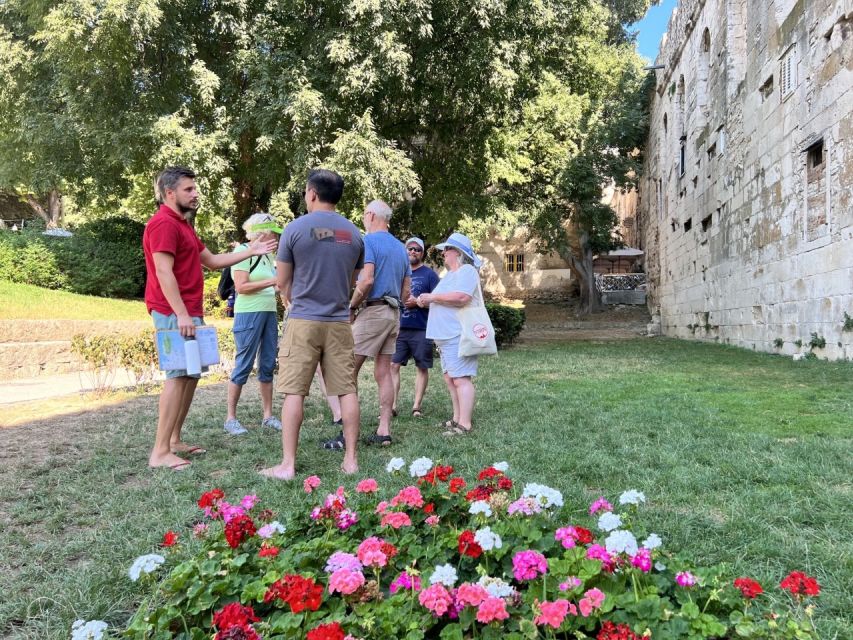
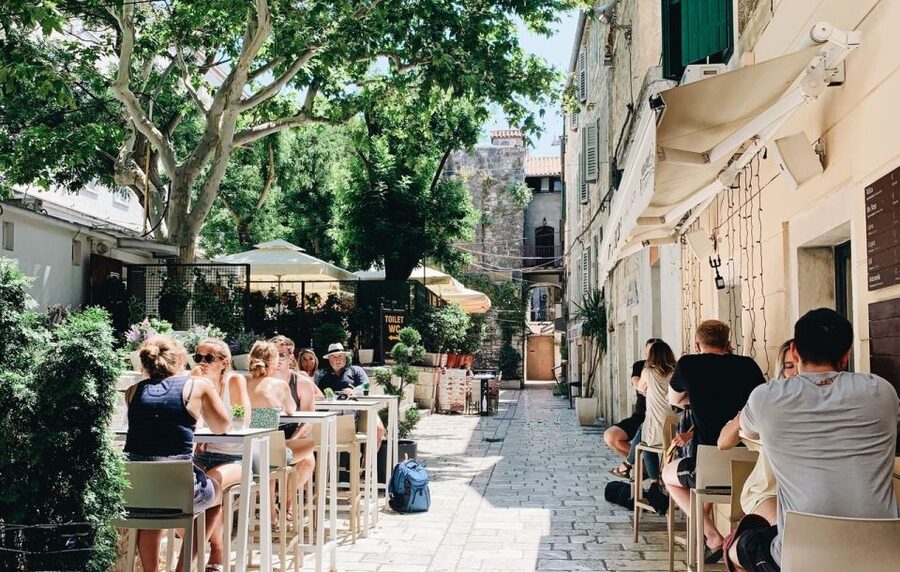
Split began inside the walls of Emperor Diocletian’s enormous retirement palace. More than 1,700 years later, the old Roman grid still shapes the center of town. You are not simply looking at ruins. You are walking through streets where people live, work, shop, and meet friends.
That makes a guide useful. The stones can look confusing at first, especially where Roman columns meet medieval homes and modern businesses. A local guide can explain why one wall belongs to the emperor’s palace, why another was altered centuries later, and how the old complex became the heart of modern Split.
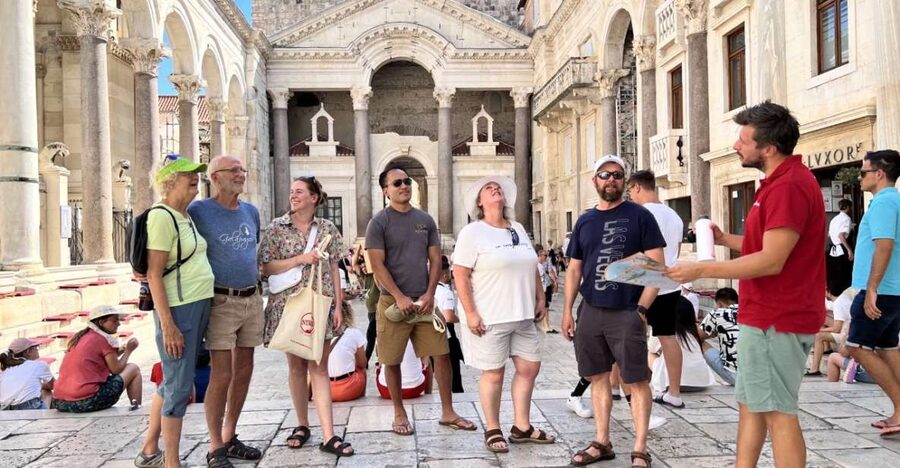
The private format matters here. A large group can clog a narrow passage or make it hard to hear near Peristil. With your own guide, you can ask about a carved detail, a local custom, or the practical question that often gets lost on a standard city walk: how do people actually live inside this old place?
The tour is led in English. Past guides have included Ted and Ivan, along with an English-speaking woman praised for her clear delivery and lively city anecdotes. You should still confirm the assigned guide when booking, since guide availability can change.
A few more things to do in Split worth a look
- Walking Tour of Split with a ‘Magister’ of History
★ 5.0 · 1,122 reviews - Split Walking Tour with Professor of History
★ 5.0 · 926 reviews - Split: History and Heritage Walking Tour
★ 4.9 · 650 reviews
Starting on the Riva and meeting Split
The meeting point is at the beginning of the Riva promenade, near the iron map of the city. This is a sensible place to start. The Riva is easy to identify, and the map gives your guide a natural way to orient you before the walk heads into the palace.
Your guide begins with Split itself, including the strong local affection for the city. People here take pride in their home, and the tour treats that pride as part of the experience, not as a throwaway joke. If you arrive ready to enjoy Split, you will likely get more from the conversations and stories.
This is also a good point to ask practical questions about the rest of your stay. The guide can point you toward favorite coffee shops and places for an evening meal or Dalmatian entertainment. Those suggestions are one of the useful benefits of taking the tour early in your visit rather than on your last afternoon.
The two-hour length keeps the outing manageable. You get a clear introduction without giving up an entire morning or afternoon. Still, the time is short enough that the tour cannot cover every museum, interior, and archaeological corner of the palace.
Tasting Split at the Green Market
One of the first important stops is the Green Market, known locally as the Pazar. This is where the tour shifts from Roman stones to food, family habits, and present-day Split.
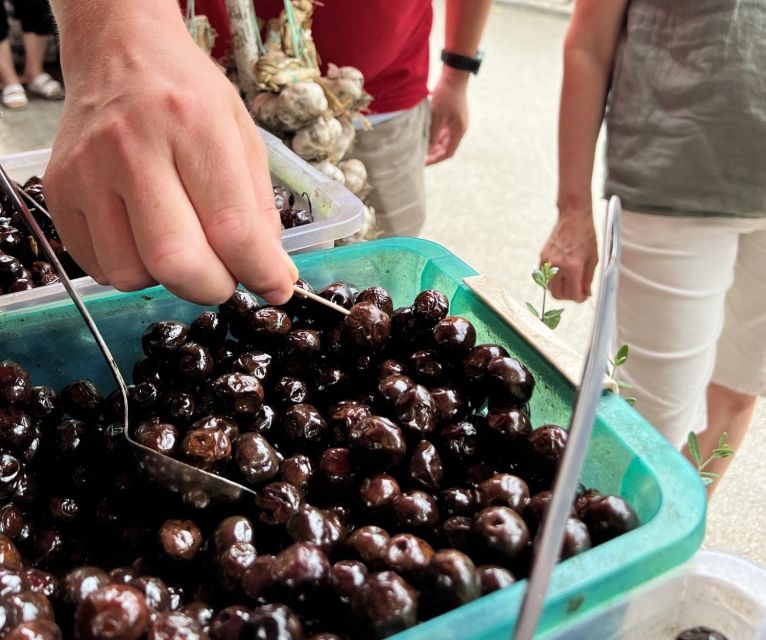
Your guide explains how locals shop here and introduces traditional foods connected with Dalmatia. Tastings may include seasonal fruits and vegetables, olive oil, rakija, cheese, and dry figs. The exact selection can depend on the season and what is available that day, so you should think of this as a guided sampling stop rather than a fixed meal.
I like this part because food gives you a quick way into local culture. A list of ingredients tells you less than tasting them while someone explains how they fit into daily life. The tour’s food theme also supports the local saying that the way to a Dalmatian’s heart is through the stomach.
Do not book this expecting a full lunch. The included food is a tasting experience, and additional food and drinks are not included. One past account described the food as lunch, but the stated arrangement is more limited: a market stop with samples. If you are hungry, plan to eat before or after the walk.
The market is also a place where the private format helps. You can stop to ask what a product is, how it is used, or why one stall matters to local shoppers. In a large group, a quick taste can pass by before you have time to make sense of it.
Entering the Golden Gate and the palace streets
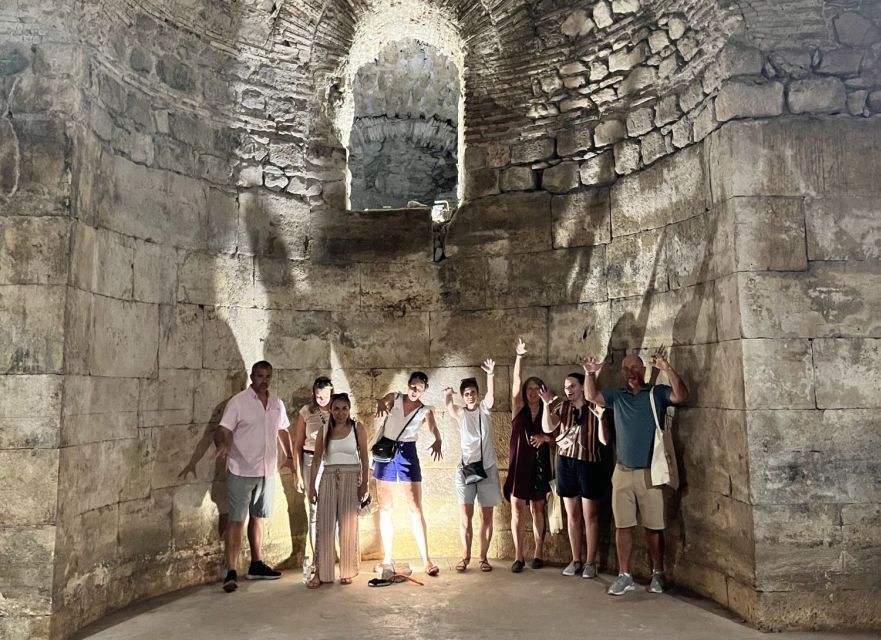
From the market, the route takes you into Diocletian’s Palace. The Golden Gate is one of the main entrances, and it gives the walk a strong sense of arrival. You are entering the structure built for Diocletian, a Roman emperor who chose Split as a place to retire.
The palace was not a simple country house. It was a fortified complex with ceremonial spaces, residences, religious buildings, and service areas. A guide can help you see how those purposes fit together, even where later construction has changed the original appearance.
The walls hold stories about the emperor’s habits and the people who came after him. One unusual detail concerns Diocletian’s fondness for salad. It is a small story, but that is exactly why it works. Personal details make a powerful ruler easier to picture as a real person, not just a name from a history book.
The walk also brings in local traditions that reach back to Illyrian times. The information provided does not promise a full lesson in pre-Roman archaeology, so expect selected stories about rituals and customs rather than a specialist seminar. For most visitors, that balance is right. You get cultural context without losing sight of the streets around you.
Same base, a different kind of day out:
- Split: Krka Waterfalls Trip with Boat Cruise and Swimming
★ 4.8 · 10,519 reviews - From Split: Krka Waterfalls, Food & Wine Tasting Tour
★ 5.0 · 9,326 reviews - Blue cave, Mamma Mia and Hvar, 5 islands speedboat tour
★ 5.0 · 7,150 reviews - From Split: Krka Waterfalls, Food & Wine Tasting Tour
★ 4.9 · 6,598 reviews
Peristil, the Vestibule, and the palace’s private side
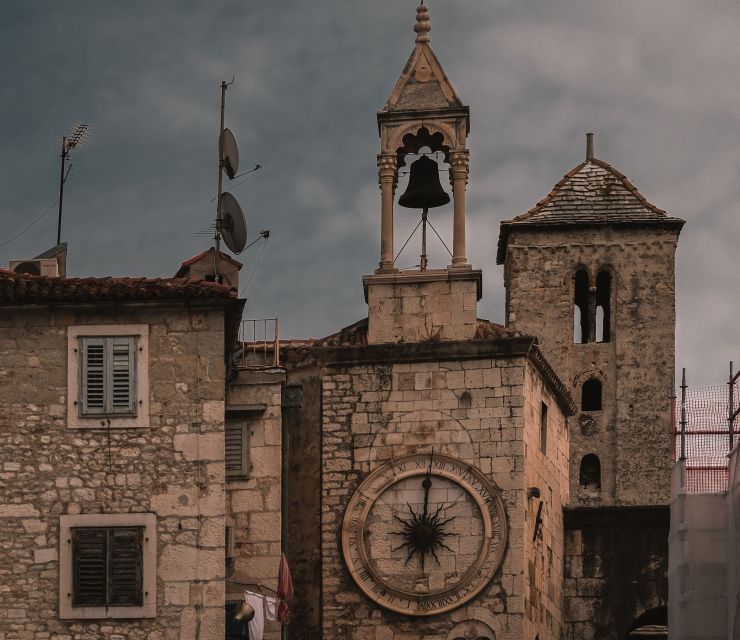
Peristil is the main square within the palace walls and one of the key stops on the route. This is where the ceremonial side of Diocletian’s project becomes easiest to understand. The scale and stonework help you picture the palace as an imperial setting, even though modern Split now surrounds it.
The Vestibule adds another layer. Its shape and position reveal how carefully the palace was planned, and your guide can connect the space to the emperor’s apartments and the public route through the complex.
The tour also includes a private section of Diocletian’s Palace. That is an important distinction, since not every palace experience is limited to the main public squares. The exact private area can depend on operating arrangements, so you should not assume it includes every paid interior in Split.
The route does not include entrance fees for the cathedral, the former imperial mausoleum, the palace underground, the Bell Tower, museums, or the Temple of Jupiter. These are not minor details if you want a full archaeological day. You can add them separately, but the two-hour walk itself focuses on orientation, stories, food, and the main palace spaces.
Gregory of Nin and the Hajduk connection
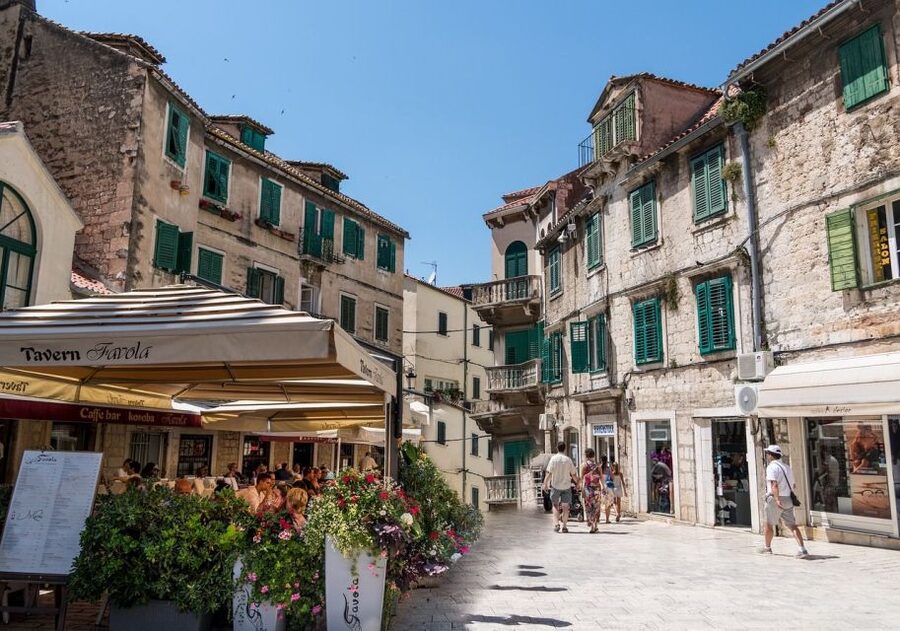
The walk includes a stop at the golden toe of Gregory of Nin, or Grgur Ninski. You can make a wish there, a small ritual that adds humor and participation to the history walk.
This statue is also useful for understanding how Split mixes the sacred, the historic, and the informal. You are not being asked only to admire a monument. You are being shown what people do around it and how local habits become part of a city’s identity.
The guide also explains Hajduk Split, the famous football club whose name appears across town, from the suburbs to the old center. Even if football is not your main interest, this is valuable local context. It shows how strongly sport can shape a city’s character and language.
These stops keep the tour from becoming a straight Roman history lecture. You move from emperor to saint, from ancient walls to modern football, and from formal history to the little acts that make a place feel lived in.
Finishing on the Riva with local food advice
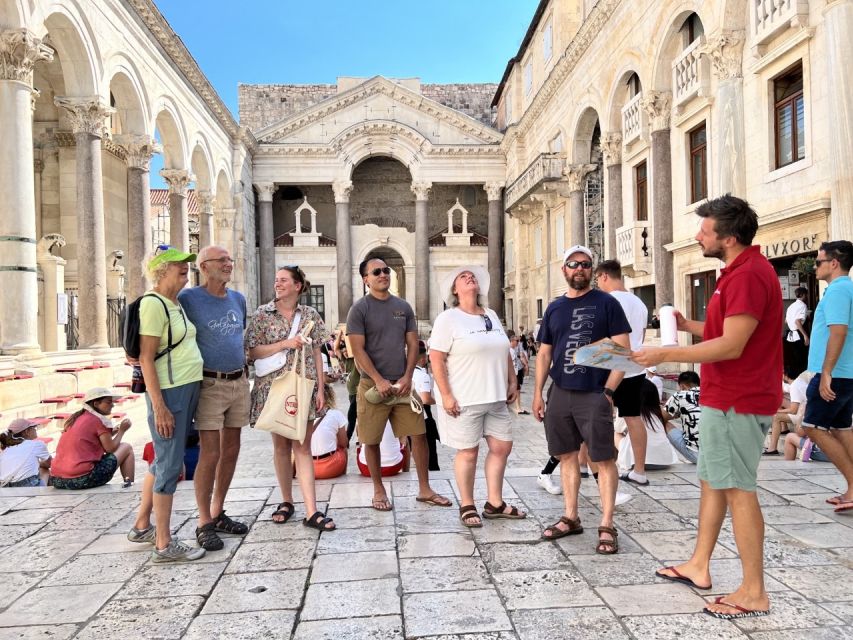
The tour ends back toward the Riva promenade. That is a practical finish, since you are left near cafés, waterfront walks, and places to continue your evening.
Your guide can point you toward favorite coffee shops and spots for Dalmatian food and entertainment. This advice is especially useful if you take the tour near the start of your stay. You can use the information later instead of trying to choose a restaurant while hungry and tired.
The ending also gives the experience a clear shape. You begin with the city map, move through the market and palace, then return to the waterfront. At two hours, the tour feels like an introduction rather than an all-day history program.
Do not expect a long final meal or a formal sit-down tasting. The included food comes from the Green Market, while later meals and drinks are your responsibility. That keeps the tour flexible, but it also means the price is paying mainly for private guiding, local interpretation, and tastings rather than a meal package.
Is $280 per person a fair price?
At $280 per person, this is expensive for a two-hour city walk. The value depends heavily on your group size and your priorities. A private tour can make financial sense for a small group that wants a guide’s full attention, a relaxed pace, and the ability to ask questions without following strangers.
The price is harder to justify if you mainly want to see the big Roman sights quickly. You will not receive entrance fees to the cathedral, underground spaces, Bell Tower, museums, or Temple of Jupiter. You also should not count on the market samples as a full meal.
I would consider booking it if you care about local stories as much as major monuments. The food stop, Illyrian customs, Hajduk explanation, Gregory of Nin ritual, and advice about Split after the tour give it a wider focus than a basic palace walk.
The carbon-neutral operation adds value for people who prefer a tour company with stated environmental and social commitments. The operator is B Corp certified and presents travel as a force for good. That does not reduce the financial cost, but it may help you choose between similar private tours.
Who will get the most from this experience?
This tour suits first-time visitors who want a quick introduction to Split before exploring alone. It also works well for families, since children under six can join free when the company is informed in advance.
Food-focused visitors will enjoy the Green Market stop, especially if you want to learn how locals shop rather than simply order a restaurant dish. The experience is also a good match for history fans who prefer stories about people and customs over a long list of dates.
The private setting is useful for couples, families, and small groups with different interests. One person can ask about Roman architecture while another asks about cheese, coffee, football, or evening plans.
You may want a different option if you prefer a long archaeological tour with every paid site included. You may also find better value in a group walk if your main goal is simply to hear the basic story of Diocletian’s Palace.
Timing, children, and cancellation details
The experience lasts two hours, with starting times based on availability. Since much of the route is outdoors and moves through active city streets, choose a time when you will be comfortable walking and stopping at the market.
English is the stated language, and the group is private. Children under six are free, but you need to notify the operator if you bring one.
You can cancel up to 24 hours before the start for a full refund. A reserve-now, pay-later option is also available, which is useful if your Split plans may change.
Should you book the Split Roman History and Market Tour?
Book it if you want a personal introduction to Split’s living Roman center, with food, local customs, and practical city advice folded into the history. The strongest parts are the private guide, the market tasting, and the link between Diocletian’s Palace and modern Dalmatian life.
Think twice if $280 per person feels high for two hours or if you want entry to the palace’s major paid interiors. In that case, use the tour as a focused orientation only if the local stories matter to you, then visit the cathedral, cellars, museums, Bell Tower, and Temple of Jupiter separately.
For a small group that values a clear pace, strong English guiding, and personal attention, it is a polished way to get your bearings fast. For a budget-minded visitor, the cost is the main obstacle.
FAQ
Where does the tour meet?
The meeting point is at the beginning of the Riva promenade, near the iron map showing the city.
How long does the tour last?
The tour lasts two hours. Starting times depend on availability.
What language is the tour conducted in?
The tour is conducted in English with a live local guide.
Is the tour private?
Yes. The experience is arranged for a private group.
What food is included?
The Green Market stop includes tastings that may include fruits, vegetables, olive oil, rakija, cheese, and dry figs. The exact selection can vary by season.
Are palace entrance fees included?
The tour includes the main square within the palace walls, a private palace section, the Vestibule, and the Golden Gates. Entrance fees to the cathedral of the former imperial mausoleum, underground palace areas, Bell Tower, museums, and Temple of Jupiter are not included.
Can children join the tour?
Yes. Children are welcome, and children under six may join free of charge. You should inform the operator if you are bringing a child under six.
Can I cancel or pay later?
You can cancel up to 24 hours in advance for a full refund. A reserve-now, pay-later option is also available.
Just added in Split
- From Trogir, Seget, Okrug: Krka Waterfalls & Šibenik Culture Tour★ 5.0 · 10 reviews
- Krka Waterfalls & Primošten from Trogir, Seget, Čiovo & Kaštela★ 5.0 · 18 reviews
- Slatine – Island Hopping Excursion (Trogir/Blue Lagoon/Shipwreck)★ 4.0 · 24 reviews
- Island Hopping Boat Excursion with Lunch (Trogir,Blue Lagoon, Šolta)★ 3.5 · 6 reviews
- From Split & Trogir: ATV Quad Tour on Island Čiovo★ 5.0 · 21 reviews
- Split: Sunset Guided Kayaking Tour★ 4.8 · 71 reviews
- Split Sunset Stand Up Paddle Tour★ 5.0 · 16 reviews
- Stand Up Paddle Tour in Split★ 4.7 · 17 reviews
Historical Tours, compared.
Walking Tour of Split with a ‘Magister’ of History
Read our review →
Split History and Gastro Small-Group Tour with Food and Drinks
Read our review →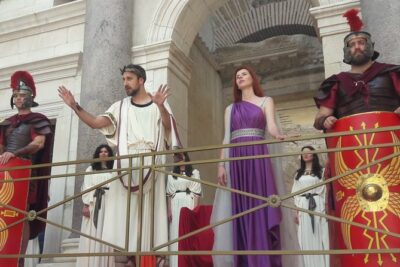
PREMIUM Emperor’s Walking Tour for History Lovers + Museum
Read our review →
Browse the lists this tour appears in