
Reviewed · WALKING TOURS
Split: Cultural Walking Tour with Anthropologist Guide
Split looks like a history lesson carved in stone, but this tour asks what those stones mean to people living here now. With cultural anthropologist Marin, you move from Diocletian’s Palace and the Golden Gate into difficult subjects such as identity, religion, demographics, sexuality, politics, and Croatia’s unsettled past. The focus is not a polished old-town script. It is a candid look at how history shapes modern life.
I like the way the tour connects major sights to current social questions, rather than treating them as isolated monuments. I also like Marin’s reported care with structure and explanation, including visual and audio material for each subject. The trade-off is its serious, sometimes sensitive subject matter, so it is not the best choice if you want only light stories, legends, and photo stops.
Key points to know before you book
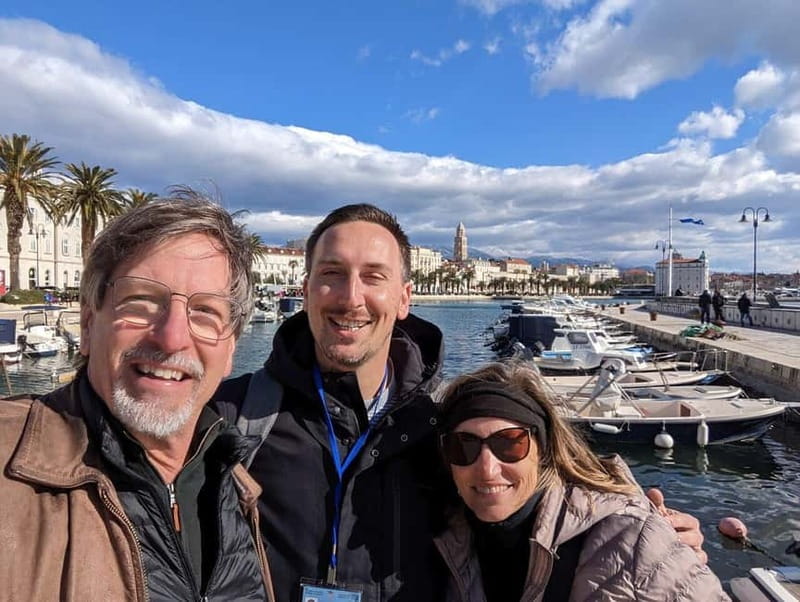
- A cultural anthropologist leads the walk: Marin brings social history and present-day issues into the usual Split sightseeing route.
- The tour covers difficult topics directly: Expect discussion of contested history, Croatian identity, politics, religion, demographics, economics, and sexuality.
- You still see the central landmarks: The route includes the Golden Gate, Peristil, Diocletian’s Cellars, People’s Square, Fruit Square, the Riva, and Republic Square.
- Audio-visual material adds context: Each topic comes with additional material to support the guide’s explanation.
- It is useful on your first day: The route gives you a framework for understanding Split and Croatia before you explore further.
- The format is flexible and inclusive: The English-language walk lasts two hours, is wheelchair accessible, and allows cancellation up to 24 hours before departure for a full refund.
Why this Split walk feels different from a standard city tour
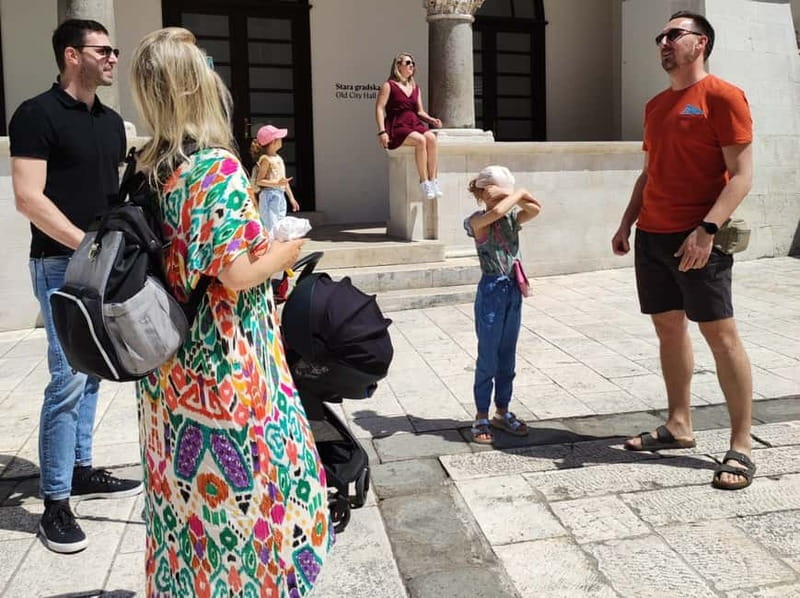
Many walking tours of Split concentrate on Roman remains, medieval lanes, and the basic story of Diocletian’s Palace. This one uses those same places as starting points, then asks harder questions about power, memory, belonging, and the way a society explains itself.
That difference matters. You do not simply hear that a building is old or that a square was important. You learn how a site can carry several meanings at once. A Roman monument may be a tourist attraction, a source of local pride, a reminder of political power, or part of a modern argument about who gets to define Croatia’s story.
Marin’s background in cultural anthropology suits this approach. He also works as a school teacher, which helps explain why the tour is designed to make complicated subjects understandable rather than technical. You should expect ideas and discussion, but not an academic lecture that leaves you behind.
The tour works particularly well for curious people over about 15 who want context along with sightseeing. One especially useful feature is the way Marin relates his explanations to the buildings around you. You are not asked to remember a long list of names and dates without a reason. The architecture becomes evidence in a larger story.
The additional audio-visual material can also help. It gives the guide another way to explain a subject, especially when a political or social issue is difficult to grasp from the street alone. You should not expect a museum presentation at every stop, but the material adds support to the spoken tour.
Other guided walks in Split:
- Split: Old Town and Diocletian Palace Walking Tour
★ 4.9 · 4,727 reviews - Walking Tour of Split and Diocletian’s Palace
★ 5.0 · 2,588 reviews - Krka Waterfalls tour with Trogir Walking tour and Krka panoramic boat cruise
★ 5.0 · 1,659 reviews
Starting in Park Josipa Jurja Strossmayera
The meeting point is in the large park at Ul. kralja Tomislava 12. Look for the fountain in the middle of the park. This is a useful beginning because you meet outside the densest part of the old center before moving into Split’s historic core.
The opening setting gives Marin room to explain how the walk will work. Since this is not a sightseeing race, you should expect the guide to set up the themes before the group reaches the most famous monuments.
The starting point is also easy to identify if you arrive with a little time. The supplied route says the activity ends back at the meeting point, while the stop list names Trumbićeva obala as the final point. Since those details do not fully match, confirm the ending location when you book or meet Marin.
Golden Gate and Peristil: Roman stones, modern meaning
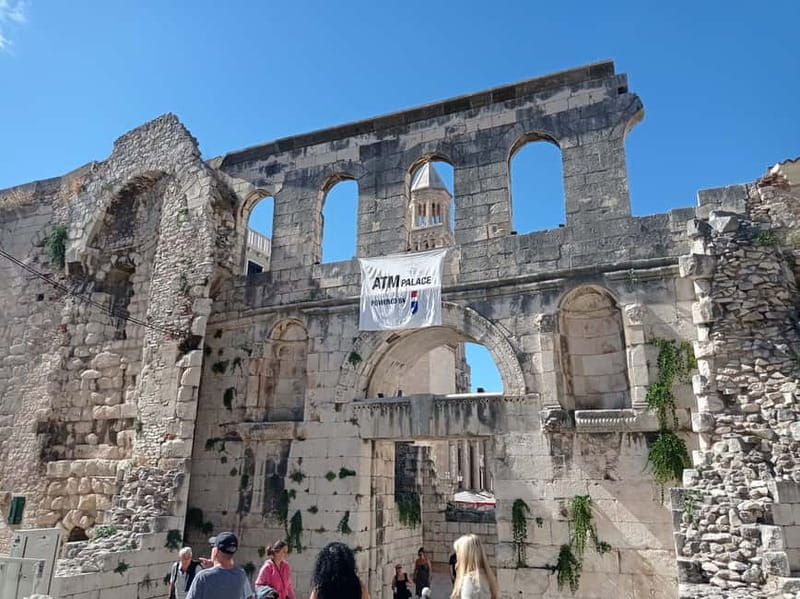
The Golden Gate receives about 15 minutes of guided attention. It is one of the clearest places to see how Diocletian’s Palace was organized and protected, but this tour uses it for more than a Roman architecture lesson.
You can expect Marin to connect the gate and the palace walls with questions about authority, public memory, and the ways later generations use ancient symbols. That broader approach gives you a better reason to look closely at the structure rather than simply photograph it and move on.
At Peristil, another 15-minute stop gives the group time to consider the palace’s central ceremonial space. The square is visually striking, but its importance is not only visual. It shows how architecture can direct movement, frame power, and shape public behavior.
I like this pairing because the two stops establish the tour’s method early. You see the site, learn its basic role, then consider the social and political meanings attached to it. If you already know Roman history, you may find the modern interpretation more valuable than a basic introduction. If Split is new to you, the guide still covers the main facts.
Diocletian’s Cellars and the problem with simple stories
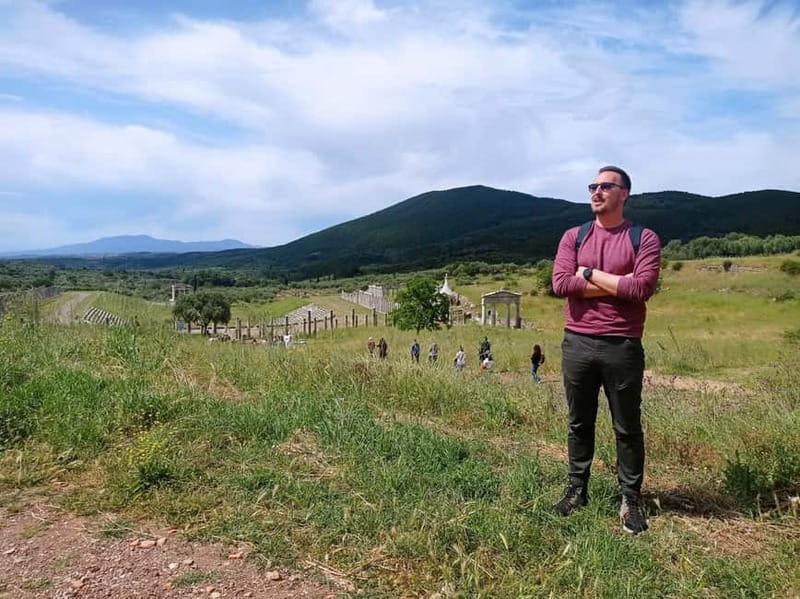
The Cellars receive about 10 minutes, making this the shortest major stop on the route. The underground spaces are among Split’s best-known attractions, yet a short visit here can work well because the tour is not trying to catalogue every architectural detail.
Instead, the Cellars can help show how layers of history overlap. Ancient construction, later use, preservation, and modern tourism all affect the way you experience the space today. The point is not to pretend that one era explains everything.
You should keep your expectations clear. This is not a dedicated archaeology tour, and the limited time means you will not receive an exhaustive account of every room or construction technique. The value comes from fitting the Cellars into the tour’s larger discussion of history and public meaning.
Same base, a different kind of day out:
- Split: Krka Waterfalls Trip with Boat Cruise and Swimming
★ 4.8 · 10,519 reviews - From Split: Krka Waterfalls, Food & Wine Tasting Tour
★ 5.0 · 9,326 reviews - Blue cave, Mamma Mia and Hvar, 5 islands speedboat tour
★ 5.0 · 7,150 reviews - From Split: Krka Waterfalls, Food & Wine Tasting Tour
★ 4.9 · 6,598 reviews
People’s Square and Jewish Passage
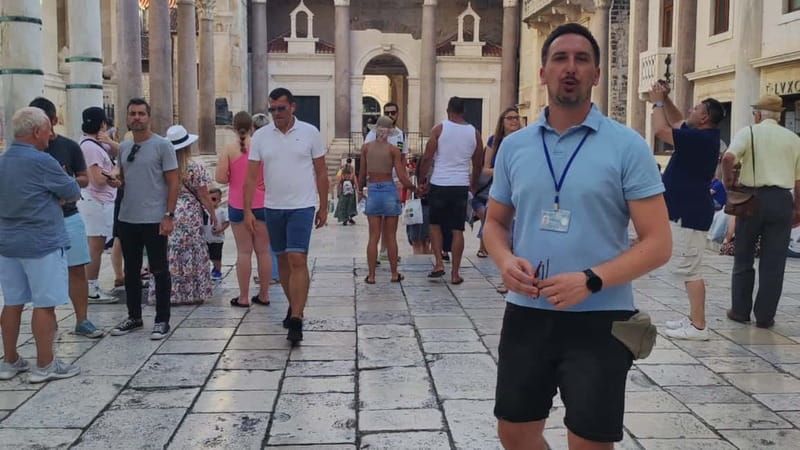
People’s Square receives around 15 minutes. This is a good setting for a discussion of public life because a square can reveal how a city presents itself, gathers people, and handles competing memories.
The tour’s wider themes become more visible here. Politics, economics, identity, and demographics are not abstract ideas when they are linked to the spaces people use and the stories a city chooses to display. Marin’s approach encourages you to look at the square as part of living society, not only as a picturesque stop.
The 10-minute visit to Židovski prolaz adds another layer. A place associated with Jewish life allows the tour to address religion, minority identity, memory, and the less public parts of local history. The stop is brief, but its subject is not decorative. You should be ready for a serious discussion rather than a simple architectural note.
This is one of the reasons the walk suits people who want a fuller understanding of Croatia. The tour does not avoid subjects that can be uncomfortable or contested. It treats them as necessary to understanding how the country sees itself.
Fruit Square, the Riva, and Republic Square

Fruit Square gets about 15 minutes of guided time. As with People’s Square, the importance here is not just the shape of the buildings or the appeal of the cafés and lanes. The guide uses familiar city spaces to discuss how daily life, commerce, class, and public identity fit into the story of Split.
You should notice how often the tour moves between past and present. That is its main strength. Instead of placing ancient, medieval, and modern Croatia in separate boxes, Marin connects them and shows how older events can still affect current debates.
The group then passes by the Riva for about five minutes. This is a shorter segment, so do not expect a full waterfront talk. It gives you a chance to see one of Split’s best-known public spaces while the discussion continues toward the final stop.
Republic Square receives another 15 minutes of explanation. The route’s final major discussion here gives Marin room to pull together themes from earlier stops: politics, identity, economics, historical memory, and the pressures shaping modern Croatian society.
Because the tour covers a lot in two hours, you should expect a brisk intellectual pace. The stops are long enough for focused explanations, but not for extended wandering, shopping, or free time. Wear comfortable shoes and arrive ready to listen.
The strongest part: connecting past and present
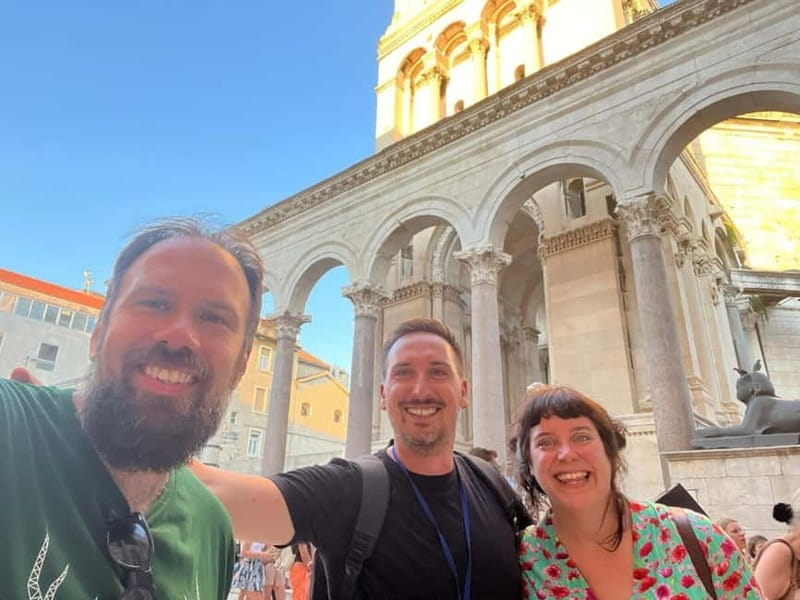
I value tours that explain why a place matters now, not only what happened there hundreds of years ago. This experience is built around that idea. The Roman palace, public squares, religious traces, and waterfront are used as prompts for a discussion of modern Croatia.
The approach can also help you make sense of later sightseeing. Once you have heard competing ideas about history and identity, you may notice more in museums, churches, monuments, and everyday conversations. The tour gives you questions to carry through the rest of your stay.
Marin’s style appears to be a major part of the experience. He is described as passionate, careful with the structure, and willing to engage participants throughout the walk. That matters on a subject-heavy tour. A guide can have good material and still lose a group if the explanation becomes dry or too abstract.
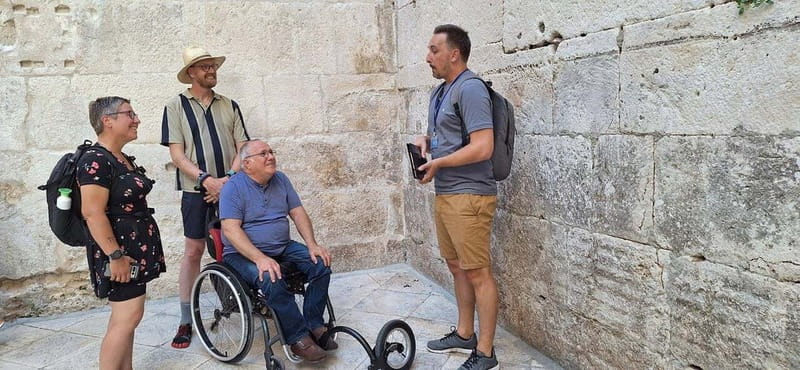
The available details also point to practical flexibility. During rainy conditions, Marin adjusted the experience, and he allowed time for interpretation so a deaf participant could follow the tour. That does not guarantee that every access need will be handled in the same way, but it suggests an attentive approach. The tour is listed as wheelchair accessible, which is important in a historic center where surfaces and access can vary.
Is $33 a fair price for two hours?
At $33 per person, this costs more than a basic orientation walk in some destinations, but the price reflects a specialized format. You are paying for a cultural anthropologist, a focused route, and discussion that goes beyond the standard Roman and medieval outline.
The value is strongest if you would otherwise spend time trying to understand Croatia’s modern politics, identity questions, and contested history on your own. The tour gives you a framework in two hours and links it to places you can see directly.
The value is weaker if your main goal is a long architectural tour or a relaxed stroll with plenty of photography time. You will cover several central sites, but the emphasis is interpretation. You are buying context, not a large number of attractions or entry tickets.
There are no extra costs listed. The tour also allows you to reserve and pay later, and cancellation up to 24 hours before the start receives a full refund. Those policies reduce the risk if your Split plans are still changing.
Who should take this tour?
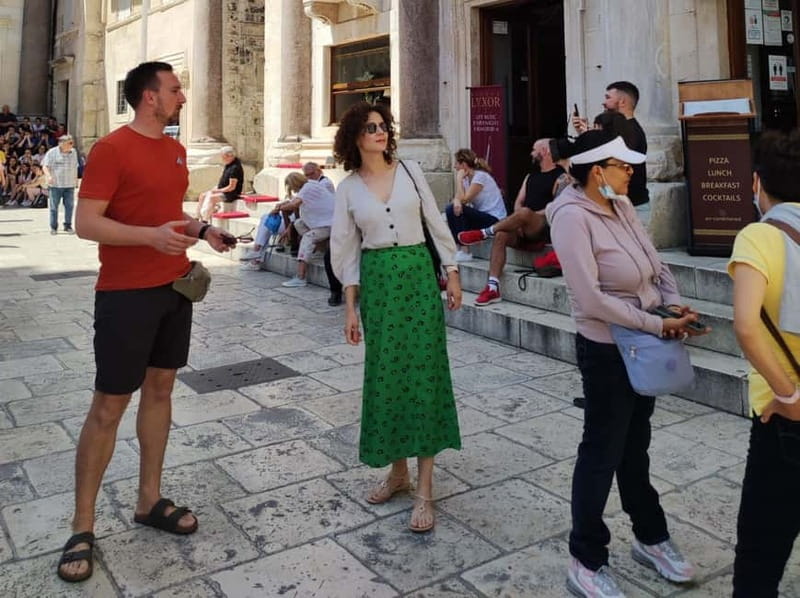
I would choose this walk early in a Split stay if you enjoy history that leads into current affairs. It is especially suitable for people who want to understand how Croatians view their past and how that past affects society today.
It should also suit students, teachers, politically curious visitors, and anyone who finds conventional sightseeing too neat. You do not need specialist knowledge. The material is intended for a general audience, and the explanations are not technical.
Families with older teenagers may find it useful, particularly if they are ready for discussions of religion, sexuality, politics, identity, and contested history. Younger children may not have much to gain from the subject matter or the pace.
I would not make it your only Split activity if you want detailed information about every palace room, church, or museum. Pair it with your own relaxed walk through the old center. After the tour, you can return to the places that caught your attention and look at them with more context.
Should you book the Cultural Walking Tour?
Book it if you want Split explained as a living city rather than an ancient backdrop. Marin’s route covers the essential center, but its real purpose is to connect monuments with questions about power, memory, religion, identity, economics, and modern Croatia.
Skip it if you are looking for jokes, legends, or a quick list of dates. This is a serious walk, and its honest treatment of controversial subjects may challenge the tidy version of history offered by many city tours.
For most intellectually curious visitors, I would take it near the start of a Split stay. At $33, it is a fair buy for a two-hour English-language conversation that can change the way you understand the rest of the city.
FAQ
Where does the tour begin?
It begins at Ul. kralja Tomislava 12 in Split, in the large Park Josipa Jurja Strossmayera. Meet next to the fountain in the middle of the park.
Where does the tour end?
The activity details say it ends back at the meeting point, while the route lists Trumbićeva obala as the final stop. Confirm the exact ending point when you book or meet the guide.
How long does the walking tour last?
The tour lasts two hours. Starting times vary, so check availability for the date you want.
What language is the tour in?
The live tour guide leads the experience in English.
Is the tour wheelchair accessible?
Yes, the activity is listed as wheelchair accessible.
What places does the route visit?
The route includes the Golden Gate, Peristil, Diocletian’s Cellars, People’s Square, Židovski prolaz, Fruit Square, the Riva, and Republic Square.
Can I cancel for a full refund?
Yes. You can cancel up to 24 hours before the tour for a full refund. You can also reserve now and pay later.
Just added in Split
- From Trogir, Seget, Okrug: Krka Waterfalls & Šibenik Culture Tour★ 5.0 · 10 reviews
- Krka Waterfalls & Primošten from Trogir, Seget, Čiovo & Kaštela★ 5.0 · 18 reviews
- Island Hopping Boat Excursion with Lunch (Trogir,Blue Lagoon, Šolta)★ 3.5 · 6 reviews
- Slatine – Island Hopping Excursion (Trogir/Blue Lagoon/Shipwreck)★ 4.0 · 24 reviews
- From Split & Trogir: ATV Quad Tour on Island Čiovo★ 5.0 · 21 reviews
- Split: Sunset Guided Kayaking Tour★ 4.8 · 71 reviews
- Split Sunset Stand Up Paddle Tour★ 5.0 · 16 reviews
- Stand Up Paddle Tour in Split★ 4.7 · 17 reviews
Walking Tours, compared.
Walking Tour of Split and Diocletian’s Palace
Read our review →

Krka Waterfalls tour with Trogir Walking tour and Krka panoramic boat cruise
Read our review →
City Walls Early Morning or Sunset Walking Tour
Read our review →
Browse the lists this tour appears in