
Reviewed · WALKING TOURS
Sibenik: Guided Evening Walking Tour
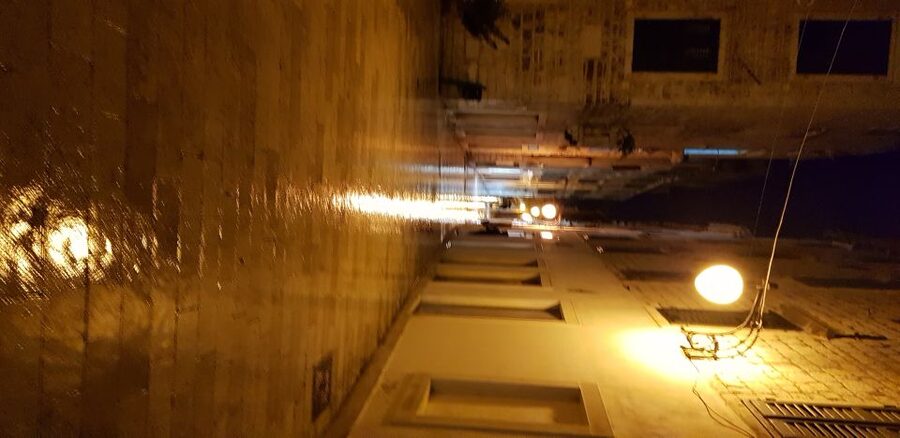
Šibenik’s old town changes character after sunset. On this 90-minute walk, you follow narrow cobblestone lanes into small squares, passing churches, old civic buildings, and the remarkable Cathedral of St. James. The evening light and quieter streets make it easier to notice details that can get lost during a busy daytime visit.
I especially like the local guide-led storytelling and the tour’s focus on small facts, such as why St. Francis Church is different, why the Four Wells cistern was built, and how Šibenik’s main square can somehow be outside the city. I also like the chance to finish near cafés and restaurants, ready to continue the evening on your own. The main consideration is the uneven old-town walking, which makes this a poor fit for people with mobility impairments.
Key points at a glance
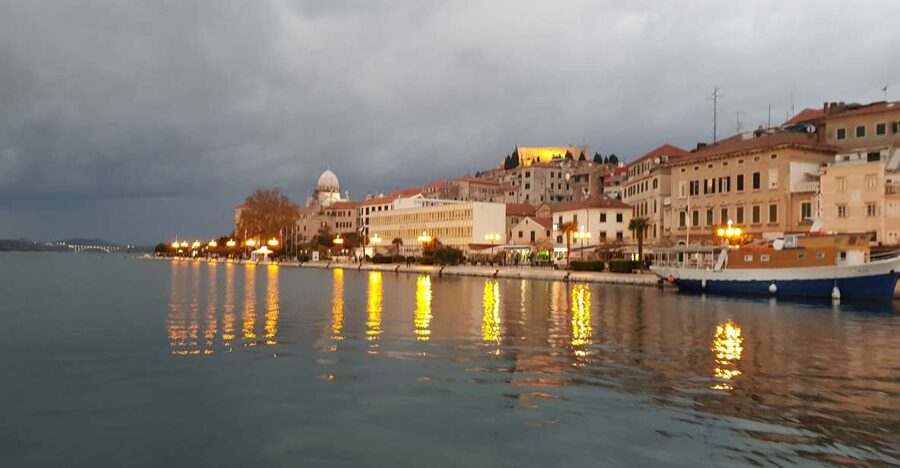
- St. James Cathedral takes center stage: See why its stone construction, trefoil facade, and 71 sculpted portraits make it unusual across Europe.
- The evening timing matters: You avoid the usual daytime crowds and see Šibenik’s medieval lanes in a cooler, quieter setting.
- Local guides add personality: Irena, Irene, Mariana, and Marilea are among the guides named in the tour feedback, with a style that mixes facts, humor, and personal affection for the city.
- Small details carry the tour: Learn about four bells at St. Barbara, the old city cistern, changing church patrons, and the theater’s early electric lighting.
- The meeting point is easy to identify: Look for the lantern at the Gat Krka parking lot and a guide wearing an orange cap.
- It is a walking tour, not a sightseeing bus: Wear comfortable shoes and expect narrow streets, cobblestones, and an old center that is not suitable for people with mobility impairments.
Why Šibenik works so well after sunset
Šibenik is one of those Croatian towns where the setting does much of the work. The historic center is built around narrow lanes, stone walls, attractive squares, and churches from several periods. At night, the old streets feel less like a route between attractions and more like a place to wander slowly.
The evening schedule also solves a practical problem. During the day, you may be looking at the same facade while dealing with heat, crowds, and the distraction of shops and passing groups. After dark, your guide can direct your attention to carved details, bell towers, and bits of local history that would be easy to miss on your own.
This is not a tour built around a long list of big monuments. Its value comes from the links between them. You hear who King Petar Kresimir was and why he matters to Šibenik. You learn why certain churches changed patron saints, why a public cistern was needed in medieval times, and how the city’s civic life developed around its squares and institutions.
The atmosphere will not be identical every night. Starting times vary, and the amount of light will change with the season. Still, the basic appeal remains: an old Adriatic town, a local voice, and a slower walk through the center after the busiest part of the day.
Other guided walks in Croatia:
- Private Sibenik Walking Historical Morning or Evening Tour
★ 5.0 · 93 reviews - Šibenik: Medieval Night Walking Tour
★ 5.0 · 19 reviews - From Sibenik: Private Walking Sibenik Sightseeing Tour
★ 4.9 · 15 reviews
Meeting your guide at Gat Krka
The meeting point is next to the lantern at the Gat Krka parking lot. Look for the guide wearing an orange cap, and arrive at least five minutes before the scheduled start.
That short arrival cushion is worth taking seriously. Šibenik’s old center can be confusing if you are coming from a hotel, a restaurant, or the waterfront, and you do not want to begin the walk by rushing through unfamiliar streets. The tour does not include hotel pickup or drop-off, so you need to make your own way to the meeting point.
The guide may lead the tour in English, German, or Croatian. Several guide names appear in the experience information and guest feedback, including Irena, Irene, Mariana, and Marilea. The names are spelled differently in places, so do not rely on a particular guide being assigned. What matters is that the experience is designed around a live local guide rather than a recorded commentary.
A walk through Šibenik’s narrow old center
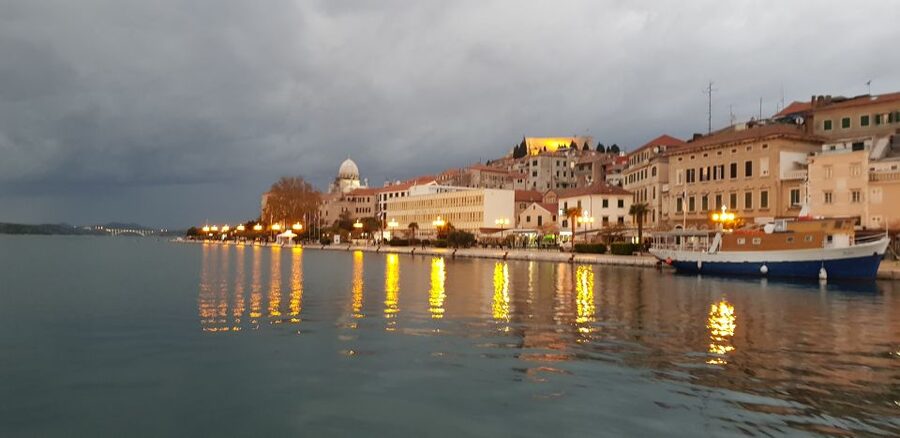
The walk takes you through the historic heart of Šibenik, where cobblestones and tight lanes create the sense of a town built long before cars. This is the part of the tour that rewards patience. You are not simply moving from one photo stop to the next. You are being shown how the streets, churches, and public spaces fit together.
Your guide points out attractive squares and architectural details from centuries past. In some parts of the old town, the setting can make you feel as if you have stepped into the 15th or 16th century. That feeling is strongest when you slow down and look upward, since towers, facades, and bell structures can be easy to miss at street level.
The walking pace is described as gentle, but the surface is still old-town terrain. Comfortable shoes are essential. The tour is not suitable for people with mobility impairments, and the supplied information does not promise step-free access. If stairs, uneven stones, or narrow lanes are a serious concern, you should choose your activity with care.
The city is compact enough for a focused 90-minute introduction. You will not see every corner of Šibenik, and that is a good thing. A shorter route lets the guide explain the places you do visit instead of turning the evening into a hurried march.
Churches with stories beyond their facades
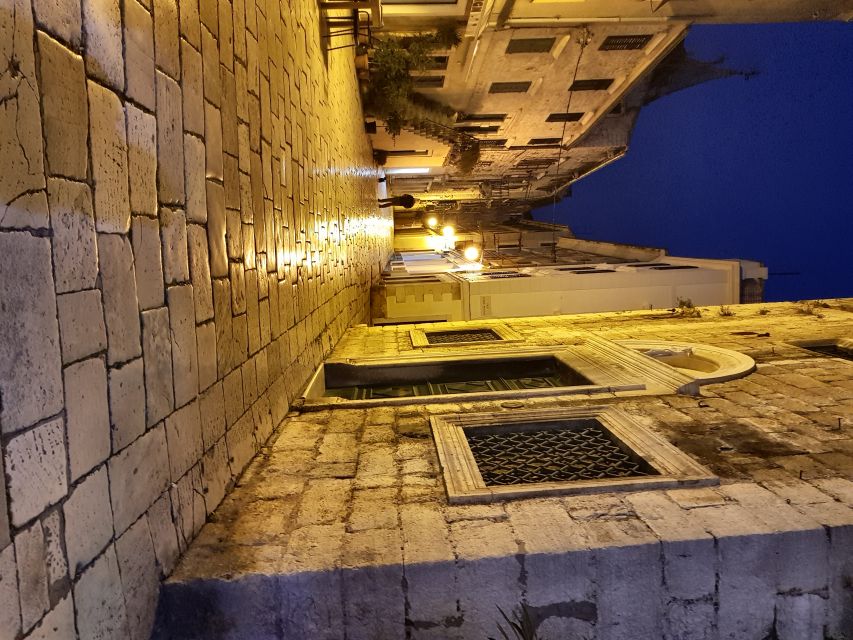
Churches provide much of the tour’s structure, but each one comes with a different question. That keeps the walk from feeling like a repetitive parade of religious buildings.
At the Church of St. Francis, you learn why it is considered more special than other churches in the city. The point is not just to photograph the exterior. Your guide supplies the local context that helps you understand why one building carries a different role or reputation from another.
The Church of the Assumption of the Blessed Virgin Mary brings another layer of detail. You learn who uses it and who built its unusual bell tower. The guide also shares a way to remember the artist’s name, which is exactly the sort of small memory aid that can make a fact stay with you after the tour.
The Church of St. John the Baptist had special importance during the Middle Ages, and the explanation includes why its patron saint changed. That sort of detail gives you a feel for how religious life and civic identity could shift over time.
The Church of St. Krsevan is presented as the oldest church in town. It may not have the visual scale of the cathedral, but its age gives it a different kind of importance. This is where a local guide earns the fee: you learn why a smaller building matters instead of judging its value by size.
At St. Barbara, look for the four bells. You learn when they ring, adding a living detail to what might otherwise be a quick architectural stop. The churches become part of the town’s daily sound and use, not just old stone to admire.
Same base, a different kind of day out:
- Split: Krka Waterfalls Trip with Boat Cruise and Swimming
★ 4.8 · 10,519 reviews - Blue Cave Small-Group Boat Tour from Dubrovnik
★ 5.0 · 9,360 reviews - From Split: Krka Waterfalls, Food & Wine Tasting Tour
★ 5.0 · 9,326 reviews - Full-Day Dubrovnik Elaphite Islands Cruise with Lunch and Drinks
★ 5.0 · 8,823 reviews
The Four Wells and Šibenik’s practical past
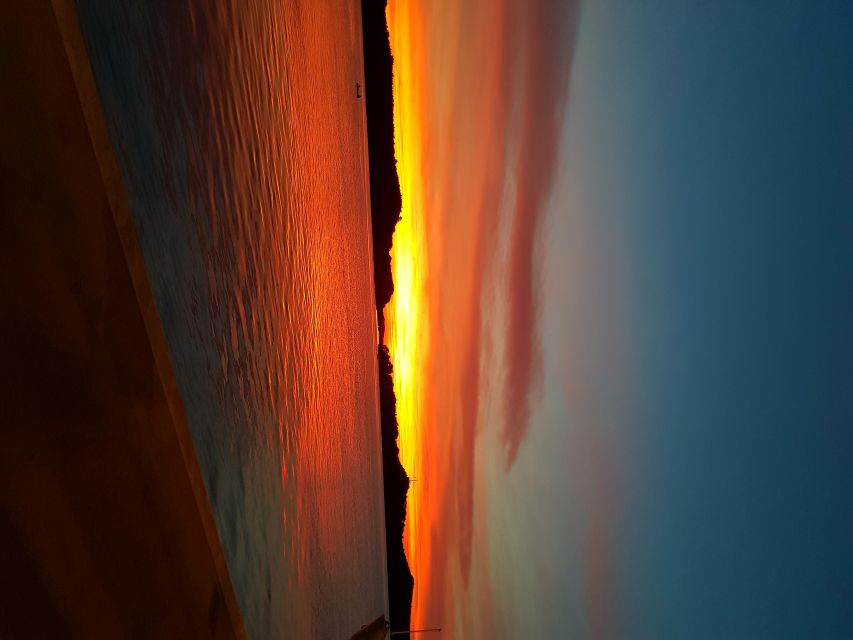
The public town cistern called the Four Wells offers a useful change of pace. Instead of focusing on rulers, art, or church design, the tour explains why the cistern was built during the Middle Ages.
Water systems are easy to overlook because they are less glamorous than cathedrals and bell towers. Yet this stop helps explain how an old city functioned. A town needs water, public spaces, and systems that serve ordinary residents. The Four Wells gives you a glimpse of that practical side of Šibenik.
I like this kind of stop because it widens the tour’s scope. You are not only hearing about major figures and grand buildings. You are also learning about the needs that shaped the streets and public life of the city.
King Petar Kresimir and the city’s identity
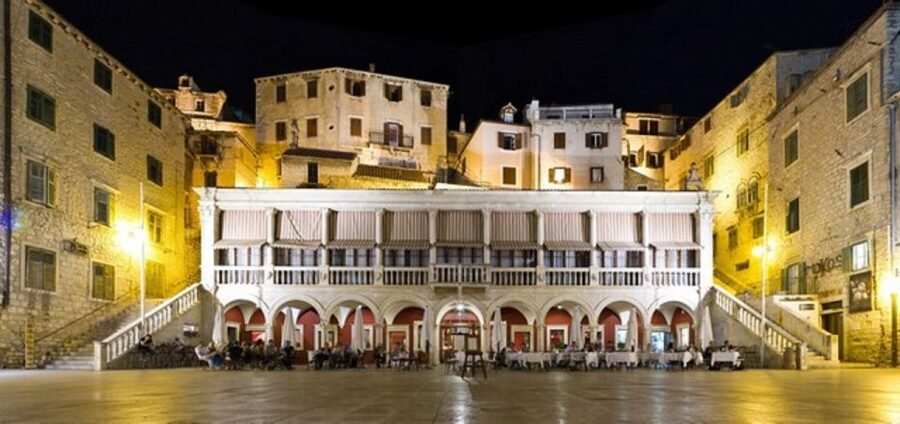
The tour also introduces King Petar Kresimir and explains why he is important to Šibenik and its people. The supplied information does not spell out the full lesson, so your guide’s explanation is the key part of this stop.
That is a useful distinction when deciding what you want from a walking tour. If you only want a list of dates, you can read one quickly. A guide can connect a name to the city itself and show why a figure remains part of local identity.
The same applies to the curious question of how the main city square is not in the city. It is an unusual fact, and the kind of puzzle that makes the walking route memorable. You get a reason to look more closely at Šibenik’s civic geography instead of treating each square as just another open space.
The Croatian National Theater and early electric light
The Croatian National Theater in Šibenik adds a civic and cultural stop to the route. When it was built, it was described as the largest and most beautiful theater in southern Europe. In 1896, it received electric lighting, making it one of the first theaters in the world to have it.
That detail is especially useful because it challenges the idea that old Croatian towns were isolated from modern developments. Šibenik’s story includes stone lanes and medieval churches, but it also includes ambitious public buildings and early technology.
The theater also helps break up the church-heavy part of the walk. You get a view of the city as a place of performance, public gathering, and local pride. At night, the building belongs naturally in the itinerary, since the evening setting makes its original function feel close at hand.
St. James Cathedral, the tour’s major stop
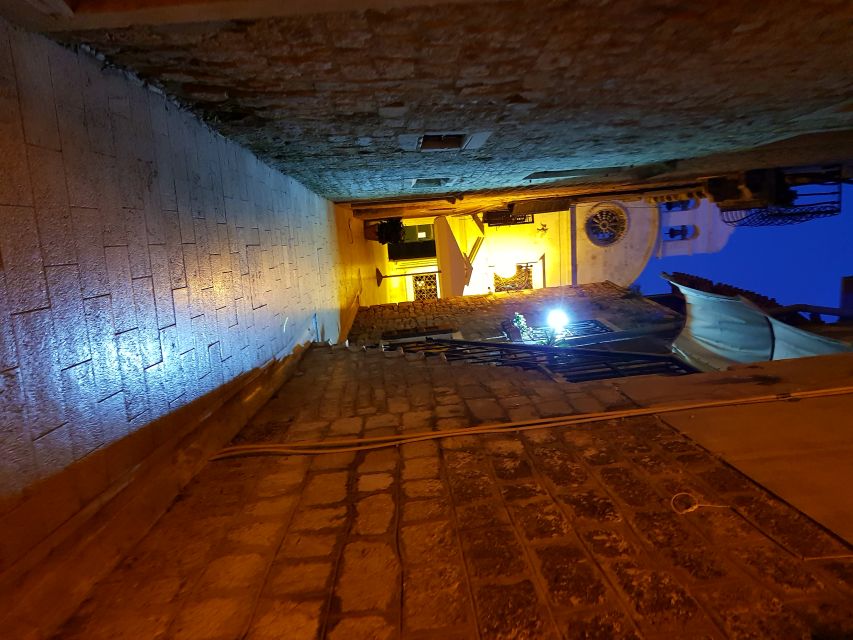
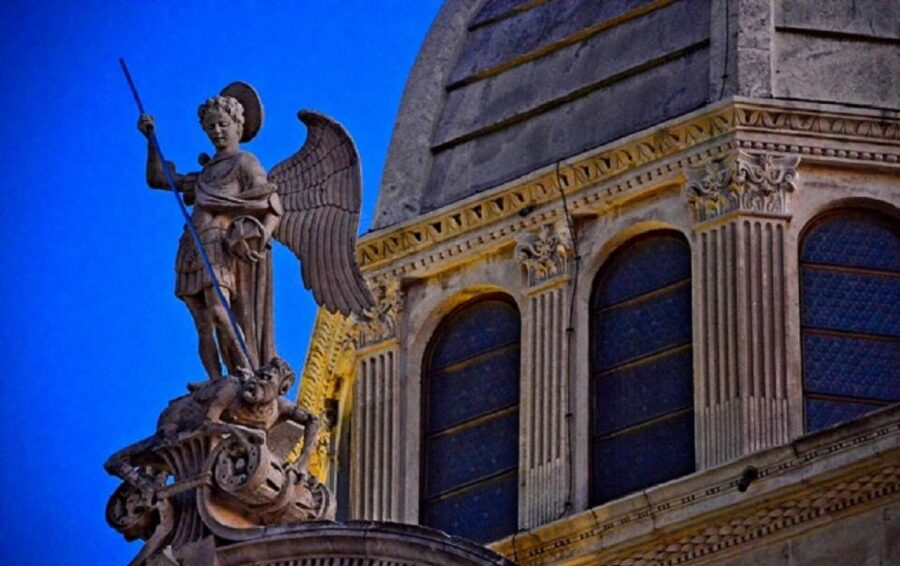
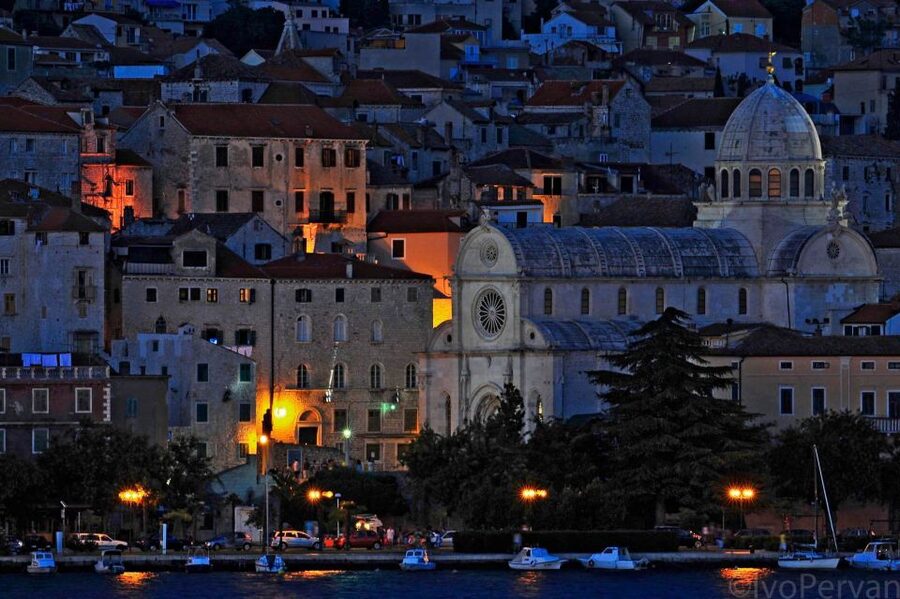
The Cathedral of St. James is the architectural centerpiece. It is built entirely of stone, including a daring structure of stone slabs and ribs with no binding material. That construction alone gives you plenty to look at, but the cathedral’s design has other unusual features.
The trefoil front facade is distinctive among Renaissance churches. Around the apses, you find a row of 71 realistic sculpted portraits. These are not vague decorative faces. They are one of the details your guide can help you notice and appreciate.
You should allow yourself time to look carefully here. A quick glance will show you the broad shape of the cathedral, but the portraits and stone structure reward a closer look. The evening visit may provide a different perspective than a bright daytime stop, although the available lighting and visibility can vary.
This is also where the guide’s storytelling matters most. The cathedral is famous enough to attract attention on its own, but facts about its construction and sculpture give you a way to read what you are seeing. You leave with more than a photograph of a grand facade.
Guide style: facts with humor and local feeling
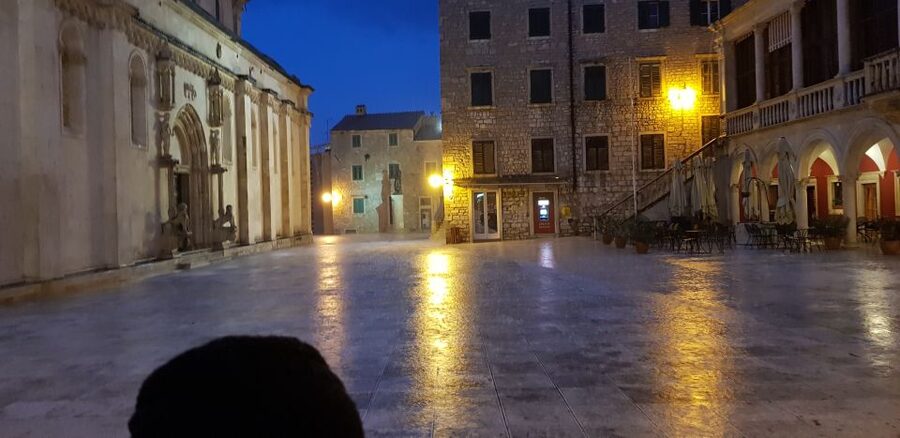
The strongest part of this experience is the guide’s presentation. The available feedback repeatedly singles out Irena or Irene for clear explanations, warmth, humor, and a strong connection to her home city. Mariana is also described as fun and well informed, while Marilea is praised for making the town’s details accessible.
You should expect a guide who answers questions and points out features you might not notice alone. The experience information emphasizes facts that do not usually appear in a basic brochure, from church details to the names of artists and the history of the theater.
The best guides make a walking tour feel like a conversation rather than a lecture. That appears to be the tone here. Still, guide assignments can change, and no tour can guarantee one individual. Book this for the route and format first, then treat the guide’s personal style as an important bonus.
Is $45 a fair price?
At $45 per person, this is not the cheapest way to spend 90 minutes in Šibenik. You are paying for a live guide, not transportation, food, drinks, or admission to a separate attraction.
The value depends on how you travel. If you are comfortable researching the city and walking alone, you can see many of these streets without paying. But you will not automatically know why St. Krsevan is important, how the Four Wells served the town, or what makes the cathedral’s stone structure so unusual.
I think the price makes the most sense early in your stay. The route can give you a framework for returning to the old center later, and the tour ends with the chance to find cafés and restaurants on your own. It can also work well for a short visit when you want a meaningful introduction without committing half a day.
The 90-minute length helps keep the cost in proportion. You get a focused introduction rather than a long excursion, and there is still time afterward for dinner or further exploring.
Who should book this evening walk?
I would recommend it to first-time visitors who want a clear introduction to Šibenik’s old center. It suits couples, solo visitors, and anyone who prefers local explanation over a self-guided walk.
It is also a good match for people who enjoy architectural details and unusual facts. The tour moves beyond the obvious cathedral photo and includes churches, bells, a cistern, a theater, public squares, and local figures.
You should think twice if you have mobility limitations. Cobblestones and narrow historic streets are part of the experience, not an occasional inconvenience. The activity specifically says it is not suitable for people with mobility impairments.
You should also bring comfortable shoes and avoid expecting a food tour. Food and drinks are not included, though the route finishes with the option to choose a café or restaurant yourself.
My verdict on the Šibenik night tour
Book this tour if you want Šibenik explained by someone who knows its streets and cares about its details. The strongest reasons are the evening timing, the compact 90-minute route, and the guides’ apparent ability to combine clear facts with humor and local pride.
Skip it if you prefer complete independence, dislike walking on uneven old-town surfaces, or want an activity centered on food and drinks. For most first visits, though, $45 buys a useful orientation and a much better understanding of what you are looking at. Arrive at the Gat Krka lantern five minutes early, find the orange cap, and wear shoes made for stone streets.
FAQ
How long does the Šibenik evening walking tour last?
The tour lasts 90 minutes.
How much does the tour cost?
The listed price is $45 per person.
Where do I meet the guide?
Meet next to the lantern at the Gat Krka parking lot. The guide will be wearing an orange cap.
How early should I arrive?
Arrive at least five minutes before the scheduled start time.
What languages are available?
The live tour guide can conduct the tour in English, German, or Croatian.
Is hotel pickup included?
No. Hotel pickup and drop-off are not included.
Are food and drinks included?
No. Food and drinks are not included. At the end, you can choose a café or restaurant on your own.
What should I wear or bring?
Bring comfortable shoes because the route includes narrow streets and cobblestones.
Is the tour suitable for people with mobility impairments?
No. The activity is listed as not suitable for people with mobility impairments.
Can I cancel for a full refund?
Yes. You can cancel up to 24 hours in advance for a full refund. You can also reserve now and pay later.
Just added in Croatia
- Discover The Old Town Split 1.5h walking Small group tour★ 4.8 · 93 reviews
- Hvar: Hvar Wine Tasting Experience★ 4.8 · 128 reviews
- Zadar: River Zrmanja Guided Kayak Safari & Waterfalls★ 4.8 · 132 reviews
- Hvar Wine tasting small group experience★ 4.5 · 80 reviews
- Twice the Wine – Two wineries half day tour, with delicacies★ 4.5 · 56 reviews
- Painting party at Art Bottega – Paint & Wine Studio in Rijeka★ 5.0 · 17 reviews
- Wine Tour – The Best of Istria★ 5.0 · 44 reviews
- Truffle and wine / Taste of Istria from POREC, ROVINJ, PULA★ 5.0 · 15 reviews
Walking Tours, compared.
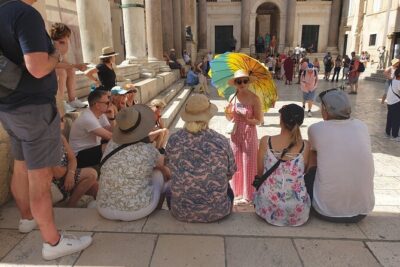
Walking Tour of Split and Diocletian’s Palace
Read our review →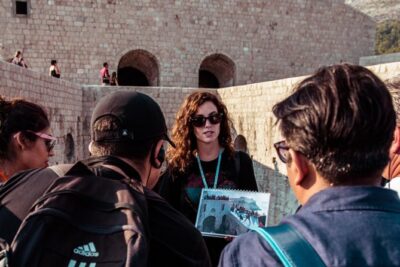
Krka Waterfalls tour with Trogir Walking tour and Krka panoramic boat cruise
Read our review →
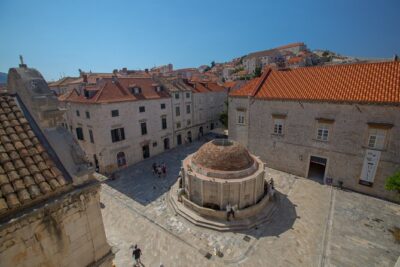
City Walls Early Morning or Sunset Walking Tour
Read our review →
Browse the lists this tour appears in