
Reviewed · WALKING TOURS
Best of Zagreb Walking Tour
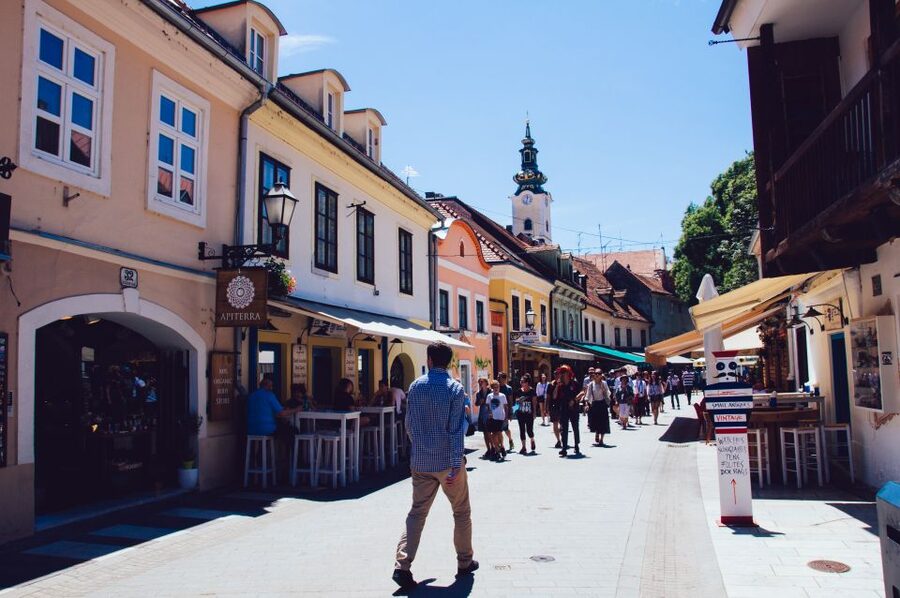
Zagreb’s best stories are tucked into its Upper Town lanes, market stalls, sacred sites, and old stone gates. This three-hour walk links them in a sensible route, beginning at Ilica 50 and finishing with a city view from Lotrščak Tower. Along the way, your guide explains not only what you are seeing, but how Zagreb’s traditions still shape daily life.
I like the personal scale, limited to 10 people, and the chance to ask for honest tips on food, shopping, and things to do later. I also like that guides such as Iva bring local detail to the walk, including small facts about monuments and sculptures. The main caution is the uphill, uneven nature of the route, which makes it unsuitable for people with limited mobility.
Key points to know before booking
- Grič Tunnel opens the walk with a piece of Zagreb’s unusual city fabric, before you head toward the Upper Town.
- The route covers Zagreb’s essential historic sights, including the cathedral, Dolac Market, Stone Gate, St. Mark’s Square, and Lotrščak Tower.
- Local guides such as Iva make the walk personal, with time for questions, photos, and practical recommendations.
- The $84 price is per group of up to two people, making it particularly appealing if you want a private-feeling experience with a companion.
- A local product tasting is included, but food and drinks beyond that are not.
- Comfortable shoes and modest clothing matter, since the route includes walking and sacred places require covered shoulders and knees.
Why this Zagreb walk works well as a first introduction
Zagreb can seem spread across two different cities. The Lower Town has broad streets and grand buildings, while the Upper Town feels older, quieter, and more compact. This tour connects the two moods through a route filled with political, religious, and everyday local life.
I like the way the walk mixes major sights with smaller details. You will see the buildings most people want to find, but the guide also explains local customs, old stories, and the meaning behind places that can otherwise look like simple photo stops.
The tour is conducted in English and lasts about three hours. That is enough time to get your bearings without turning the outing into an all-day march. You also have room to pause, ask questions, and request advice about where to eat or shop afterward.
The small-group limit is 10 people, though the price structure is especially interesting. At $84 per group of up to two, two people pay about $42 each for a private booking. If your group is larger, confirm the exact arrangement at booking, since the listed price is specifically stated for up to two people.
Other guided walks in Zagreb:
- Zagreb: Small Group Walking Tour City Center and WW2 Tunnels
★ 4.9 · 895 reviews - Zagreb: City and WWII Tunnels Walking Tour
★ 4.9 · 845 reviews - Walking tour of Zagreb
★ 5.0 · 383 reviews
Starting at Ilica 50 and entering Grič Tunnel
The meeting point is Ilica 50, a central Zagreb address that puts you near the route into the older part of town. Your guide begins by introducing the city and then leads you through Grič Tunnel.
The tunnel is a good opening because it gives you a sense that Zagreb’s past is not confined to museums. It is part of the city itself, under the streets and behind ordinary-looking entrances. The guide uses this first stretch to set up the stories that follow.
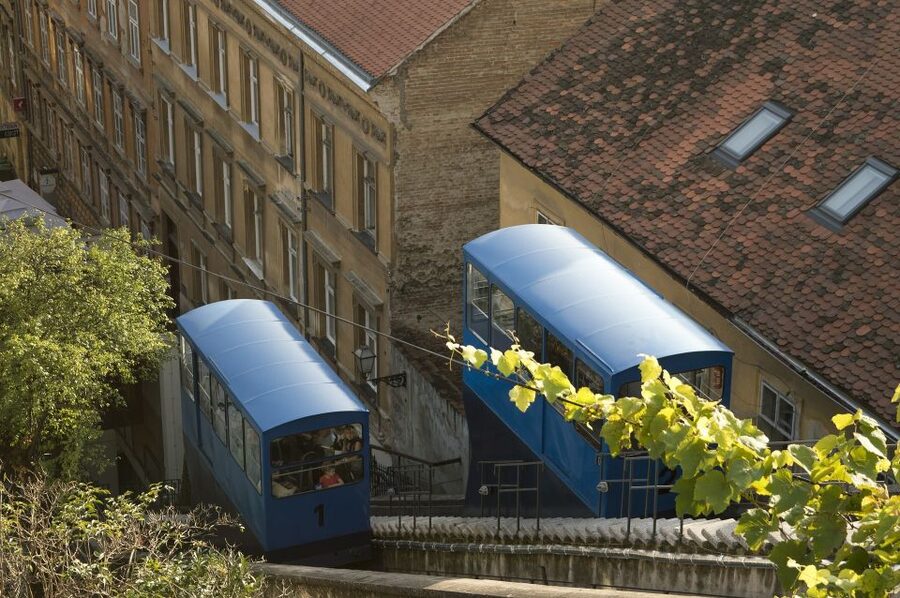
From here, the walk leads toward Zagreb’s famous funicular. The tour describes it as the shortest funicular in the world, and it is one of the city’s most recognizable pieces of transport history. You may not spend a long time riding it, but seeing how it connects the Lower and Upper towns helps explain Zagreb’s layout.
This section is brief, but useful. You get an early look at the contrast between the city’s modern daily rhythm and its older hilltop center.
Ban Jelačić Square and Zagreb’s city story
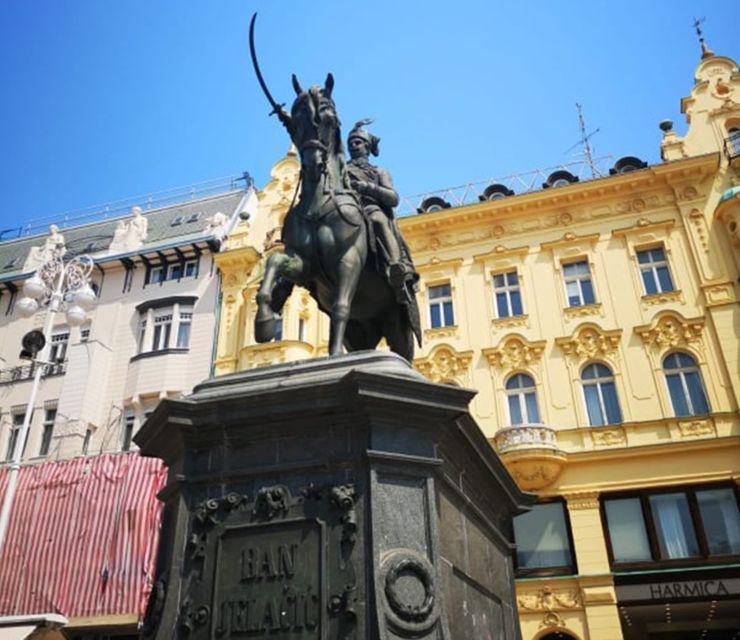
A short stop at the main square introduces Zagreb on a larger scale. Ban Jelačić Square is the place to listen for the basic story of the city, including how its central districts developed and why this spot matters to local life.
I find a guide especially useful here because a square can be hard to read on your own. You may notice the statue, buildings, and people passing through, but you will not necessarily understand how the space fits into Zagreb’s past and present.
This is also a good point to ask questions. If you want to know more about daily life, local celebrations, or where to go after the tour, this is the sort of stop where a conversation can shape the rest of your visit.
Zagreb Cathedral and the meaning of sacred places
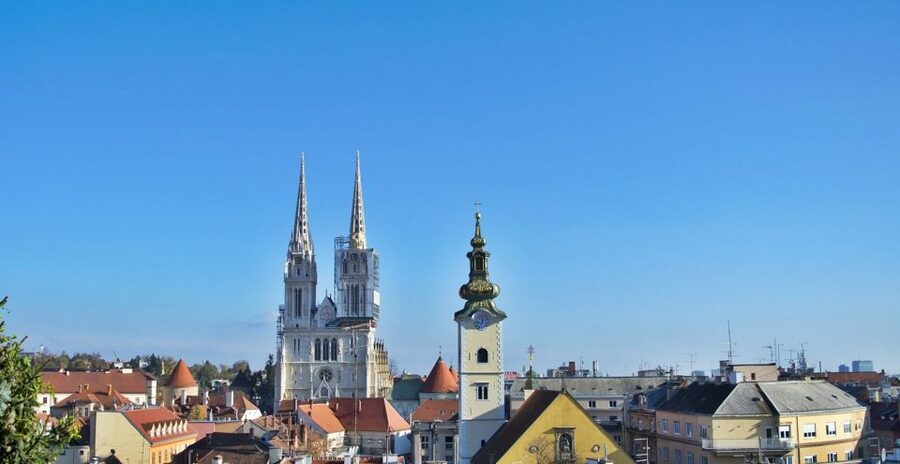
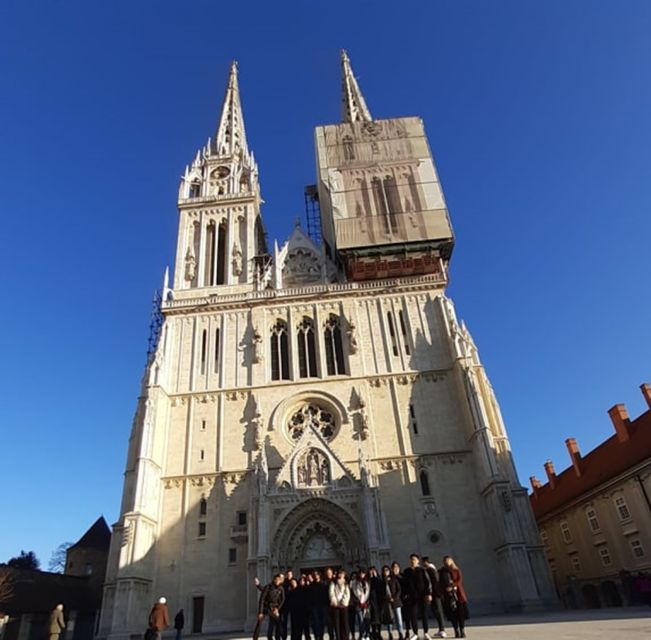
The next major sight is Zagreb Cathedral, the largest Croatian sacred building and one of the country’s important cultural monuments. Its scale gives the walking route a clear focal point after the smaller streets and tunnel.
Your guide explains the cathedral’s place in Croatian religious and cultural life. The stop is not simply about taking a picture of a large church. It gives you a better sense of why religious buildings matter so much in the story of Zagreb and Croatia.
If you enter sacred places, cover your shoulders and knees. This is a practical detail worth handling before you arrive, especially in warm weather. The tour information does not promise a long interior visit, so think of the cathedral as a major stop within the walk rather than a guaranteed extended church tour.
Same base, a different kind of day out:
- From Zagreb: Plitvice & Rastoke Guided Day Trip with Ticket
★ 4.9 · 2,955 reviews - Zagreb: Rastoke & Plitvice Lakes Guided Tour with Ticket
★ 4.9 · 1,897 reviews - Communism & Croatian Homeland War Tour
★ 5.0 · 1,355 reviews - Best of Zagreb with the WW2 Tunnels
★ 5.0 · 973 reviews
Dolac Market and the story of Kumica
One of the most characterful parts of the route is Dolac Market, described as Zagreb’s oldest open market on the site of demolished old walls. This is where the tour shifts from grand monuments to ordinary local life.
The guide introduces you to Kumica, the traditional market woman associated with the market’s long-standing culture. Learning who Kumica is gives the market more meaning than a quick pass through stalls. You begin to see it as a place tied to local identity, food, work, and neighborhood habits.
A local product tasting is included, which fits naturally here. It is a small taste rather than a meal, and food and drinks beyond the included tasting are not covered. If you are hungry, plan to buy anything extra separately.
This stop is also a good reason to take your time. Markets are at their best when you notice small details, and your guide can explain customs or products that might otherwise pass without context.
Stone Gate and one of Zagreb’s most unusual stories
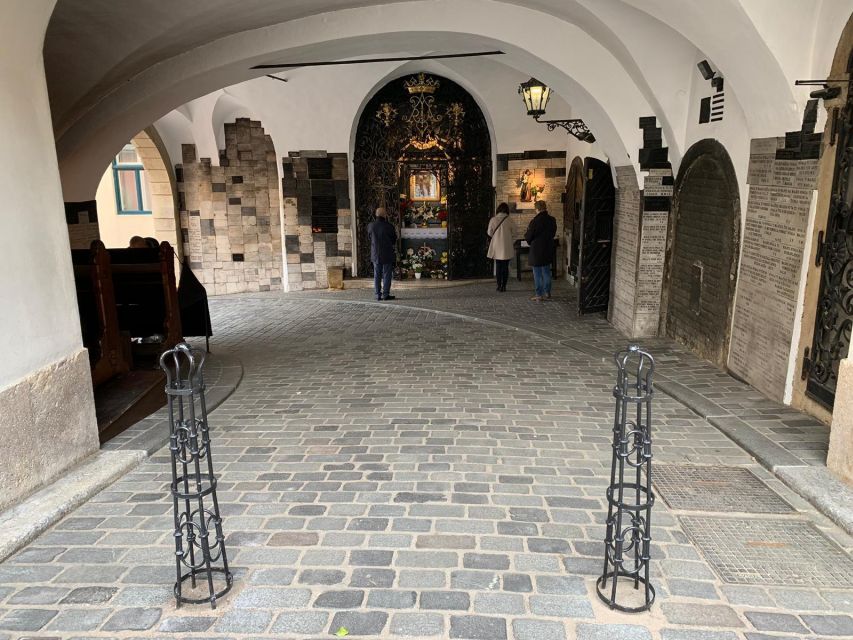
Stone Gate is one of the best-preserved monuments of old Zagreb and one of the city’s key symbols. It is more than an old entrance in the walls. The gate has a religious and local meaning that your guide explains through one of the route’s more unusual stories.
This is the sort of place where a short explanation changes what you see. Without context, you might walk through, take a photograph, and move on. With the story, the gate becomes a living part of Zagreb’s traditions.
Because Stone Gate is a sacred site, dress respectfully. The route is not designed as a silent religious visit, but you should be prepared to behave appropriately when entering or passing through places of worship.
St. Mark’s Square, politics, and old rebellions
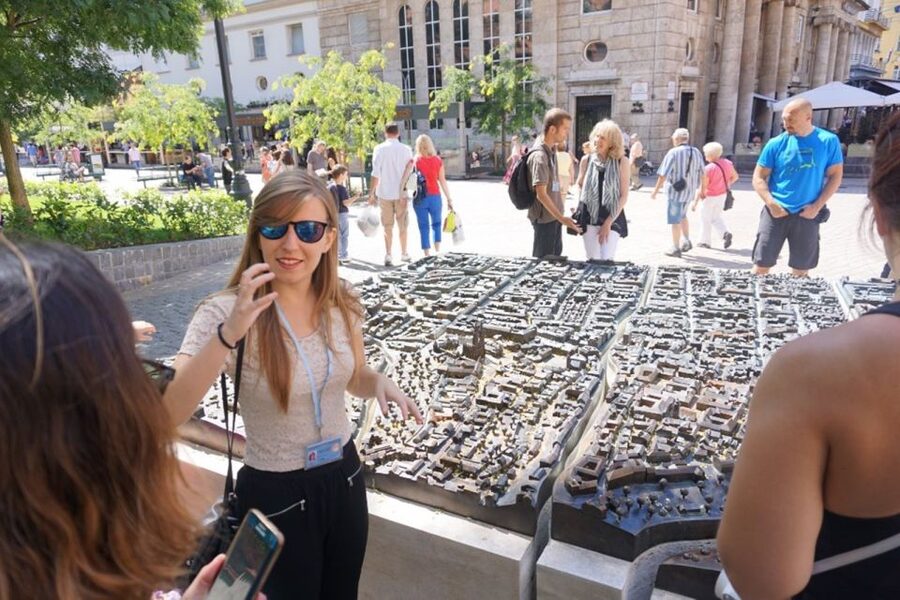
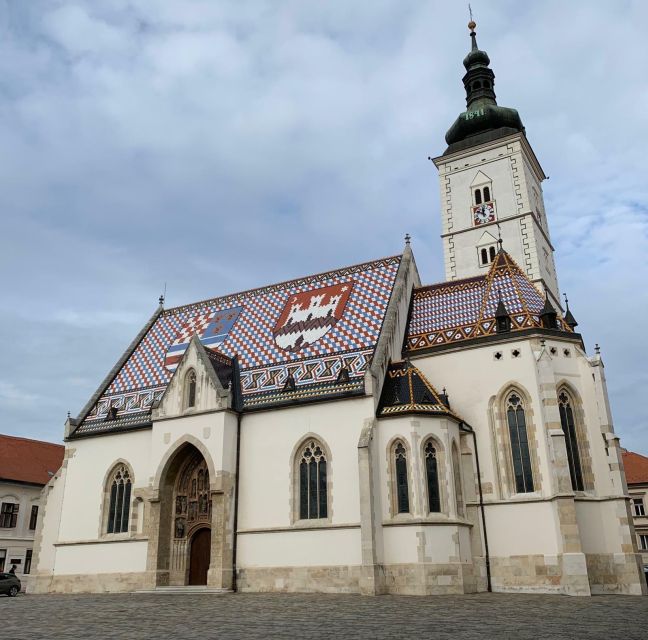
St. Mark’s Square brings together some of Zagreb’s most recognizable symbols. The square and St. Mark’s Church provide the setting for stories about influential kings, peasant rebellions, and the forces that shaped the city and the country.
This is one of the places where a local guide adds real value. Political buildings and historic churches can be visually impressive but hard to understand without a simple explanation of who used them and why they mattered. The guide turns the square into a place of events and competing interests, not just a pretty stop.
The presentation appears to be one of the tour’s main strengths. Iva, a guide named often in booking feedback, is described as friendly, energetic, and able to explain both Zagreb’s past and what it is like to live in the city. That combination matters. You get historical context, but you can also ask questions that help with the rest of your stay.
Lotrščak Tower and the daily cannon
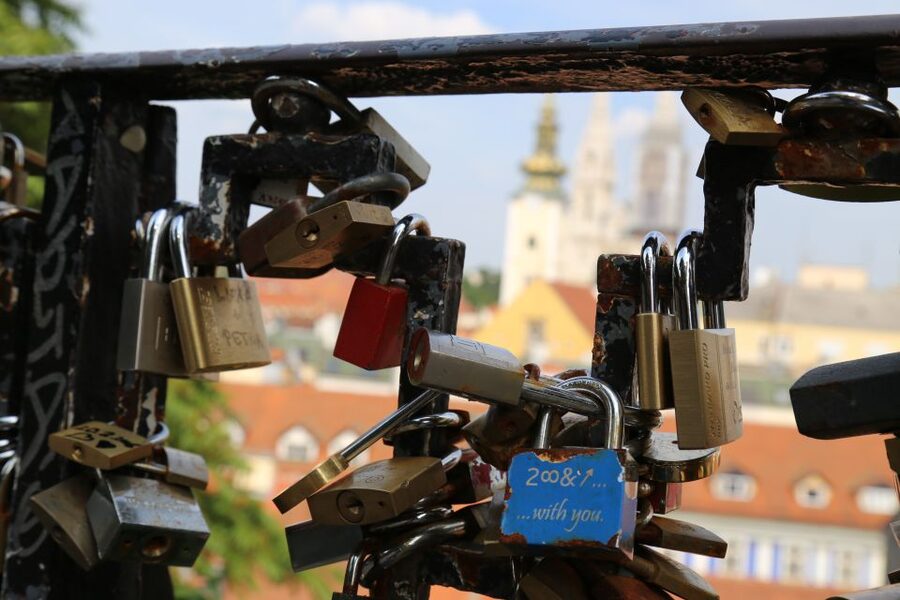
The final major stop is Lotrščak Tower, where the tour explains why a cannon fires every day. It is an odd detail, and exactly the sort of local fact that makes a city walk memorable.
The tower also provides one of the best viewpoints in Zagreb. Bring your camera, but do not rush the stop. After moving through streets, markets, and squares, this is a useful moment to look back over the city and understand how the Upper Town sits above the Lower Town.
The viewpoint gives the tour a satisfying ending because it combines scenery with a story. You are not just told that the tower is old. You learn about its daily cannon tradition and get a visual sense of Zagreb’s layout at the same time.
The guide makes the difference
The route is strong, but the guide is the heart of the experience. The names Iva and Eva appear in the supplied booking information, with Iva mentioned repeatedly. If your guide is Iva, expect an English-language walk with plenty of room for questions, local recommendations, and photos.
Specific praise centers on her warmth, clear English, careful explanations, and eye for details. One especially appealing detail is her ability to identify small facts about sculptures, including the names of horses represented in them. That suggests a guide who pays attention beyond the standard script.
You should still keep your expectations sensible. This is a city walking tour, not a full museum program or a specialist academic lecture. The value comes from connecting many places in one route and hearing stories that help you make sense of what you see.
How much walking and what to wear
The route lasts three hours and includes walking through the historic center and Upper Town. Comfortable shoes are essential. The tour is not recommended for people with mobility impairments, so consider the hills, old streets, and general walking demands before booking.
You should also wear clothing that covers your shoulders and knees for sacred places. This is not merely a suggestion if you plan to enter churches or religious sites.
There is no separate transport included. The experience is built around walking, with the funicular included as part of the route’s story and sightseeing focus rather than presented as a separate transport service. Ask the guide if you need clarification about any particular section before the tour begins.
Is $84 good value for two people?
At $84 per group of up to two, this is not the cheapest way to see Zagreb if you only want a quick list of landmarks. It becomes better value if you want a private-feeling walk, personal answers, and practical advice tailored to your visit.
The price also makes sense for a first day in Zagreb. Three hours with a local guide can help you decide where to return, which market foods to try, and how to spend the rest of your time. Several people specifically valued the guide’s recommendations and the chance to ask questions at their own pace.
For couples, friends, or two family members, the cost is easier to justify. If you are traveling alone, the full group price is less attractive unless you place a high value on having a private guide. The advertised small-group limit of 10 keeps the experience from becoming a large crowd, but confirm whether your booking will be private or shared.
Free cancellation up to 24 hours before the start and reserve-now, pay-later terms also make it easier to fit the walk into a changing schedule. Check starting times before booking.
Who should book this Zagreb walking tour?
I would choose this walk if you are visiting Zagreb for the first time and want the main sights explained in one connected route. It is also a good fit if you care about local traditions, unusual stories, and practical suggestions rather than only taking photographs.
It suits couples especially well because of the $84 price for up to two people. It also works for anyone who enjoys asking questions and having a guide adjust the conversation to their interests.
I would look elsewhere if you have limited mobility, dislike uphill walking, or want extended interior visits at every major building. The tour moves through several sights in three hours, so some stops are introductions rather than long, detailed visits.
Should you book it?
Book this tour if you want Zagreb explained by a local rather than simply photographed. The route covers the city’s essential historic sights, but its real value lies in the connections between them: market customs, sacred traditions, political stories, old walls, and the daily cannon at Lotrščak Tower.
For two people, the price is fair for a small, personal outing, especially if your guide is as attentive and engaging as Iva. Wear good shoes, dress respectfully for churches, and arrive ready to ask questions. Skip it only if walking is difficult or you prefer to explore every site at your own slow pace.
FAQ
Where does the Best of Zagreb Walking Tour start?
The meeting point is Ilica 50 in Zagreb.
How long does the tour last?
The tour lasts three hours.
What language is the tour conducted in?
The live tour guide speaks English.
How much does the tour cost?
The listed price is $84 per group of up to two people.
How large is the group?
The tour is described as a small-group experience limited to 10 participants.
What sights are included?
The route includes Grič Tunnel, Zagreb’s funicular area, the main square, Zagreb Cathedral, the open market, Stone Gate, St. Mark’s Square and Church, and Lotrščak Tower.
Is a food tasting included?
Yes. A local product tasting is included.
Are other food and drinks included?
No. Food and drinks beyond the included local product tasting are not included.
What should I bring?
Bring comfortable shoes. You should also wear clothing that covers your shoulders and knees before entering sacred places.
Is the tour suitable for people with limited mobility?
No. The tour is not recommended for people with mobility impairments.
Can I cancel the booking?
Yes. You can cancel up to 24 hours in advance for a full refund.
Do I have to pay when I reserve?
No. The reserve-now, pay-later option lets you book without paying immediately.
Just added in Zagreb
- Toast to the Morning After: Zagreb Museum of Hangovers Visit★ 4.0 · 39 reviews
- From Split: Transfer to Zagreb with Stop at Plitvice Lakes★ 4.6 · 44 reviews
- Private Walking Tour of Zagreb★ 4.9 · 5 reviews
- Jump into Zagreb: Walking Tour with local guide★ 4.8 · 3 reviews
- From Zagreb: Varazdin Baroque Town & Trakoscan Castle★ 4.9 · 38 reviews
- From Zagreb to Plitvice Lakes and Rastoke – Private day tour★ 5.0 · 4 reviews
- From Zagreb: Plitvice Lakes National Park Full-Day Tour★ 4.7 · 98 reviews
- From Zagreb: Prehistoric and Medieval Croatia Tour★ 4.9 · 3 reviews
Walking Tours, compared.
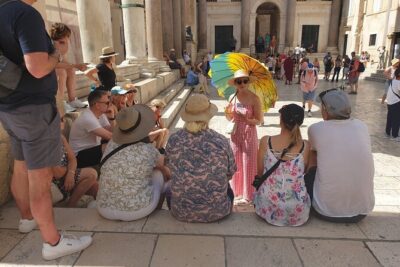
Walking Tour of Split and Diocletian’s Palace
Read our review →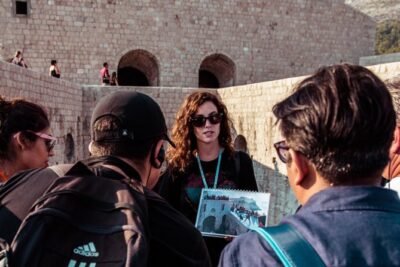
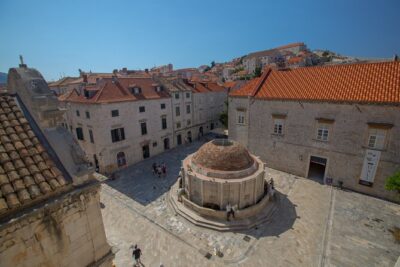
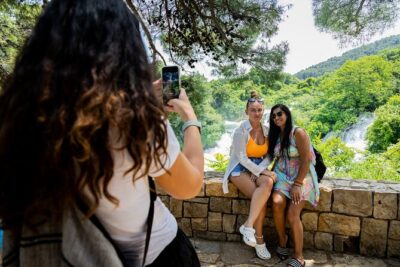
Krka Waterfalls tour with Trogir Walking tour and Krka panoramic boat cruise
Read our review →
City Walls Early Morning or Sunset Walking Tour
Read our review →
Browse the lists this tour appears in