
Reviewed · WALKING TOURS
Walking tour of Zagreb
Zagreb’s best stories are scattered across two levels, and this tour ties them together on foot. You move from leafy Zrinjevac and the market streets to the medieval Upper Town, with local history, folklore, politics, and everyday life filling the gaps between the landmarks.
I like the clear city orientation and the way the guide connects old Zagreb with modern Croatian life. I also like the compact route: Dolac Market, Grič Tunnel, the Upper Town, and Tkalčićeva Street give you a useful first look in roughly two and a half hours.
The main catch is the funicular closure until March 2026. The ride is included only if it operates, and some dates may also affect access to the WWII tunnel. Earthquake repairs have also affected the cathedral and other buildings, so expect construction around parts of the historic center.
Key points to know before booking
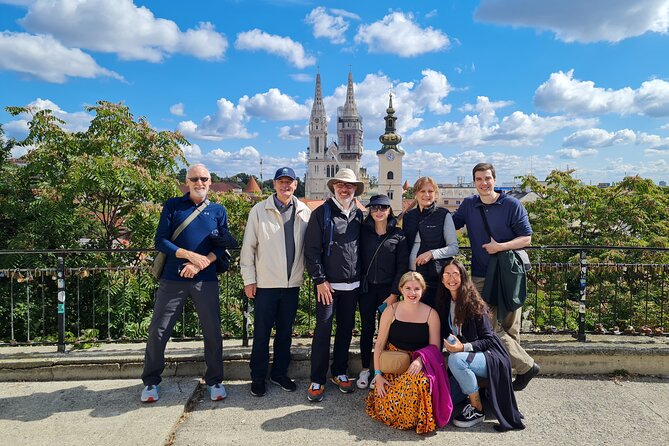
- The route covers both sides of central Zagreb: You begin around Zrinjevac and Ban Jelačić Square, then climb toward the Upper Town before descending to Tkalčićeva Street.
- Guides make the difference: Robert, Marko, Iva, Lucia, and other local guides are praised for clear explanations, humor, restaurant tips, and thoughtful answers.
- The funicular is not currently guaranteed: It is closed for renovation until March 2026, despite the ride being part of the planned experience.
- Grič Tunnel adds an unusual stop: This WWII-era passage gives the walk a practical, slightly mysterious change of pace.
- The group can reach 25 people: That is still manageable for a city walk, but it is not an intimate private tour.
- Book it early in your stay: The route gives you a useful map of Zagreb and helps you choose restaurants, museums, and sights for later.
Starting beneath the trees at Zrinjevac
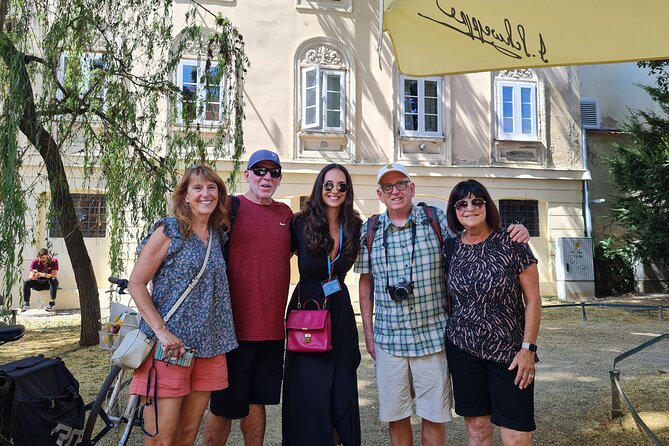
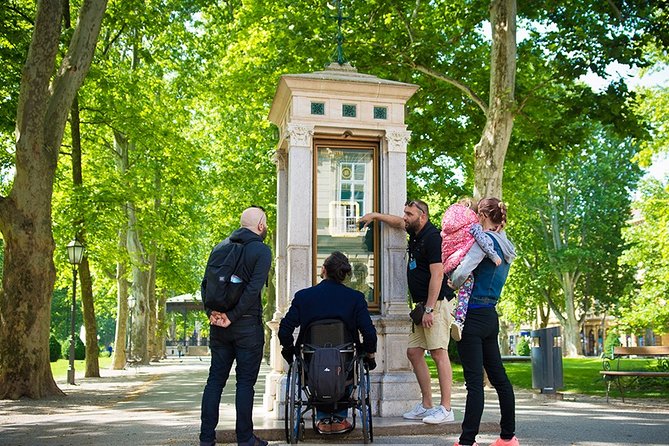
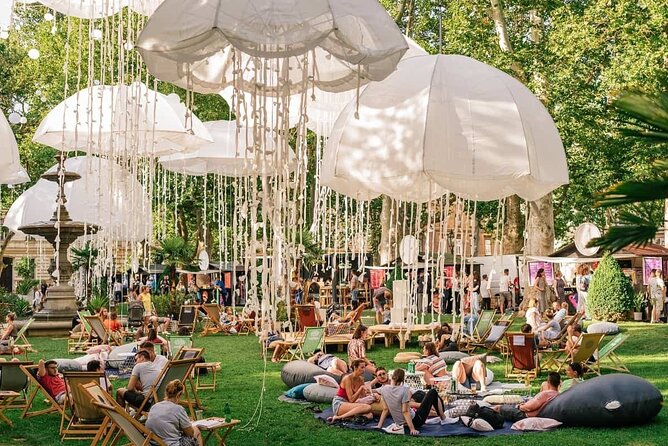
The meeting point is Zrinjevac 2, beside one of Zagreb’s most pleasant central parks. The park’s formal paths, trees, and public art make a calm opening scene, and your guide uses the setting to introduce the city and its people.
You should arrive with a few minutes to spare. One useful meeting-point tip is to look for the clock in the park rather than rely entirely on Google Maps or Apple Maps. The map pin can be less helpful than the simple visual landmark.
Zrinjevac is also a good place to begin because it shows Zagreb’s lower town at its most orderly. From here, you are close to shops, cafés, museums, and the main pedestrian areas. The guide can give you the basic shape of the city before the route becomes more historical.
Other guided walks in Zagreb:
- Zagreb: Small Group Walking Tour City Center and WW2 Tunnels
★ 4.9 · 895 reviews - Zagreb: City and WWII Tunnels Walking Tour
★ 4.9 · 845 reviews - Zagreb Small Group Guided Walking Tour with WW2 Tunnels
★ 5.0 · 380 reviews
Bogovićeva Street and the rhythm of local Zagreb
The short walk along Bogovićeva Street shifts the mood from parkland to café life. Bars and restaurants line this well-used street, so you get an early look at how central Zagreb works after the monuments are out of sight.
This is not a long stop, and it is not intended as a food tour. Its value is context. You begin to see the city as a place where work, coffee, conversation, and old architecture overlap.
Several guides are praised for restaurant advice, so this is a good moment to ask where to eat later. Marko and Robert, in particular, are described as generous with suggestions for food, museums, and ways to use the rest of your time in Zagreb.
Ban Jelačić Square, the city’s main meeting place
Ban Josip Jelačić Square is Zagreb’s central reference point. The statue of Ban Josip Jelačić gives the square its name, while the surrounding streets lead toward the market, the cathedral, the lower town, and the Upper Town.
A guide is useful here because the square’s importance is not just visual. It has served as a place for public gatherings and daily city life, and the guide can explain its place in Croatian politics and modern Zagreb.
The tour ends back near this square, which makes the route practical. You are not left at an unfamiliar edge of town. Afterward, you can continue toward the market, restaurants, public transport, or nearby sights.
Zagreb Cathedral and the limits of sightseeing during repairs
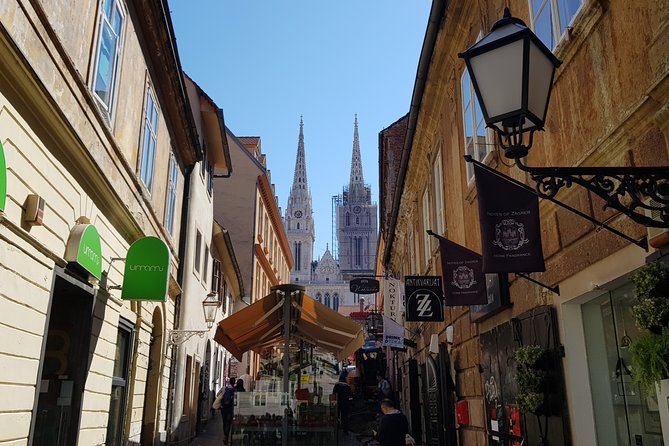
The cathedral is one of Zagreb’s defining landmarks, with its tall profile visible from several parts of the center. The planned stop allows about 20 minutes for the guide to explain the building and its role in the city.
Do not assume you will enter. Earthquake damage has led to repair work, and accounts of the tour describe construction materials around the cathedral and restrictions on interior access. Conditions can change, but you should treat this as an exterior-focused stop unless your booking information says otherwise.
That limitation does not make the stop pointless. A local guide can explain what you are seeing, why the cathedral matters, and how the earthquake has affected Zagreb’s historic center. Still, if your main aim is detailed interior architecture, this walk may not provide it.
Same base, a different kind of day out:
- From Zagreb: Plitvice & Rastoke Guided Day Trip with Ticket
★ 4.9 · 2,955 reviews - Zagreb: Rastoke & Plitvice Lakes Guided Tour with Ticket
★ 4.9 · 1,897 reviews - Communism & Croatian Homeland War Tour
★ 5.0 · 1,355 reviews - Best of Zagreb with the WW2 Tunnels
★ 5.0 · 973 reviews
Dolac Market, Zagreb’s most sensory stop
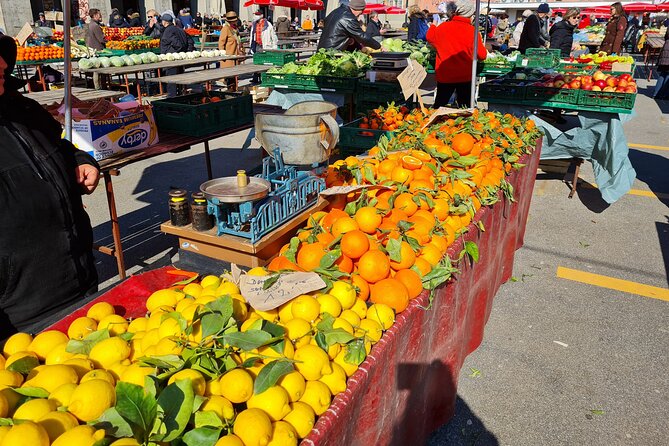
Dolac Market is one of the strongest parts of the route. It is Zagreb’s oldest green market, and the tour gives you time to notice more than the building itself. You hear about local food products and get a sense of how residents shop and eat.
The market also helps keep the tour grounded in daily life. Grand squares and old towers can make a city feel like a museum. Dolac shows you the practical side of Zagreb, where food, routine, and conversation matter as much as monuments.
I would pay attention here and ask questions. The guide may be able to explain products or customs that are easy to miss when you walk through alone. The stop lasts about 15 minutes, so it is an introduction rather than time for a full market meal or extended shopping.
Through Grič Tunnel beneath the hill
Grič Tunnel is a WWII-era passage beneath Grič Hill. It was built for military use and now offers a direct route through the center. The tunnel is one of the walk’s more unusual stops because it changes the setting completely: you leave the open market streets and pass through a piece of Zagreb’s wartime infrastructure.
The tunnel takes about 10 minutes on the planned route. That is enough to understand its purpose and atmosphere without turning the tour into a long underground visit.
Access is not guaranteed on every date. The tour information specifically warns that the tunnel may not operate, so do not book this walk solely for the tunnel. If it is closed, the rest of the route still covers the city’s major central sights.
The funicular and the climb to the Upper Town
The Zagreb Funicular Railway is designed to carry you up toward the historic Upper Town. The ride itself takes only about five minutes, and its appeal is partly its brevity. It is a small historic railway rather than a major transport experience.
The ticket is included when the funicular is running. The important current detail is that the railway is closed for renovation until March 2026. If your visit falls before reopening, the tour must handle the climb another way, so check the operating status before you book or arrive.
This is a good example of why the tour’s value does not rest on a single attraction. The funicular is a pleasant shortcut, but the main experience is the guide-led walk through Zagreb’s central districts and medieval streets.
Lotrščak Tower and the Grič cannon
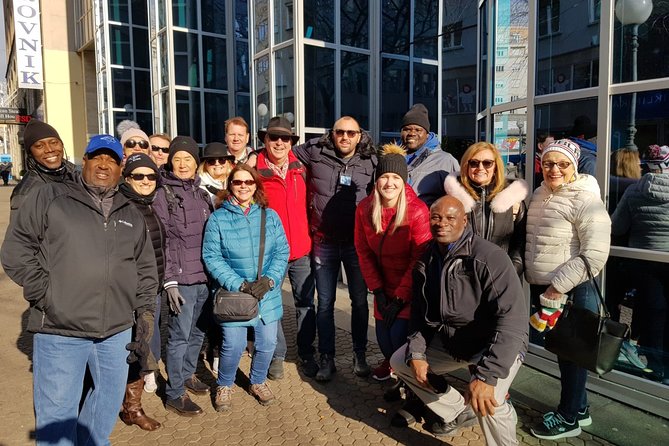
Lotrščak Tower is a historic guard tower on the Upper Town route. It houses the famous Grič cannon, which is tied to Zagreb’s daily noon tradition.
The stop itself is short, about five minutes, but it gives the guide a chance to explain how the Upper Town was defended and how old military features became part of modern city life. You may also hear the story behind the cannon, which adds a bit of local character to what could otherwise be just another old tower.
The schedule is fairly brisk here. If you want extensive time at the tower itself, or hope to visit every interior, this tour is not built for that. It is meant to connect the landmark to the larger story of the hill.
Upper Town Gornji Grad in one long, useful stop
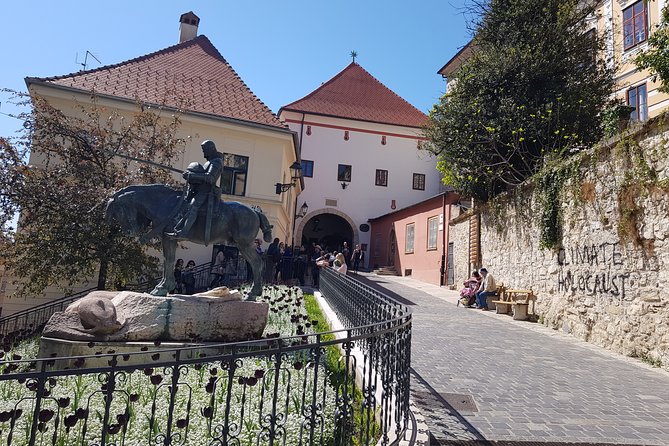
The 50-minute Upper Town section is the heart of the tour. This is where Zagreb becomes most atmospheric, with medieval lanes, open views, and major national buildings close together.
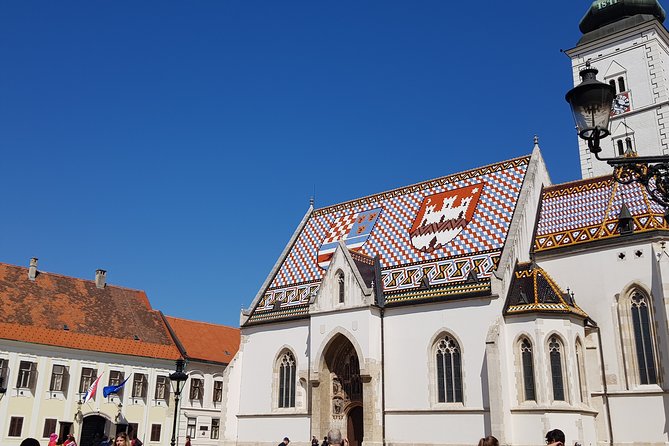
The guide points out St. Mark’s Church, the Croatian Government Building, and the Croatian Parliament. You also have time for views across the city and for photographs. The colorful tiled roof of St. Mark’s Church is one of the visual highlights, although the route does not promise interior entry.
You may also pass the Museum of Broken Relationships, one of Zagreb’s best-known museums. The tour helps you decide if it deserves a later visit, but the museum entry is not part of this experience.
This section rewards questions. Guides such as Robert, Marko, Iva, and Lucia are repeatedly praised for explaining both older events and present-day life. You can ask about Croatian politics, military events, folklore, city customs, or what changed after the earthquake.
The pace appears suited to a broad range of ages. One guide was specifically praised for speaking loudly and clearly, while other comments describe a relaxed pace and plenty of time for questions. You still need to be comfortable walking through old streets and handling some uphill movement, especially if the funicular is closed.
Petrinjska Gate and the descent to Tkalčićeva
The route continues through Petrinjska Pyli, a medieval city gate. The stop is brief, but it gives you another physical reminder that Zagreb’s old center was once a fortified town.
From there, the walk descends toward Tkalčićeva Street. This change in elevation also changes the atmosphere. The Upper Town feels historic and formal, while Tkalčićeva is a pedestrian zone known for bars and restaurants.
The final 15-minute stop is useful for planning your evening. You can ask the guide about dining, drinks, or nearby places to continue exploring. Since the tour ends at Ban Jelačić Square, you can easily return to the main center after the street stop.
What the guides add to the walk
The strongest part of this experience is not the number of stops. You can find most of them on a map. The value comes from having someone explain how the pieces fit together.
Robert is described as funny, approachable, and good at covering both current events and daily life. Marko is praised for answering questions with ease and for making a large amount of information entertaining. Iva and Lucia are also described as friendly and well prepared, with Iva helping connect museum information and city history.
The guide style may vary because several people lead the tours. That is normal for a small-group operation. The consistent strengths are clear explanations, local stories, a good pace, and useful recommendations for the rest of your stay.
The maximum group size is 25 people. That is small enough for a guide-led city introduction, though you should not expect the quiet, flexible rhythm of a private walk. If you want to ask many questions, stay near the guide and speak up when the group pauses.
Is $24.20 a fair price?
At $24.20 per person, this is a reasonable way to get oriented in Zagreb. The price includes the licensed guide and the funicular ticket when the railway operates. Even without the railway, you are paying for roughly two to three hours of structured explanation across the lower and Upper Towns.
The value is strongest if you take the tour early in your visit. You can use the guide’s suggestions to choose restaurants, museums, and later walks. You also avoid spending your first day wandering past major sights without understanding their place in the city.
It is less useful for you if you prefer to explore alone, stop for long meals, or enter every building. Several stops are short, and the walk focuses on broad context rather than extended visits inside individual attractions.
Who should book this Zagreb walking tour?
I would choose this tour if you want a strong first look at Zagreb, especially if you are in town for only a short stay. It suits history fans, first-time visitors, couples, families with older children, and anyone who likes to ask a local guide practical questions.
It also works well for people who want both famous landmarks and ordinary city life. Dolac Market, Bogovićeva Street, and Tkalčićeva keep the walk from becoming a parade of monuments.
You should think twice if stairs, hills, or a two-hour walking route are a serious concern. The funicular closure may add more uphill walking, and the cathedral or tunnel may not be fully available. The tour also requires good weather, with a different date or full refund offered if the operator cancels for poor conditions.
Free cancellation is available up to 24 hours before the start time. Inside that window, the payment is not refunded, and changes are not accepted.
My booking advice
Book this early in your Zagreb stay, and use the first few minutes to confirm the meeting point by the clock in Zrinjevac Park. Ask about the funicular and Grič Tunnel before the walk begins, especially if you are visiting before March 2026.
For a modest price, you get a practical city map, a run through Zagreb’s major central sights, and the local context that is hard to pick up from signs alone. I would book it if you want an entertaining orientation with room for questions. I would skip it only if you want a private, slow-paced tour or guaranteed access inside the cathedral, tunnel, or other buildings.
FAQ
How long does the Walking Tour of Zagreb last?
The tour lasts approximately two to three hours. The planned route takes about two and a half hours, depending on walking pace and operating conditions.
What is the price per person?
The listed price is $24.20 per person.
Where does the tour start?
The meeting point is Zrinjevac 2, 10000 Zagreb, Croatia. The guide’s meeting area is in Zrinjevac Park.
Where does the tour end?
The tour ends at the Ban Josip Jelačić Statue on Trg bana Josipa Jelačića, near Zagreb’s main square and close to the starting area.
Is the tour offered in English?
Yes. The tour is offered in English.
Is the funicular ticket included?
Yes, the funicular ticket is included if the railway is operating. The funicular is closed for renovation until March 2026.
What happens if the funicular is not operating?
The tour information warns that the funicular may not operate on certain dates. The tour still covers the Upper Town, but the planned funicular ride may not be available.
Can I visit Zagreb Cathedral during the tour?
The cathedral is included as an exterior sightseeing stop. Access can be affected by earthquake repairs, so interior entry is not guaranteed.
Is Grič Tunnel always open during the tour?
No. The WWII tunnel may not operate on certain dates, so it is not guaranteed.
What is the maximum group size?
The tour can have a maximum of 25 participants.
Can I cancel for a full refund?
Yes, if you cancel at least 24 hours before the experience start time. Cancellations made less than 24 hours before the start time are not refunded.
What happens if bad weather cancels the tour?
If the operator cancels because of poor weather, you can receive a different date or a full refund.
Just added in Zagreb
- Private Wine Road Day Tour from Zagreb★ 4.5 · 11 reviews
- Private Wine Tour from Zagreb: Two Local Wineries & Samobor★ 5.0 · 18 reviews
- Painting party at Art Bottega – Paint & Wine Studio in Zagreb★ 5.0 · 23 reviews
- Fairytale Castle & Wine Tasting & Lunch★ 5.0 · 19 reviews
- Private Transfer: Zagreb Airport (ZAG) to Zagreb Hotel★ 5.0 · 52 reviews
- Zagreb Airport One Way Private Transfer To or From Airport★ 5.0 · 132 reviews
- From Zagreb: Transfer to Split & Plitvice Lakes Guided Tour★ 4.7 · 463 reviews
- All of Zagreb Bike Tour★ 5.0 · 97 reviews
Walking Tours, compared.
Walking Tour of Split and Diocletian’s Palace
Read our review →
Krka Waterfalls tour with Trogir Walking tour and Krka panoramic boat cruise
Read our review →
City Walls Early Morning or Sunset Walking Tour
Read our review →
Browse the lists this tour appears in