
Reviewed · WALKING TOURS
Discover The Old Town Split 1.5h walking Small group tour
Diocletian’s Palace is not an isolated ruin behind a fence. It is the heart of Split, with homes, cafés, shops, squares, and narrow lanes built into and around the old Roman complex. This 90-minute walk helps you make sense of that wonderfully tangled center, beginning near the harbor and leading into the palace and medieval Old Town.
I like two things here. First, a local guide can explain how Roman walls became part of an everyday Croatian city. Second, the tour is short enough to fit a cruise stop or a busy day in Split, yet long enough to cover the major sights. The main consideration is that entrance fees are not included, so some monuments may require an extra payment if you want to go inside.
Key points at a glance
- Roman ruins in a living city: Walk through Diocletian’s Palace while people shop, eat, and live among its ancient walls.
- A useful 90-minute orientation: Cover the Riva, palace area, Peristyle courtyard, cellars, cathedral, and medieval lanes without giving up an entire morning.
- Strong local guide element: Past guides including Ina, an archaeologist, and guides such as Marko, Aneka, Anita, and Toni have been praised for clear explanations, humor, and local tips.
- Small-group format with some variation: The tour is designed for a small group, though past group sizes have ranged from just a few people to around 19.
- Good value at $29: The price is modest for a licensed guide and a focused introduction to Split’s complicated Old Town.
- Plan for uneven walking: Wear comfortable shoes, and note that the tour is not suitable for wheelchair users.
Why Diocletian’s Palace is different from a normal ruin
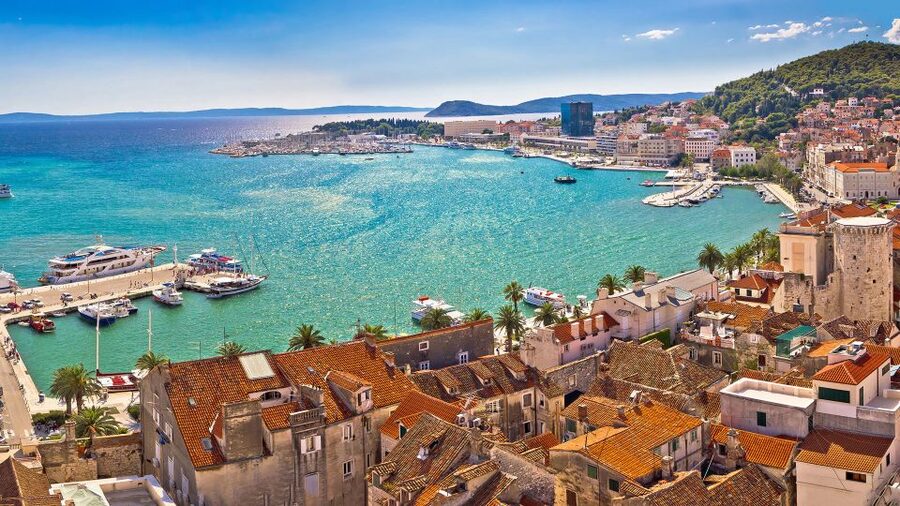
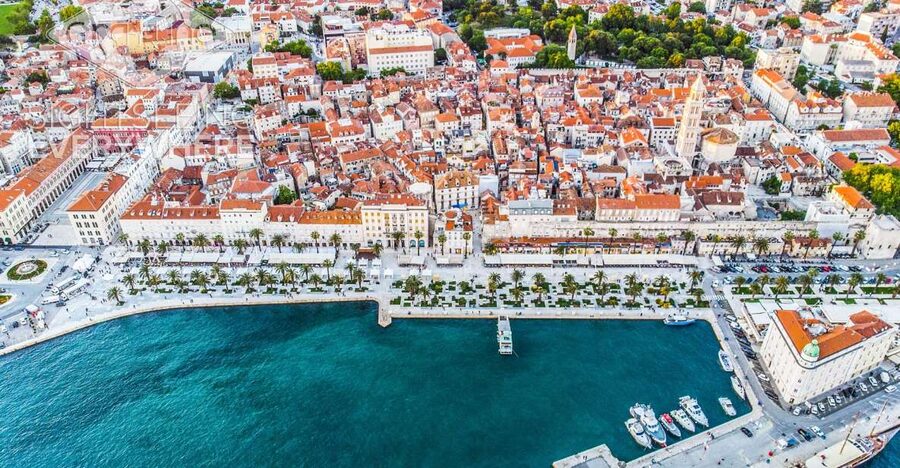
The first surprise in Split is that the palace is still part of the city’s daily life. You are not simply walking around a preserved Roman monument. You are moving through streets where the old stonework has been reused for centuries.
The Roman emperor Diocletian built his palace near the Adriatic as a retirement residence and fortress. Today, its walls and rooms form the framework of central Split. That makes the history easier to picture, but it can also make the site confusing. A modern doorway may sit inside an ancient wall, and a narrow lane may follow the footprint of a Roman passage.
This is where the guide matters. A good explanation turns scattered stone into a readable story: Roman construction, medieval changes, later homes and shops, and the city that grew inside the old palace. The tour is less about checking off isolated sights and more about understanding how Split developed.
The experience is conducted in English with a licensed local guide. Guides named in past bookings include Marko, Ina, Aneka, Anita, Toni, Maja, Roko, Gabriela, Viktoria, and Daniella. Their styles have varied, but the strongest pattern is clear: local history, friendly delivery, humor, and practical advice are central to the walk.
Other guided walks in Split:
- Split: Old Town and Diocletian Palace Walking Tour
★ 4.9 · 4,727 reviews - Walking Tour of Split and Diocletian’s Palace
★ 5.0 · 2,588 reviews - Krka Waterfalls tour with Trogir Walking tour and Krka panoramic boat cruise
★ 5.0 · 1,659 reviews
Starting on the Riva promenade
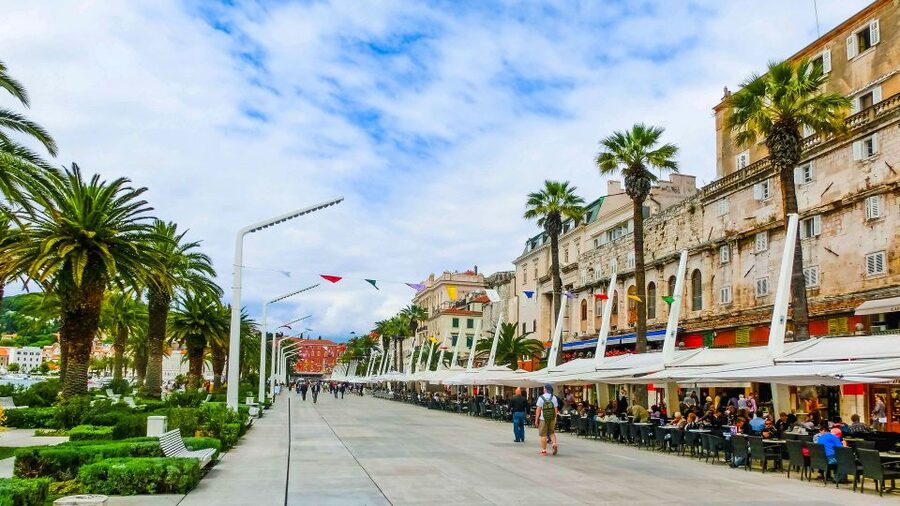
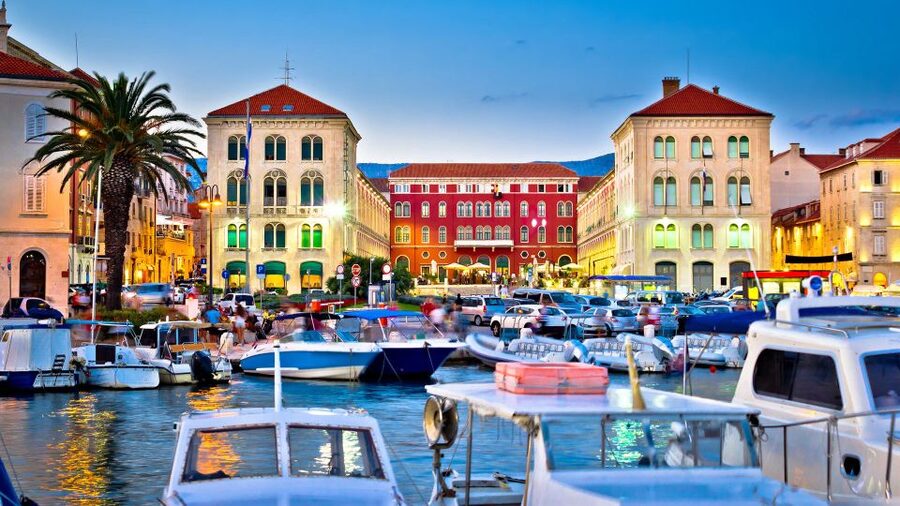
You meet near the supplier’s office at Obala Hrvatskog narodnog preporoda 21, along Split’s famous Riva promenade. The office is close to the harbor and can be identified by the local supplier’s sign and staff wearing matching shirts.
Arrive 15 minutes before departure. That small cushion matters in Split, where the Old Town can be busy and the lanes around the palace are easy to confuse. The tour may also be available from two listed starting points connected with the local office, ATM, and Auro Domus, so check your booking details carefully before setting out.
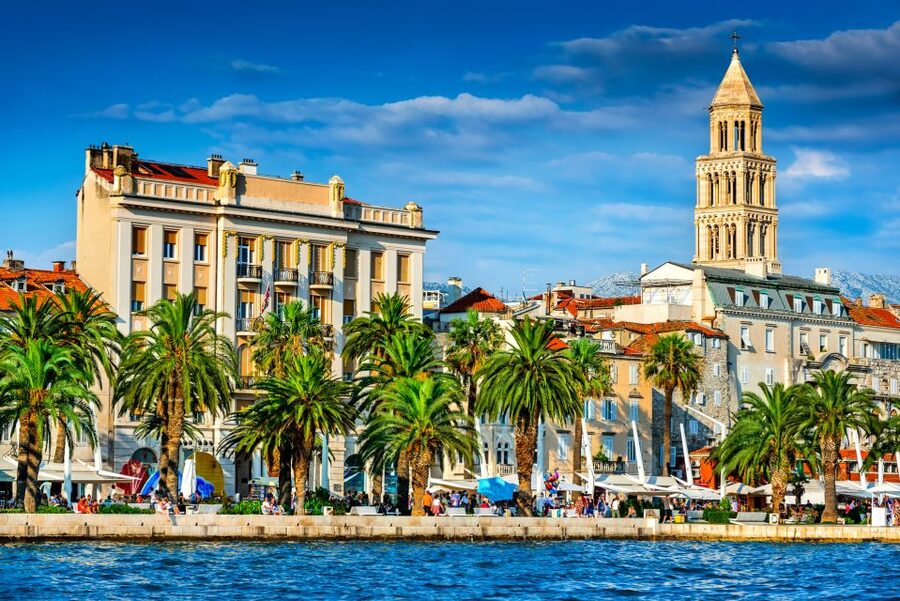
Beginning on the Riva gives you a useful first view of Split. The harbor side helps you understand the palace’s position and scale before you enter the dense streets. Facing the water, the palace feels like a massive stone stronghold. Once inside, it becomes a maze of alleys, courtyards, shops, and homes.
Your guide usually begins with the broad story of Split, then connects the waterfront to the Roman complex. Past guides have also used the opening to bring the story forward to modern Croatia, rather than stopping at the Roman period. That wider time span is useful because Split is not only an archaeological site. It is a city shaped by many periods.
Entering the palace through Split’s narrow lanes
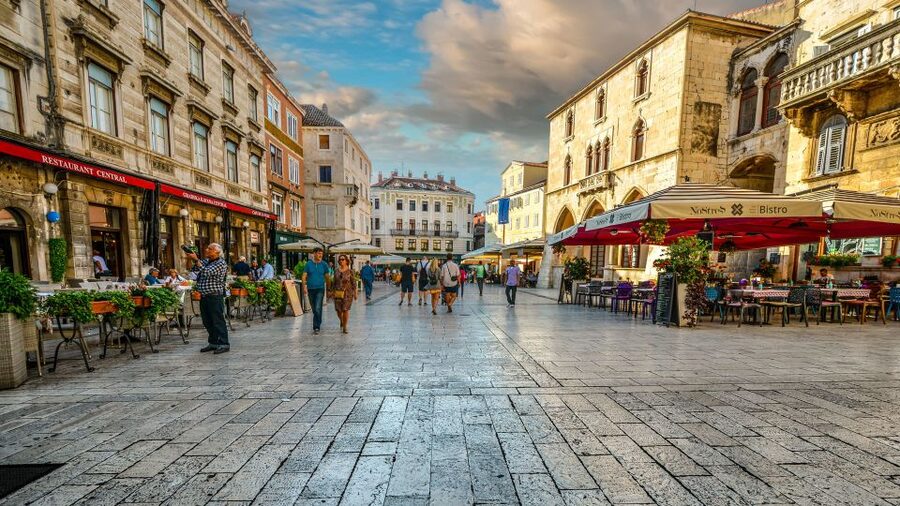
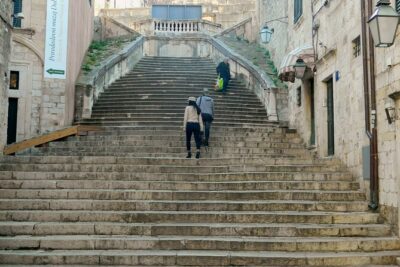
The walk continues into the Old Town, where the scale changes quickly. Broad harbor views give way to narrow streets and small openings. Some lanes are lined with souvenir stores, while others lead toward cafés, squares, or pieces of Roman masonry.
This part of the walk is ideal for getting your bearings. You see how the palace survives in fragments and full sections at the same time. Walls, passageways, and underground spaces help explain the original plan, while the medieval streets show how later residents adapted the site.
Do not expect a quiet museum setting. The center is an active part of Split, and the route passes through places used by residents and businesses. That is a benefit if you want an authentic feel, but it can make listening harder at busy moments. Stay close to the guide and avoid drifting behind when the group turns into a side street.
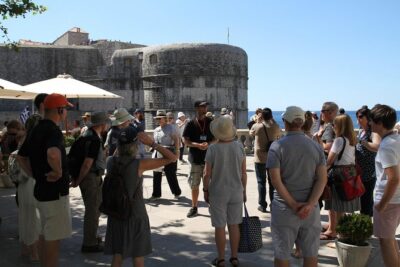
Group size can vary. The experience is presented as a small-group walk, and past outings have included groups of only two couples or around five people. One group numbered 19, so do not assume every departure will feel intimate. Smaller groups allow more questions and easier conversation, while a larger group may require you to stand close to hear every explanation.
The Peristyle courtyard and palace cellars
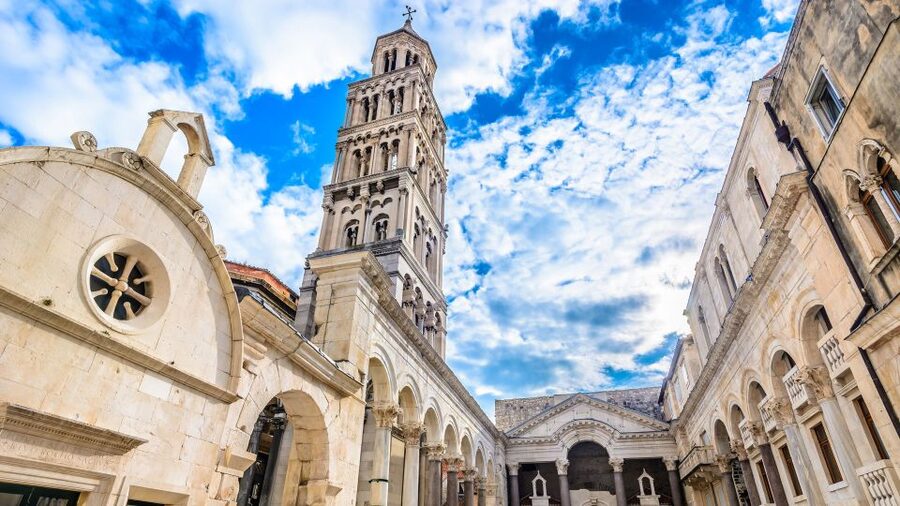
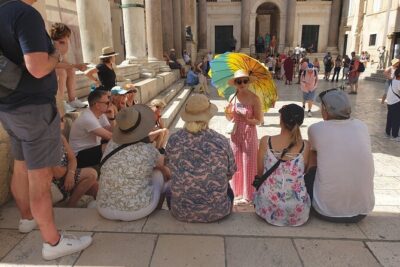
The Peristyle courtyard is one of the key stops. This formal Roman space gives you the clearest sense of the palace as an imperial residence. Stone columns and surrounding walls create a strong visual link to the Roman past, even as modern Split continues around them.
A guide can do more here than recite dates. The layout helps explain how imperial power was displayed and how the palace worked as both a residence and a fortified complex. The courtyard is also one of the places where the old and new city meet most clearly.
The palace cellars add another layer. They preserve the lower structure of the complex and show how the Roman plan supported the rooms above. You will see them as part of the tour’s explanation, but entrance fees for monuments are optional and not included. Ask your guide or the local office what is covered on your departure if entering a paid area is important to you.
The distinction matters for budgeting. At $29 per person, the walking tour itself is reasonably priced for a licensed guide and a focused introduction. You should still set aside extra money if you want to enter optional monuments. The tour works well as an overview, then you can decide which paid interiors deserve more of your time afterward.
Same base, a different kind of day out:
- Split: Krka Waterfalls Trip with Boat Cruise and Swimming
★ 4.8 · 10,519 reviews - From Split: Krka Waterfalls, Food & Wine Tasting Tour
★ 5.0 · 9,326 reviews - Blue cave, Mamma Mia and Hvar, 5 islands speedboat tour
★ 5.0 · 7,150 reviews - From Split: Krka Waterfalls, Food & Wine Tasting Tour
★ 4.9 · 6,598 reviews
Cathedral of St Domnius, once Diocletian’s mausoleum
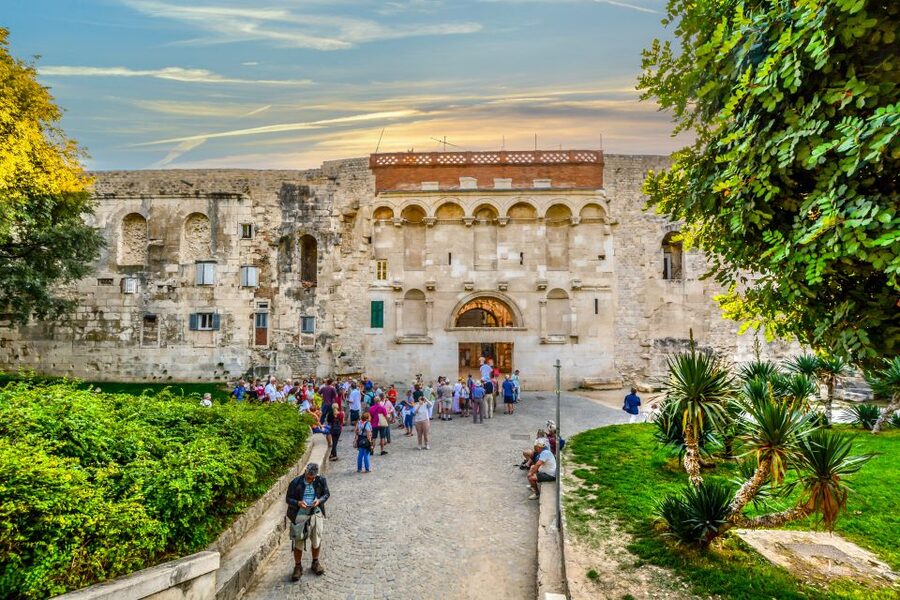
The Cathedral of St Domnius occupies what was once the mausoleum of Diocletian. That change tells you a great deal about Split in one stop. A building created for an emperor’s burial became part of the city’s Christian center.
Your guide explains the connection between the Roman structure and the cathedral, helping you see why the building is so important. The point is not simply that one structure is old. It is that later generations reused and reshaped an earlier imperial site.
The cathedral is part of Split’s UNESCO-listed historic center, but the UNESCO label alone does not explain what you are seeing. The guide’s value is in showing how the palace, mausoleum, cathedral, streets, and squares belong to one long story.
Again, entrance is optional and not included. If you plan to go inside, confirm the current arrangement before the tour begins. If you remain outside, the explanation still gives you a useful understanding of the building’s place in the Old Town.
Medieval Split among cafés and souvenir shops
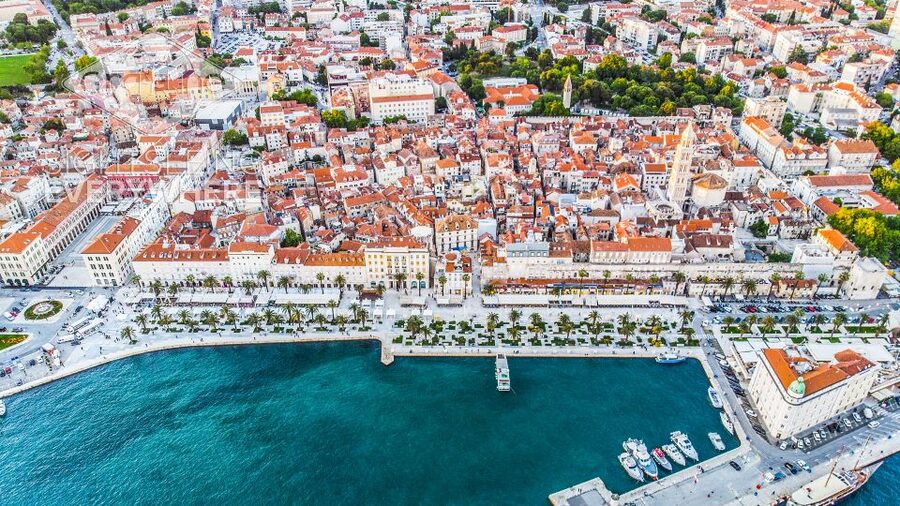
After the Roman sections, the route moves through the medieval part of the city. This is where Split feels least like a conventional archaeological site. Stone lanes bend around older walls, cafés occupy small spaces, and souvenir shops sit beside buildings with centuries of change behind them.
I like this portion because it prevents the tour from becoming a Roman history lecture. You see the city as a place that kept adapting. The medieval streets also give you practical orientation for the rest of your visit. You can return later for a meal, a drink, shopping, or a second look at a square you passed too quickly.
The tradeoff is that the souvenir streets can feel commercial. If you want only untouched ruins, parts of this route may seem busy or tourist-focused. But that is also the honest character of central Split. The palace is not preserved apart from modern life. It is surrounded by businesses, homes, and the normal movement of a popular coastal city.
Several guides have added local suggestions after or during the walk. Roko, for example, has been praised for mixing history with present-day information and recommending a restaurant. Daniella was also noted for offering local discounts. These extras are not guaranteed, but a local guide can often help you decide what to do next.
How the guiding style affects your experience

The guide is the main reason to choose this tour instead of using a map and walking alone. Split’s center is compact, but its story is not simple. Without context, you may see attractive stone lanes without understanding which parts are Roman, medieval, or later.
Past guide feedback points to several useful qualities. Aneka has been described as personable, clear, funny, and strong on local detail. Ina, who is also an archaeologist, used the city’s Roman and medieval changes to make the route easier to understand. Marko has been praised for an informative and friendly approach, and Toni for combining historical facts with modern local details.
One particularly useful strength is flexibility. A guide may adjust explanations to your interests or find shade for pauses in hot weather. That matters in Split’s summer heat, especially when you are standing in open squares or moving over old stone surfaces.
You should still keep expectations realistic. A 90-minute tour cannot cover every part of the palace or provide a full archaeological study. One past walk ran beyond two hours because the guide had so much to explain, but you should not count on an extended departure. Treat the scheduled 90 minutes as the reliable planning time.
Is $29 a fair price?
At $29, this is a good-value introduction to Split if you want a human explanation rather than a self-guided walk. You are paying for a licensed local guide, not transportation or monument entry. The tour also saves you time by linking the palace, Peristyle, cellars, cathedral, and medieval streets in one coherent route.
The value is strongest on a first visit. You get the basic map of the Old Town and enough historical context to make later exploring more rewarding. It is also a practical choice for a short stay or cruise call, when you want an organized experience without committing to a half-day excursion.
The value is weaker if you already know Diocletian’s Palace well or want extensive time inside paid monuments. In that case, a private guide or a longer specialist visit may suit you better. For most first-time visitors, though, the modest price and short schedule make this an easy addition to a day in Split.
Free cancellation is available up to 24 hours before departure, and you can reserve now and pay later. Those terms help if your schedule depends on weather, ferry timing, or a cruise itinerary.
Who should book this walk?
This tour fits you best if you want:
- A first introduction to Split’s Old Town
- Roman history explained in plain English
- A short activity that leaves most of the day free
- Local tips about Split beyond the ancient monuments
- A guided route through streets that can be confusing at first
- A reasonably priced experience for a couple, family, or small group
It is also a good fit for history fans who prefer a city to a museum. You see the ruins in their real setting, with modern Split built around them.
It is less suitable if you use a wheelchair. The tour is not wheelchair accessible, and the route through narrow historic streets and old surfaces may be difficult. Children can join, but they must be accompanied by an adult. Pets are not allowed.
Wear comfortable shoes. The walk is only 90 minutes, but you will be on foot through the Old Town, and the historic center is not designed like a modern pedestrian promenade. In summer, shade is helpful, and guides have sometimes adjusted stops to make the heat easier.
Should you book the Old Town Split walk?
I would book it if this is your first time in Split and you want the palace to make sense quickly. The mix of Roman remains, the former mausoleum at the Cathedral of St Domnius, medieval lanes, and everyday city life gives you a strong introduction without taking over your day.
Choose it especially if you value a guide who can connect ancient history with local life. Names such as Ina, Marko, Aneka, Anita, and Toni have been associated with warm, clear, lively guiding, but guides can change and each departure may feel different.
Skip it if you want a long archaeological tour, guaranteed private attention, or all monument entrances included. For a compact, affordable orientation to Split’s UNESCO-listed center, however, $29 is a sensible price and the 90-minute format is easy to fit into most itineraries.
FAQ
How long does the Split Old Town tour last?
The guided walking tour lasts 90 minutes, or 1.5 hours. Check the available departure times when booking.
What language is the tour conducted in?
The tour is conducted in English with a live local guide.
Where does the tour meet?
The main meeting point is the local supplier’s office on the Riva promenade at Obala Hrvatskog narodnog preporoda 21, 21000 Split. Look for the supplier’s sign and staff wearing shirts with the same sign.
How early should I arrive?
Arrive 15 minutes before departure for check-in.
Are entrance fees included?
No. Entrance fees are not included. Entry to monuments is optional, so you may need to pay separately if you choose to go inside.
Is the tour wheelchair accessible?
No. The tour is not wheelchair accessible and is not suitable for wheelchair users. Children must be accompanied by an adult, and pets are not allowed.
More walking tours in Split
- Split & Diocletian’s Palace Walking Tour
★ 5.0 · 1,125 reviews - Walking Tour of Split with a ‘Magister’ of History
★ 5.0 · 1,122 reviews - Split Walking Tour with Professor of History
★ 5.0 · 926 reviews - Split: Diocletian Palace & Old Town Guided Walking Tour
★ 4.7 · 882 reviews
Just added in Split
- From Split: Zagreb Transfer & Plitvice Lakes Tour★ 4.7 · 131 reviews
- Blue Cave, Komiža, Stiniva Bay, Budikovac, Hvar Split Island Boat Tour★ 5.0 · 53 reviews
- Split to Dubrovnik Private transfer 1-8 pax (Door to Door any location)★ 5.0 · 118 reviews
- From Sinj: 1.5-Hour Private Flight over Kornati & Šibenik★ 4.1 · 11 reviews
- From Sinj: Panoramic Flight over Split★ 5.0 · 14 reviews
- **Private Door to Door Airport Split Transfer up to 15 People**★ 5.0 · 136 reviews
- Sinj: Panoramic Flight over Peruca Lake and Dinara mountain★ 5.0 · 9 reviews
- The Diocletian route – Panoramic Flight over Split★ 5.0 · 9 reviews
Walking Tours, compared.
Walking Tour of Split and Diocletian’s Palace
Read our review →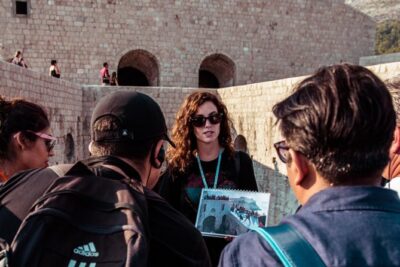
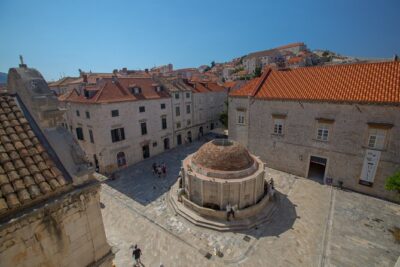

Krka Waterfalls tour with Trogir Walking tour and Krka panoramic boat cruise
Read our review →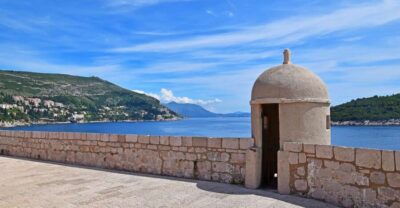
City Walls Early Morning or Sunset Walking Tour
Read our review →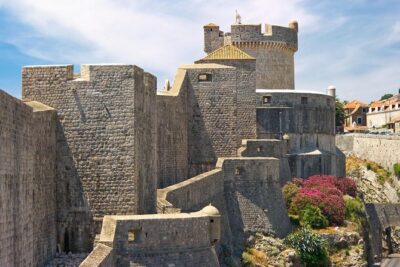
Browse the lists this tour appears in