

Reviewed · WALKING TOURS
Split: Old Town Guided Evening Walking Tour
Split’s old town is not a museum behind ropes. It is a living city built into a 1,700-year-old Roman palace, and this 70-minute evening walk gives you a useful first look at how the two fit together. You’ll pass Peristyle Square, underground cellars, the Temple of St. Jupiter, and the Cathedral of St. Duje while the worst of the summer heat fades.
I like the evening timing, especially in July and August, and I like the compact route. At $20 per person, it is a reasonable way to get the basic story and layout without spending half a day. The main caution is practical: the meeting point has caused confusion for at least one person, so check the location carefully before setting out.
Key points to know before booking
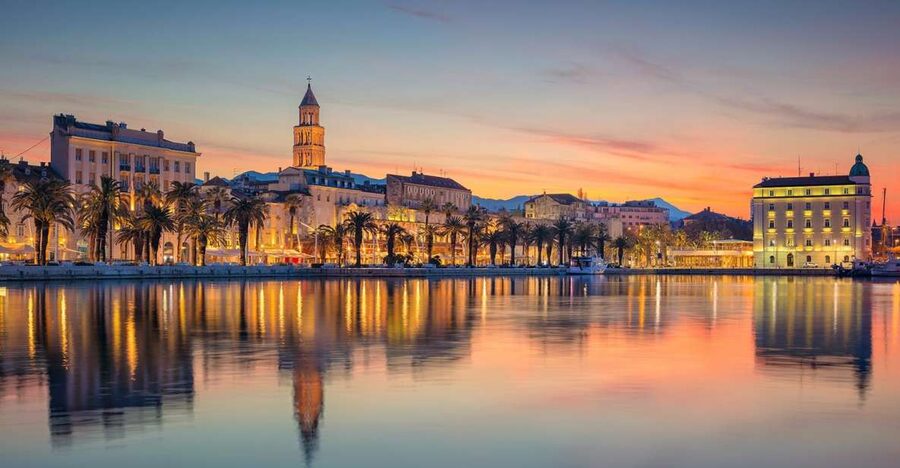
- A Roman palace became a city: You walk through Diocletian’s Palace as part of modern Split, not through an isolated archaeological site.
- The cooler hour helps: The evening schedule makes the outdoor route more comfortable during hot Dalmatian summers.
- Several major sights fit into 70 minutes: Peristyle Square, the cellars, St. Jupiter’s Temple, and St. Duje Cathedral are all part of the walk.
- Small groups may allow extra questions: Guide Duje has added Jewish heritage information when group size made that possible.
- The meeting point needs attention: Look for the large red SPLIT sign at Split port and a guide holding a My Special Tour sign.
- You return to the start: The walk begins and ends at the same meeting point, with no hotel transport included.
Why an evening walk suits Split’s old town

Split can feel hard to read at first. Streets run through the former palace, modern shops occupy ancient walls, and a grand square can appear suddenly after a narrow passage. A guided walk helps you understand the basic plan instead of simply wandering from one attractive corner to the next.
The evening hour is a sensible choice. You avoid the strongest summer heat while walking outdoors, and the old town takes on a more relaxed mood. This is still a sightseeing tour, not a candlelit private stroll, but the timing gives it a slightly romantic feel without adding a premium price.
The route lasts about 70 minutes. That is long enough to cover the key places and short enough to fit around dinner, an evening ferry, or a later plan. You should not expect a detailed archaeological lecture at every stop. Think of this as a well-sized introduction to Split’s central old town.
Other guided walks in Split:
- Split: Old Town and Diocletian Palace Walking Tour
★ 4.9 · 4,727 reviews - Walking Tour of Split and Diocletian’s Palace
★ 5.0 · 2,588 reviews - Krka Waterfalls tour with Trogir Walking tour and Krka panoramic boat cruise
★ 5.0 · 1,659 reviews
Meeting at Split port
The meeting point is at Trg Braće Radić, near Split port. Look for the large red SPLIT sign. The guide is supposed to carry a My Special Tour sign, which gives you something specific to watch for in a busy area.
I would arrive early. The stated location has been marked incorrectly on a map before, and one person missed the tour as a result. That is a serious weakness for an otherwise simple walking experience. Save the meeting instructions, allow extra time, and ask locally if you are unsure where the port square is.
There is no hotel pickup or drop-off. You need to reach the port meeting point yourself, and the walk returns there when it ends. This is easy to factor into a visit based in central Split, but it matters if you are staying far outside the old town or arriving by transport on a tight schedule.
Entering Diocletian’s Palace
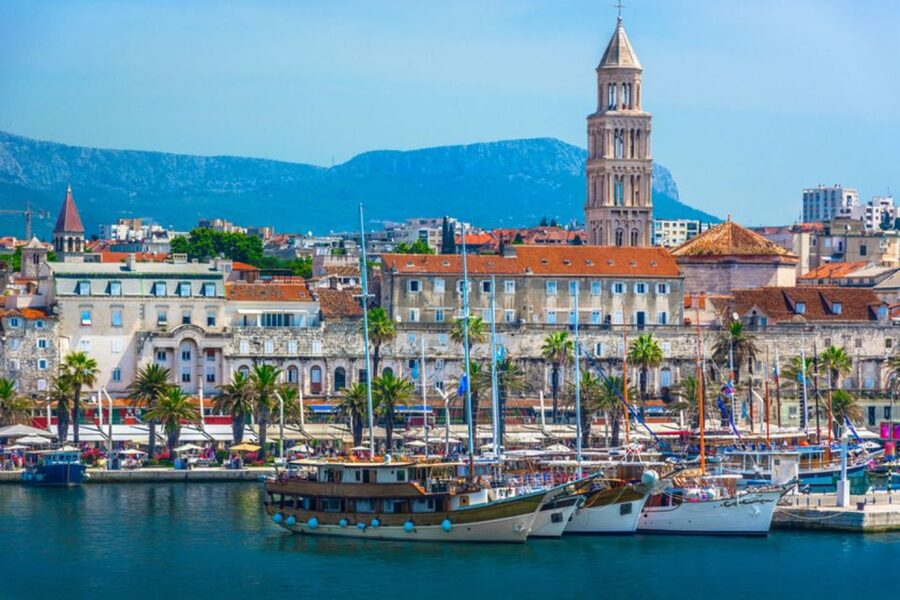
The central idea of the walk is also the most interesting part: Diocletian’s Palace is not just a ruin. It has become part of Split’s urban fabric. You move through streets, squares, and buildings where ancient Roman remains sit beside the working city.
That setting gives the tour more value than a simple list of old stones. You can see how the palace survives as a place people pass through and use. The guide’s job is to connect the visible walls and spaces with the Roman past, then explain how the old palace relates to the city around you.
You will hear about the ancient Roman Empire and the palace’s place in Split’s cultural story. The walk is conducted in English. If you want a highly technical account of Roman architecture, 70 minutes will feel brief. If you want a clear introduction before exploring on your own, the length works well.
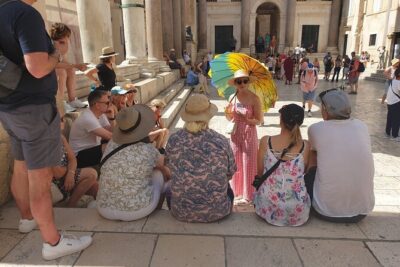
Peristyle Square, the tour’s main stage
Peristyle Square is one of the key stops. It provides the strongest sense of the palace’s scale and form, and it is the sort of place that benefits from explanation. A guide can point out how the space fits into the wider palace and why it matters, rather than leaving you to take a few photos and move on.
This is likely to be one of the tour’s most memorable views, but you should expect an active public square rather than a quiet archaeological setting. The old town is still part of everyday Split. That is part of its appeal, though it means the atmosphere can change from one moment to the next.
A guide also helps you get your bearings here. Once you understand the relationship between the square, the surrounding streets, and the palace, the rest of your time in old Split becomes easier. You can return later and explore with a much clearer sense of direction.
Same base, a different kind of day out:
- Split: Krka Waterfalls Trip with Boat Cruise and Swimming
★ 4.8 · 10,519 reviews - From Split: Krka Waterfalls, Food & Wine Tasting Tour
★ 5.0 · 9,326 reviews - Blue cave, Mamma Mia and Hvar, 5 islands speedboat tour
★ 5.0 · 7,150 reviews - From Split: Krka Waterfalls, Food & Wine Tasting Tour
★ 4.9 · 6,598 reviews
Going below ground into the underground cellars
The underground cellars add a different layer to the walk. Above ground, Split can look like a maze of streets and facades. Below ground, the palace plan becomes easier to imagine through its surviving structural spaces.
This stop is valuable because it gives you a view of the palace that you cannot get from a street-level stroll alone. You are not simply looking at a monument from the outside. You are seeing part of the structure beneath the city and learning how the ancient site remains present in modern Split.
The supplied details do not promise a separate ticket, a long cellar visit, or a full archaeological presentation, so keep your expectations measured. The cellars are one stop within a 70-minute route, not a standalone museum visit.
The Temple of St. Jupiter and St. Duje Cathedral
The Temple of St. Jupiter brings another religious site into the story of the palace. It helps show the range of places included in the route and gives the guide a chance to connect Roman-era remains with later cultural layers.
The Cathedral of St. Duje adds an important Christian landmark. Seeing it alongside the temple and the palace creates a useful sequence: Roman imperial power, later religious use, and the continuing life of the old town. You get a better sense of how Split changed over time rather than treating each sight as an unrelated stop.
The exact time spent at each place is not specified. The guide may pause longer at one site depending on questions and the pace of the group. You should be ready for a steady walk through the old town, with explanations along the way rather than long seated talks.
What the guide can add to the walk
A strong guide matters on a route like this because the most important details are not always obvious. A wall may look ordinary until you understand what it once formed part of, and a modern street may make more sense once the palace layout is explained.
Duje led one particularly small group and added information about Split’s Jewish heritage. That detail is worth noting if you care about the city’s less obvious cultural stories. It also suggests that a small group can sometimes make the walk more flexible, though you should not assume every departure will include the same additions or the same guide.
The basic tour is in English. The advertised experience includes a walking tour and a guide, so the main value comes from interpretation rather than entry to a long list of indoor attractions. If your main goal is to hear local context and ask questions, that format suits you.
What $20 buys you
At $20 per person, the price is fair for a short guided introduction in one of Croatia’s most important historic centers. You are paying for 70 minutes of orientation, stories, and help reading a complicated old town. You are not paying for hotel transport, a meal, or a full-day sightseeing package.
I see the best value here on a first evening in Split. The walk can give you the layout you need for later independent exploring. You may then return to a favorite square, revisit the cellars if available, or simply wander with more confidence.
The value is weaker if you already know Diocletian’s Palace well or want extensive time inside each sight. The route is compact, and the price reflects that. It works as an affordable overview, not as a substitute for a detailed private archaeological tour.
The practical drawbacks to weigh
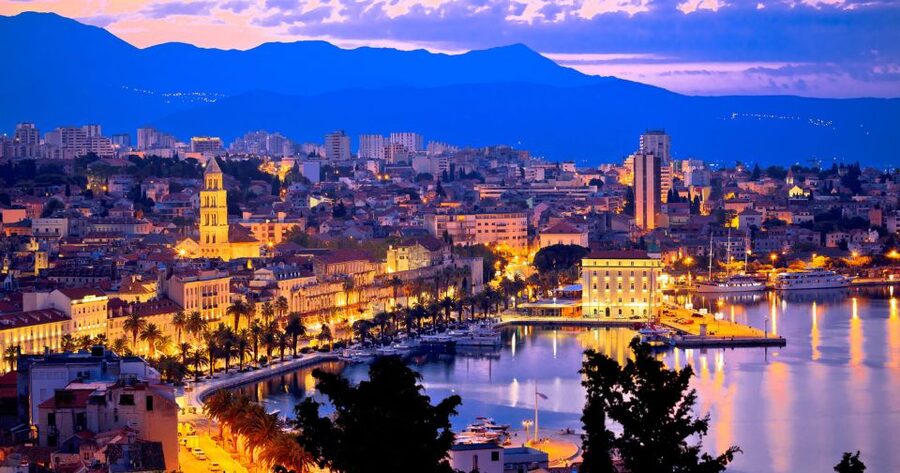
The map problem is the biggest concern. Missing a 70-minute tour because the starting point is unclear is frustrating, especially when the meeting area is near a busy port. Use the written directions, look for the red SPLIT sign, and identify the guide’s My Special Tour sign before the scheduled start.
The rating information is mixed, with an overall score of 3.8 from four ratings. The positive experiences describe interesting city details and an informative, customized walk, while the lowest rating concerns the incorrect map location rather than the sightseeing content itself. That distinction matters: the tour’s content appears more dependable than its meeting-point information, but you still need to handle that detail carefully.
The short duration is both a strength and a limit. You get a manageable introduction, but not a leisurely examination of every building. If you prefer to stop often, take many photographs, or ask long questions, the group may need to keep moving.
Who should book this Split tour?
I would choose this walk for a first visit, a short stay, or an evening when you want some context before dinner. It also suits anyone who finds old towns confusing and prefers to understand the layout before exploring alone.
The evening schedule is especially useful during hot weather. You can spend the middle of the day elsewhere and save the palace for a cooler hour. Couples may like the timing, and independent visitors can use the walk as a practical orientation.
Families and older walkers may appreciate the 70-minute length, though the information provided does not describe the route’s surface, stairs, or accessibility. If those details affect your decision, ask before booking rather than assuming the old town will be easy underfoot.
I would skip it if you want extensive interior visits, hotel transport, or a long specialist tour devoted only to Roman architecture. I would also avoid booking it at the last minute if you cannot confirm the starting point.
Booking, payment, and cancellation
You can reserve a place and pay later, which keeps your plans flexible. Cancellation is allowed up to 24 hours before the activity for a full refund.
The tour includes the walking tour and guide. Hotel pickup and drop-off are not included, and the activity ends back at the Split port meeting point. Check that return location against your evening plans before reserving.
Should you book the 70-minute evening walk?
Book it if you want a reasonably priced introduction to Split’s old town, especially in the cooler evening hours. The route covers the places most people need to understand first: Diocletian’s Palace, Peristyle Square, the underground cellars, the Temple of St. Jupiter, and St. Duje Cathedral.
The strongest reasons to go are the compact timing, the local guide, and the chance of extra detail in a small group. The main reason to hesitate is the meeting-point confusion. Confirm the port location carefully, arrive early, and treat the tour as a useful overview rather than an exhaustive study. With that expectation, it is a sensible first step into Split.
FAQ
How long does the Split evening walking tour last?
The walking tour lasts approximately 70 minutes.
What sights are included?
The route includes Split’s old town, Diocletian’s Palace, Peristyle Square, the underground cellars, the Temple of St. Jupiter, and the Cathedral of St. Duje.
What language is the tour conducted in?
The tour is conducted in English.
How much does the tour cost?
The listed price is $20 per person.
Where does the tour begin?
It begins at Trg Braće Radić near Split port. Look for the large red SPLIT sign and a guide carrying a My Special Tour sign.
Where does the tour end?
The activity ends back at the meeting point.
Is hotel pickup included?
No. Hotel pickup and drop-off are not included.
Can I reserve now and pay later?
Yes. You can reserve your place and pay later. Cancellation up to 24 hours in advance is available for a full refund.
Just added in Split
- From Trogir, Seget, Okrug: Krka Waterfalls & Šibenik Culture Tour★ 5.0 · 10 reviews
- Krka Waterfalls & Primošten from Trogir, Seget, Čiovo & Kaštela★ 5.0 · 18 reviews
- Slatine – Island Hopping Excursion (Trogir/Blue Lagoon/Shipwreck)★ 4.0 · 24 reviews
- Island Hopping Boat Excursion with Lunch (Trogir,Blue Lagoon, Šolta)★ 3.5 · 6 reviews
- From Split & Trogir: ATV Quad Tour on Island Čiovo★ 5.0 · 21 reviews
- Split: Sunset Guided Kayaking Tour★ 4.8 · 71 reviews
- Split Sunset Stand Up Paddle Tour★ 5.0 · 16 reviews
- Stand Up Paddle Tour in Split★ 4.7 · 17 reviews
Walking Tours, compared.
Walking Tour of Split and Diocletian’s Palace
Read our review →

Krka Waterfalls tour with Trogir Walking tour and Krka panoramic boat cruise
Read our review →
City Walls Early Morning or Sunset Walking Tour
Read our review →
Browse the lists this tour appears in