
Reviewed · WALKING TOURS
Discover Trogir: Guided Walking Tour of a Medieval Gem
Trogir’s old town is small enough to explore on foot, yet packed with Roman, medieval, Gothic, and Renaissance remains. This 90-minute walking tour gives you a clear route through the historic center, from the old town gate to St. Lawrence Cathedral and the waterfront.
I like the mix of major sights and everyday stories, especially the focus on how people lived in earlier times. I also like the personal care shown by guides such as Daniela and Anna, including checking that everyone is comfortable and has water. The main drawback is time: 90 minutes is enough for an introduction, but not enough for a slow visit inside every landmark.
Key points to know before you book
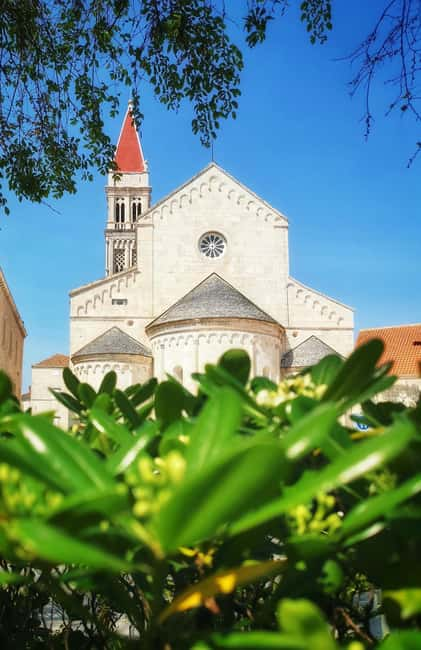
- St. Lawrence Cathedral gives the tour its finest architectural stop, with Gothic and Renaissance details worth a close look.
- The narrow old-town streets make Trogir easy to explore on foot, but they also mean the route is about walking rather than lingering at every sight.
- Local guides Daniela and Anna have brought personal stories about Trogir and daily life into the tour.
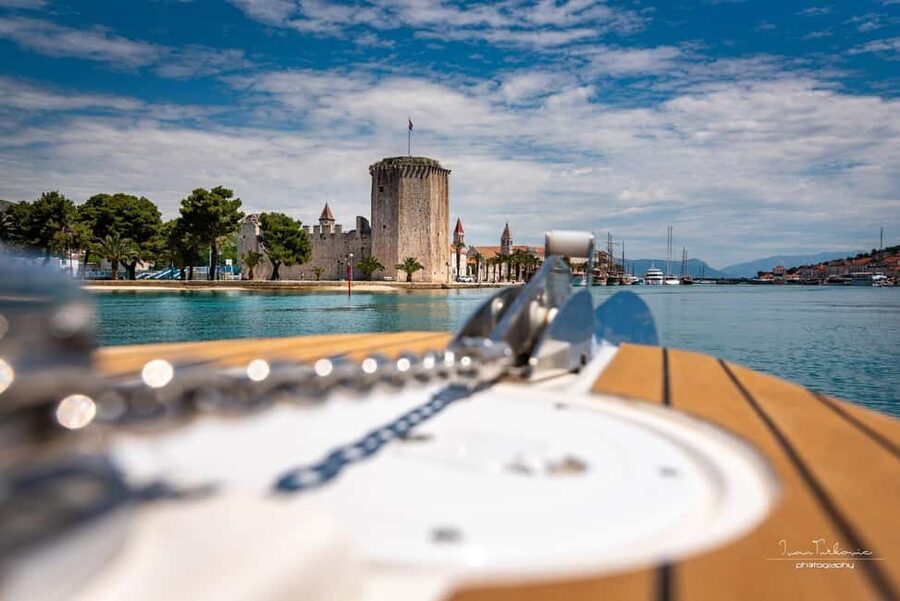
- Kamerlengo Fortress adds a strong visual finish, with views toward the Adriatic Sea.
- The waterfront promenade provides a relaxed contrast to the stone lanes and enclosed squares.
- At $17 per person, the tour offers a practical introduction for a modest price, especially if Trogir is new to you.
Why Trogir works so well as a walking tour
Trogir is the sort of place where a map only tells part of the story. Its old town is compact, but the streets, gates, palaces, churches, and defensive walls reflect several periods of settlement. You can see the Roman beginnings, the medieval city, and later changes in architecture without traveling between separate sites.
That compact layout makes a guided walk useful. You are not spending half the tour getting from one neighborhood to another. Instead, the guide can point out how the city fits together, explain why particular buildings matter, and connect the grand monuments with smaller details along the way.
The tour is led in English by a live local guide. That matters in a place where the most interesting details may not be obvious from the outside of a building. A guide can give you the basic timeline, then add the small stories that make the streets easier to remember.
I especially like that the tour does not focus only on famous architecture. The personal side of Trogir is part of the experience. Past guides Daniela and Anna have shared stories about daily life as well as major events, giving the walk a more human scale.
Other guided walks in Trogir:
- Trogir: City Highlights Guided Walking Tour
★ 4.9 · 199 reviews - Trogir walking tour with a local guide
★ 5.0 · 129 reviews - Trogir: Old Town Guided Walking Tour
★ 4.6 · 76 reviews
Entering through Trogir’s ancient town gate
The town gate is a natural starting point for understanding Trogir. Passing through it, you move from the modern setting into the old town’s enclosed network of lanes and stone buildings.
A guide can help you read the gate as more than a pretty entrance. It belongs to the city’s defensive system and marks the boundary of the historic center. From here, the shape of the old town begins to make sense: narrow streets, old walls, public squares, and buildings fitted closely together.
I would pay attention to the change in pace at this point. Trogir is not a place to rush through with your eyes fixed on a phone. The best parts are often above street level, around doorways, or in the relationship between one building and the next.
The route through the old town is described as wheelchair accessible, which is useful to know when planning. Still, you should ask for current route details if you need specific information about surfaces, access to individual buildings, or the interiors of landmarks. Accessibility for the walking route does not necessarily mean every historic space has identical access.
Reading the old town’s Roman and medieval layers
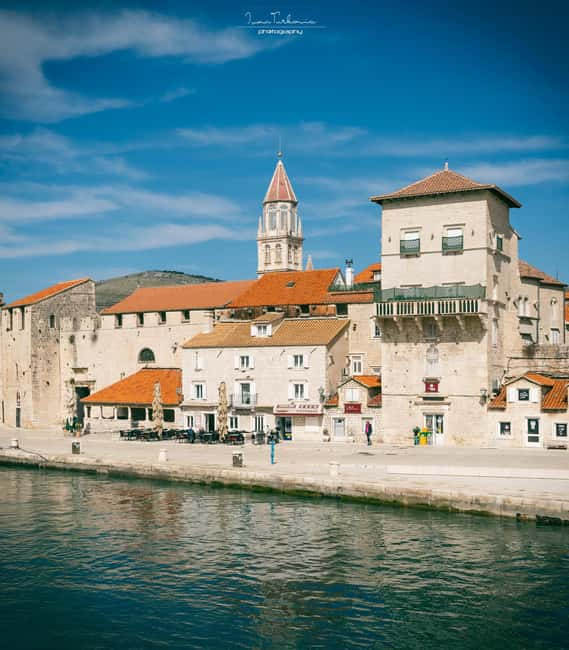
As you walk the narrow streets, the guide places Trogir’s buildings in a longer story. The city has Roman origins, then passed through medieval development and later architectural changes. You get a sense of how the same urban center continued to serve people across centuries.
That context is one of the strongest reasons to choose a guided walk rather than simply wander alone. Without explanation, you may see an old wall, a palace, or a carved doorway and appreciate its appearance without understanding its purpose. With a guide, those pieces become part of the city’s development.
The old town is also a good setting for learning about scale. Medieval streets were shaped by practical needs and limited space, not by modern traffic or wide promenades. The lanes lead you toward small squares and larger public landmarks, creating a sequence of compressed and open spaces.
You should expect a walking tour rather than a museum-style presentation. The route takes you through the streets, with stops for explanation. If you want long periods inside churches or fortifications, you may need extra time after the tour.
St. Lawrence Cathedral and its carved details
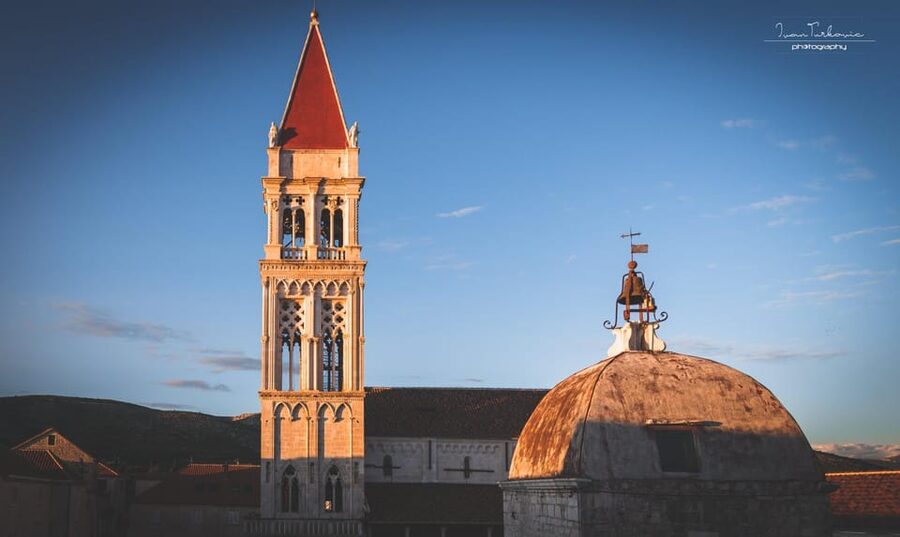
St. Lawrence Cathedral is the architectural centerpiece of the walk. It brings together Gothic and Renaissance features, making it a useful place to see how artistic styles changed over time.
The cathedral is not simply a quick photo stop. Look closely at its stonework and the detail around its entrance and exterior elements. A local guide can explain what you are seeing and point out features that might otherwise blend into the larger façade.
This is also where the tour’s historical approach pays off. Trogir’s story is not presented as one neat period. Roman foundations, medieval power, and later artistic influences all appear in the city’s architecture. The cathedral helps make that layered story visible.
The practical limit is the fixed length of the tour. Ninety minutes must cover several key locations, so your cathedral stop may be focused rather than leisurely. If St. Lawrence is your main reason for visiting, plan to ask the guide how much time is available and consider returning afterward for a closer look.
Same base, a different kind of day out:
- Blue cave, Mama Mia and Hvar, 5 island speedboat tour from Trogir
★ 5.0 · 2,861 reviews - From Trogir: Three Islands Half-Day Speedboat Tour
★ 4.8 · 804 reviews - From Trogir or Split: Full-Day Blue Cave & Hvar Island Tour
★ 4.7 · 413 reviews - Half Day Speedboat Tour to Three Islands from Trogir
★ 5.0 · 401 reviews
Kamerlengo Fortress and the Adriatic view
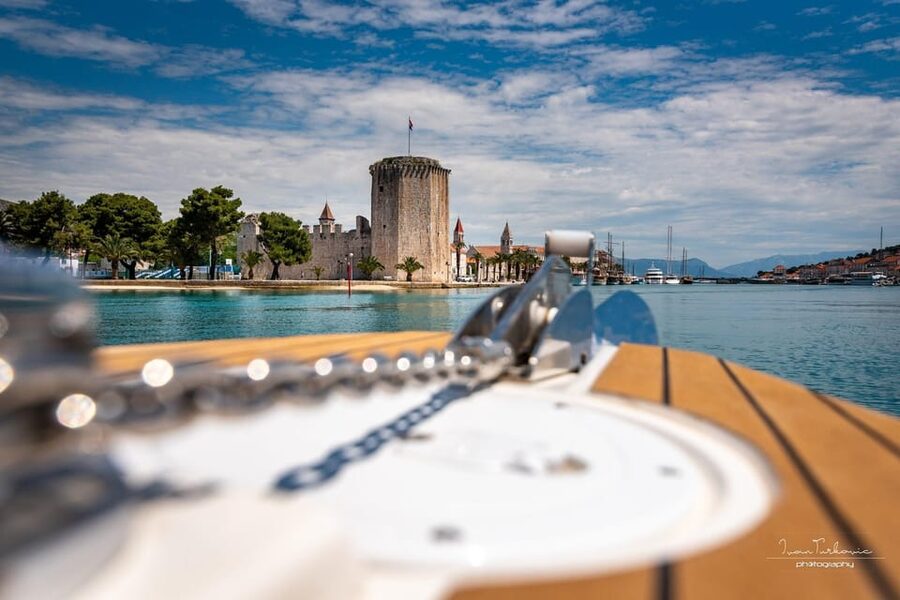
Kamerlengo Fortress adds a more defensive side to Trogir’s story. Its walls and position show that this was not only a place of churches and palaces, but also a fortified coastal settlement.
The fortress is especially valuable as a viewpoint. From here, you can take in the Adriatic Sea and see Trogir in relation to its coastal setting. The view gives you a break from the close quarters of the old town and helps explain why the city’s position mattered.
I like the contrast between this stop and the cathedral. St. Lawrence shows craftsmanship, religious life, and changing artistic styles. Kamerlengo brings you back to security, walls, and the practical demands of a coastal city.
The tour description includes the fortress among the major stops, but it does not specify the amount of time spent inside or the exact access arrangement. Treat it as an important part of the walking route, while checking on-site details if you want a full fortress visit rather than an exterior view or guided stop.
The waterfront promenade as a calm finish
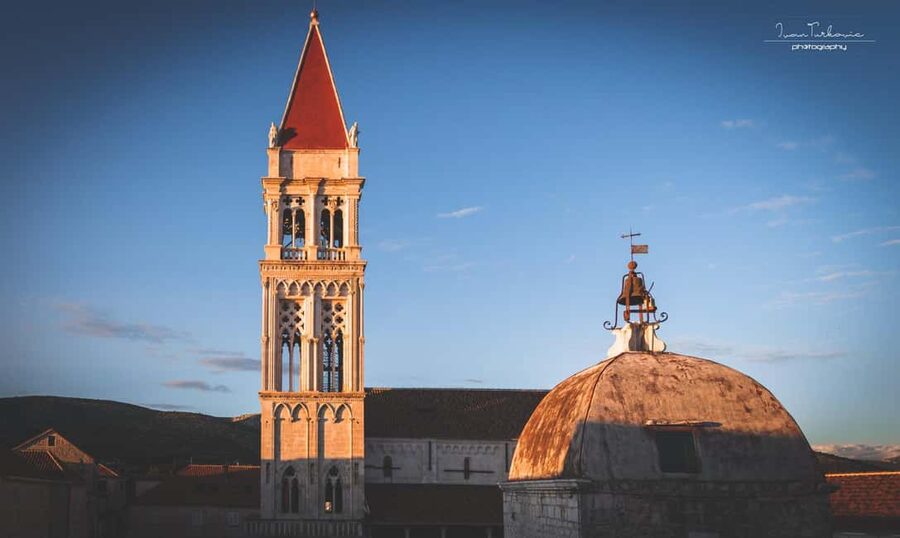
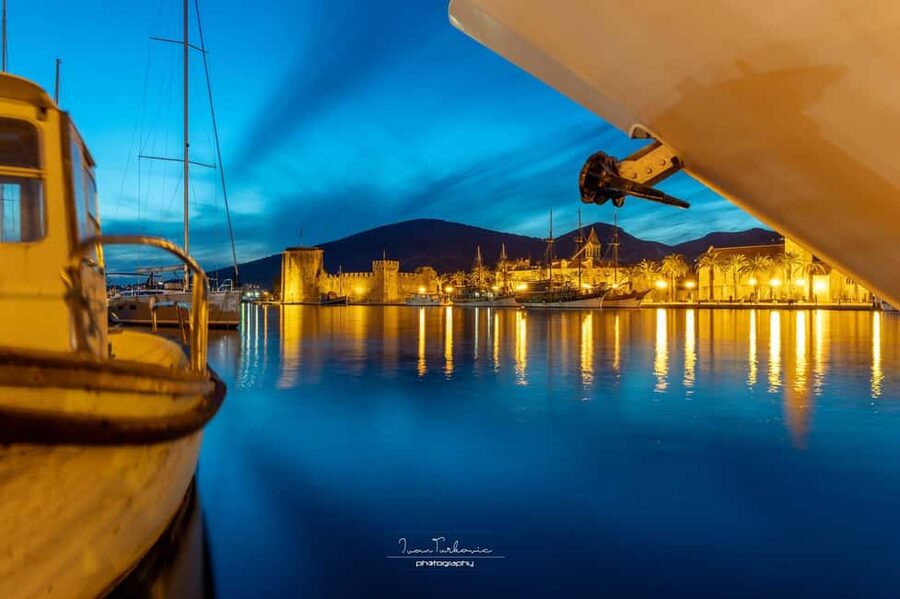
The waterfront gives the tour a change of mood. After the stone lanes and old buildings, the open promenade lets you look outward toward the sea and take in Trogir from a different angle.
This is a good place to connect the city’s history with its present life. The waterfront is not only scenic. It helps you understand Trogir as a coastal town whose identity has long been tied to the Adriatic.
I would save a little energy for this part of the walk. The promenade offers a natural place to pause, take photos, and ask the guide about the city beyond the monuments. It also makes a useful orientation point if you plan to continue exploring after the tour.
The waterfront is described as a leisurely stroll, so it should feel less demanding than the tighter streets of the center. Still, the experience remains a walking tour, and you should wear shoes suited to historic streets rather than treating it as a purely scenic ride.
The guide’s role, from history to daily life
The quality of this experience depends heavily on the guide. The strongest part of the format is the chance to hear local explanation while you are standing in the actual places being discussed.
The English-language guides are described as friendly, clear, and attentive. Daniela has shared stories about both Trogir’s past and ordinary daily life. Anna has been praised for explaining the city and its beautiful places well. Those details suggest a style that goes beyond dates and names.
You can also expect a guide who pays attention to the group. One guide made a point of checking whether everyone was doing well and had water, and took care to explain things clearly to French-speaking participants. The tour itself is in English, but that example gives you a useful idea of the guide’s pace and care.
The tour has received a perfect rating from 13 verified bookings, which is a small sample but still a strong signal. The praise centers on the guides, the explanations, the personal touch, and the chance to learn about Trogir in a small-group setting.
That small-group feel matters. You have a better chance of asking questions and hearing the explanation than you would on a large group walk. The supplied information does not give a fixed maximum group size, so do not assume a private or very small party. It does, however, describe the experience as having a small-group character.
What 90 minutes can and cannot cover
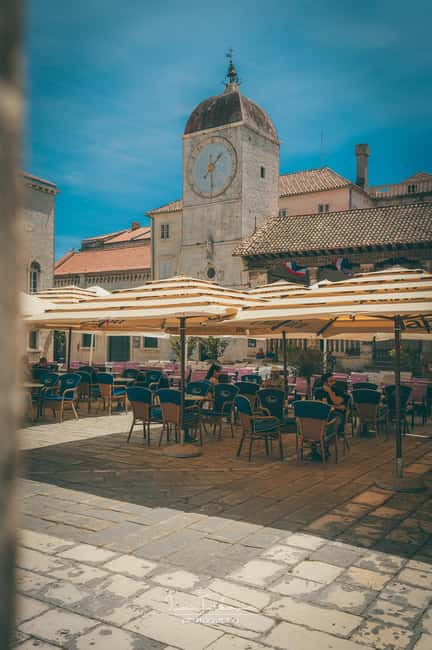
Ninety minutes is a sensible length for a first look at Trogir. You can cover the central old town, see major landmarks, and finish with the waterfront without giving up an entire morning or afternoon.
I like this timing for several types of schedules. It works well if you are making a short stop in Trogir, fitting the town into a wider Dalmatian itinerary, or looking for an orientation before exploring on your own.
The trade-off is depth. You will not have time for a full historical course, a slow interior visit at every building, and long pauses at every viewpoint. The tour is best understood as a guided framework. It shows you what matters, explains the main story, and leaves you better prepared to return to the places that catch your interest.
If you like to take many photographs, ask detailed questions, or stop often, you may find the pace brisk. That is not a flaw in the format, but it is worth knowing before you book. Keep the tour’s purpose clear: it is a compact introduction, not an all-day study of Trogir.
Is $17 a fair price for this walk?
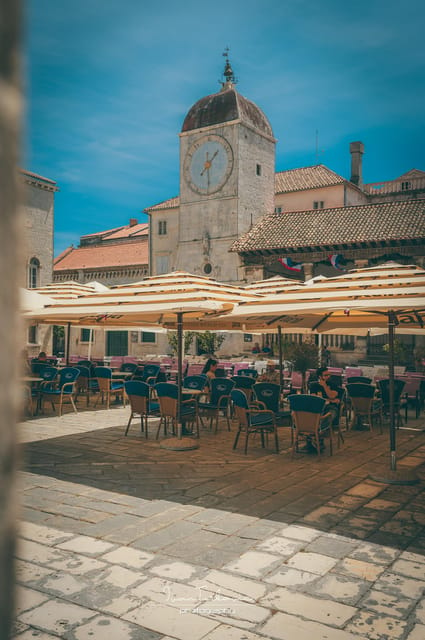
At $17 per person, the tour is priced as an accessible introduction rather than a major splurge. You are paying for a local guide, a planned route, and explanations that help you make sense of a UNESCO World Heritage Site.
The value is strongest if this is your first time in Trogir. A self-guided walk costs less, but you would need to research the city, identify the important stops, and build your own route. The fee saves that preparation and gives you the chance to ask questions on the spot.
The price is less compelling if you already know Trogir well or prefer to move at your own pace. In that case, the 90-minute structure may feel restrictive. You may still enjoy the local stories, but the main benefit is orientation and interpretation, not access to a special private area.
A useful way to judge the cost is to compare it with the time involved. For $17, you get a focused introduction in 90 minutes, with St. Lawrence Cathedral, the old town, the gate, Kamerlengo Fortress, and the waterfront included in the route. That is a reasonable exchange for most first-time visitors.
Who will get the most from this experience
I would recommend this walk to you if you want history explained in plain language and prefer seeing a town on foot. It suits first-time visitors, short-stay visitors, and anyone who wants a strong starting point before exploring independently.
It is also a good fit if personal stories matter to you. The guides bring in daily life and local memories, not just architectural labels. That can make the old town feel more connected to the people who have lived there.
The tour may suit families and mixed-age groups because the duration is manageable, though the supplied information does not give a specific age recommendation. It is also listed as wheelchair accessible, which makes it worth considering if access is important to your planning.
You may prefer another format if you want a private guide, a long interior visit, or a highly specialized focus on architecture. Those needs are not promised here. This is a general city walk with several major stops and a local guide.
Booking flexibility and practical planning
You can cancel up to 24 hours in advance for a full refund, and you can reserve now while paying later. That flexibility helps if your Dalmatian plans are still shifting.
The tour is available in English, with a live guide. Starting times vary, so you need to check availability for the date you want. The meeting point is not included in the supplied details, so confirm it carefully before setting out.
Because the tour covers narrow historic streets and a waterfront promenade, comfortable walking shoes are sensible. Bring water, particularly in warm weather. One guide’s attention to whether everyone had water is a useful reminder that even a short city walk can feel demanding in the sun.
I would also keep the rest of your schedule slightly open. The tour lasts 90 minutes, but you may want extra time afterward for the cathedral, fortress, waterfront, or streets that interest you most.
Should you book the Trogir walking tour?
Book it if you want an affordable, well-paced introduction to Trogir led by an English-speaking local guide. The route covers the town’s essential sights, while the guide’s personal stories add warmth to the architecture and history.
I would be especially inclined to book if you are visiting for the first time or have only a short time in town. At $17, the cost is modest, and the 90-minute format leaves room for further exploring afterward.
Skip it if you already know Trogir, dislike guided pacing, or want extended time inside each landmark. For everyone else, this is a practical way to get your bearings, understand the city’s main story, and see why Trogir rewards careful walking.
FAQ
Where does the Trogir walking tour take place?
The tour takes place in Trogir, in the Dalmatia region of Croatia. It covers the historic old town, town gate, St. Lawrence Cathedral, Kamerlengo Fortress, and the waterfront promenade.
How long is the tour?
The walking tour lasts 90 minutes.
What language is the tour conducted in?
The live guided tour is conducted in English.
How much does the experience cost?
The listed price is $17 per person.
Is a guide included?
Yes. A local guide is included.
Is the tour wheelchair accessible?
Yes, the activity is listed as wheelchair accessible.
Can I cancel for a full refund?
Yes. You can cancel up to 24 hours in advance for a full refund.
Do I have to pay when I reserve?
No. The reserve-now-and-pay-later option lets you book your spot without paying immediately.
Just added in Trogir
- Split: Private tour to Salona, Vitturi castle and Trogir★ 5.0 · 6 reviews
- Private Trogir walking tour with LOCAL guide★ 4.8 · 23 reviews
- Private tour from Split area: Trogir and Krka National Park★ 5.0 · 7 reviews
- From Trogir Day sailing (private tour)★ 5.0 · 4 reviews
- From Trogir, Seget & Okrug: Krka Waterfalls & Swimming★ 4.8 · 25 reviews
- From Trogir: 3 islands half day tour with Blue Lagoon★ 4.9 · 26 reviews
- From Split: Blue Lagoon & Trogir Boat Trip with Snorkeling★ 5.0 · 5 reviews
- From Split: 3 Islands Half-Day Boat Tour with Blue Lagoon★ 4.9 · 6 reviews
Walking Tours, compared.
Walking Tour of Split and Diocletian’s Palace
Read our review →
Krka Waterfalls tour with Trogir Walking tour and Krka panoramic boat cruise
Read our review →
City Walls Early Morning or Sunset Walking Tour
Read our review →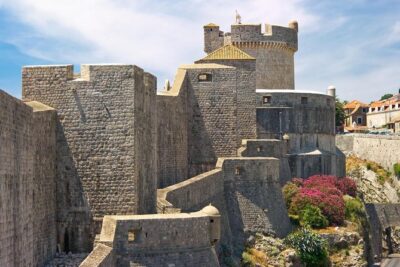
Browse the lists this tour appears in