
Reviewed · TOURS IN PULA
Pula: Arena Entrance Ticket
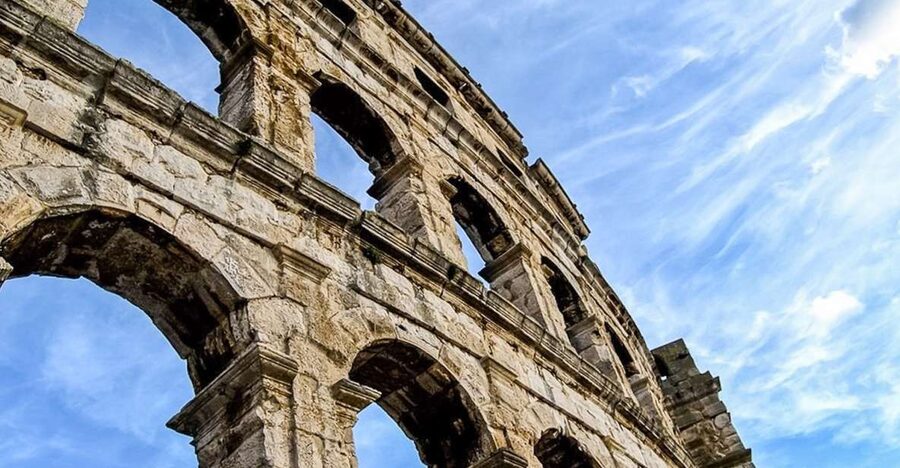
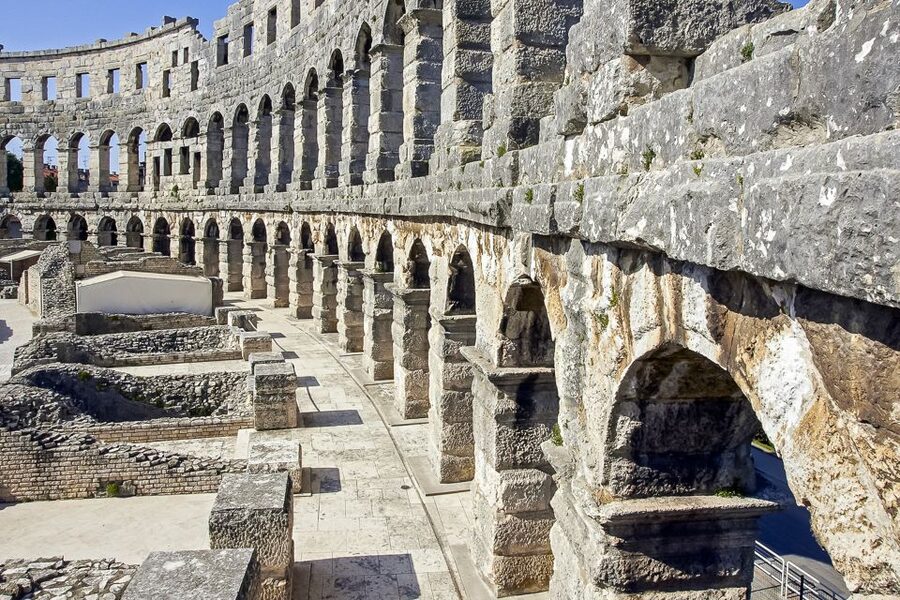
Pula Arena is the kind of ancient site that makes Roman history feel physical. You can walk where gladiatorial contests and animal hunts once took place, sit in the stone seating, and look out toward the water through the arena’s arches. The underground exhibition adds a useful local angle, showing how olive oil and wine were made in antiquity.
I like the freedom to explore without being tied to a group, and I like that the ticket covers the underground gallery as well as the main amphitheater. Arrive early, especially in summer, and you may have a quiet hour inside this enormous monument. The main drawback is that the online ticket may not always mean an instant walk through the gate, since you may still need to have the QR code scanned and receive a receipt.
Key points to know before you go
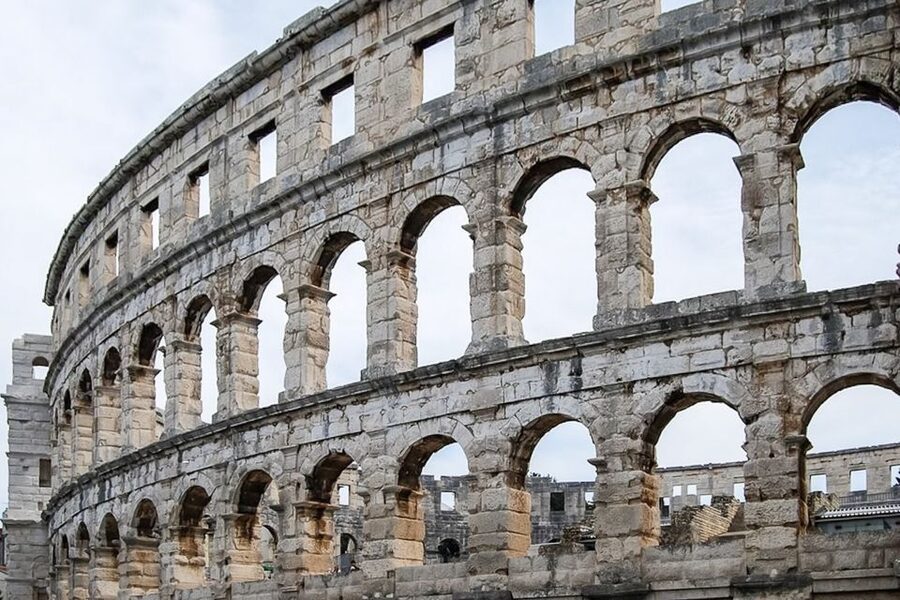
- A 2,000-year-old Roman amphitheater: See Pula’s main symbol from inside, including the arena floor, stone seating, arches, and underground spaces.
- A local olive oil and wine exhibition: View reproductions of mills, presses, settling tanks, amphorae, and other tools used in ancient production.
- A self-guided visit: QR points around the site provide information, though an audio guide is not included and may not always be available.
- Best timing is early morning: The arena is exposed to the sun, and large groups can arrive later in the day.
- Plan on about 60 to 120 minutes: You can make a quick visit, but the underground gallery and information points reward a slower look.
- Good value for history fans: At about $11 per person, the ticket costs more than an outside view, but it gives you the full inside experience.
Why Pula Arena is worth your time
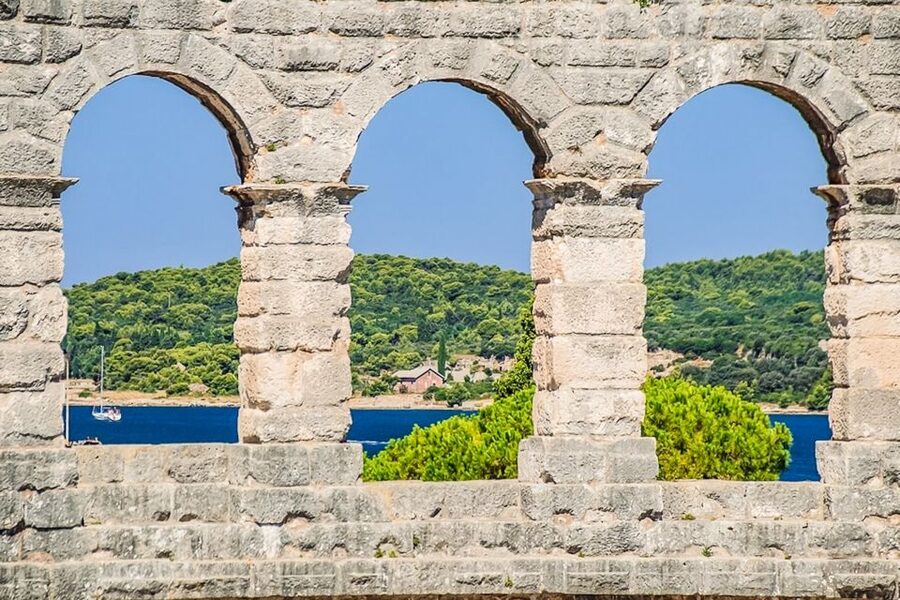
Pula Arena is not a small ruin that you glance at before moving on. Its great stone walls and repeated arches give you a clear sense of the building’s scale, even if you know little about Roman architecture. You can walk inside the oval arena, look up at the tiers, and picture crowds gathered for public spectacles almost 2,000 years ago.
The setting also helps. This is not an isolated archaeological site far from town. The amphitheater sits in Pula, close to the harbor and the city’s other Roman sights. You can combine it with the Temple of Augustus, the old streets, the fortress, and the town center without arranging transport.
I particularly like the way the arena connects grand public entertainment with ordinary economic life. The main structure recalls gladiators and animal hunts, while the basement exhibition turns your attention to farming, storage, oil, and wine. That combination gives you a better sense of ancient Istria than a collection of dramatic arena stories alone.
You can see much of the exterior without paying. That is a fair point to consider before buying. The ticket earns its keep through the interior access, the closer look at the seating and arena, and the underground gallery. If you are only passing through Pula for a few minutes, an outside view may be enough. If you want to understand why the building matters, go inside.
A few more things to do in Pula worth a look
- Zadar: Plitvice Lakes Guided Day Tour with Tickets
★ 4.9 · 3,148 reviews - From Zagreb: Plitvice & Rastoke Guided Day Trip with Ticket
★ 4.9 · 2,955 reviews - From Split: Plitvice Lakes Guided Tour with Entry Tickets
★ 4.9 · 2,468 reviews
Entering Pula Arena with a prepaid ticket
The meeting point is simple: use the main entrance to Pula Arena. Keep your mobile ticket ready so the QR code can be scanned. In some situations, you may be directed to the ticket counter or shop entrance to exchange the digital booking for a receipt before entering.
This is where expectations should stay realistic. Buying online can save time, but it has not always worked as a completely separate skip-the-line entrance. Some people have still needed to wait briefly for the code to be checked. The advantage is greatest when the normal ticket line is long, but the process can be less useful when the entrance is already quiet.
The ticket is valid for one day, so you have flexibility around your Pula sightseeing. The activity is not a timed tour with a guide or a fixed departure. You arrive during the available opening period, enter, and set your own pace.
Wheelchair access is good across most of the site. The main exception is the lower gallery in the basement, which is not wheelchair accessible. That detail matters if the underground exhibition is your main reason for coming.
Walking through the Roman amphitheater
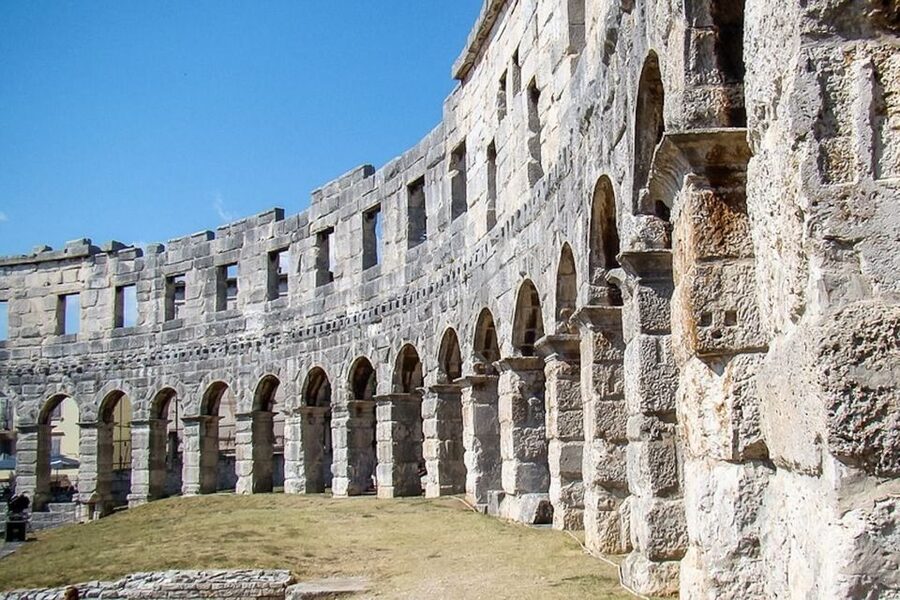
Once inside, start with a slow circuit rather than rushing straight to the arena floor. From different points around the building, you get changing views of the stonework, arches, seating, and open sky. The scale becomes clearer as you move, especially when you compare the small human figures around you with the height of the outer walls.
The arena was built for public entertainment, including gladiatorial contests and animal hunts. You should treat the subject with some distance: this was mass entertainment built around violence, not a film set or a stage show. Standing in the same physical space makes that difference easier to grasp.
The open design is part of the appeal and part of the practical challenge. On a sunny summer day, there is little relief from heat in the exposed areas. Wear a hat, bring water, and consider visiting early. One visit began around 8 a.m. with the arena almost empty for the first half hour, while several other early arrivals found the site noticeably calmer around 9:30 a.m.
The quieter start also improves your photographs. You can take in the arches and water views without constantly waiting for people to move out of the frame. Later, concert preparation or stage construction may create noise and block parts of the view. Events are one of the arena’s modern uses, so conditions can change from day to day.
The underground gallery and ancient production
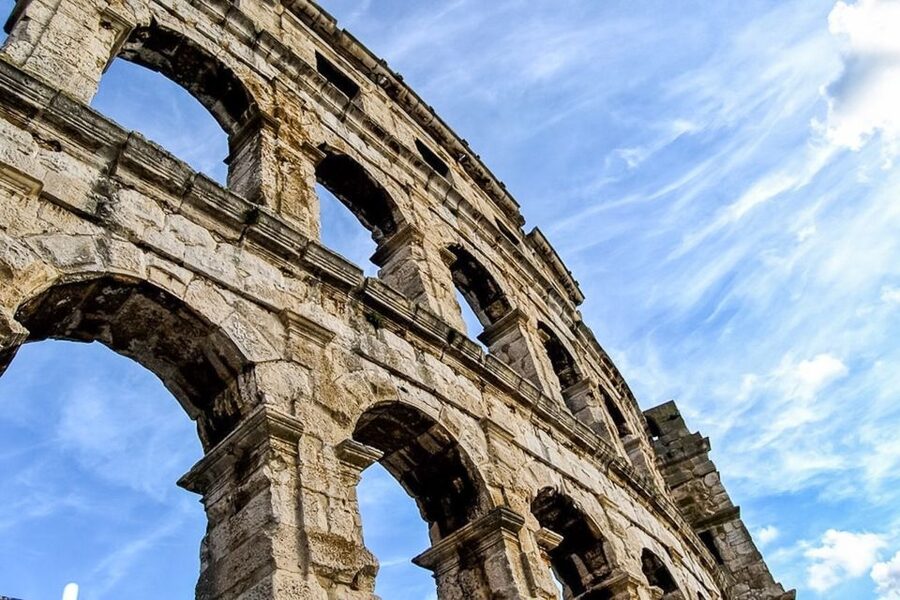
The underground area is not merely a passage beneath the arena. It holds the permanent exhibition Istrian Olive and Viticulture in Antiquity, which shifts the focus from spectacle to the food and trade that supported daily life.
You can see reproductions of equipment used to make olive oil and wine, including mills, presses, and sedimentation tanks. Amphorae show how oil and wine were packaged and transported. These objects help explain the practical side of ancient Istria: crops had to be processed, stored, and moved before they could reach households or markets.
I find this section especially useful if you are visiting with children or with someone who is less interested in battles and emperors. The equipment gives you something concrete to study. You can ask how the tools worked, why liquids needed settling tanks, and how amphorae functioned as containers.
The basement also changes the feel of the visit. After the bright, open arena, the lower area is more enclosed and focused. Allow extra time if you want to read the information and examine the reproductions instead of simply walking through.
The lower gallery is the only part specifically excluded from wheelchair access. Check your comfort and mobility needs before making the ticket decision, since the rest of the site is wheelchair accessible.
Same base, a different kind of day out:
- Medulin -Kamenjak 5h boat trip with lunch & drinks on Sandra Boat
★ 5.0 · 1,621 reviews - Full-Day Boat Tour of the Medulin Archipelago from Medulin
★ 5.0 · 1,389 reviews - 3hours all inclusive Sunset&Dolphin Tour from Medulin on Sandra
★ 5.0 · 1,130 reviews - Dolphin Watching & Sunset Boat Tour With Dinner and Drinks
★ 5.0 · 1,075 reviews
Using QR information instead of a full guide
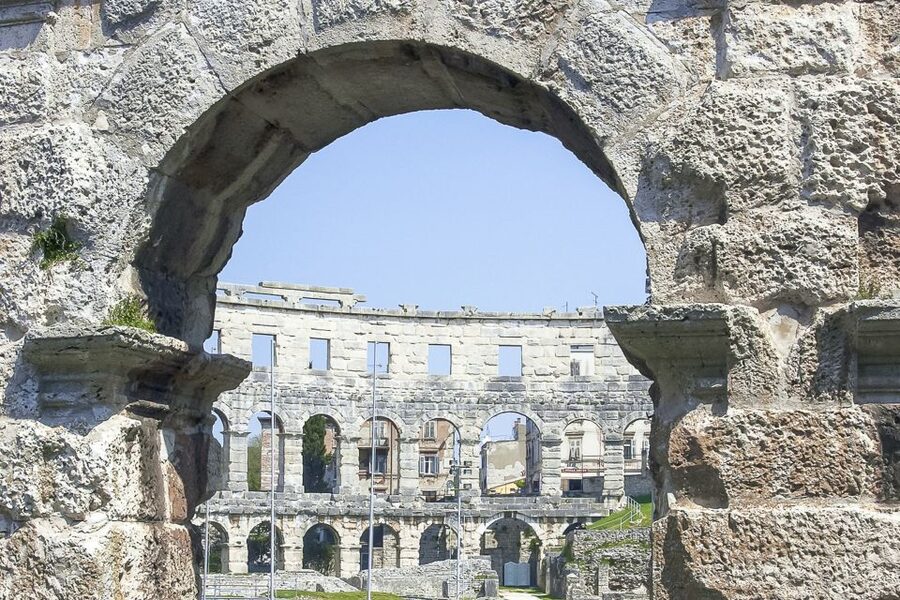
This is a self-guided visit. QR points around the arena let you access information on your phone, and several people have used the linked audio content at each point. Bring headphones, as they are listed among the recommended items and make phone-based listening easier in a large, open space.
An audio guide is not included in the ticket. Availability can vary, and some visits have had no working audio service or no English guide available. For that reason, I would not buy this ticket expecting a guaranteed narrated tour.
If the QR system is working, it gives you a flexible way to choose what interests you. You can stop at each point, listen or read, then continue without keeping up with a group. If it is not working, use the visible information boards and your own phone research. The monument itself remains the main attraction, but the lack of a consistent guide can make the historical side feel thinner than expected.
The best approach is to arrive prepared. Bring headphones, keep your phone charged, and download or bookmark any information you want to consult. Families may find it helpful to agree on a few questions before entering, such as how Roman seating was arranged or how amphorae were used. That turns a free-form walk into an easy history lesson.
How long to allow inside
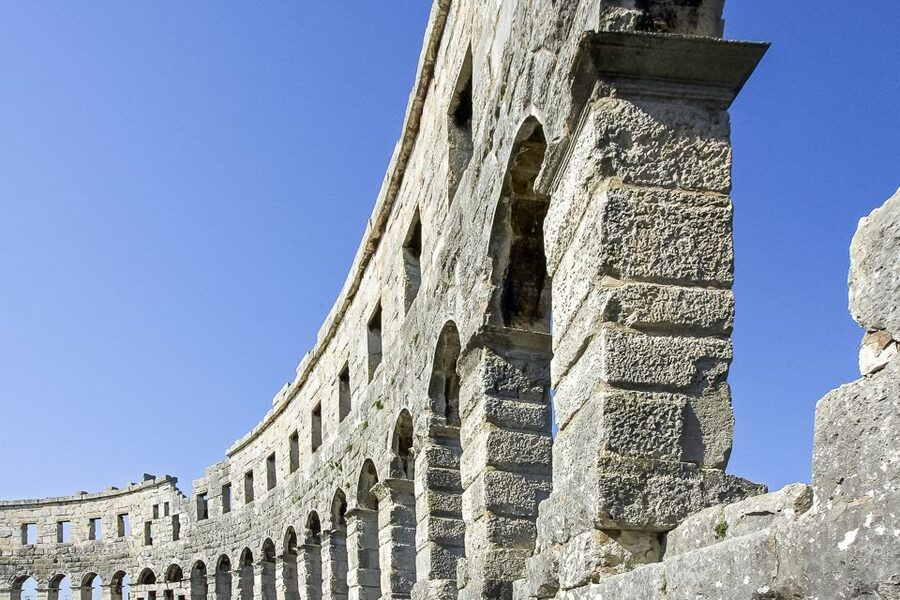
You can see the central areas in about an hour if you walk steadily and take a few photographs. A slower visit with the underground exhibition, QR stops, and time to sit in the seating takes closer to 90 to 120 minutes.
The ticket is valid for one day, but the experience is not designed as a full-day activity by itself. Think of it as a substantial stop within a day in Pula. You can visit the arena in the morning, then continue to the Temple of Augustus, the fortress, and the old streets.
Morning is the safest choice in summer. The site is wide open, the stone can become hot, and large tour groups may arrive as the day goes on. An afternoon visit can still work, and one visit in that period was unexpectedly quiet, but you cannot count on that.
Give yourself more time if an event is being prepared. Stage construction has occasionally made parts of the visit noisy. Concerts and summer gladiator re-creations are part of the arena’s modern life, but they can affect the atmosphere during your visit.
The value of an $11 entrance ticket
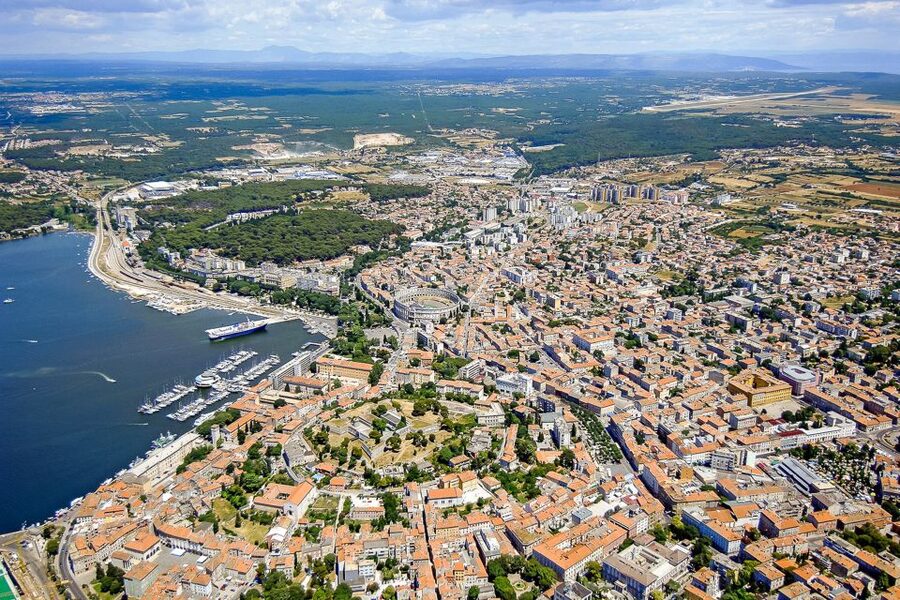
At about $11 per person, this is not an expensive attraction by European Roman-site standards. The price is easier to justify if you care about ancient history, want interior access, or plan to spend an hour or two looking closely rather than simply taking an exterior photograph.
The outside of the arena is impressive and free to see, so the ticket is not essential for every Pula stopover. You are paying for the inside perspective, the ability to walk through the monument, and the underground exhibition. The close view gives the arena a different presence than the roadside or harbor-side view.
I also see the ticket as a small contribution toward maintaining a large and demanding historic structure. Restoration has taken place over many years, and a site this size needs ongoing care. That does not mean you should ignore the price if your budget is tight, but it adds value for people who want their admission to support preservation.
The weakest value comes when the self-guided material is unavailable and you spend only 20 or 30 minutes inside. The strongest value comes when you arrive early, take the full circuit, visit the basement, use the QR points, and combine the arena with the rest of Pula’s Roman center.
Who will enjoy Pula Arena most
I would choose this for anyone with an interest in Roman architecture, ancient entertainment, archaeology, or photography. It is also a good stop for families because the open setting allows children to move around, and the gladiator theme gives younger visitors an immediate way into the story.
It works well for independent sightseers. You do not need to follow a guide, and you can pause where you like. Couples and solo visitors can spend a quiet hour with the stonework, while history fans may want the full two hours.
The experience is less satisfying if you require a guaranteed spoken tour in English. The ticket does not include an audio guide, and the QR or audio system may not always function as expected. You should also think twice if the lower gallery is your main goal but you have mobility limitations, since that basement section is not wheelchair accessible.
The arena is easy to pair with other Pula sights. One full day in town can include the amphitheater, the Temple of Augustus, the fortress, and the central streets. That makes the $11 admission more useful than it would be as a stand-alone trip from another part of Croatia.
Should you book the Pula Arena ticket?
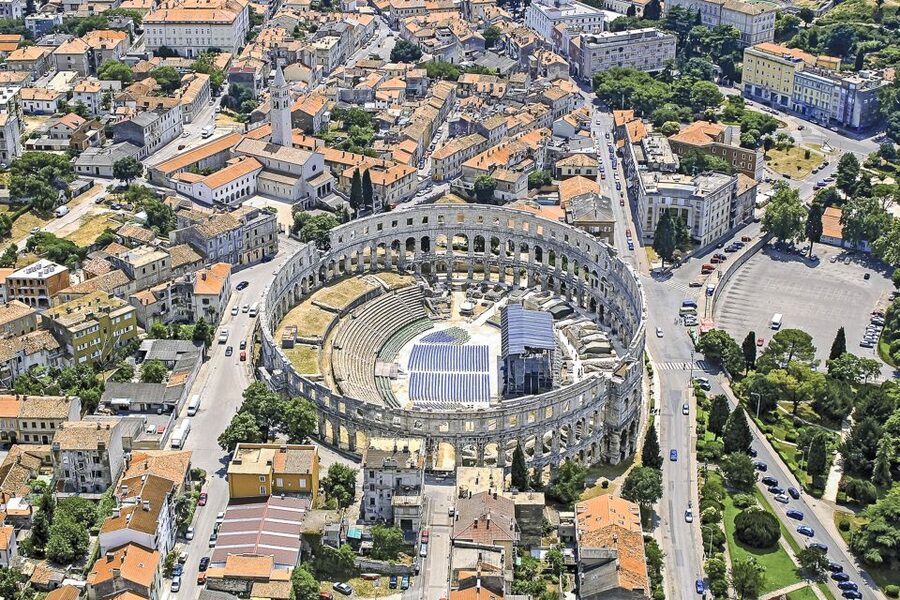
Book it if you want to enter one of Croatia’s finest Roman monuments, have at least an hour to spare, and are willing to explore mostly on your own. Arrive early, bring headphones, prepare for sun, and allow time for the underground olive and wine exhibition.
Skip the ticket if you only want an exterior photograph or if your schedule is so tight that you cannot make the inside visit worthwhile. Also keep in mind that prepaid entry does not always remove every bit of queueing, since the QR code may still need to be exchanged or checked.
For most people spending time in Pula, I would buy it. The building is powerful from outside, but the inside changes your sense of scale. The combination of arena, stone seating, Roman spectacle, and ancient agricultural equipment gives you a fuller visit than a quick look through the gates.
FAQ
Where do I redeem the Pula Arena ticket?
Redeem the ticket at the main entrance to Pula Arena. Keep the mobile QR code ready for scanning.
How much does the entrance ticket cost?
The listed price is about $11 per person.
How long is the ticket valid?
The ticket is valid for one day. Check the available starting times when booking.
Is an audio guide included?
No. The audio guide is not included. QR information points may be available around the arena, and you should bring headphones if you plan to listen on your phone.
What does the underground exhibition cover?
The permanent exhibition is called Istrian Olive and Viticulture in Antiquity. It covers ancient olive oil and wine production and includes reproductions of mills, presses, sedimentation tanks, and amphorae.
Is Pula Arena wheelchair accessible?
Most of the site is wheelchair accessible. The lower gallery in the basement is not accessible by wheelchair.
Can I cancel the booking?
You can cancel up to 24 hours in advance for a full refund. A reserve-now, pay-later option is also available.
Just added in Pula
- Pula Essentials Walking Tour★ 4.8 · 64 reviews
- Pula: Historic Sites Guided Walking Tour★ 4.8 · 78 reviews
- Pula walking tour★ 5.0 · 96 reviews
- Pula: Historic Walking Tour with Local Guide & City Views★ 4.8 · 143 reviews
- Pula: Introduction to Scuba Diving★ 4.9 · 190 reviews
- Brijuni National Park Boat Excursion from Pula. With a visit to the island★ 4.0 · 179 reviews
- Medulin: Boat Cruise to Kamenjak/Ceja with Lunch and Drinks★ 4.4 · 221 reviews
- Dolphins Watching in the National Park Brijuni from Pula★ 4.5 · 233 reviews
Tours in Pula, compared.
Kamenjak 5h boat trip with lunch & drinks on Sandra Boat
Read our review →
Full-Day Boat Tour of the Medulin Archipelago from Medulin
Read our review →
3hours all inclusive Sunset&Dolphin Tour from Medulin on Sandra
Read our review →
Dolphin Watching & Sunset Boat Tour With Dinner and Drinks
Read our review →
Kayaking,Snorkeling, Cliff jumping Tour with Wetsuit
Read our review →
BOAT & KAYAK! Sea Adventure – Snorkeling & Cliff Jumps
Read our review →
National Park Brijuni Island Visit & Dolphin Cruise
Read our review →
Brijuni Sunset Dolphin Cruise with Dinner & Drinks
Read our review →Browse the lists this tour appears in