
Reviewed · WALKING TOURS
Old Town Secrets Walking Tour
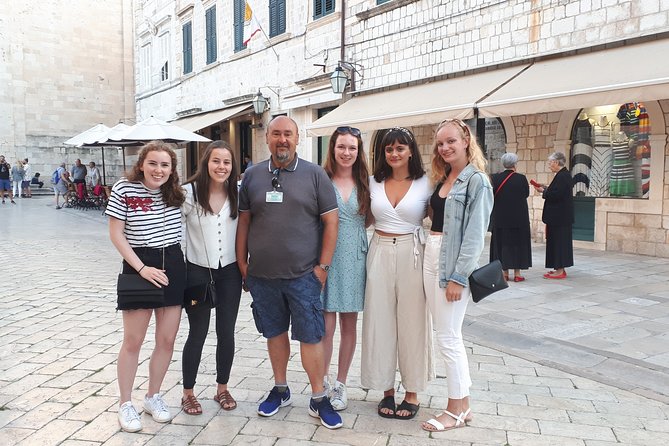
Dubrovnik’s Old Town Secrets Walking Tour packs the city’s main historic sights into one brisk hour, but its real appeal is the way guide Davor connects them. You move from the defensive walls at Pile Gate to the cathedral, hearing about medieval government, the 1990s Croatian Independence War, old rivalries, strange customs, and even a pharmacy that has been working for centuries.
I like the private format, since your group gets the guide’s attention and can ask questions as you go. I also like the early start option, reported as available at 9am, when the stone streets are cooler. The main drawback is the pace: one hour is enough for orientation and stories, not for a slow visit inside every major building.
Key points to know before you book
- Davor brings local detail: Expect stories about Dubrovnik’s politics, customs, wartime damage, and unusual monuments, not just dates and names.
- Five central stops fit into 60 minutes: The route covers Pile Gate, Stradun, Luza Square, Rector’s Palace, and the Cathedral of the Assumption.
- The tour is private: Your group alone participates, with a maximum of 10 people per booking.
- The meeting point is easy to find: Begin at Amerling Fountain near Pile Gate and finish on Stradun.
- The price works best for a group: At $239.65 per group, ten people pay about $24 each, while a couple pays much more per person.
- The focus is storytelling: This is a walking introduction, not a full museum tour or a long architectural inspection.
Starting at Pile Gate and Dubrovnik’s defenses
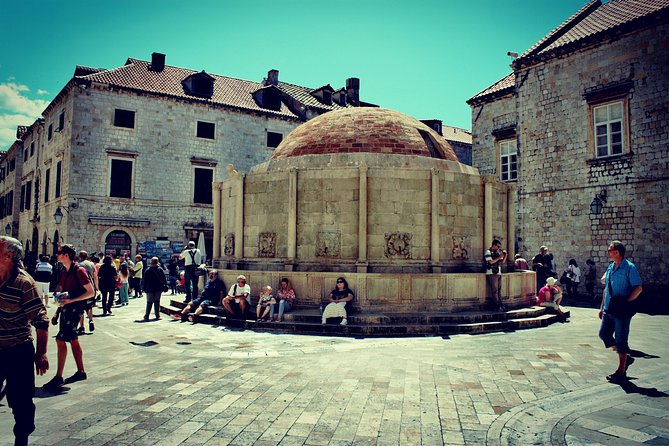
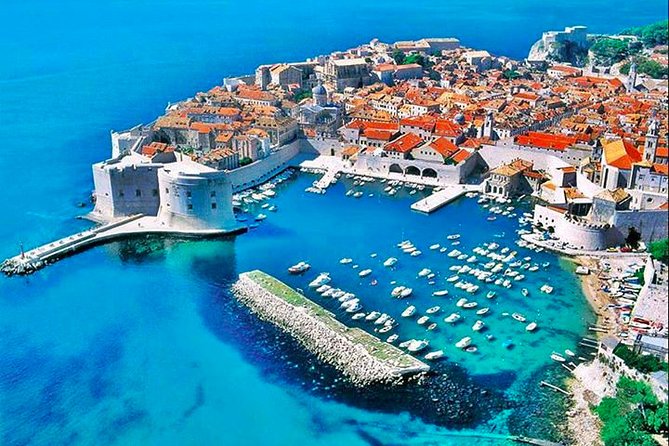
The tour begins at Amerling Fountain on Ul. Svetog Đurđa, close to Pile Gate. That location gives you a useful first look at Dubrovnik’s heavily fortified entrance before you enter the Old Town.
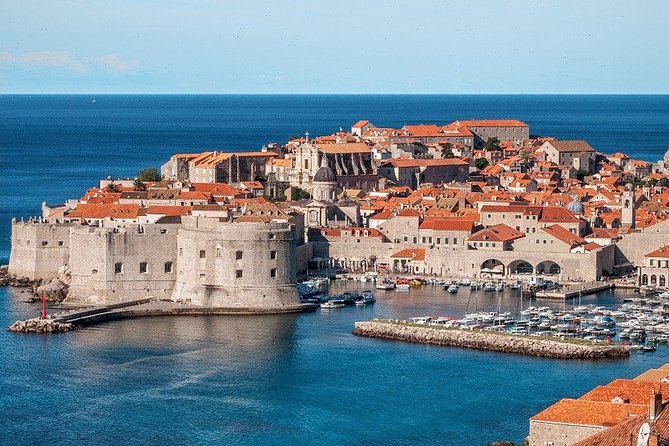
Pile Gate is more than a photo stop. The area between the outer and inner gates helps explain how Dubrovnik protected itself for centuries. You hear about the city’s defensive system and why its walls and entrances mattered so much.
The tour also includes a map showing damage to the Old Town during the siege in the 1990s. This brings the Croatian Independence War into the story early, rather than treating Dubrovnik as a perfectly preserved medieval setting with no modern past.
That balance is important. You get the old stonework, but you also get a reminder that the city’s buildings and residents faced very recent danger. Since this portion lasts about 10 minutes, expect a focused explanation rather than a detailed military history lesson.
Pile Gate is also a sensible starting point for first-time visitors. If you are still trying to understand the city’s layout, this introduction helps you see the Old Town as a defended settlement, not simply a pretty collection of streets.
Other guided walks in Dubrovnik:
- Dubrovnik: Old Town Walking Tour
★ 4.8 · 5,174 reviews - Dubrovnik Discovery Old Town Walking Tour
★ 5.0 · 4,458 reviews - Dubrovnik: Game of Thrones Walking Tour
★ 5.0 · 1,732 reviews
Stradun, the pharmacy, and the city’s grand main street
From Pile Gate, the route moves along Stradun, Dubrovnik’s main street. The polished stone thoroughfare is the city’s clearest visual introduction, lined with important buildings and leading you toward the political center.
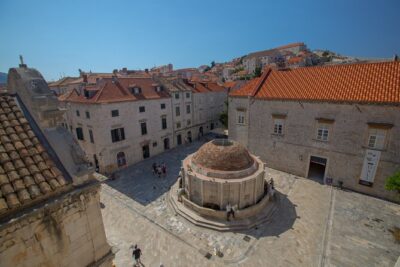
You hear about St. Saviour’s Church, the Franciscan monastery, and Onofrio’s Fountain. The tour also points out the Franciscan pharmacy, described as one of the oldest working pharmacies in the world. That detail gives the monastery a practical human connection. It was not only a religious complex, but also part of daily life and public care.
Onofrio’s Fountain brings a different kind of story. It represents medieval engineering and the effort required to bring water into the city. St. Saviour’s Church adds architectural and religious context, while the monastery helps show how faith, medicine, and civic life overlapped.
Davor’s approach, based on the available tour information, also includes legends and old customs connected with these places. That matters because architecture can blur together when you see several churches and palaces in a short visit. A story gives each stop a reason to stick in your memory.
The allotted time here is about 15 minutes. You should not expect an extended look at every façade or a quiet, unhurried visit inside each site. Think of Stradun as a fast but useful introduction to the Old Town’s public face.
Luza Square and Dubrovnik’s political theater
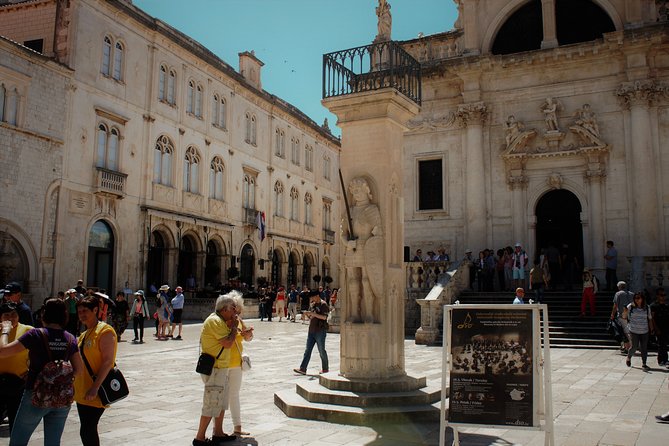
Luza Square is the heart of the route and receives another 15 minutes. This is where the city’s government, ceremonies, rivalries, and public life come together.
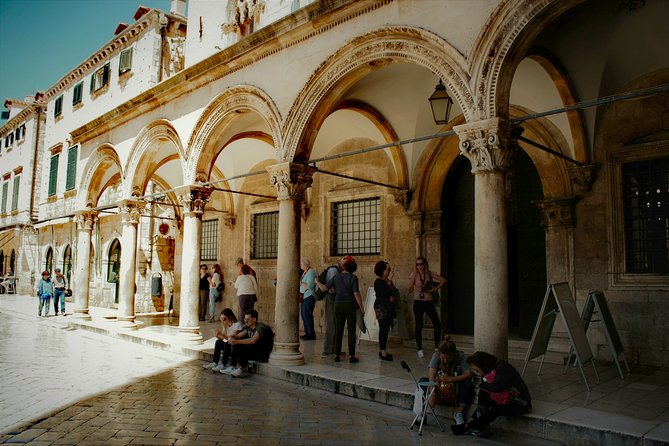
The square includes Sponza Palace, the Clock Tower, St. Blaise’s Church, and the Old Parliament Building. The architecture spans the 15th through 18th centuries, so you get a compact view of how Dubrovnik changed over time while keeping its civic center intact.
The stories here sound especially useful for anyone who likes politics with their architecture. You hear about rivalries, government, and monuments connected with bribery. That sort of detail can make a formal palace or statue easier to understand. Instead of seeing an elegant building as decoration, you begin to see it as a place where decisions were made and power was displayed.
I would pay close attention at this stop if you want to understand Dubrovnik as a self-governing republic. The tour description promises an explanation of the city’s political life, but the short schedule means the treatment will remain selective. You are getting the outline and the memorable anecdotes, not a full course in constitutional history.
Luza Square is also near the end point on Stradun, so it helps you connect the walking route to the city’s main pedestrian corridor. After the tour, you will already be positioned in a central area for continuing your own visit.
Rector’s Palace and the odd machinery of power

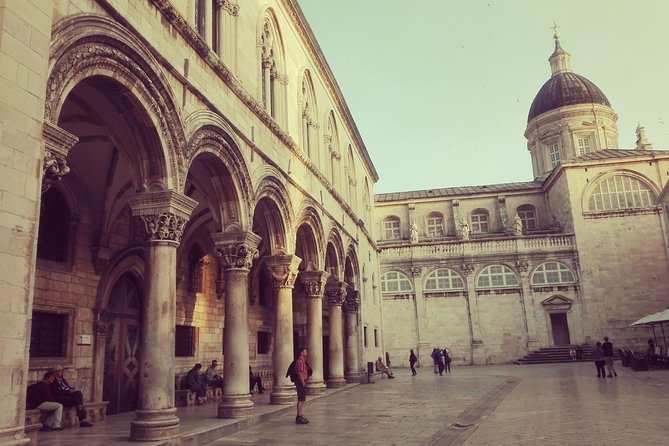
The next stop is Rector’s Palace, with about 10 minutes devoted to it. The building served several roles: a center of power, a prison, and a treasury. That mixture tells you plenty about how closely government, security, and money were tied together in the old republic.
The tour also covers the palace’s unusual origin story and Dubrovnik’s unlikely system of governing. This sounds like one of the strongest stops for people who prefer human details over a list of construction dates.
A palace can seem distant from ordinary life. Hearing that it also held prisoners and protected the treasury gives the building a more practical edge. You can think about who entered it, who was confined there, and how public authority was organized.
The limitation is time. Ten minutes gives Davor room to frame the building and share a few strong stories, but it does not provide a thorough palace visit. The itinerary does not promise a dedicated interior tour or admission, so you should treat this as an exterior and historical explanation unless your booking details say otherwise.
Same base, a different kind of day out:
- Blue Cave Small-Group Boat Tour from Dubrovnik
★ 5.0 · 9,360 reviews - Full-Day Dubrovnik Elaphite Islands Cruise with Lunch and Drinks
★ 5.0 · 8,823 reviews - Dubrovnik: Epic Game of Thrones Tour + Lokrum & Saver Option
★ 4.9 · 5,995 reviews - Dubrovnik: Elaphiti Islands Full-Day Cruise with Lunch
★ 5.0 · 5,938 reviews
The Cathedral and its unexpected stories
The final stop is the Cathedral of the Assumption of the Virgin Mary, also allocated about 10 minutes. The tour takes an unusual route into the building’s story by pointing out that it is dedicated to Mary but decorated with many statues, apparently none of Mary.
That kind of detail is exactly the sort of small puzzle that can make a short tour memorable. Davor also discusses valuable objects kept within the cathedral, their unexpected purpose, and the connection with Richard the Lionheart.
The cathedral is presented as part of the story of Dubrovnik’s origins, not just as a religious monument. You hear about secrets tied to the building and the city’s beginnings. Since the stop is brief, expect a clear introduction to the cathedral’s importance rather than enough time to inspect every artwork or object.
Again, do not assume that a 10-minute stop means a full interior visit. The supplied details confirm the cathedral as a featured stop, but they do not specify admission arrangements. If entering the building is essential to you, check the booking information before you go.
Why the private format matters at $239.65
The listed cost is $239.65 per group of up to 10 people. That makes the value depend almost entirely on your group size.
For a full group of 10, the cost comes to roughly $24 per person. For five people, it is about $48 each. For two people, it works out to nearly $120 per person, and a solo booking would carry the full group price.
That is not a cheap one-hour walk for a couple. Still, a private tour gives you your own guide rather than placing you in a larger group. You can ask Davor about a building, a wartime detail, a political custom, or a story that catches your attention. The value improves if several people in your party share an interest in history and can split the cost.
The short duration also affects the calculation. You are paying for a concentrated orientation, not a half-day activity. That can be a good choice on a busy Dubrovnik schedule, especially if you want context before exploring alone.
The available rating is 5 out of 5 from 36 ratings, with 100 percent recommending the experience. The strongest praise focuses on Davor’s command of Dubrovnik’s complicated past, his ability to answer questions, and his mix of key facts with entertaining anecdotes. One particularly practical detail is the option to book at 9am, which can help you avoid the worst heat of the day.
What Davor’s guiding style adds
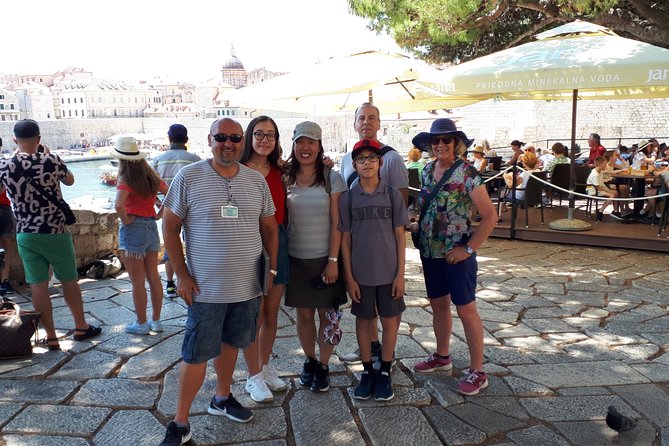
Davor is named as the guide in the available feedback, and his role appears to be the main reason this tour works. He explains the city’s complex past while tying it to places you can see in front of you.
That connection matters in Dubrovnik. A wall, fountain, church, or palace can look impressive without telling you why it exists. A guide who explains the defensive needs, political rivalries, customs, and wartime damage turns the walk into a sequence of connected ideas.
The feedback also points to a guide who welcomes questions and can shift between major facts and small anecdotes. That suits a private tour. You are not locked into a lecture delivered at one fixed pace.
The tone appears educational without being stiff. If you enjoy asking questions, this is likely a better match than a large group walk where the guide must keep moving and protect a tight schedule.
Timing, route, and practical details
The tour lasts about one hour and operates daily from a central meeting point. It begins at Amerling Fountain and finishes on Stradun, so you do not return to the starting point.
That one-way route is useful. You end in the middle of the Old Town, close to several places you may want to revisit on your own. It also means you should plan where you want to go next, rather than assuming you will be escorted back to Pile Gate.
The experience is offered in English and uses a mobile ticket. Booking confirmation is provided at the time of booking. The activity is private, with up to 10 people in your group, and service animals are allowed.
Public transportation is nearby, and most people can participate. The route is through the Old Town, so anyone who needs specific mobility information should confirm details before booking. The supplied information does not give a step-free route or describe the surface conditions in detail.
Free cancellation is available if you cancel at least 24 hours before the start time. Changes made inside that 24-hour period are not accepted, and the payment is not refunded. The tour also requires a minimum number of participants, though the stated private capacity is still a maximum of 10 people per booking.
Who should book this one-hour walk
I would choose this tour if you want a quick historical framework before spending more time in Dubrovnik on your own. It gives you the main route, the key buildings, and enough political and military context to make later wandering more rewarding.
It is also a good fit for a family or friend group that wants a private guide and has several questions. The price becomes much easier to justify when shared among six to 10 people.
The tour suits early risers particularly well. The 9am option mentioned in the available feedback offers a cooler start and leaves the rest of the day open. That may also help you begin before the Old Town feels at its busiest, though the tour information does not promise crowd-free streets.
I would hesitate if you want long interior visits, extensive museum time, or a relaxed architectural study. Five stops in one hour requires a brisk pace. You will hear a lot, but you will not linger everywhere.
Should you book the Old Town Secrets Walking Tour?
Book it if you want Dubrovnik explained by a local guide rather than simply photographed. Davor’s focus on fortifications, the Croatian Independence War, political intrigue, medieval engineering, customs, and odd stories gives the walk more substance than a basic route through the main sights.
The strongest case is a private group of several people booking the early morning slot. You get a compact introduction, personal attention, and an easy finish on Stradun. The weaker case is a couple seeking the lowest possible price for a one-hour activity, or anyone expecting full admission and detailed visits at the palace and cathedral.
For most first-time visitors, I see this as a useful orientation with personality. Just arrive ready to walk, ask questions, and accept that the short schedule favors memorable stories over a slow look at every building.
FAQ
How long does the Old Town Secrets Walking Tour last?
The tour lasts approximately one hour.
Where does the tour start?
It starts at Amerling Fountain on Ul. Svetog Đurđa in Dubrovnik, near Pile Gate.
Where does the tour end?
The tour ends on Stradun in Dubrovnik’s Old Town.
How many people can join the private tour?
A maximum of 10 people can participate in one booking, and only your group takes part.
Is the tour offered in English?
Yes. The experience is offered in English.
What is the cancellation policy?
You can cancel for a full refund up to 24 hours before the experience starts. Cancellations or changes made less than 24 hours before the start time are not accepted for a refund.
More walking tours in Dubrovnik
- Dubrovnik Old Town History Walking Tour
★ 5.0 · 1,684 reviews - Dubrovnik: City Walls Early Morning or Sunset Walking Tour
★ 4.8 · 1,523 reviews - Dubrovnik: Ancient City Walls & Wars Walking Tour
★ 5.0 · 1,270 reviews - Dubrovnik: Game of Thrones Walking Tour
★ 4.9 · 981 reviews
Just added in Dubrovnik
- Elaphiti Islands Private Dubrovnik Boat Unique Experience★ 5.0 · 10 reviews
- Full- Day Private Speedboat Tour in Dubrovnik on Elaphiti Islands★ 5.0 · 21 reviews
- Wine tour peninsula Pelješac★ 5.0 · 3 reviews
- PRIVATE Wine Tour to Konavle country side★ 5.0 · 11 reviews
- Dubrovnik at War 1991-1992 Private Walking Tour★ 5.0 · 4 reviews
- Welcome to Dubrovnik Walking Tour★ 5.0 · 36 reviews
- City Walls of Dubrovnik★ 5.0 · 70 reviews
- Walls of Liberty: A Self-Guided Audio Tour of Dubrovnik★ 3.5 · 3 reviews
Walking Tours, compared.
Walking Tour of Split and Diocletian’s Palace
Read our review →

Krka Waterfalls tour with Trogir Walking tour and Krka panoramic boat cruise
Read our review →
City Walls Early Morning or Sunset Walking Tour
Read our review →
Browse the lists this tour appears in