
Reviewed · WALKING TOURS
Dubrovnik: Guided Old City Walking Tour
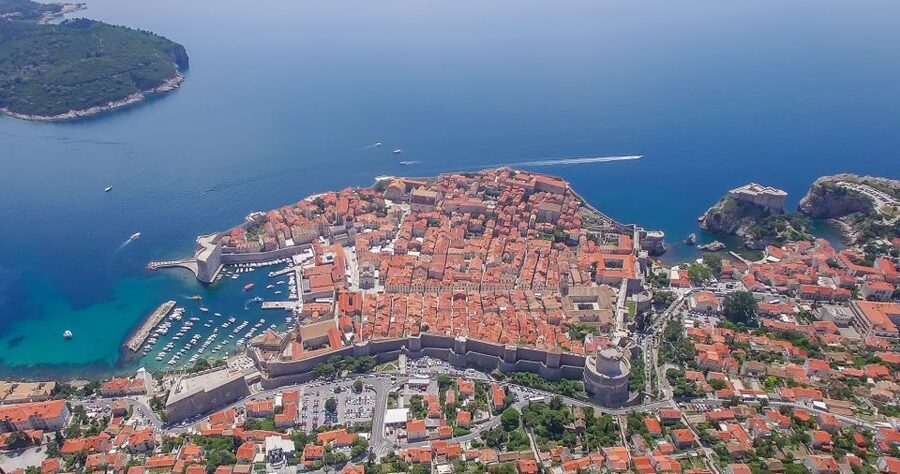
Dubrovnik’s stones carry more than postcard beauty. On this guided walk through ancient Ragusa, you connect grand palaces, churches, and narrow lanes with the city’s survival through earthquake, war, and political change. I like the clear route from Stradun to the cathedral, Sponza Palace, Rector’s Palace, and the old port. I also like that guides such as Sonja and Sophia bring a personal, easy-going voice to the past.
The main consideration is that the $26 price covers a licensed local guide, while the details do not say that entrance fees are included. The tour is also in English only, and no duration or group size is provided, so check those points before booking if your day in Dubrovnik is tightly planned.
Key points to know before you book
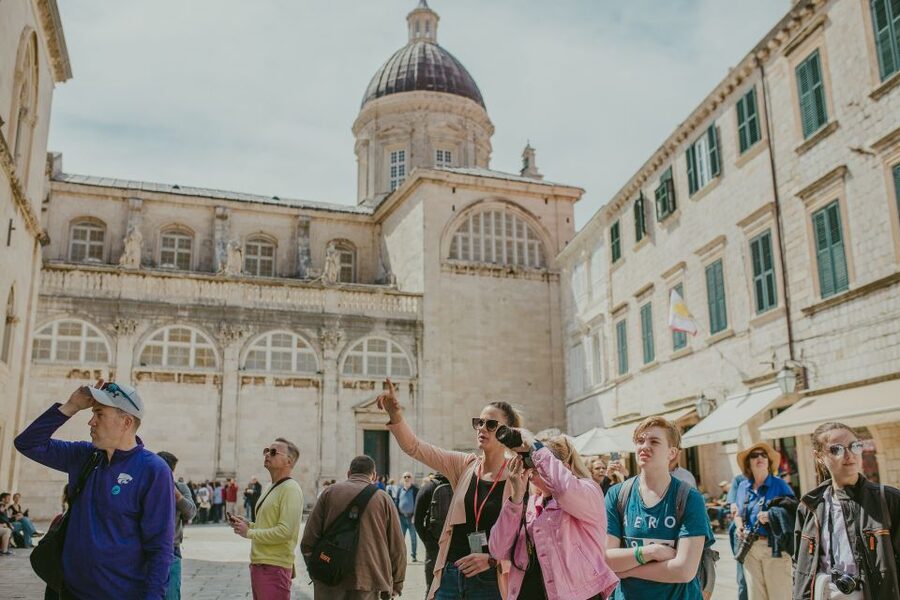
- Start by the blue DUtheTour umbrella: Meet at Amerling Fountain on Pile Square, outside the Old City and beside Restaurant Dubravka.
- See Dubrovnik’s main historic sights on foot: The route includes Stradun, the cathedral, Sponza Palace, Rector’s Palace, and the old port.
- Hear the city’s full political story: The tour covers Dubrovnik from its beginnings through the collapse of Yugoslavia and Croatia’s independence.
- Get more than monument names: The guide adds local stories, legends, and details about daily life inside the Old City.
- Walk through a UNESCO World Heritage site: Dubrovnik’s preserved medieval walls and street plan provide the setting for the entire experience.
- Book with modest financial risk: You can reserve now, pay later, and cancel up to 24 hours ahead for a full refund.
Why a guided walk helps in Dubrovnik

Dubrovnik is easy to admire and surprisingly easy to misunderstand. You can stroll down Stradun, photograph the polished limestone, and leave with a pleasant impression of the place. But the city makes more sense when you learn why it was built as it was, how it governed itself, and how it recovered from repeated disaster.
That is the real value of this tour. You are not simply moving from one handsome building to another. You are following the story of Ragusa, the former name of Dubrovnik, through its medieval growth, its rebuilding after a devastating earthquake, the 1991 destruction, the collapse of Yugoslavia, and Croatia’s independence.
I like this broad time span. Many Old City walks stop once the medieval architecture has been explained. This one reaches into recent history, when Dubrovnik again faced devastation that few people expected. That gives the streets a more human meaning. The polished façades are not just old scenery. They are evidence of a city that had to rebuild more than once.
A guide is especially useful here because the Old City is compact but layered. A square may look simple until you learn what happened there. A palace may have served more than one purpose. A church may tell part of the story of wealth, faith, civic pride, and recovery. The walk gives you a framework you can use for the rest of your stay.
Other guided walks in Dubrovnik:
- Dubrovnik: Old Town Walking Tour
★ 4.8 · 5,174 reviews - Dubrovnik Discovery Old Town Walking Tour
★ 5.0 · 4,458 reviews - Dubrovnik: Game of Thrones Walking Tour
★ 5.0 · 1,732 reviews
Meeting at Pile Square and entering the Old City
You meet at the Amerling Fountain, outside the Old City at Pile Square, next to Restaurant Dubravka. Look for the blue umbrella marked with the DUtheTour logo. This is a useful meeting point because Pile is one of the main approaches to Dubrovnik’s historic center, and the clear marker should help you find the guide in a busy area.
The start outside the walls also makes sense for the story. You begin at the edge of the old city, then move into the enclosed streets where Dubrovnik’s design becomes easier to read. The contrast matters. Outside, you are in a modern arrival area. Inside, you enter a carefully preserved historic setting shaped by defense, trade, religion, and civic rule.
I recommend arriving with enough time to find the fountain and blue umbrella without rushing. The meeting point is specific, but Pile Square can feel crowded, especially when many people are arriving for different activities. You should also wear shoes suitable for stone streets. The tour is entirely on foot, and the Old City’s surfaces can be hard underfoot.
The activity returns to the same meeting point at the end. That makes the walk easier to fit into a day of sightseeing because you finish where you began, rather than having to work out a new meeting place in an unfamiliar part of town.
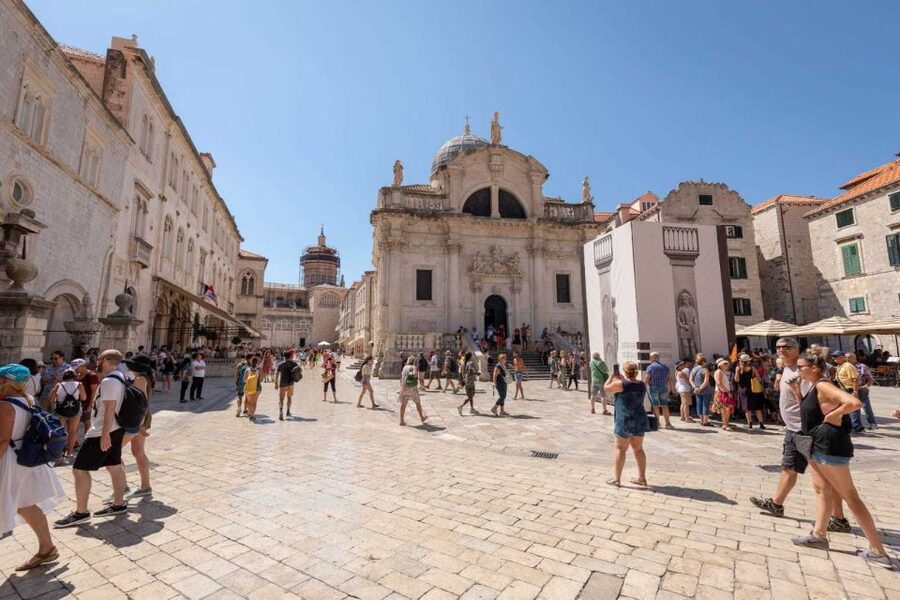
Stradun, Dubrovnik’s polished main street
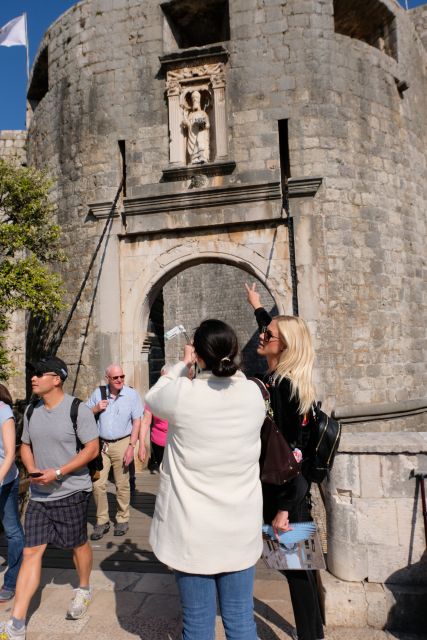
Stradun is the natural backbone of a first visit to Dubrovnik. This broad limestone street cuts through the Old City and links important squares, churches, palaces, and side lanes. You will see the grand public face of Dubrovnik here, but the guide can also help you understand what lies beyond it.
I like having Stradun explained rather than treated as a simple photo stop. It is the street most people remember, yet its real value comes from how it connects the city. From here, you can begin to see Dubrovnik as a planned urban center, not just a collection of attractive buildings.
The side streets matter, too. The experience is designed to move beyond the usual tourist path into narrow lanes and small squares. That gives you a better sense of daily life inside the walls. The Old City is not only a museum of stone. People still live there, and the guide brings attention to that present-day reality.
Do not expect every corner to feel quiet or empty. Dubrovnik is one of Dalmatia’s best-known destinations, and its main street is a natural focus for visitors. The benefit of a guided walk is not escaping all activity. It is learning to read the place even when the street is busy.
The cathedral and the city’s religious center

The cathedral is one of the tour’s main stops. You can expect the guide to place it within Dubrovnik’s wider story, rather than simply point out its architecture. Religious buildings in a historic city often reveal how civic life, wealth, and public identity were connected, and this stop adds that layer to the walk.
The cathedral also gives the route a useful change of pace. Stradun presents Dubrovnik as a public avenue. The cathedral turns your attention toward worship, ceremony, and the beliefs that helped shape life inside the walls.
The supplied details do not specify whether admission to the cathedral is included in the $26 price. I would check that before you book, especially if visiting the interior is essential to you. The tour description says the cathedral is visited, but the only stated inclusion is the local, professional, licensed guide.
Same base, a different kind of day out:
- Blue Cave Small-Group Boat Tour from Dubrovnik
★ 5.0 · 9,360 reviews - Full-Day Dubrovnik Elaphite Islands Cruise with Lunch and Drinks
★ 5.0 · 8,823 reviews - Dubrovnik: Epic Game of Thrones Tour + Lokrum & Saver Option
★ 4.9 · 5,995 reviews - Dubrovnik: Elaphiti Islands Full-Day Cruise with Lunch
★ 5.0 · 5,938 reviews
Sponza Palace and the memorial room
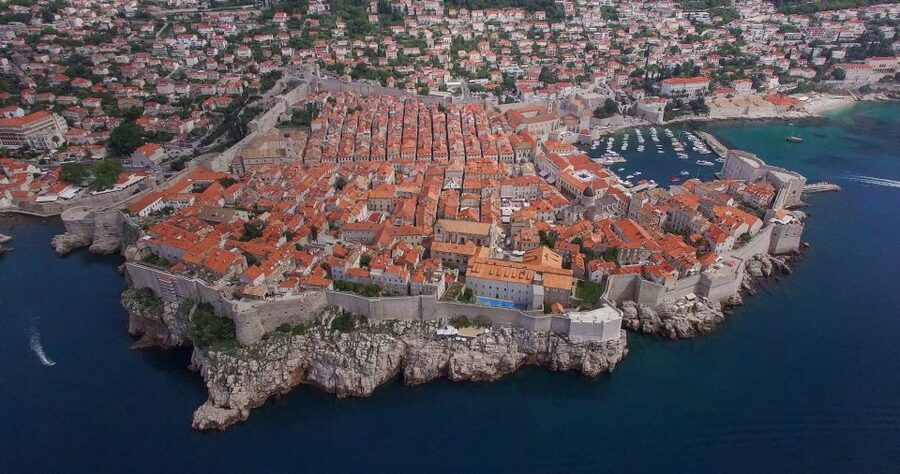
Sponza Palace is another strong stop, particularly because the experience includes its memorial room. This gives the walk a direct connection to Dubrovnik’s recent past and the suffering caused by the 1991 conflict.
That stop helps prevent the tour from becoming a polished medieval fantasy. Dubrovnik’s famous stone streets survived earlier disasters, but they were also damaged in living memory. The memorial room asks you to consider the people and buildings affected by that period, not just the city’s older legends.
I find this kind of pause important. It gives emotional weight to the rebuilding story introduced earlier in the walk. You begin to understand that restoration is not only about repairing façades. It is also about preserving memory and showing what happened.
The exact admission arrangement is not stated, so confirm whether access to the memorial room is part of the tour price or requires a separate ticket. That small check can save confusion on the day.
Rector’s Palace and the old Republic of Ragusa
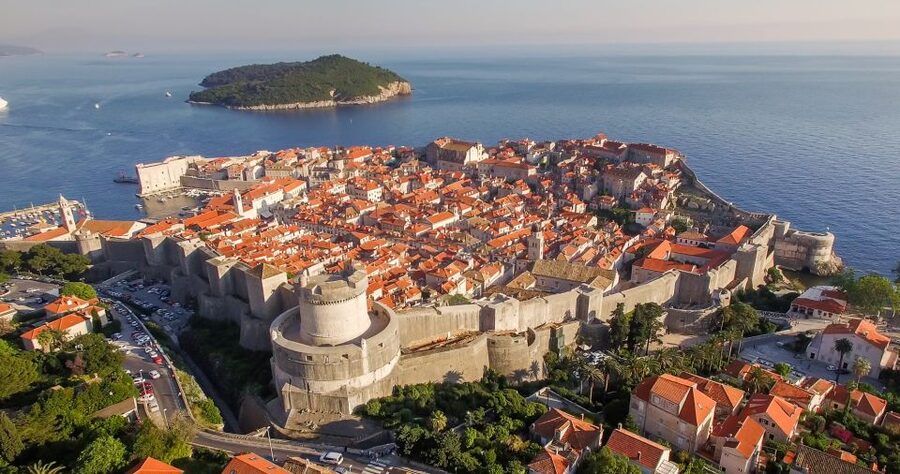
Rector’s Palace brings the political story into focus. The building represents the governing world of the old Republic of Ragusa, the historic state centered on Dubrovnik. Here, the guide can connect architecture with leadership, civic rules, diplomacy, and the way the city managed itself.
I like that Rector’s Palace is paired with stories about the establishment and development of Dubrovnik. It gives you a better way to understand the city’s power. The Old City was not built only to look beautiful. Its buildings served a working society with officials, institutions, religious life, trade, and strict civic order.
The name Ragusa is important here. The tour uses it to take you beyond modern Dubrovnik and into the city’s older identity. You are not just hearing a list of dates. You are seeing how one place changed names, governments, and circumstances while keeping a remarkably clear physical shape.
Again, the information provided does not confirm whether entry inside Rector’s Palace is included. You should ask about ticket coverage if you want to spend time indoors. Even if the route focuses on exterior views and explanation, the palace remains a valuable stop because its setting helps make the old government visible.
The old port and Dubrovnik’s connection to the sea
The old port gives the walk a natural sense of place. Dubrovnik grew as a maritime city, and the port helps you understand its relationship with the Adriatic. It is also a welcome shift from the tight streets and enclosed squares of the central Old City.
This is where the nickname Pearl of the Adriatic becomes more than a slogan. The sea shaped the city’s trade, defense, and contacts with the wider region. A visit to the port rounds out the tour by showing the setting that helped Dubrovnik prosper.
The port also works well near the end of a walking route. You have already seen the civic, religious, and residential sides of the city. Here, the wider horizon gives you a chance to connect Dubrovnik’s walls with the water beyond them.
The tour information does not promise a particular port activity or boat ride. This is a walking stop, so expect interpretation and views rather than a separate maritime excursion.
Stories beyond the standard sightseeing route
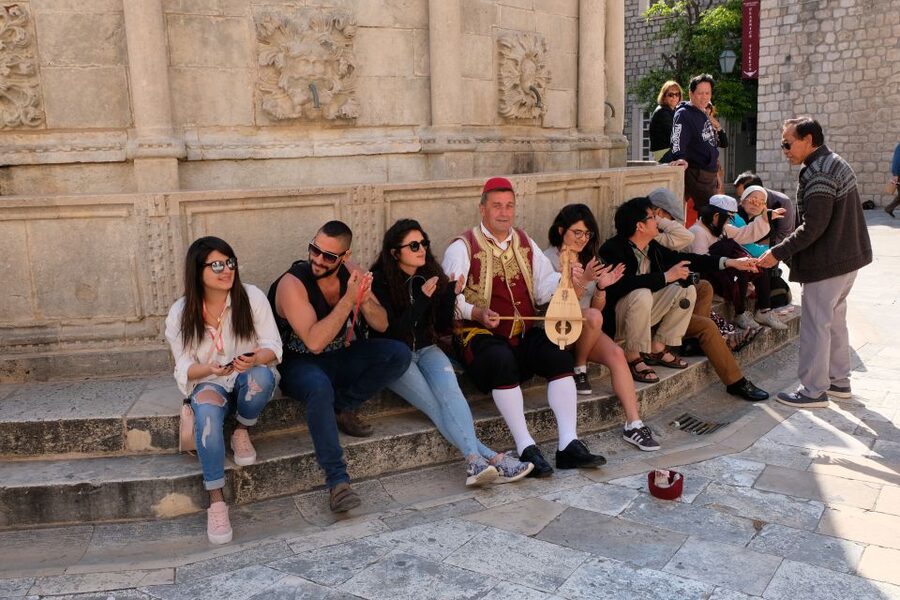
The strongest part of the experience may be the guide’s use of local stories. The walk is built around legends, curiosities, and details that are hard to pick up from a map. That does not mean every story is a major historical event. Small anecdotes often explain a city better than a long string of dates.
Sonja is described as entertaining while leading people through the Old City and to filming locations connected with Game of Thrones. Sophia is also described as an excellent and informative guide. Those comments point to two useful qualities: the ability to keep the walk lively and the ability to explain the setting clearly.
The Game of Thrones connection is not listed as a formal highlight, so you should not book this solely as a television-location tour. Still, if that interest comes up during the walk, the Old City setting gives the guide a natural chance to point out related locations.
I also like the focus on present-day residents. The tour aims to show how people live inside the walls now, not only how officials and nobles lived centuries ago. That makes the experience feel less like a procession through monuments and more like an introduction to a real neighborhood with a long memory.
What $26 gets you

At $26 per person, the price is reasonable if you want a structured introduction to Dubrovnik and plan to use the rest of your day for independent exploring. You are paying for a professional, licensed local guide and for the explanation that ties several major sights into one story.
The value depends on how you usually sightsee. If you enjoy reading plaques, following a map, and researching the city later, you may prefer to walk alone. If you want context right away, the guide saves time and helps you notice details you might otherwise pass without understanding.
The price does not list entrance tickets, food, transportation, or any other extras. It is safest to treat the $26 as the cost of the guided walking service and confirm admission arrangements for the cathedral, Sponza Palace, and Rector’s Palace before booking.
There is also no duration or group size stated in the provided details. Those factors affect value. A longer walk with a small group feels very different from a short walk with a large crowd. Ask the provider if either point matters to your plans.
You can reserve and pay later, which is useful if your schedule is still shifting. Cancellation is available up to 24 hours in advance for a full refund. Those terms make the booking less risky, though you should still read the final conditions when reserving.
Who will get the most from this walk
I would choose this tour if you are visiting Dubrovnik for the first time and want a strong historical foundation. It is also a good fit if you prefer stories and explanation to simply moving between photo stops.
The route should suit you if you want to see several major landmarks without arranging separate visits. The cathedral, Sponza Palace, Rector’s Palace, Stradun, and the old port cover the city’s religious, civic, commercial, and maritime sides.
It is less suitable if you need a precise schedule and the missing duration creates a problem. It may also disappoint you if you expect a dedicated Game of Thrones excursion, a wall walk, or a boat trip. Those are not stated features of this experience.
The English-only format is another point to consider. If you want the tour in another language, this is not the right choice based on the available information.
Should you book the Dubrovnik Old City walk?
Yes, I would book it if you want the main Old City sights placed inside a clear story of Ragusa, Dubrovnik, the 1991 conflict, and Croatia’s independence. The memorial room at Sponza Palace gives the route unusual weight, while Stradun, Rector’s Palace, the cathedral, and the old port provide a well-rounded first look.
Before paying, confirm the tour duration, group size, and whether monument admission is included. If those details work for your schedule, $26 is a fair price for an English-language introduction led by a licensed local guide. Sonja and Sophia are names to look for when available, especially if you value a guide who can balance clear information with an entertaining walk.
FAQ
Where does the Dubrovnik walking tour start?
The tour starts at Amerling Fountain on Pile Square, outside the Old City and next to Restaurant Dubravka. Look for the blue umbrella with the DUtheTour logo.
Where does the tour finish?
The activity ends back at the meeting point at Amerling Fountain.
Which language is the tour offered in?
The tour is offered in English.
What sights are included in the walking route?
The route includes the cathedral, Sponza Palace and its memorial room, Stradun, Rector’s Palace, and the old port.
Is a guide included in the price?
Yes. The price includes a local, professional, licensed tour guide.
Can I cancel the booking and receive a refund?
Yes. You can cancel up to 24 hours in advance for a full refund. You can also reserve and pay later.
Just added in Dubrovnik
- Elaphiti Islands Private Dubrovnik Boat Unique Experience★ 5.0 · 10 reviews
- Full- Day Private Speedboat Tour in Dubrovnik on Elaphiti Islands★ 5.0 · 21 reviews
- Wine tour peninsula Pelješac★ 5.0 · 3 reviews
- PRIVATE Wine Tour to Konavle country side★ 5.0 · 11 reviews
- Dubrovnik at War 1991-1992 Private Walking Tour★ 5.0 · 4 reviews
- Welcome to Dubrovnik Walking Tour★ 5.0 · 36 reviews
- City Walls of Dubrovnik★ 5.0 · 70 reviews
- Walls of Liberty: A Self-Guided Audio Tour of Dubrovnik★ 3.5 · 3 reviews
Walking Tours, compared.
Walking Tour of Split and Diocletian’s Palace
Read our review →

Krka Waterfalls tour with Trogir Walking tour and Krka panoramic boat cruise
Read our review →
City Walls Early Morning or Sunset Walking Tour
Read our review →
Browse the lists this tour appears in