
Reviewed · TOURS IN ZAGREB
Communism & Croatian Homeland War Tour
Zagreb’s prettiest streets reveal little about the conflicts that shaped modern Croatia. This walking tour takes you beneath the city, into World War II tunnels and a real bombing shelter, then uses maps, photographs, and multimedia to explain Yugoslavia’s breakup and Croatia’s war for independence.
I like the way guides such as Ivana, Darko, Luka, and Diana turn a tangled subject into a clear story. I also like the personal touch: guides may explain family experiences and everyday wartime life, not just list dates and political names. The main drawback is that this is a serious history lesson, not a sightseeing stroll, and the discussion can run to two and a half hours.
Key points to know before booking
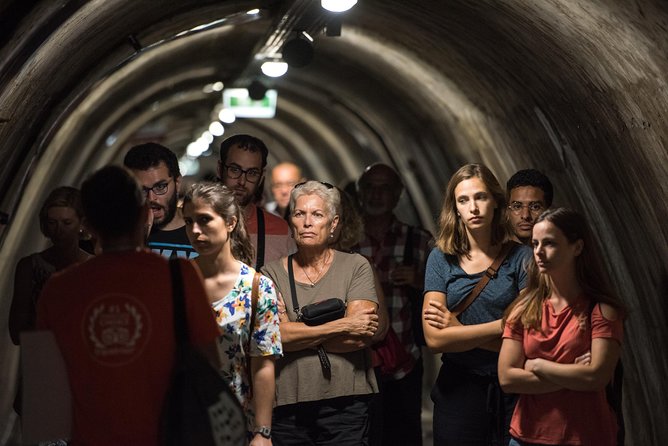
- Walk through Tunel Grič: Enter Zagreb’s World War II-era underground passages and hear how they were used during air raids.
- See an authentic shelter basement: The Kaptol stop uses a former bombing shelter for a multimedia look at Croatia’s Homeland War.
- Get the big political picture: The tour links early twentieth-century events, communism, Yugoslavia, and the 1990s conflict.
- Expect a strong guide-led presentation: Maps, photographs, personal stories, and a final film help make complicated events easier to follow.
- Plan for a serious but accessible experience: It suits curious adults and older children more than visitors seeking light entertainment.
- Book with timing in mind: Tours meet at the Ban Josip Jelačić Monument at 3 p.m. Monday through Saturday and 11 a.m. Sunday.
Why this Zagreb tour matters
Many city tours give you churches, squares, and grand facades. Those are worthwhile, but they do not explain why modern Croatian identity is so closely tied to war, independence, and the fall of Yugoslavia.
This experience takes a different route. You walk through central Zagreb while your guide builds a political timeline around you. The city becomes a setting for questions about communism, nationalism, air raids, military conflict, and the ordinary people caught in between.
I find that useful because Balkan history can become a blur of names and borders. A good guide gives you a framework: what Yugoslavia was, how communist rule shaped daily life, why the federation broke apart, and how Croatia’s 1990s war affected families and communities.
The tone is generally serious, but guides use humor when appropriate. Darko, for example, is described as both passionate and funny, while Ivana is praised for teaching the subject with energy and care. That balance matters. The material includes loss and trauma, but the presentation does not need to feel cold or academic.
You should also expect a Croatian point of view. One especially useful part of the guiding approach is the acknowledgment that this is not the only perspective on the regional conflicts. Ivana has reportedly encouraged people to seek views from neighboring countries and other sources. That makes the tour more responsible than a simple patriotic narrative.
Other trips people book in Zagreb:
- From Zagreb: Plitvice & Rastoke Guided Day Trip with Ticket
★ 4.9 · 2,955 reviews - Zagreb: Rastoke & Plitvice Lakes Guided Tour with Ticket
★ 4.9 · 1,897 reviews - Best of Zagreb with the WW2 Tunnels
★ 5.0 · 973 reviews
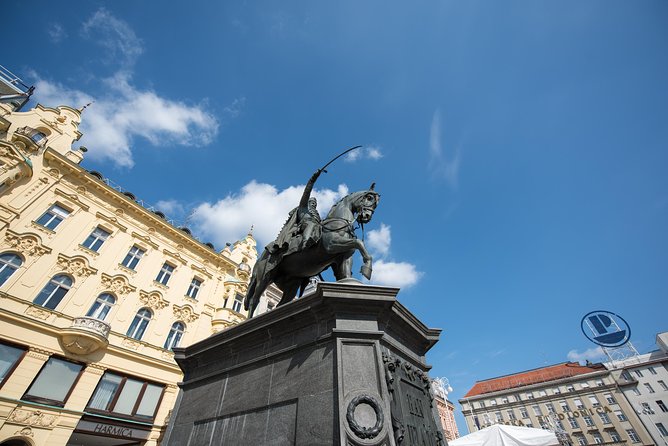
Meeting at Ban Josip Jelačić Monument
The tour begins at the Ban Josip Jelačić Statue, at Trg bana Josipa Jelačića 15. This is a central Zagreb meeting point and a practical place to begin a walking experience.
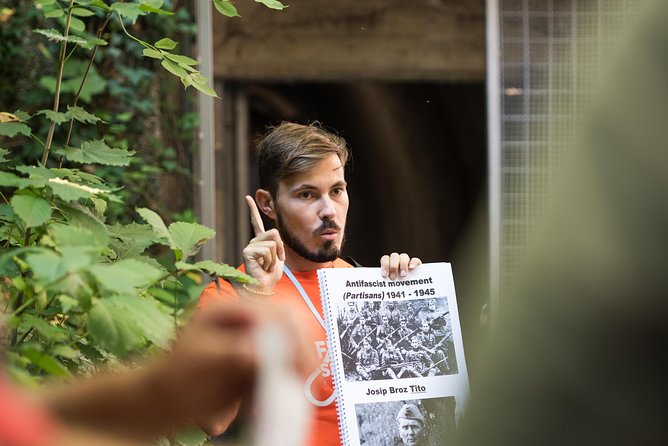
Arrive ready to walk and listen. The opening section takes about 30 minutes and sets up the political story before you enter the underground sites. Your guide may use maps, photographs, and a booklet of visual material to explain how Croatia fit into the larger story of Central Europe and the Balkans.
This introduction is important because the tour covers a lot of ground. The subject is not limited to communism. You may hear about early twentieth-century Croatia, World War I, the formation and development of Yugoslavia, World War II, communist rule, and the war of independence from 1990 to 1995.
That broad scope is a strength, but it also creates a challenge. If you know little about the region, the number of political parties, leaders, borders, and armed groups can feel heavy at first. Guides who explain the sequence clearly make a major difference. The strongest accounts describe Ivana, Darko, and Diana as organized, clear, and ready to answer questions.
The meeting point is also convenient if you are already exploring Zagreb on foot. The activity returns there at the end, so you do not need to arrange transport between stops.
Entering Tunel Grič beneath Zagreb
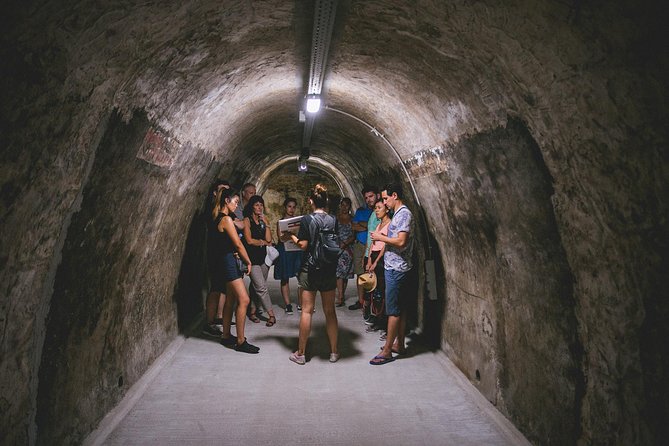
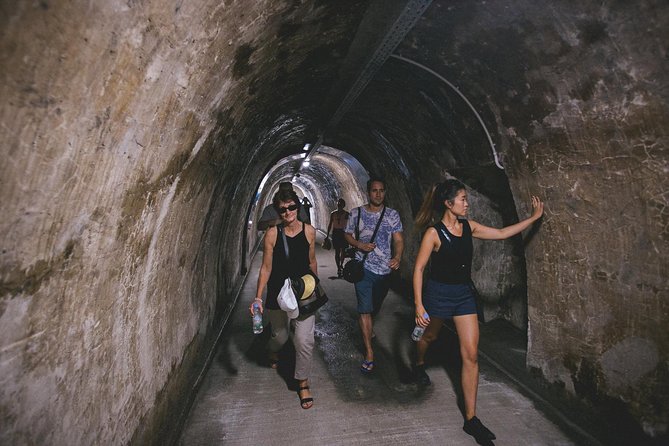
The first major stop is Tunel Grič, a World War II-era underground passage. The tunnel and its shelter areas give the discussion a physical setting that a classroom or ordinary museum display cannot quite match.
Here, you learn about air raids on Zagreb and the way underground spaces were used for protection. The guide connects the tunnel to life under communism, helping you see that political systems are not just ideas in books. They affect where people work, how they receive information, what they fear, and how they respond when war reaches the city.
The tunnel itself is freely accessible, so you are not paying an entrance fee for an exclusive attraction. The value comes from the context supplied by the guide. Without that context, you would mainly be walking through a large underground passage. With it, the space becomes part of a story about civilian life, danger, and political change.
Do not expect a huge collection of objects or a long museum visit here. The setting is atmospheric, but the main content is spoken explanation. If you want a tour packed with monuments and photo stops, this section may feel modest.
There is also an important scheduling limitation. The tunnel visit is not included when public events are taking place inside, and it may be unavailable during the Christmas Market period. Check the conditions around your date if entering the tunnel is a priority.
The Kaptol shelter and Croatia’s 1990s war
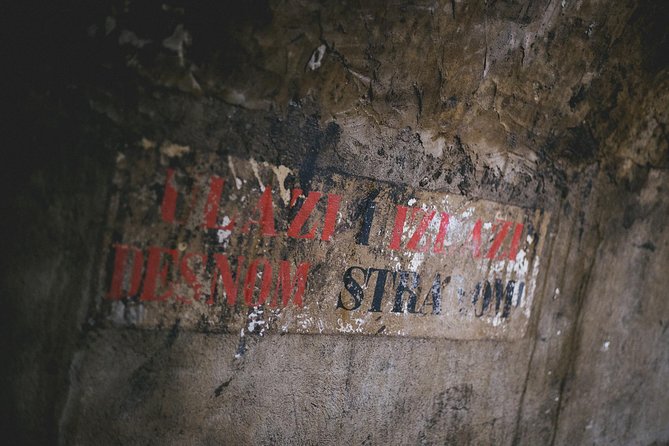
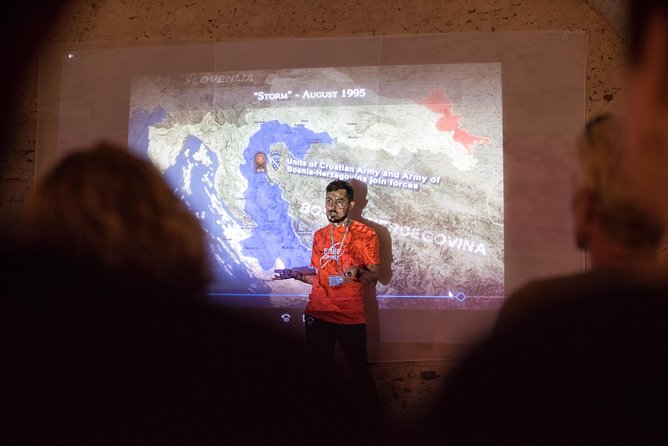
The Kaptol stop brings the story closer to the Croatian Homeland War. You visit a basement that was used as a bombing shelter and now serves as the setting for a multimedia presentation.
This is where the tour shifts from older wartime history to the fall of Yugoslavia and Croatia’s struggle for independence. Maps and visual material help explain events that are hard to follow from a simple timeline. The region’s borders, alliances, and political divisions changed quickly, and the guide’s job is to show how those changes affected real communities.
The shelter is especially effective because it puts the subject in an everyday setting. You are not only hearing about military operations or government decisions. You are also considering where civilians waited during bombing, how families lived with uncertainty, and why the war remains so close to living memory.
The multimedia presentation is a key part of the experience. One account describes a final film of about 20 minutes, and several people found it sobering. You should be prepared for emotional material rather than a light closing attraction.
The presentation also means the tour may feel longer than the advertised two hours. The stated duration is approximately two hours, but the pace and discussion can stretch to about two and a half. That is not necessarily a problem, though it matters if you have a dinner reservation or another fixed activity afterward.
Same base, a different kind of day out:
- Plitvice Lakes with Ticket & Rastoke Guided Tour from Zagreb
★ 5.0 · 966 reviews - Zagreb: Small Group Walking Tour City Center and WW2 Tunnels
★ 4.9 · 895 reviews - Zagreb: Skip-the-Ticket-Line Museum of Broken Relationships
★ 4.5 · 847 reviews - Zagreb: City and WWII Tunnels Walking Tour
★ 4.9 · 845 reviews
What the guides add to the experience
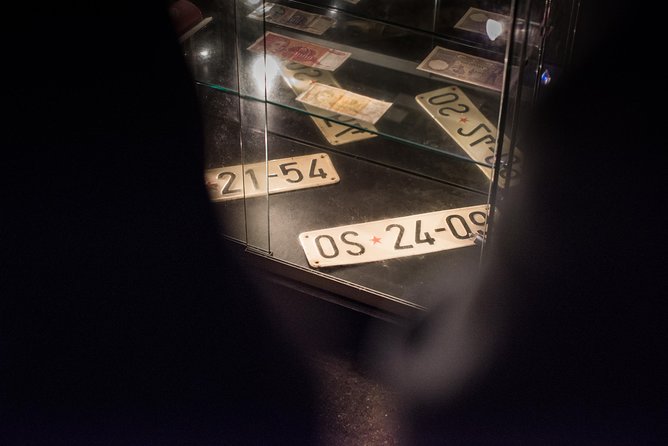
The guide is the deciding factor here. The route itself is compact, and the underground sites are not large museums. You are booking the interpretation.
The certified local guides have extensive experience, and the strongest guiding style combines structure with personal connection. Ivana is described as a former teacher who uses maps and photographs like classroom tools. Darko is praised for making a complex subject digestible while adding a little humor. Diana is noted for handling hot weather thoughtfully by giving explanations in shaded areas.
Some guides also bring family stories into the discussion. That can make the recent past feel less distant, especially when the subject turns to the 1990s war. At the same time, personal stories need to be handled with care. The most useful approach is to connect them to the wider record rather than present one family’s experience as the complete truth.
You should feel free to ask questions. The guides are expected to handle questions about politics, geography, and the conflicts of the former Yugoslavia. If you arrive with no background, ask for clarification when names or borders begin to pile up. The group size is capped at 20, which is small enough for questions without making the walk feel private.
The tour is offered in English. Children may participate, but they must be accompanied by an adult. Because the material includes war and civilian suffering, parents should decide if the topic fits the age and interests of their children.
How much walking and sightseeing to expect
This is an easy walking tour in the sense that it follows central Zagreb streets and does not require a strenuous hike. It is not, however, a conventional sightseeing walk.
You will see the Ban Josip Jelačić area, central streets, Tunel Grič, and Kaptol. The focus remains on explanation rather than a long list of architectural highlights. One honest way to think about it is as a moving history class with two important underground locations.
Wear comfortable shoes and bring water, especially for a warm afternoon. The tour takes place outdoors between indoor or underground sections, and guides may seek shade for talks when the weather is hot. The tunnels and basement also provide a change from the open streets, but the experience is not designed around comfort stops.
Public transportation is nearby, though the activity begins and ends at the statue. Since the group returns to the starting point, it is easy to continue sightseeing in central Zagreb afterward.
The $47.16 price and what you receive
At $47.16 per person, this is not the cheapest way to spend two hours in Zagreb, especially since the tunnel and shelter do not require a separate admission fee. You are paying mainly for the guide’s preparation, translation into a clear English presentation, visual material, and access to a structured explanation of Croatia’s recent past.
I think the value is good if you would otherwise struggle to understand the region. A guide can connect subjects that are often presented separately: World War II, communist rule, Yugoslavia, Croatian independence, and the effects of war on civilians.
The value is weaker if you want a broad city tour with major landmarks, interiors, and plenty of free time for photographs. It is also less suitable if you prefer to learn independently at your own pace. The tour moves through a large amount of material, so you need to stay engaged.
The booking pattern suggests that people often reserve about 11 days ahead. You do not necessarily need to book that far in advance, but it is sensible if your Zagreb schedule is fixed or if you specifically want a certain departure. The maximum group size is 20, which helps keep the price below a private tour while avoiding a very large crowd.
Free cancellation is available up to 24 hours before the start time for a full refund. Cancellations or changes inside that window are not refunded or accepted. The tour also requires a minimum number of participants, so an operator cancellation would bring the choice of another date or a full refund.
Who should take this tour
I would recommend it to you if you want to understand present-day Croatia beyond beaches, food, and medieval streets. It is particularly useful early in a Croatia trip, since the background may help you make better sense of museums, memorials, conversations, and road signs elsewhere in the country.
It also works late in a longer trip. If you have already visited several Croatian cities, spoken with locals, and encountered different explanations of the region, the tour can help connect those pieces.
You do not need prior expertise. The best guides explain basic terms and use visual aids to keep the story moving. Still, you should enjoy listening and asking questions. This is not a passive attraction.
I would hesitate to recommend it if you want only cheerful sightseeing, dislike political history, or have a tightly packed schedule. The subject can be sad, and the final film may leave you thinking about the human cost long after the tour ends.
Should you book the Communism and Croatian Homeland War Tour?
Book it if your main goal in Zagreb is understanding the last century of Croatian history. The combination of Tunel Grič, a genuine air-raid shelter, maps, photographs, local stories, and a multimedia presentation gives the subject more weight than a standard city walk.
Choose a departure led by a guide who can explain several viewpoints and welcome questions. Ivana, Darko, Luka, and Diana are among the guides associated with especially strong instruction, though the exact guide may vary.
Skip it if you are looking for Zagreb’s classic sights or a short, casual orientation. But if you want the political and human context behind modern Croatia, the $47.16 fee is a fair price for a focused, serious, and well-organized lesson.
FAQ
Where does the tour begin?
It begins at the Ban Josip Jelačić Statue at Trg bana Josipa Jelačića 15 in Zagreb.
What time does the tour start?
It meets at 3 p.m. Monday through Saturday and at 11 a.m. on Sundays.
Where does the tour end?
The activity ends back at the meeting point near the Ban Josip Jelačić Statue.
How long does the tour last?
The stated duration is approximately two hours. Allow up to about two and a half hours, since the walking tour and multimedia presentation may take longer.
Is the tour offered in English?
Yes. The tour is offered in English and includes a mobile ticket.
What places are visited?
The route includes the Ban Josip Jelačić Monument, Tunel Grič, and Kaptol. At Kaptol, you visit a basement that was used as a bombing shelter.
Is admission to the tunnels included?
Yes. The tour includes the World War II underground tunnels when they are open for tour use. The tunnel visit is not included during public events held there or during the Christmas Market.
How many people can join the group?
The activity has a maximum of 20 participants.
Can children join the tour?
Yes, most participants can take part, but children must be accompanied by an adult.
What is the cancellation policy?
You can cancel up to 24 hours before the start time for a full refund. Cancellations or changes made less than 24 hours before the start time are not refunded or accepted.
Just added in Zagreb
- Private Wine Road Day Tour from Zagreb★ 4.5 · 11 reviews
- Private Wine Tour from Zagreb: Two Local Wineries & Samobor★ 5.0 · 18 reviews
- Painting party at Art Bottega – Paint & Wine Studio in Zagreb★ 5.0 · 23 reviews
- Fairytale Castle & Wine Tasting & Lunch★ 5.0 · 19 reviews
- Private Transfer: Zagreb Airport (ZAG) to Zagreb Hotel★ 5.0 · 52 reviews
- Zagreb Airport One Way Private Transfer To or From Airport★ 5.0 · 132 reviews
- From Zagreb: Transfer to Split & Plitvice Lakes Guided Tour★ 4.7 · 463 reviews
- Zagreb: Guided City Tour with WWII Tunnels★ 4.9 · 155 reviews
Tours in Zagreb, compared.
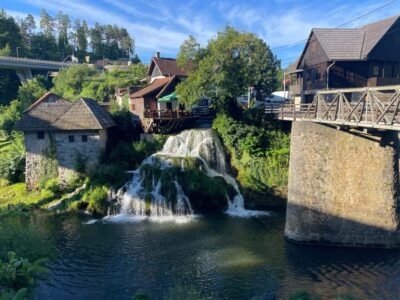
Rastoke & Plitvice Lakes Guided Tour with Ticket
Read our review →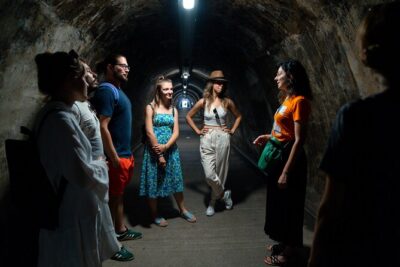
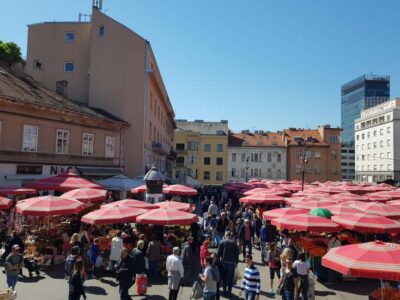
Small Group Walking Tour City Center and WW2 Tunnels
Read our review →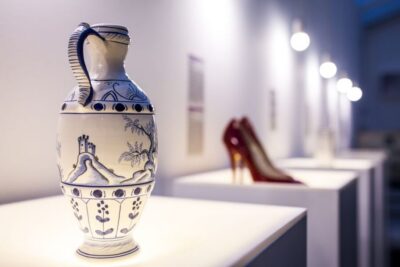
Skip-the-Ticket-Line Museum of Broken Relationships
Read our review →
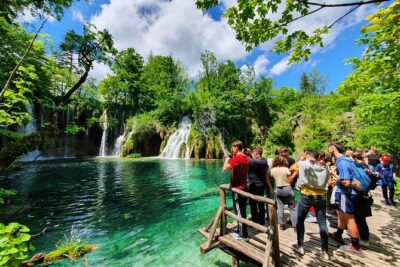
Plitvice and Rastoke day trip from Zagreb w/ticket (guar. dep.)
Read our review →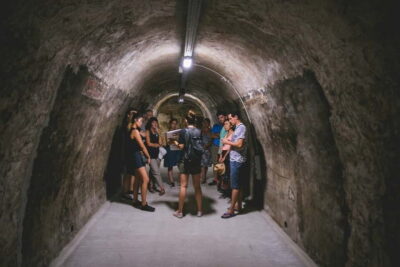
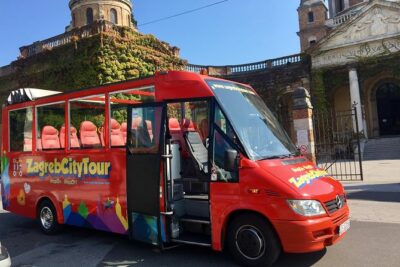
Hop On Hop Off Panoramic bus – Zagreb City Tour
Read our review →Browse the lists this tour appears in