
Reviewed · MUSEUMS
Zagreb: Nikola Tesla Technical Museum Ticket
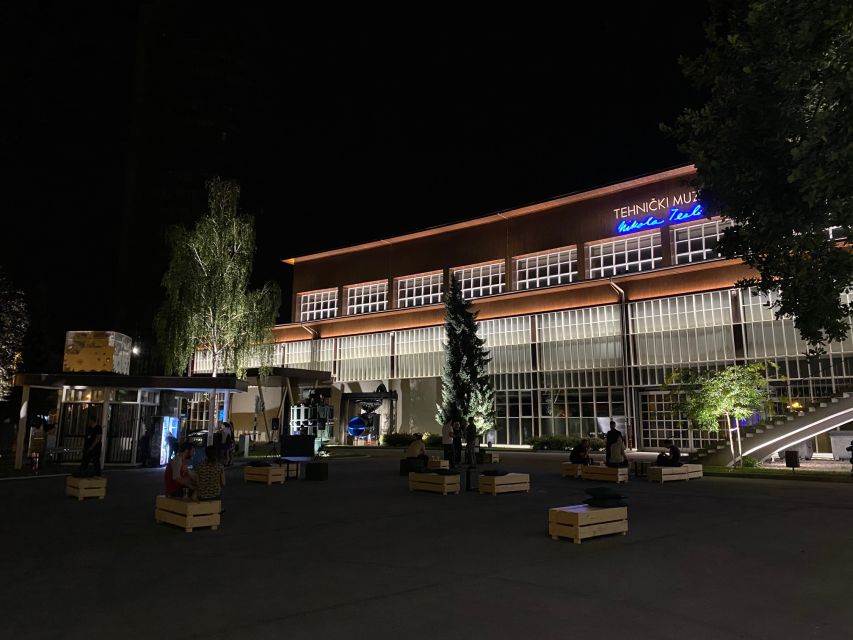
The most exciting part of Zagreb’s Nikola Tesla Technical Museum is not a glass case of old gadgets. It is the chance to watch electricity jump between Tesla coils, walk through a reconstructed mine, and see machines large enough to make modern technology look surprisingly small. The museum connects big ideas to real engines, aircraft, cars, radios, tools, and power systems.
I like the free guided mine tour and Tesla demonstration, and I like the sheer range of the collection. You can move from steam engines to spacecraft, farming tools, radioactive waste, and renewable energy without leaving the building. The main drawback is that some displays have limited English text, and the large museum can feel cold or slightly dated.
Key points to know before you go
- Tesla’s Cabinet brings science to life: Watch electrical demonstrations and take part in simple experiments, sometimes with volunteers from the audience.
- The mine is a real highlight: A guided visit takes you below the museum and adds a practical sense of how industrial work was done.
- The collection is much larger than Tesla: Expect turbines, generators, cars, motorcycles, aircraft, communications equipment, mining tools, and farming machinery.
- Time your arrival carefully: The free guided program is listed for 3:00 PM Tuesday through Friday and 11:00 AM Saturday and Sunday.
- Allow at least 90 minutes, ideally two hours: Technical visitors can spend much longer examining the machinery and themed sections.
- English coverage is uneven: Many objects have English explanations, but not all. An audio guide may help, and the free tour can add useful context.
Tesla’s electrical experiments are the museum’s spark
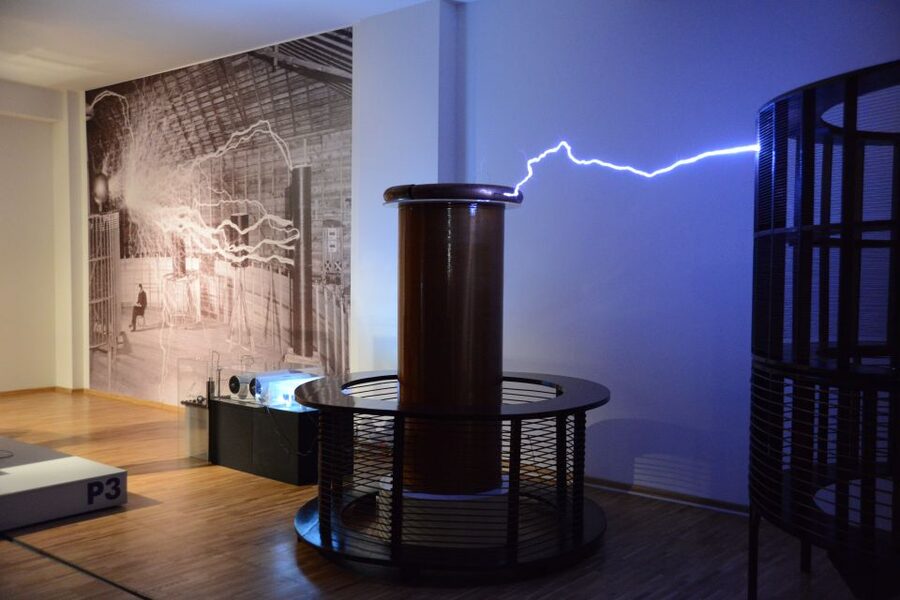
Nikola Tesla receives the star treatment here, but the experience is more than a shrine to one inventor. In Tesla’s Cabinet, you can watch demonstrations built around high voltage, electrical fields, and wireless transmission. The practical demonstrations give you something that labels alone cannot provide: a visible, sometimes startling sense of what Tesla’s ideas actually do.
The Tesla section is especially good for children, teenagers, and anyone who learns better by watching than reading. Some demonstrations involve volunteers from the audience, so you may not just sit quietly behind a barrier. The effects are theatrical, but the point is scientific rather than magical.
Try to arrange your visit around the museum’s free program. The listed times are 3:00 PM from Tuesday to Friday and 11:00 AM on Saturday and Sunday. This includes a guided trip through the mine and a demonstration at the Nikola Tesla Cabinet. The program is free with admission, so missing it can mean missing the most memorable part of the museum.
The exact guide may vary. Past guided sessions have included Eva and Tonka, both praised for clear explanations and strong knowledge of the subject. The demonstrations can also be given in English, which matters if you do not read Croatian.
A few more things to do in Zagreb worth a look
- Zagreb: Skip-the-Ticket-Line Museum of Broken Relationships
★ 4.5 · 847 reviews - Zagreb: Museum of Illusions Entrance Ticket
★ 4.0 · 261 reviews - Museum of Illusions Zagreb
★ 4.0 · 197 reviews
The underground mine changes the pace
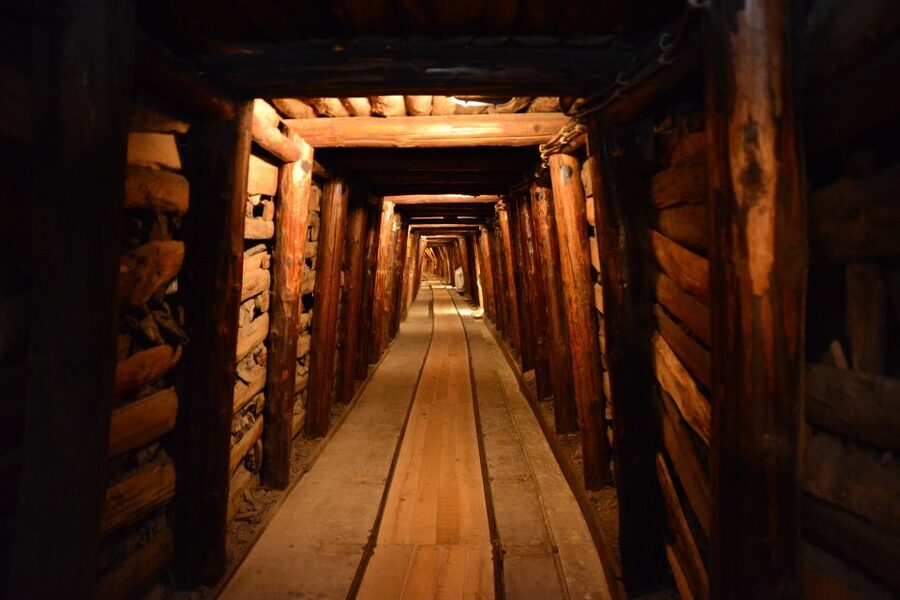
The museum’s underground mine is a welcome change from rows of machines and display cases. You enter a work-focused space with mining tools and industrial details, then get a closer sense of the conditions and methods tied to extracting raw materials.
This section works best with the guide. Without explanation, a mine can look like a dark corridor with equipment. With the tour, it becomes part of the larger story: technology depends on energy, materials, transport, measurement, and labor long before a finished machine reaches the public.
The mine tour is also one reason to avoid rushing through the museum in an hour. A short visit can cover the main halls, but the guided route adds structure and gives the collection a stronger human scale. Check the scheduled time before you arrive, since the free program is tied to specific days and hours.
A century of machines, from turbines to transport
The permanent exhibitions are the museum’s main body. Tesla may bring you through the door, but the larger collection gives you a broad look at technological change. You can see how power was produced, transferred, measured, and used across different industries.
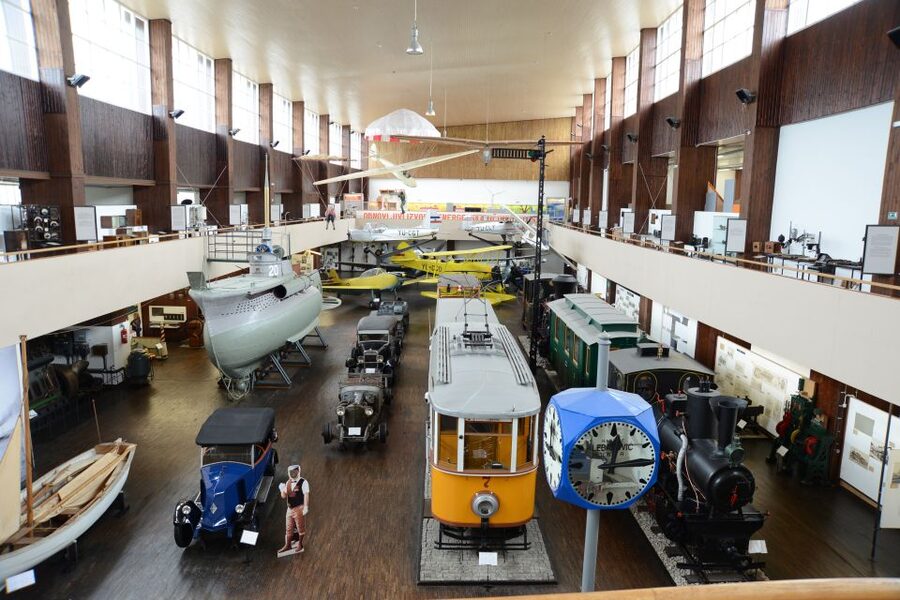
The transformation of energy section is a strong stop for anyone interested in engineering. Large turbines, generators, motors, and other machinery show the physical scale of power production. If you enjoy mechanical systems, this is likely where you will spend extra time. The objects are not small teaching models. Many are substantial, real-world machines.
The transport department widens the story. Old cars, motorcycles, bicycles, railway equipment, and aircraft show how movement changed over time. The displays are useful even if you are not an engineer because they make progress visible. A vehicle from an earlier period can look familiar in outline but very different in its machinery and practical limits.
The aircraft and aeroplane engine sections add another layer. You can examine the hardware behind flight rather than only reading about aviation. The collection also reaches into astronautics, with spacecraft-related objects and a planetarium section.
This is a museum for people who like details. You can look at the shape of a turbine, the layout of an engine, or the working logic of a communication device. You can also move quickly, enjoy the big objects, and leave the more technical material for another visit.
Smaller sections give the museum its unusual character
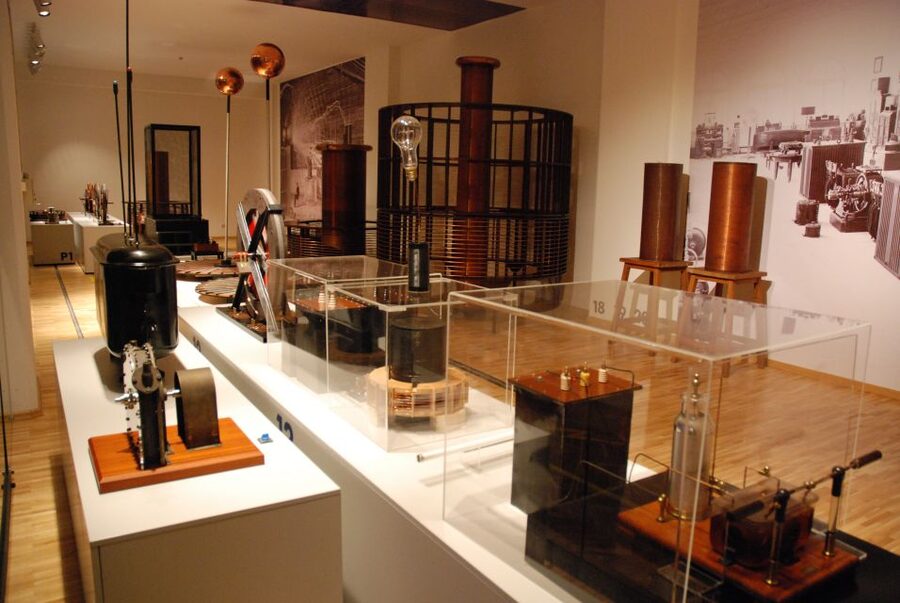
Some of the most memorable exhibits are not the obvious ones. The museum includes firefighting, geology and oil, geodetics, cadastre, agriculture, beekeeping, and radioactive waste. These subjects may sound scattered, but together they show how technology touches ordinary work and public life.
The firefighting display connects machines to safety. Geology and oil explain the materials and energy sources behind industrial development. Geodetics and cadastre focus on measurement, mapping, and land records, fields that rarely receive attention in a general museum.
The agriculture section includes early farming tools and the foundations of agricultural technology. The apiary adds an unexpected look at beekeeping. These displays are useful if you want to see technology outside factories and laboratories.
Renewable energy and energy efficiency bring the collection into the present. After seeing older power systems and heavy machines, you can consider how energy use is changing now. The exhibit does not only celebrate invention. It also encourages you to think about cost, waste, efficiency, and the effect of technology on future life.
The radioactive waste section may be especially interesting for visitors who want a less polished account of modern industry. It points to the problems created by technological progress, not only its achievements.
Same base, a different kind of day out:
- From Zagreb: Plitvice & Rastoke Guided Day Trip with Ticket
★ 4.9 · 2,955 reviews - Zagreb: Rastoke & Plitvice Lakes Guided Tour with Ticket
★ 4.9 · 1,897 reviews - Communism & Croatian Homeland War Tour
★ 5.0 · 1,355 reviews - Best of Zagreb with the WW2 Tunnels
★ 5.0 · 973 reviews
How long should you spend inside?
The ticket is valid for one day, but your practical visit will probably last between 90 minutes and several hours. One hour is enough for a quick look at the major halls, but it is too short if you want the mine, Tesla demonstration, and the permanent displays at a relaxed pace.
I would plan for at least two hours. Add more time if you are interested in mechanical engineering, energy, aviation, vehicles, or industrial history. A mechanical engineer could easily spend a full day studying the turbines, motors, generators, and transport displays.
The museum can feel dense because the collection covers so many subjects. You may need to choose between reading every panel and seeing the full range of rooms. The best approach is to use the large objects as anchors, then stop for detailed explanations in the sections that interest you most.
A Sunday visit needs extra care. One visitor found that limited Sunday opening hours allowed only about an hour inside. Check the current starting times and plan around the free guided session rather than arriving late in the day.
English information and the value of the guided tour
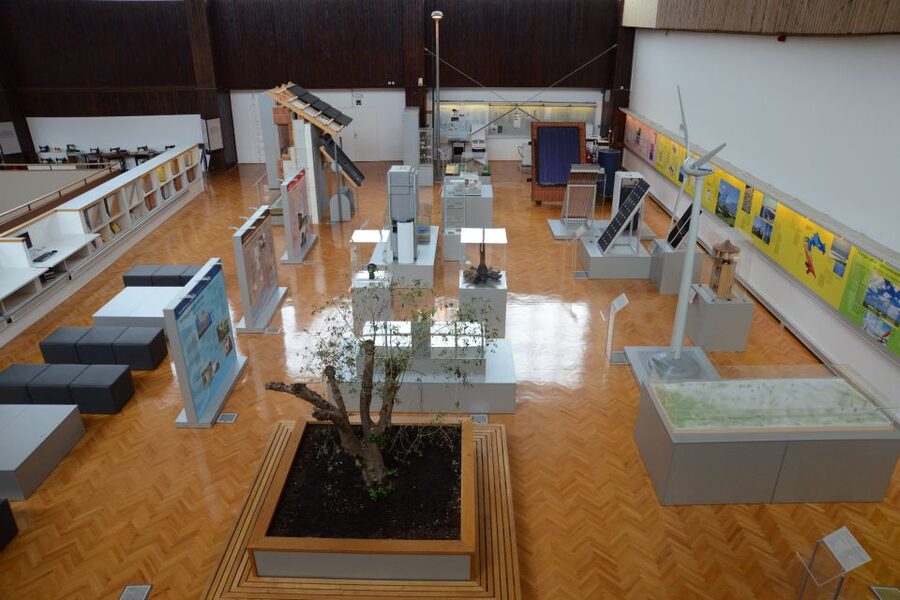
English explanations are available for many exhibits, but not every object has a full English description. This is the main practical issue for international visitors. You can still understand plenty from the machines themselves, but the historical and technical meaning may not always be clear.
An audio guide is available in several languages. It may not be obvious when you first enter, so ask about it before starting. The free guided program is also valuable because it gives you spoken context at the mine and Tesla Cabinet.
The tour can make the museum easier to follow, especially if you are not familiar with electricity, industrial machinery, or Croatian technical terms. It also helps you find the sections that are easiest to miss during an independent visit.
The museum’s staff have been described as welcoming, and named guides such as Eva and Tonka have received strong praise for their explanations. Still, do not assume a particular guide will be working on your day. The useful point is to join the scheduled program if the time fits your plans.
The building and presentation: useful, not polished
This is not a glossy science center with every object rebuilt for hands-on play. The museum’s strength is its collection of real machines and preserved technical objects. You can get close to many exhibits, which gives the displays a direct, physical quality.
The tradeoff is presentation. Some areas look dated, and the organization may not always be obvious to a first-time visitor. A few explanations could be clearer, especially in English. Some parents may also wish that children could touch or operate more objects.
The Tesla demonstrations provide the hands-on element that the permanent galleries sometimes lack. They also help younger visitors stay engaged after several rooms of machinery. If you are visiting with children, make the demonstration the center of your schedule rather than treating it as an optional extra.
The museum has also been reported as cold during winter, particularly for families with small children. Bring an extra layer if you visit in colder weather. That is a small point, but it can affect how long you want to stay.
Price and practical value at $8
At $8 per person, this is an easy museum to justify if you have even a moderate interest in science, engineering, transport, or industrial history. The ticket covers the museum entrance, and the guided mine visit and Tesla demonstration are offered free at the listed times.
The value comes from variety. You are not paying for one small Tesla room. You are getting a large collection that includes engines, turbines, vehicles, aircraft, communications, energy systems, farming equipment, mining, space technology, and sustainability.
The price is less compelling if your Zagreb schedule is extremely short and you want only the city’s major historic sights. The museum is not a universal must for every two-day visit. It is a strong choice on a rainy afternoon, for a family with older children, or for anyone who enjoys seeing how machines work.
If you arrive by car, parking requires attention. Navigation may bring you to the museum entrance, where you cannot park. One practical route described by a visitor is to continue past the gate along the tram lane, take the first right, and keep to the right lane for the entrance behind the building. Parking was reported at about 1.50 euros per hour, but confirm current conditions when you arrive.
Who will enjoy this museum most?
I would recommend it first to people who enjoy machinery, invention, transport, and the story of energy. Mechanical engineers, science students, amateur inventors, and older visitors who remember some of the displayed technology from childhood can all find something personal here.
Families can also do well, especially if children are old enough to follow a demonstration or ask questions about engines and electricity. The Tesla Cabinet is likely to be the strongest hook for younger minds, while the aircraft, cars, and large generators provide visual appeal.
The museum is less suited to anyone who wants a polished, highly interactive attraction with every label in English. It is also not suitable for wheelchair users or people with mobility impairments, according to the available information. The underground mine and the broad spread of exhibits require mobility.
Is the Nikola Tesla Technical Museum worth booking?
Book it if you want a low-cost, substantial museum with far more than Tesla memorabilia. The best plan is to visit at 3:00 PM Tuesday through Friday or 11:00 AM on Saturday or Sunday, join the free mine tour and experiment demonstration, then continue through the permanent exhibitions.
Skip it if your Zagreb visit is limited to two or three days and your interests lie mainly in architecture, food, or historic streets. For everyone else, especially science-minded visitors, this is a smart use of an afternoon. Just allow enough time, bring a layer in cool weather, and do not judge the museum by the Tesla room alone.
FAQ
How much does admission cost?
The ticket costs $8 per person and includes entrance to the Nikola Tesla Technical Museum.
How long is the ticket valid?
The ticket is valid for one day.
When can I join the free guided mine tour?
The free guided tour is available at 3:00 PM from Tuesday through Friday and at 11:00 AM on Saturday and Sunday.
Does the free program include Tesla experiments?
Yes. At the listed times, you can join a demonstration of Tesla’s experiments at the Nikola Tesla Cabinet, along with the guided mine tour.
Is the museum suitable for wheelchair users?
No. The experience is listed as unsuitable for wheelchair users and people with mobility impairments.
Can I cancel my booking?
Yes. You can cancel up to 24 hours in advance for a full refund. A reserve now and pay later option is also available.
Just added in Zagreb
- Private Wine Tour from Zagreb: Two Local Wineries & Samobor★ 5.0 · 18 reviews
- Painting party at Art Bottega – Paint & Wine Studio in Zagreb★ 5.0 · 23 reviews
- Fairytale Castle & Wine Tasting & Lunch★ 5.0 · 19 reviews
- Private Wine Road Day Tour from Zagreb★ 4.5 · 11 reviews
- Zagreb Airport One Way Private Transfer To or From Airport★ 5.0 · 132 reviews
- From Zagreb: Transfer to Split & Plitvice Lakes Guided Tour★ 4.7 · 463 reviews
- Private Transfer: Zagreb Airport (ZAG) to Zagreb Hotel★ 5.0 · 52 reviews
- Zagreb BIG Tour – Our Signature Walking & Panoramic Tour★ 5.0 · 106 reviews
Museums, compared.

Blue Lagoon & Underwater Museum from Split with Lunch & Drinks
Read our review →
Skip-the-Ticket-Line Museum of Broken Relationships
Read our review →
PREMIUM Emperor’s Walking Tour for History Lovers + Museum
Read our review →
Klis Fortress GOT and Olive Museum Entry Tickets
Read our review →


Browse the lists this tour appears in