Reviewed · TOURS IN DUBROVNIK
Dubrovnik to Athens; Semi – Private tour with Tour Leader & Car
This is a big Balkan journey in a small vehicle, linking seven countries in 14 days. You move from Dubrovnik through Bosnia and Herzegovina, Montenegro, Kosovo, Albania, North Macedonia, and Greece, with castles, mosques, monasteries, lakes, wine country, and old bazaars along the way. It is a strong choice if you want the region in one sweep rather than piecing it together with buses and border crossings.
I especially like the small maximum group of 10 and the mix of famous sights with local stops such as a paper workshop, a Venetian mask factory, an Albanian farm, and a family winery. The hotels are generally small and family-run, and named guides such as Sokol, Eri, Gerion, Neli, and Juli have been praised for practical help, history, restaurant advice, and good company.
The tradeoff is mileage. A few days involve long drives, and some stops are short. You should also know that the $6,020.56 price is based on shared rooms in three-star hotels, while lunches, dinners, drinks, and personal spending are extra.
Key points at a glance
- Seven countries in 14 days: Croatia, Bosnia and Herzegovina, Montenegro, Kosovo, Albania, North Macedonia, and Greece.
- A true small-group format: The tour has a maximum of 10 people, with private transportation and a professional tour leader.
- Strong cultural range: You will see Ottoman houses, Catholic and Orthodox churches, mosques, synagogues, castles, bazaars, and monasteries.
- Food is part of the trip: The included Tirana food tour adds byrek, market tastings, a traditional meal, and Albanian grape raki.
- UNESCO sites come thick and fast: Mostar, Kotor, Ohrid, Berat, Gjirokaster, Meteora, Decan, and St. Naum all feature.
- The pace is active: Expect uneven streets, hilltop fortresses, border crossings, and some long road days.
What this Dubrovnik to Athens trip really offers
I see this as a regional introduction, not a slow, deep stay in every place. You get a guided route through the western Balkans, where each country changes the language, food, religion, architecture, and feel of the road.
The private car matters here. Public transport across this many borders would take much more planning, and some of the stops are difficult to connect efficiently. Your tour leader handles the route, roads, hotel arrivals, border crossings, and site visits while you watch the scenery pass.
The group size keeps the trip personal. With no more than 10 people, it should be easier to hear the guide, ask questions, and stop at small businesses. It also means you will spend a great deal of time with the same people, so this suits you best if you enjoy shared travel.
The tour begins at 7:30 a.m. in Dubrovnik. A local driver collects you near your hotel, since cars cannot enter every part of the old town, and takes you to the border where you meet the tour leader. That transfer detail is useful, especially if you are staying inside Dubrovnik’s pedestrian center.
A few more things to do in Dubrovnik worth a look
- Mostar and Kravice Waterfalls Tour from Dubrovnik (Semi-Private)
★ 5.0 · 3,125 reviews - Dubrovnik: Blue & Green Caves Private Boat Tour with Drinks
★ 4.7 · 814 reviews - Dubrovnik Private Speedboat Tour to Elaphite Islands with Drinks
★ 5.0 · 660 reviews
Mostar and Sarajevo: Ottoman streets and twentieth-century scars
The first major stop is Mostar, where the famous Stari Most arches over the river. The bridge is a UNESCO site and reflects the city’s Ottoman past, but Mostar is not just a pretty old town. Stones marked with Don’t Forget point to the damage and division of the modern era.
You have about an hour for the Old Bridge and bazaar, followed by a visit to Bišćevića Kuća. This seventeenth-century riverside home gives you a closer look at Ottoman domestic life than a large monument can. It is a useful counterpoint to the bridge, with rooms and details tied to everyday living.
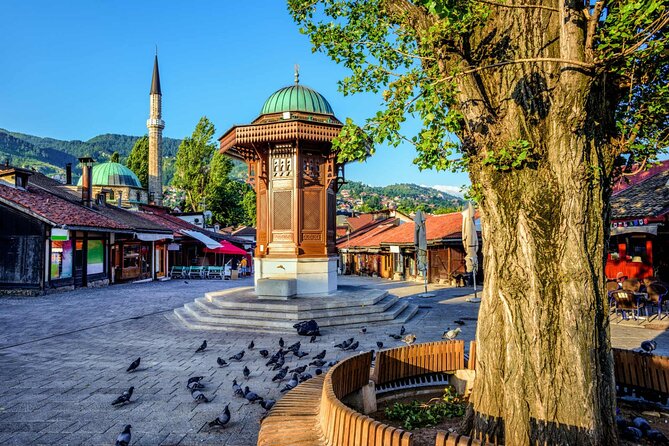
Day two takes you to Sarajevo, a city built from several cultural layers. The route covers the Ottoman and Austro-Hungarian quarters, along with mosques, churches, synagogues, markets, and reminders of the Yugoslav War. Bullet marks and cannon damage remain visible in parts of the city, so this is a history walk with real weight.
At the Latin Bridge, you hear how the assassination of Archduke Franz Ferdinand helped trigger World War I. You also stop at Caffe Divan for Turkish coffee or tea. I like this small inclusion because it gives you time to sit down rather than march from monument to monument.
The Sarajevo walk includes uneven ground. Wear shoes with good grip, and keep some energy for the rest of the day.
Blagaj, Kotor, and the Montenegrin coast
Blagaj is a brief but lovely stop outside Mostar. The town sits beneath a cliff beside the blue-green source of the Buna River, with Ottoman buildings and a peaceful setting. The visit lasts about an hour, so think of it as a scenic pause rather than a full outing.
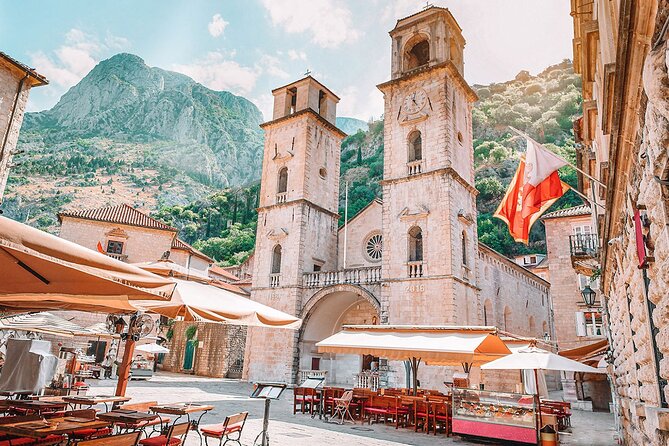
Kotor brings you into Montenegro and one of the trip’s major highlights. Inside the walled old town, narrow stone lanes twist between churches and old buildings. The confusing street plan was designed to slow potential attackers, though today it simply makes wandering fun.
You visit St. Luke’s Church and have free time to explore. That free time is important because Kotor rewards unplanned wandering. Still, two hours is not enough for every corner, so decide in advance if you want coffee, photographs, church visits, or a more active walk.
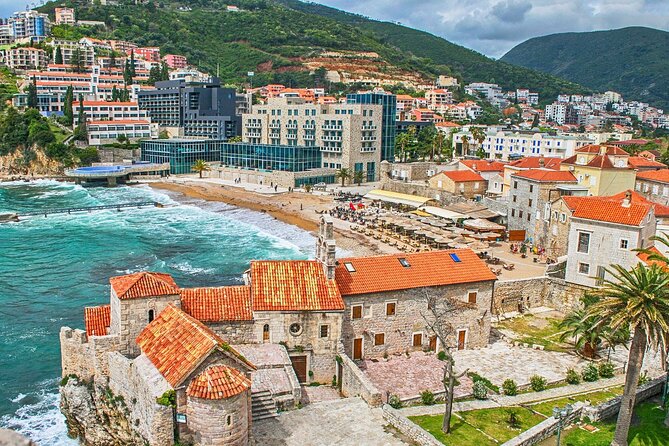
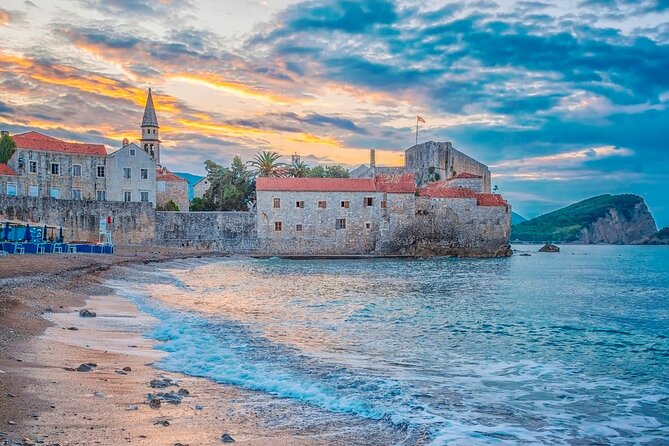
The next day begins in Budva, where the historic old town contrasts with the modern resort area. The tour focuses on the medieval center and its churches, including St. Ivan and St. Mary.
At Sveti Stefan, you stop for photographs from the coast. The island is now an exclusive residential resort and cannot be visited as part of this tour. That makes the stop worthwhile for the view, but not for exploring the island itself.
Shkoder, Prizren, and the food of northern Albania
Shkoder introduces you to northern Albania. The city has centuries of settlement, Venetian influences, and a position beside Lake Shkoder. Rozafa Castle gives you broad views toward the lake and the rivers reaching the Adriatic.
You also visit a Venetian mask workshop. The masks are made and painted by hand, and the stop adds an artistic angle to a day otherwise focused on history and scenery. If you like buying directly from small producers, this is one of the more distinctive shopping opportunities on the route.
The following day brings a particularly interesting food stop at Mrizi i Zanave. This agricultural restaurant and farm works with regional products and has adapted old Communist-era buildings for storage. You can walk around the farm, learn how the operation supports local employment, and buy fresh products or stop for lunch at your own cost.
Prizren is one of the strongest town visits on the trip. Its river, stone bridges, Ottoman-era buildings, and lively old center make it easy to explore on foot. The Sinan Pasha Mosque is the key interior visit, while Kalaja Fortress provides a view over the town.
You get free time in Prizren, which I consider a plus. The town has enough small streets, craft shops, and cafes to reward a slower afternoon. Filigree metalwork is a local specialty, so look for handmade jewelry rather than generic souvenirs.
Gjakova follows with one of Kosovo’s largest traditional bazaars. The bazaar has been destroyed and rebuilt more than once, and its workshops still carry on old crafts. This is a good place to watch artisans at work and take a meal break.
At Decan Monastery, Orthodox monks still live on the grounds and produce food such as cheese. The monastery is known for fourteenth-century frescoes and is part of the UNESCO list. Dress respectfully and follow the guide’s instructions, since this remains an active religious site.
The stop in Rahovec adds wine country to the route. Grapes have been grown here for about 2,000 years, and the valley is known for vineyards on gentle hills. The annual wine festival takes place in September, so timing your trip then could add a seasonal event, though the tour itself does not include festival admission.
Same base, a different kind of day out:
- Blue Cave Small-Group Boat Tour from Dubrovnik
★ 5.0 · 9,360 reviews - Full-Day Dubrovnik Elaphite Islands Cruise with Lunch and Drinks
★ 5.0 · 8,823 reviews - Dubrovnik: Epic Game of Thrones Tour + Lokrum & Saver Option
★ 4.9 · 5,995 reviews - Dubrovnik: Elaphiti Islands Full-Day Cruise with Lunch
★ 5.0 · 5,938 reviews
Kruja and Tirana: Albania’s strongest local experiences
Kruja is tied to Albanian resistance against Ottoman expansion, and its hilltop setting gives the town a dramatic shape. The old bazaar is lined with wooden buildings and shops selling carpets, jewelry, and handmade goods.
The castle visit includes local paths once used to leave the fortress unseen during attacks. You also have time for lunch and shopping. This is one of the better places on the trip for souvenirs because the focus is on traditional Albanian crafts.
Tirana offers a different kind of experience. Instead of only touring grand buildings, you spend time with a local companion and eat your way through markets and neighborhoods.
You begin with byrek, a pastry made from thin layers of dough and filled with ingredients such as cheese, meat, or spinach. At Çam Bazaar, you can browse everyday goods and bargain with sellers. The route then continues to Pazari i Ri, where you sample seasonal produce, eat a traditional meal, and taste Albanian grape raki.
I like this day because it shows ordinary city life, not only the official sights. Come hungry. The food tour is included, but additional snacks, drinks, and purchases are not.
Ohrid and St. Naum: two restful days by the lake
After Albania, you cross into North Macedonia and stop in Struga beside the source of the Drini River. It is a short visit, then you continue to Ohrid.
Ohrid is one of the trip’s most rewarding bases. The city and lake have UNESCO status, and the old town combines Orthodox churches, sloping lanes, Ottoman-era houses, and views across the water. At the Church of St. John at Kaneo, you get the classic viewpoint over the lake.
The claim of 365 churches is part of Ohrid’s identity, one for each day of the year. You will not see all of them, but the town makes clear why this area became an important Orthodox center.
The Paper Museum is a small, unusual stop. You learn how paper is made by hand using methods linked to the time of Gutenberg, and you can buy a handmade sheet as a souvenir. It is the sort of visit that breaks up the parade of fortresses and churches.
The next day takes you to St. Naum Monastery near the source of the Crni Drim River. Clear spring water, mountain views, and the protected setting of Galicica National Park make this a quieter morning.
Across the border in Albania, Tushemisht gives you time with local sellers offering preserves, honey, herbs, and handmade items. Drilon National Park follows, with springs forming a small lake beneath willow trees. These stops are gentle and scenic, useful after several demanding sightseeing days.
Berat, Gjirokaster, and the stone towns of southern Albania
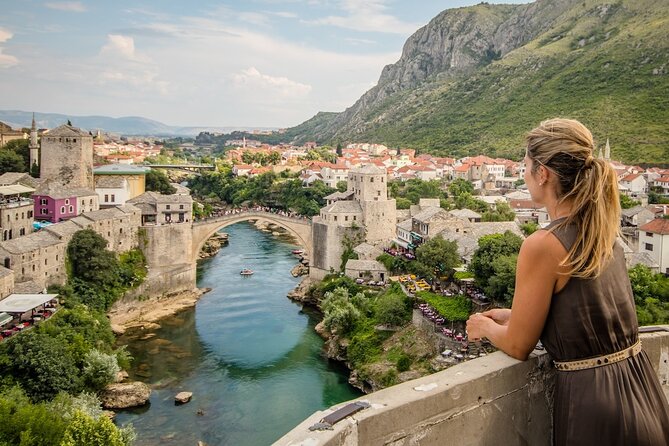
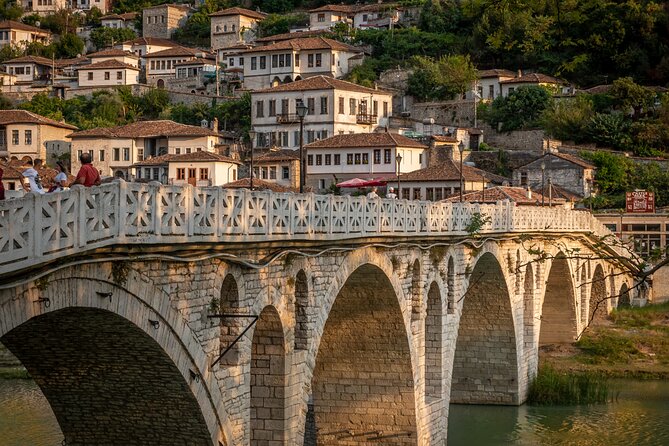
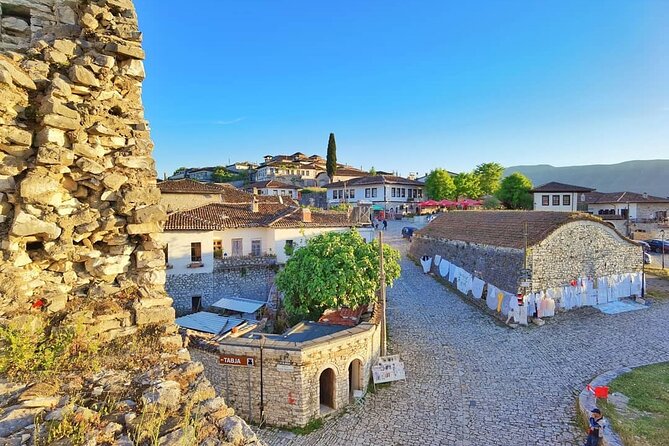
Berat is known for its rows of houses and windows climbing the hillsides. The old town and castle are UNESCO listed, and people still live inside the fortress walls.
The castle is more than a viewpoint. You find old churches, mosques, museums, and traces of different periods of Albanian life. The Onufri Iconographic Museum focuses on the church painter known for a distinctive red pigment, and the visit adds art to the architectural story.
Across the river, the Gorica neighborhood offers a different view back toward Berat. The town is hilly, so take your time on the stone lanes.
Gjirokaster is another UNESCO town, but its character differs from Berat. Here, stone roofs and fortified homes climb the slope below the castle. The old bazaar gives you access to handmade crafts, while a preserved traditional house shows how a wealthy local family once lived.
The visit to The Barrels winery is a relaxed finish to the Albanian portion. It is family-run, and you have time for lunch in the countryside. Lunch is not included, so budget for it separately.
Ioannina and Meteora: a dramatic Greek finish
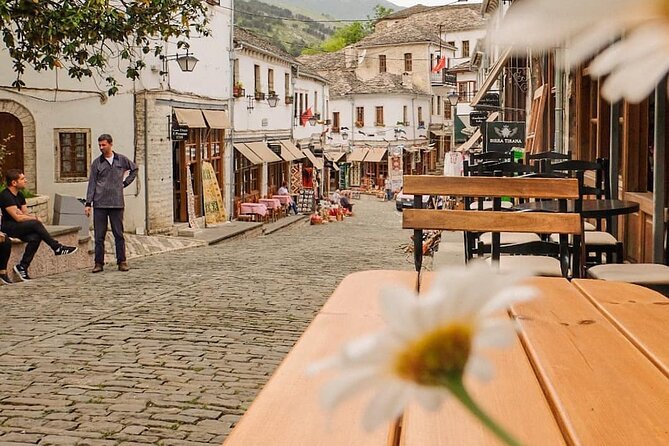
Ioannina is the bridge between Albania and mainland Greece. Its old town and Byzantine-era castle contain narrow lanes, historic houses, cafes, and reminders of Ottoman rule.
The stop is fairly short, so you get an introduction rather than a full city visit. Still, the castle gives the town a clear sense of place before the road continues to Meteora.
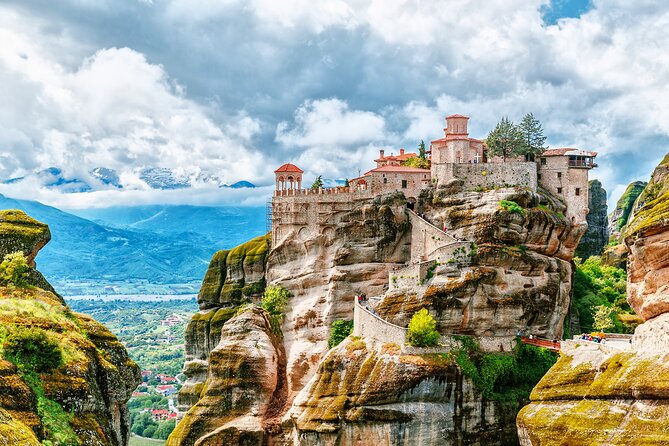
Meteora is the visual climax of the journey. Monasteries sit on tall rock formations, creating one of the most memorable settings in Greece. The tour includes entry, and the sunset stop is designed for photographs and atmosphere.
You should set expectations carefully here. With only about two hours, you may not have time to visit several mountaintop monasteries. One past itinerary found the Meteora visit too brief, and I think that is a fair concern. The sunset is included, but a dedicated Meteora stay would allow more monastery time.
On day 14, the tour leader drives you to your Athens hotel. An alternate ending is available at Igoumenitsa Port, with ferry tickets included for Corfu. Confirm your preferred ending before booking.
Price, rooms, and what you still pay
At $6,020.56 per person, this is a major purchase. The value comes from the private car, 13 breakfasts, accommodation, tour leader, fuel, road taxes, international vehicle insurance, tourist taxes, border-to-border planning, and entry fees for listed sites.
The price is based on double, twin, triple, or quadruple room occupancy in three-star hotels. You are not paying for luxury lodging. The appeal is usually location, local character, and convenience, with many properties described as small family-run hotels or updated historic buildings.
You must pay separately for lunches, dinners, drinks, snacks, souvenirs, and personal expenses. The Tirana food tour and the Sarajevo coffee or tea are included, but do not assume every meal or tasting along the route is covered.
The tour is non-refundable and cannot be changed after booking. You also need your own health and travel insurance. Weather, strikes, holidays, closures, or other outside events can alter the route.
Who should book this Balkan route?
Book it if you want to see a lot of the Balkans without arranging seven-country transport yourself. It suits you if castles, religious buildings, local food, old bazaars, and cultural contrasts matter more than long stays at one beach or city.
It also suits active adults who can manage uneven streets, hills, early starts, and long drives. The private car and small group make the road far easier than a self-guided trip, but they do not remove the distance.
I would hesitate if you prefer slow travel, luxury hotels, or several free days in each city. The route is packed, and the long days from Kosovo toward Ohrid and from Meteora to Athens can feel tiring.
Should you book it?
Yes, if you want a well-organized first look at the western Balkans. The strongest parts are the guide support, the small group, the food stops in Albania, the family-run lodging, Ohrid, Prizren, Berat, and the range of UNESCO sites.
Before paying, confirm room arrangements, the exact guide, the Athens or Corfu ending, and how much free time you will have in Meteora. If you accept the mileage and extra meal costs, this trip gives you an unusually broad view of a fascinating part of Europe in just two weeks.
FAQ
How long is the Dubrovnik to Athens tour?
The tour lasts approximately 14 days, beginning in Dubrovnik and ending at a hotel in Athens. An alternate ending is available at Igoumenitsa Port for a ferry to Corfu.
What countries does the tour visit?
The route covers Croatia, Bosnia and Herzegovina, Montenegro, Kosovo, Albania, North Macedonia, and Greece.
How many people can join the tour?
The maximum group size is 10 people. The tour includes private transportation and a professional tour leader.
Are hotels and breakfast included?
Yes. Accommodation and breakfast are included for all overnight stays. The package includes 13 breakfasts and uses three-star hotels based on shared double, twin, triple, or quadruple occupancy.
Are meals included?
Breakfast is included throughout the tour. The Tirana food tour and one Ottoman-style coffee or tea in Sarajevo are also included. Lunches, dinners, drinks, snacks, and personal purchases are not included.
Is hotel pickup available in Dubrovnik?
Yes. A local driver collects you from the nearest practical point to your hotel in Dubrovnik Town. Cars cannot enter some parts of the town, so the pickup point may not be directly outside your accommodation.
Just added in Dubrovnik
- Elaphiti Islands Private Dubrovnik Boat Unique Experience★ 5.0 · 10 reviews
- Full- Day Private Speedboat Tour in Dubrovnik on Elaphiti Islands★ 5.0 · 21 reviews
- Wine tour peninsula Pelješac★ 5.0 · 3 reviews
- PRIVATE Wine Tour to Konavle country side★ 5.0 · 11 reviews
- Dubrovnik at War 1991-1992 Private Walking Tour★ 5.0 · 4 reviews
- Welcome to Dubrovnik Walking Tour★ 5.0 · 36 reviews
- City Walls of Dubrovnik★ 5.0 · 70 reviews
- Walls of Liberty: A Self-Guided Audio Tour of Dubrovnik★ 3.5 · 3 reviews
Tours in Dubrovnik, compared.
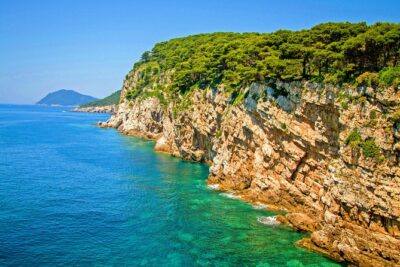
Blue Cave Small-Group Boat Tour from Dubrovnik
Read our review →
Full-Day Dubrovnik Elaphite Islands Cruise with Lunch and Drinks
Read our review →
Epic Game of Thrones Tour + Lokrum & Saver Option
Read our review →
The Original Game of Thrones Tour & Lokrum Option
Read our review →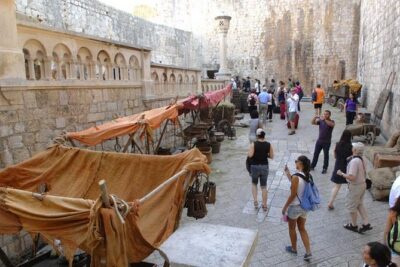
Dubrovnik Game of Thrones Tour & Optional Lokrum Island Visit
Read our review →