
Reviewed · DUBROVNIK CITY WALLS & CABLE CAR
Dubrovnik Old City Walls Private Tour
Dubrovnik’s old walls turn the city into a giant history lesson with a superb view. From the ramparts, you look down on the harbor, red roofs, sea forts, narrow lanes, and the island of Lokrum. The private format also lets you stop for questions instead of trying to hear a guide over a crowd.
I like the way this tour links military history with daily life, from the Republic of Dubrovnik’s defenses to quarantine buildings and old water systems. I also like the attention given to families: guides such as Mia and Viktor used questions and personal stories to keep children involved, not just parked beside the adults.
The main catch is simple: the wall entrance fee is not included in the $132.45 price per person. The tour lasts about two and a half hours, so you should be ready for stairs, uneven surfaces, sun, and a steady walk. A wireless guiding system is also extra if you request one.
Key points to know before booking
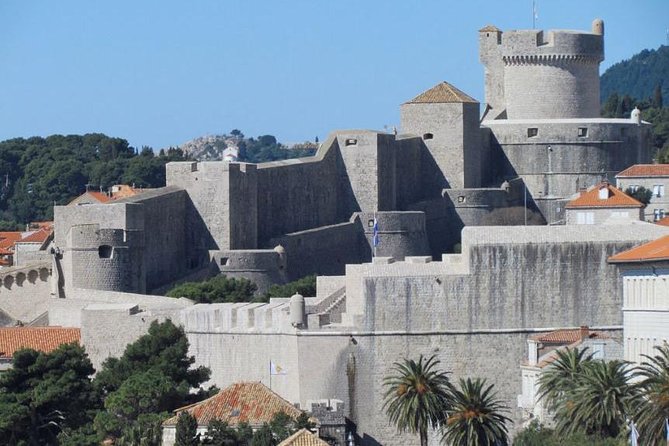
- Minceta Fortress gives you the high point: The climb brings broad views over Dubrovnik’s roofs and the surrounding coast.
- The tour is private: Only your group takes part, which makes it easier to ask questions and set a comfortable pace.
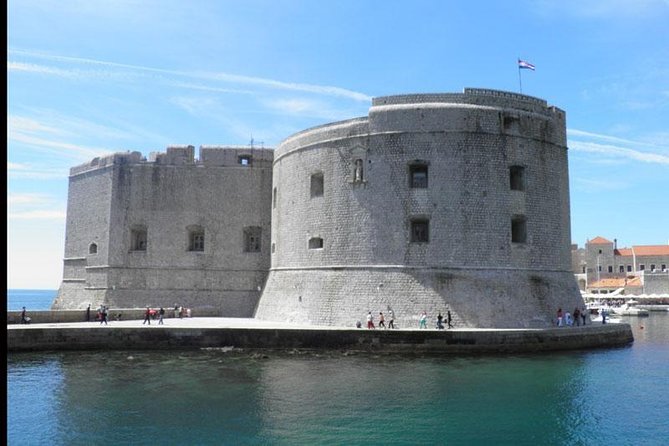
- The harbor side is especially rewarding: You’ll see St. John’s Fortress, the old breakwaters, Lokrum, and several layers of sea defense.
- The history goes beyond photo stops: Expect stories about the Republic of Dubrovnik, its government, its defenses, quarantine, and the Homeland War.
- Game of Thrones connections are included: The route passes filming locations, but the tour remains focused on Dubrovnik itself.
- The price covers guidance, not everything: Wall admission, food, drinks, personal spending, and optional wireless equipment cost extra.
Why Dubrovnik’s walls are the right place to start
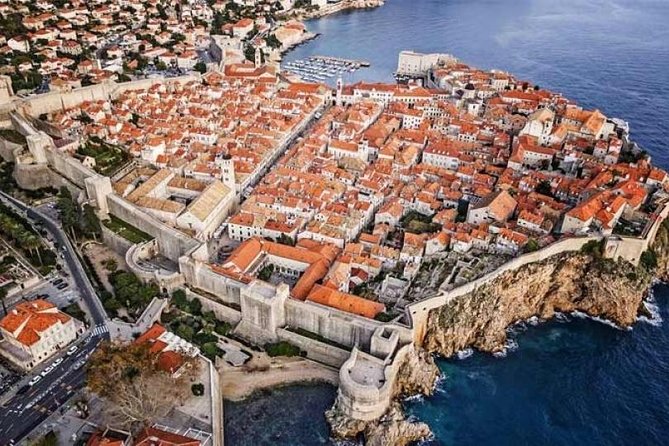
If you have only a short time in Dubrovnik, the walls give you a useful first look at the whole old city. At street level, the limestone lanes can feel like a maze. From above, the shape of the city makes sense: the long main street, the compact blocks, the harbor, the gates, and the forts guarding the approaches.
The walls also explain why Dubrovnik mattered. This was not simply a pretty Adriatic port. Its rulers built a careful defense system, watched the sea, controlled access through gates, and maintained a political center inside the fortifications. A good guide helps you connect the stones to that larger story.
This tour begins near Revelin Fortress, by the eastern approach to the old city. That is a sensible meeting point because it introduces you to Dubrovnik’s defensive character before you climb the walls. You receive a short welcome and introduction, then move toward the wall entrance.
The old city wall ticket is separate. Since the tour price does not include admission, check the current fee when you book or before you arrive. The supplied details do not state the amount, so I would not treat the advertised $132.45 as the final per-person cost.
Other ways to get above the old town in Dubrovnik:
- Dubrovnik: City Walls Early Morning or Sunset Walking Tour
★ 4.8 · 1,523 reviews - Dubrovnik: Ancient City Walls & Wars Walking Tour
★ 5.0 · 1,270 reviews - Dubrovnik Combo: Old Town & Ancient City Walls
★ 5.0 · 1,019 reviews
Starting at Revelin Fortress and the wall entrance
Revelin Fortress frames the opening of the experience. The first ten minutes are not a long sightseeing stop, but they give your guide a chance to explain the plan and orient your group.
You then hear an introduction to the city’s past before reaching the wall entrance. That order matters. You are not simply sent upstairs with a list of names. The guide sets up the story first, then points out how the fortifications worked as you walk.
The private setting is useful here. If you want to know why one wall is higher, how a gate was protected, or where an attack might have come from, you can ask at once. A large group can make this part feel rushed, especially when several people are waiting to enter.
City Harbor, St. John’s Fortress, and the eastern defenses
The harbor section is one of the tour’s strongest stretches. From the walls, you look toward the old city harbor, St. John’s Fortress, the fortifications of St. Luke, and the Dominican Monastery.
This is where the city’s relationship with the sea becomes clear. The harbor was a working part of Dubrovnik, not just a pretty foreground for photographs. St. John’s Fortress helped guard the water, while other defensive points protected the approaches from different angles.
You also get a good view of the Dominican Monastery and the old harbor arrangement. Your guide can explain the city as a connected system rather than treating each building as an isolated sight.
If you are carrying a camera, this part offers several strong compositions. The only practical warning is that walls and harbor views can expose you to bright sun. Bring water and use sun protection, especially in warm weather. Food and drinks are not included.
Buža Gate, the moat, and Dubrovnik’s rooftops
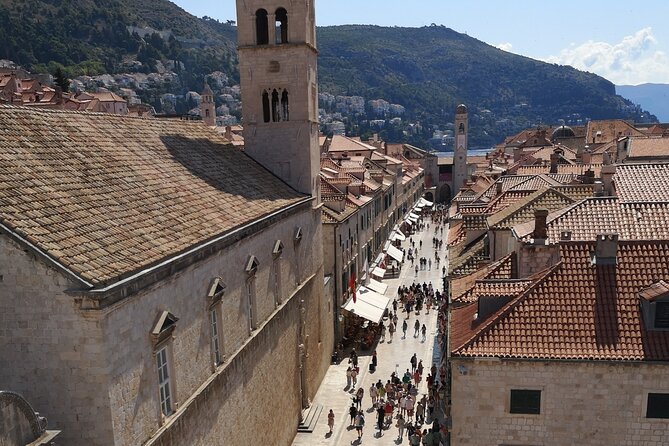
The route continues near Buža Gate, along Ruđera Boškovića Street and Peline Street, with views toward the lower wall and moat. You also look across the tightly packed roofs of the old city.
For me, the rooftops are one of the most useful parts of a wall walk because they show Dubrovnik’s scale. From street level, you see facades and doors. From above, you see how close the homes are, how the lanes fit together, and how much of the old town sits inside a small fortified shell.
Buža Gate also helps show that Dubrovnik had more than one way in and out. Gates, walls, moats, and slopes worked together. The guide’s job is to make those details readable without burying you in dates.
The route includes stairs and changes in level. Most people can take part, according to the supplied tour information, but the experience is still a walking tour on historic fortifications. If you need a slower pace, say so at the start. That is one of the reasons to choose a private tour.
A few more things to do in Dubrovnik worth a look
- Mostar and Kravice Waterfalls Tour from Dubrovnik (Semi-Private)
★ 5.0 · 3,125 reviews - Dubrovnik: Blue & Green Caves Private Boat Tour with Drinks
★ 4.7 · 814 reviews - Dubrovnik Private Speedboat Tour to Elaphite Islands with Drinks
★ 5.0 · 660 reviews - Private Tour: Montenegro Day Trip from Dubrovnik
★ 4.5 · 495 reviews
Minceta Fortress, the highest point, and the aqueduct
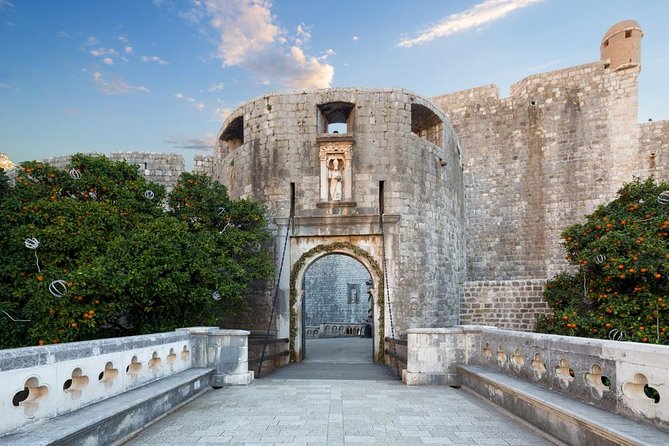
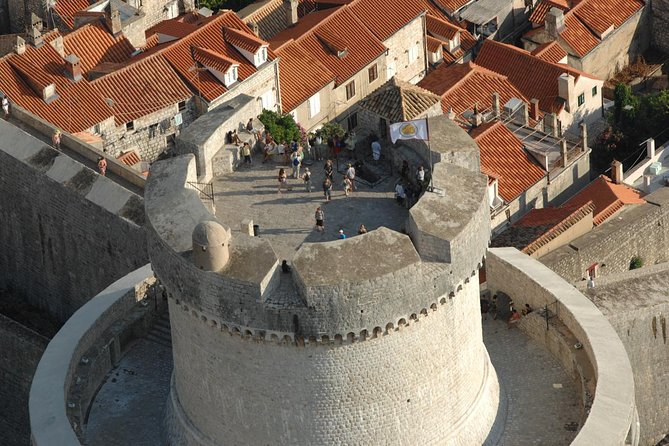
The climb to Minceta Fortress is a major moment. The tower is described as the highest point of the walls, giving you a wide view across Dubrovnik and the surrounding area.
This stop mixes scenery with practical defense. From a high tower, you can understand why the position mattered. You also hear about the last depot, the aqueduct, and the Upper Corner. These details add texture to the military story. A fortress was not only thick stone. It needed supplies, water, storage, and protected working spaces.
Minceta is also connected with Game of Thrones filming locations, so fans get an extra layer of interest. Still, I would not book the tour only for television references. The stronger reason is the view and the way the location explains Dubrovnik’s defenses.
The climb may be the most demanding part for some people. There is no claim that the wall route is step-free, and the historic setting naturally includes stairs and uneven ground. Wear practical shoes. Take your time at the top, where stopping for photos is worthwhile.
Franciscan Monastery, Stradun, and Pile Gate
The walk then brings you near the Franciscan Church and Monastery, Large Onofrio’s Fountain, the Church of the Holy Saviour, Stradun, and Pile Gate.
This section shifts from the military edge of the city to its civic and religious center. Stradun is Dubrovnik’s main street, and Pile Gate is the western entrance most closely tied to the classic approach into the old town. The Franciscan complex and Onofrio’s Fountain also help explain how religion, water, and public life fit into the city.
Admission to some interior sights is not included. The tour information specifically lists admission as not included for the city walls, the Franciscan Church and Monastery, and Rector’s Palace. You should think of this experience mainly as a guided wall walk with exterior views, unless your guide confirms that a particular interior visit is part of your plan.
That distinction is important for value. You are paying for a private guide and a carefully connected route, not an all-inclusive ticket covering every building.
Fort Bokar and the western sea view
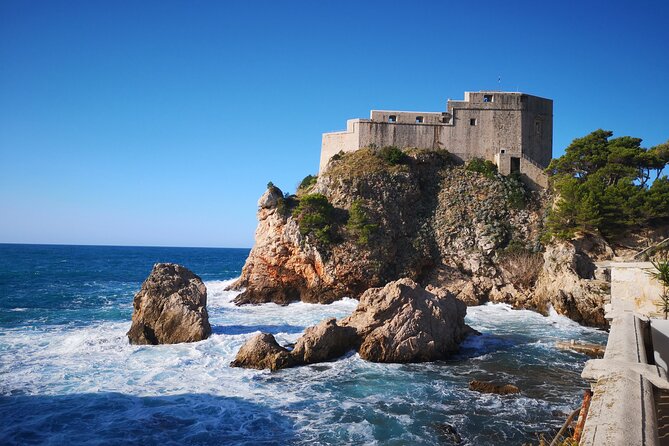
On the seaside portion, you pass Fort Bokar, St. Clara’s Monastery, Fort Lawrence, Kolorina Bay, Park Gradac, and the Penatur Rocks.
Fort Bokar is a strong example of how the city protected its western side. From the wall, you get a sense of the relationship between the fort, the open sea, the harbor approaches, and Fort Lawrence outside the main wall line.
The views here are more open than those over the inner rooftops. You can look away from the city and see the defensive line meeting the coast. The route also passes locations associated with Game of Thrones, which may interest fans who want to recognize the setting from above rather than simply tick off a street corner.
This section can feel exposed in hot or windy weather. The private format helps because your guide can pause when needed, but the walk still has a fixed physical character. You are on a wall, not in an air-conditioned museum.
St. Ignatius, Buža Gates, and views toward Lokrum
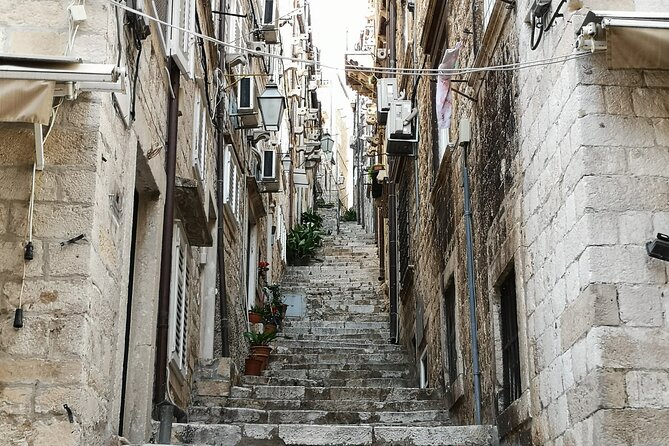
The route passes the Church of St. Ignatius of Loyola and the two Buža openings, then points toward Lokrum Island and several bastions, including St. Peter, St. Margarita, and St. Steven.
This part offers a useful contrast between the city’s grand religious buildings and its practical defensive works. The Church of St. Ignatius belongs to the city’s architectural and spiritual story, while the bastions show how carefully the perimeter was organized.
The views toward Lokrum are another highlight. From the walls, the island helps you read Dubrovnik’s position on the coast. It is not just a distant blue shape. It forms part of the setting that made the city a strong maritime center and a visually dramatic one.
The tour also references the Church of the Holy Saviour again in the wider route. If you are interested in architecture, ask your guide how the church buildings, public spaces, and defensive structures fit together. A private tour gives you room to follow your own interest instead of moving on at a fixed group pace.
St. John’s Fortress, quarantine, and the beaches
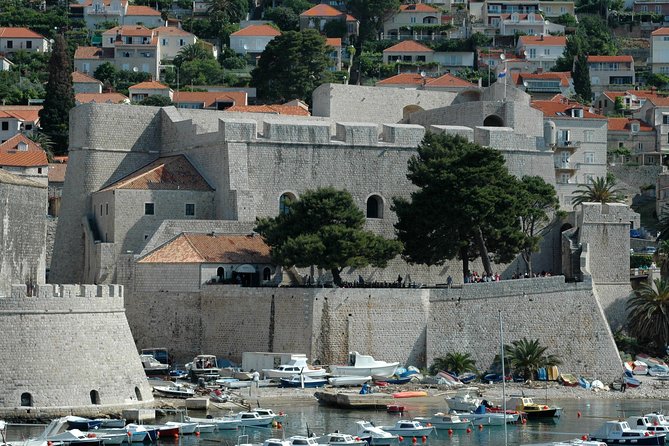
The next section returns to St. John’s Fortress and adds the Church of St. Carmen, the old quarantine area, and the breakwaters at Kaše and Porporela. You also look toward Banja and St. Jacob’s beaches.
The quarantine reference is especially useful because it reveals a less polished side of port history. Dubrovnik had to protect itself from disease as well as armies. Quarantine buildings and controlled arrivals show the practical pressures faced by a busy coastal republic.
The breakwaters help you understand how the harbor was managed. Kaše and Porporela were not decorative additions. They helped shelter boats and control the water near the city.
This portion is also a good reminder that the tour is about more than the postcard center. You see beaches, harbor works, churches, and old defensive points in one connected walk. If you enjoy local history more than quick photo stops, this is where the tour earns its keep.
Cathedral, Rector’s Palace, and the old government
The route then reaches the Cathedral of the Assumption of the Virgin Mary, the Treasury of the Republic, the Bishop’s Palace, and Ponta Gate.
The cathedral area brings you into the religious heart of Dubrovnik. Nearby, the Treasury reflects the wealth and organization of the old republic. The Bishop’s Palace adds another layer to the city’s governing and religious structure.
At Rector’s Palace, your guide explains the building’s role as the seat of government for the Republic of Dubrovnik. This is one of the most important historical stops because it turns the city from a collection of beautiful buildings into a functioning political state.
Admission to Rector’s Palace is not included. If you want to enter, plan for that as a separate expense and confirm timing with your guide. The tour can still explain the palace from the outside, but an interior visit would require additional time and admission.
Ending at Luža Square and the Homeland War Memorial Room
The tour ends at Luža Square, near the Church of St. Blaise at the eastern end of Stradun. Here you see the Clock Tower, Small Onofrio’s Fountain, City Hall, and the Church of St. Blaise.
This is a good finish because Luža gathers several key civic sights in one space. You are left in the main city center rather than at an isolated drop-off point. The tour also includes a visit to the Homeland War Memorial Room in Sponza Palace, adding modern history to the older stories of walls, rulers, and trade.
That final subject matters. Dubrovnik is not only a medieval or early modern setting. The city has a recent past that shaped local families and daily life. Guides such as Tea and Viktor have been praised for adding personal family stories, while Paolo has been noted for discussing current life and events affecting the community. Those personal details can give the history more weight, provided you are comfortable with a more serious turn near the end.
Guides, group size, and the value of personal attention
The guides associated with this experience include Mia, Tea, Viktor, Paolo, and Vlaho, also spelled Vhalo in one account. You are not guaranteed a particular guide unless the provider confirms one, but the strong pattern is clear: the best part of the experience is the human explanation.
Mia is described as flexible with timing, helpful before the tour, patient with questions, and especially good at keeping a family engaged. Tea added personal family stories and even stopped to help a pigeon at the end. Viktor brought clear passion for Croatian history. Paolo was praised for explaining regional history, present-day life, and taking photographs. Vlaho was noted for telling many stories about Dubrovnik.
The private format is particularly useful for families, mixed-age groups, and anyone who wants to ask questions. Large groups can make it hard to hear on a windy wall. Here, your guide can adapt the pace and spend more time on the subjects you care about.
Is $132.45 per person a fair price?
At $132.45 per person, this is not a budget walk. You also pay the Old City Walls entrance fee separately, and food, drinks, personal purchases, and optional wireless equipment are extra.
The value depends heavily on your group size and priorities. For one or two people, the per-person cost may feel high. For a family or group of friends, a private guide can make more sense because you are buying focused attention, flexible pacing, and the chance to hear every explanation.
I would consider it good value if you care about history, have limited time, or dislike large group tours. The price is harder to justify if you only want quick wall photos or plan to spend most of your time exploring independently.
The tour is offered in English and is usually booked well ahead, with an average lead time of 117 days. That suggests you should reserve early if your dates are fixed, especially during a busy season.
Practical details before you go
The meeting point is on Ulica Vrata od Ploča, near the Pile Gate area of the old city. The tour ends at Luža Square, near St. Blaise’s Church and the eastern end of Stradun.
Confirmation arrives at booking. The meeting point is near public transportation, and most people can participate, but the route remains a historic wall walk with stairs and exposed sections. Good walking shoes will make the experience easier.
This tour requires good weather. If poor weather cancels it, you are offered another date or a full refund. You can cancel for a full refund up to 24 hours before the local start time. Changes or cancellations inside that window are not accepted.
Who should book this private wall walk?
I would choose this tour for a family, a small group of friends, first-time visitors who want context, or anyone interested in Dubrovnik’s defenses and political past. It also suits Game of Thrones fans who want filming locations folded into a wider city story.
I would think twice if you have trouble with stairs, want a fully indoor experience, or expect admission to every monument to be included. The tour is also less attractive for a solo budget visitor who is happy to read signs and explore at their own pace.
Should you book it?
Book it if you want the walls explained, not just photographed. The route covers the harbor, Minceta, Bokar, St. John’s Fortress, the cathedral, Rector’s Palace, Stradun, and the city’s modern war memory in one guided visit.
The strongest reasons are the private group, the flexible pace, and guides who add personal stories to the formal history. Just budget for the separate wall ticket, prepare for stairs and sun, and confirm the meeting details. If those conditions suit you, this is a focused way to understand why Dubrovnik looks the way it does.
FAQ
How long does the Dubrovnik Old City Walls private tour last?
The tour lasts approximately 2 hours and 30 minutes.
Where does the tour start?
It starts on Ulica Vrata od Ploča in Dubrovnik, near the eastern approach to the old city.
Where does the tour end?
It ends at Luža Square, near the Church of St. Blaise at the eastern end of Stradun.
Is the tour private?
Yes. Only your group participates in the private activity.
Is the Old City Walls entrance fee included?
No. The Old City Walls entrance fee is not included in the tour price.
Is the tour offered in English?
Yes. The tour is offered in English.
Are food and drinks included?
No. Food and beverages are not included.
Is wireless tour equipment included?
No. A wireless tour guiding system is available only on request and at an extra charge.
Does the tour include Game of Thrones locations?
Yes. The route passes places used as Game of Thrones filming locations.
What happens if bad weather cancels the tour?
If poor weather causes cancellation, you are offered another date or a full refund.
Just added in Dubrovnik
- Elaphiti Islands Private Dubrovnik Boat Unique Experience★ 5.0 · 10 reviews
- Full- Day Private Speedboat Tour in Dubrovnik on Elaphiti Islands★ 5.0 · 21 reviews
- Wine tour peninsula Pelješac★ 5.0 · 3 reviews
- PRIVATE Wine Tour to Konavle country side★ 5.0 · 11 reviews
- Dubrovnik at War 1991-1992 Private Walking Tour★ 5.0 · 4 reviews
- Welcome to Dubrovnik Walking Tour★ 5.0 · 36 reviews
- City Walls of Dubrovnik★ 5.0 · 70 reviews
- Walls of Liberty: A Self-Guided Audio Tour of Dubrovnik★ 3.5 · 3 reviews
Dubrovnik City Walls & Cable Car, compared.
City Walls Early Morning or Sunset Walking Tour
Read our review →
Dubrovnik Combo: Old Town & Ancient City Walls
Read our review →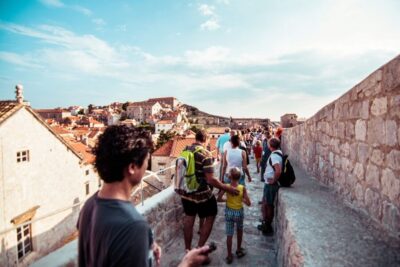
Dubrovnik Cable Car Ride, Old Town Walking Tour plus City Walls
Read our review →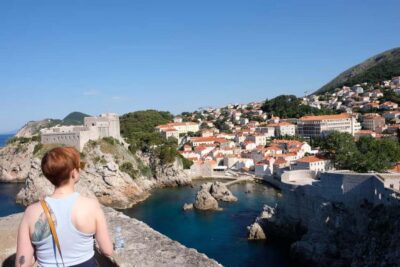
City Walls Tour for Early Birds & Sunset Chaser
Read our review →
Dubrovnik City Walls Tour for Early Birds or Sunset Chasers
Read our review →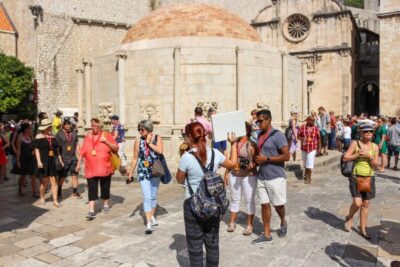
Browse the lists this tour appears in