
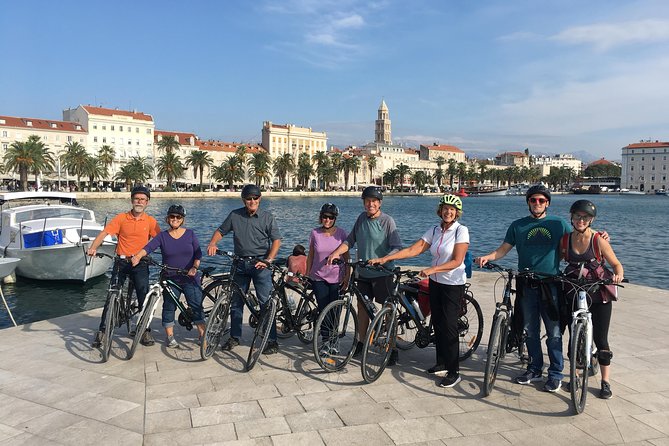
Reviewed · BIKE & E-BIKE TOURS
City Bike Tour of Split
Split is easiest to understand from a bicycle seat, and this tour gives you a quick look at both its old stone center and its green hill above the sea. You’ll ride past the harbor and Riva, skirt the walls of Diocletian’s Palace, then work your way toward Marjan Park for broad views of Split, the islands, and the surrounding hills.
I like the small-group format, capped at 15 people, and the way the route mixes city sights with pine-shaded roads. I also like the guides’ personal touch. Darla, Eva, Ivana, Yvonne, and Egor are among the guides praised for clear local stories, photo stops, restaurant tips, and good care of the group.
The main caution is the climb up Marjan. It can be tough on a standard bicycle, even for a fit rider, and one section takes you to a high viewpoint. An e-bike upgrade can make the ride far more comfortable, especially in hot weather or if you are unsure about hills.
Key points to know before you book
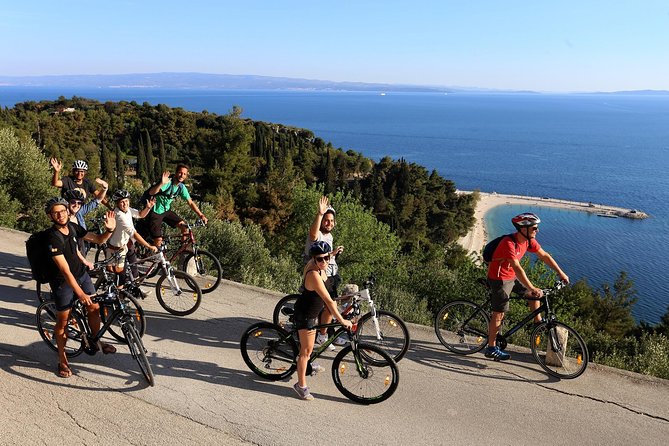
- Marjan Hill is the physical center of the tour: The route climbs through pine woods to viewpoints over the harbor, beaches, islands, and hills.
- The ride covers more than the old center: You’ll see Riva, Diocletian’s Palace, the National Theatre, Poljud, Varos, and Sustipan.
- Regular bikes are included: An e-bike may be available as an optional upgrade and is worth considering for the uphill section.
- Guides add local color: Guides such as Darla, Eva, Ivana, Yvonne, and Egor have been praised for stories, photos, safety, and practical advice.
- Plan on three to three and a half hours: This is a sightseeing ride with stops, not a short spin around the waterfront.
- The group can reach 15 people: A rear staff member may help keep a larger group together, but hearing every comment can be harder.
Why a bicycle works well in Split
Split’s old center is compact, but the city’s best views are not all within easy walking distance. A bicycle lets you connect the seafront, the palace district, the western neighborhoods, and Marjan Park in one outing.
That matters if you have only a day or two in town. On foot, you can spend hours threading through Diocletian’s Palace and still have little time for the hill. This route gives you a broad first look, then leaves you free to return to the places you want to explore more slowly.
The tour also shows two sides of Split. The palace and old streets reveal the city’s long urban story, while Marjan gives you pine trees, open air, and views across the water. You are not simply checking off monuments. You are seeing how the historic center fits beside everyday neighborhoods and a large recreation area.
The listed price is $53.95 per person. That is a fair value if you want a guide, a good-quality bicycle, a helmet, and a route that links several parts of town. You would need to rent a bike separately to copy much of this outing, and finding your way through the city and up Marjan would take extra time.
Food and drinks are not included, and neither is hotel pickup or drop-off. You meet at Ul. kralja Zvonimira 8 and finish there, so allow time to reach the starting point on your own.
More rides around Split:
- Zagreb Highlights Bike Tour
★ 5.0 · 208 reviews - Classic Zagreb Bike Tour
★ 5.0 · 193 reviews - Hvar Island Self-Guided E-Bike Tour
★ 5.0 · 144 reviews
Starting beside Split’s harbor and market
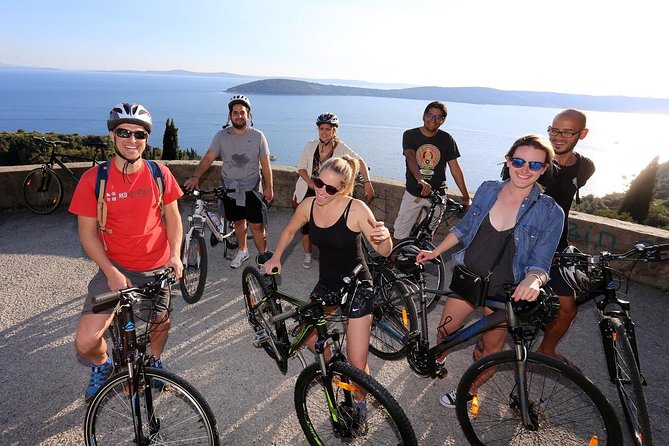
The ride begins near the city center, then heads toward the harbor and the main green market. This is a useful opening because it places you in the middle of daily Split rather than starting at an isolated attraction.
As you approach Riva, the scene changes. On one side, you have the sea and the harbor. On the other, the long walls of Diocletian’s Palace, built around 1,700 years ago. The contrast is the point: modern waterfront life presses right against ancient stone.
You will pass the palace rather than take a formal interior tour. That distinction matters. The bicycle is excellent for seeing the palace walls and understanding its place in the city, but it does not replace a walking tour through the cellars, courtyards, and narrow lanes.
Still, this first stretch gives you a strong sense of scale. Split is not an ancient ruin separated from modern life. The palace forms the core of the living city, with cafés, markets, shops, and streets built into and around its old structure.
The National Theatre and the working city
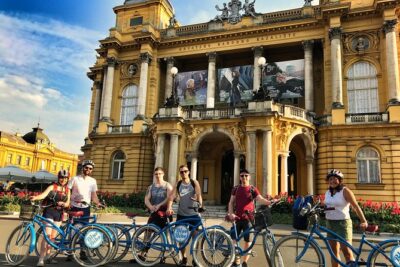
From the old center, the route continues through streets near the fish market and Croatian National Theatre. You will also pass Ottoman-era fortifications and other landmarks while the guide explains how the city works today.
This section is less about a single grand sight and more about seeing Split as a place where people live. You may notice the change from the waterfront’s open promenade to tighter city streets and busy local routes.
A guide is especially useful here. While riding, you cannot stop to read every sign or study every building. Guides such as Egor, Eva, and Ivana have been praised for explaining the city’s development and answering questions as the group goes.
There is one practical issue: sound. In a larger group, some riders have found it hard to hear every explanation while moving or standing near traffic. Stay close to the guide when possible, and ask for a repeat if a key detail gets lost.
Split’s sports story and Poljud Stadium
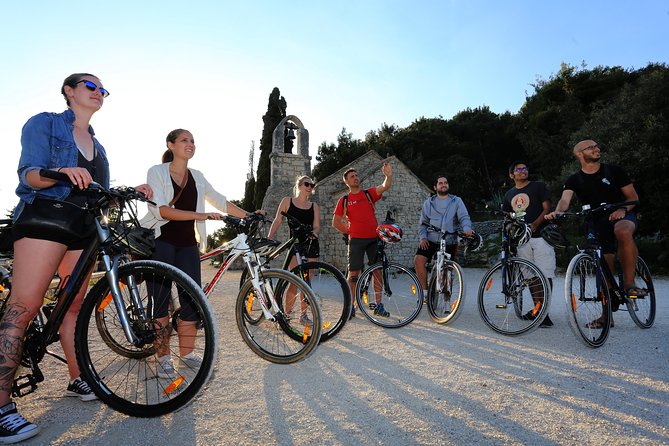
The route also brings in Split’s strong sports culture. Your guide may explain the city’s record of Olympic medals per person and the intense local passion for football before taking you past Poljud Stadium.
This is a welcome change from a standard ancient-city route. Split is not only stone walls and Roman remains. Sport is part of local identity, and the stadium gives that story a physical setting.
The stop at Poljud also helps break up the ride before Marjan. You are still seeing the city, but the focus has shifted from old architecture to modern public life. It gives the tour a more rounded feel than a route that stays only inside the old center.
The itinerary refers to a stop associated with fritule, a local sweet fritter, but food is not included in the tour price. Do not count on a tasting as part of the booking. Bring water, and plan your meal or snack separately.
Same base, a different kind of day out:
- Split: Krka Waterfalls Trip with Boat Cruise and Swimming
★ 4.8 · 10,519 reviews - From Split: Krka Waterfalls, Food & Wine Tasting Tour
★ 5.0 · 9,326 reviews - Blue cave, Mamma Mia and Hvar, 5 islands speedboat tour
★ 5.0 · 7,150 reviews - From Split: Krka Waterfalls, Food & Wine Tasting Tour
★ 4.9 · 6,598 reviews
The climb through Marjan Park
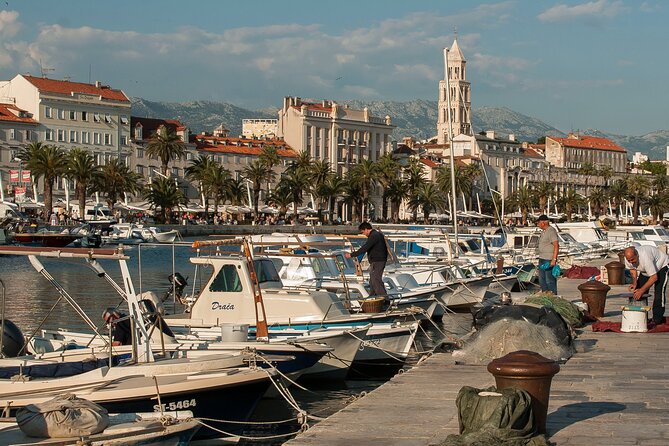
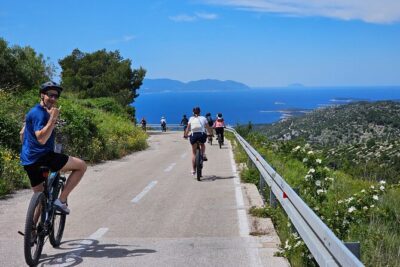
Marjan is the main reason to choose this tour over a basic city bike ride. Once you enter the park, the traffic and hard stone of the center give way to shaded paths beneath pine trees.
The ride is not flat. The climb can be long and demanding, and the physical effort is the clearest limitation of the experience. Several riders found a standard bike manageable, while others wished they had chosen an e-bike. Even fit riders may prefer electric assistance if the day is hot or you want to save energy for sightseeing.
The guide usually controls the pace and waits for the group. Darla was praised for keeping everyone safe and together, and another account describes the guide slowing down on uphill sections. That helps, but it does not remove the climb.
If heights make you uneasy, pay attention to the route description and the pre-ride briefing. One viewpoint reaches a high position above the city. You can still enjoy the park and its scenery, but this may not be the right activity if elevated roads make you uncomfortable.
The reward comes at the viewpoints. You can look over Split’s marina and beaches toward the islands and hills around the city. The return ride includes long downhill stretches, which offer a welcome break after the uphill work.
I would choose an e-bike if you are not a regular cyclist, if you dislike extended climbs, or if you want to focus on the guide’s stories instead of your breathing. If you ride often and enjoy a challenge, the standard bike can be fine.
Varos and the narrow streets of old Split
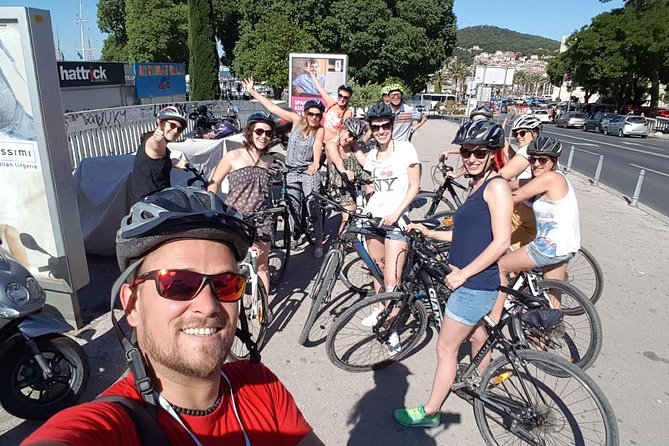
After Marjan, the route passes through Varos, one of Split’s most characterful neighborhoods. In earlier centuries, farmers, fishermen, and working people lived here in tightly packed homes and narrow streets.
This part of the ride helps explain the human scale of the city. Diocletian’s Palace tells the story of emperors and ancient power. Varos shows how ordinary families lived and worked close to the center and the sea.
Cycling through narrow streets requires attention. You will need to follow the guide carefully and respect pedestrians, especially if the area is busy. The payoff is a look at a neighborhood that feels different from the grand waterfront and formal sights.
The route is also a reminder that this is not a speed tour. You will stop for explanations and photographs, and the guide may adjust the pace to the group. One private-feeling outing lasted close to four hours, although the advertised duration is about three to three and a half hours.
Sustipan, the final viewpoint
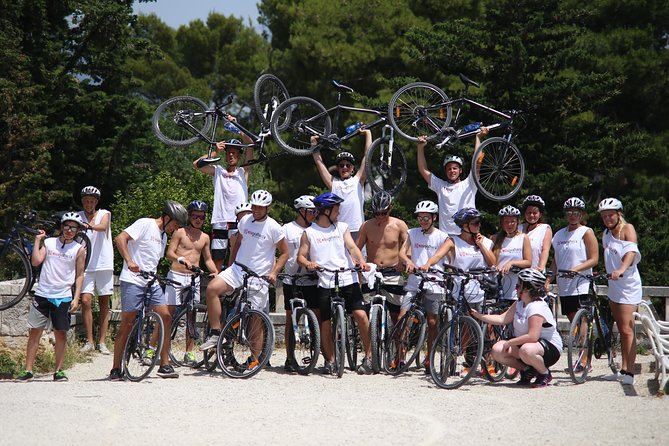
The last major stop is Sustipan, an old area above the water. It provides one more chance to look back toward Split and connect the city center, harbor, and surrounding coast.
By this point, you have seen the city from several angles: beside the palace walls, among local streets, from the wooded slopes of Marjan, and from the western side near Sustipan. That range is what gives the tour its value.
The route then returns to the original meeting point. Since the ride finishes where it starts, you do not need to arrange transport back across town. You can continue your day from the center, although food and drinks remain your responsibility.
The guides shape the experience
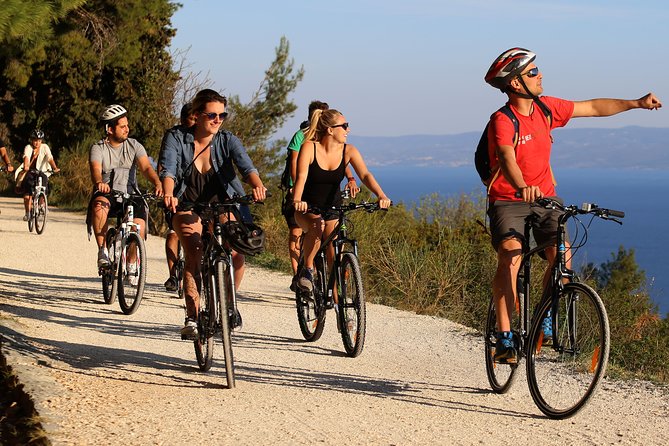
The guide is a major part of this tour. The route covers a lot, but the stories turn the ride from transport into sightseeing.
Darla has been praised for explaining how Split developed, taking photos, and adjusting the outing to the group. Eva has been noted for sharing local information, answering questions, and suggesting a good lunch spot afterward. Ivana has been described as both informative and fun, and she handled a weather delay by moving the start time until a storm passed.
Yvonne received especially warm praise for local knowledge and for showing less obvious parts of Split. Egor was also recognized for giving a clear city overview and practical suggestions for places to visit without a bicycle.
The quality of a city bike tour can change with the guide, and the available names may vary by departure. The supplied experience identifies an English-speaking local guide, not a guaranteed individual guide. Still, the range of positive guide feedback suggests that the operator has a strong team.
Communication before the ride deserves a little care. One rider nearly missed the departure after receiving unclear text instructions about when to arrive. Double-check your meeting time and arrive with a small cushion.
Group size, fitness, and what to wear
The maximum group size is 15 people. That is small enough for a personal outing in principle, though a full group can feel less intimate on city streets. A staff member may ride at the back to prevent anyone from getting lost.
You need a moderate level of fitness. This is not a gentle waterfront pedal. The uphill route, the three-hour duration, and the possibility of riding more than 10 miles make it a real active tour.
Wear comfortable clothes and bring water. Children must be accompanied by an adult, and everyone’s height should be provided at booking so the operator can prepare a suitable bicycle.
Bikes and helmets are supplied. The tour description specifies high-quality bikes, while several riders found the regular mountain bikes good for the route. If you have any doubt about the hills, ask about the e-bike option before setting out rather than waiting until the climb begins.
The experience requires good weather. If poor weather forces a cancellation, you can receive a different date or a full refund. You can also cancel for a full refund up to 24 hours before the start time, but changes or cancellations inside that window are not accepted.
Who should book this Split bike tour?
I would recommend it to you if you want a broad first look at Split and enjoy active sightseeing. It suits couples, friends, and families with older children who can manage a long ride and an uphill section.
It is also a good choice if you have already seen the palace and want to connect the old center with Marjan, Varos, and Sustipan. The views from the park are the strongest reason to book.
I would hesitate if you want a slow archaeological tour, dislike hills, or need a fully predictable flat route. You may also prefer a walking tour if your main goal is to explore the palace interiors, since this bicycle outing mainly passes the palace rather than touring it inside.
For many people, the best compromise is an e-bike. You still get the exercise and the fresh air, but the climb is less likely to dominate the day.
Is the City Bike Tour of Split worth it?
Yes, if you want to see more than the old center in a short time. At $53.95, the package offers a bicycle, helmet, local English-speaking guide, and a route that reaches places you might skip on foot.
Book it for the mix of city and nature, not for a detailed palace tour or an easy ride. Choose a standard bike if you are comfortable with sustained hills. Choose an e-bike if comfort matters more than the workout.
My practical pick is a morning or cooler departure, with water, comfortable clothing, and a clear understanding that Marjan is the tour’s main climb. If that sounds appealing, this is a lively and efficient way to get your bearings in Split while seeing the city from above.
FAQ
How long does the City Bike Tour of Split last?
The tour lasts approximately three to three and a half hours. Some outings may run longer depending on the group, stops, and conditions.
What places does the bike tour visit?
The route includes the harbor, green market, Riva, Diocletian’s Palace, the Croatian National Theatre, the fish market area, Ottoman-era fortifications, Poljud Stadium, Marjan Park, Varos, and Sustipan.
Is Diocletian’s Palace visited inside?
The route passes the walls of Diocletian’s Palace and gives you a view of the palace area. A formal interior visit is not listed as part of the bicycle tour.
Are bicycles and helmets included?
Yes. A high-quality bicycle and helmet are included in the tour price.
Is an e-bike included?
The included bicycle is a regular bike. An e-bike may be available as an optional upgrade, and it is worth asking about if you are concerned about the Marjan climb.
How difficult is the cycling?
You should have a moderate level of fitness. The route includes a significant uphill section on Marjan, and some riders have found the climb difficult on a standard bicycle.
Where does the tour start and finish?
The tour starts at Ul. kralja Zvonimira 8, 21000 Split, Croatia. It ends back at the same meeting point.
What happens if the weather is poor?
If bad weather causes the operator to cancel, you will be offered another date or a full refund. The tour also requires a minimum number of participants to operate.
Just added in Split
- Discover The Old Town Split 1.5h walking Small group tour★ 4.8 · 93 reviews
- From Split: Zagreb Transfer & Plitvice Lakes Tour★ 4.7 · 131 reviews
- Blue Cave, Komiža, Stiniva Bay, Budikovac, Hvar Split Island Boat Tour★ 5.0 · 53 reviews
- Split to Dubrovnik Private transfer 1-8 pax (Door to Door any location)★ 5.0 · 118 reviews
- From Sinj: 1.5-Hour Private Flight over Kornati & Šibenik★ 4.1 · 11 reviews
- From Sinj: Panoramic Flight over Split★ 5.0 · 14 reviews
- **Private Door to Door Airport Split Transfer up to 15 People**★ 5.0 · 136 reviews
- Sinj: Panoramic Flight over Peruca Lake and Dinara mountain★ 5.0 · 9 reviews
Bike & E-Bike Tours, compared.



Browse the lists this tour appears in