Reviewed · TOURS IN DUBROVNIK
Small Group Tour; Balkans & Central Europe – Dubrovnik to Vienna
The real draw here is the cross-border route. In ten days, you move from Dubrovnik through Bosnia and Herzegovina, Serbia, Hungary, and Slovakia before finishing in Vienna. The stops mix major capitals with smaller towns such as Zvornik, Sremski Karlovci, Subotica, and Győr.
I like the small maximum group of ten, which should make border crossings, hotel arrivals, and city walks easier to manage. I also like the built-in breakfast, transport, tour leader, road costs, and selected entry tickets. The main concern is that the headline description mentions Komani Lake and Valbona Valley in Albania, yet the supplied ten-day itinerary does not include Albania or hiking. Confirm the exact route before paying.
Key points to know before booking
- Four countries between Dubrovnik and Vienna: The route crosses Bosnia and Herzegovina, Serbia, Hungary, and Slovakia before ending in Austria.
- A maximum of 10 people: This is much more intimate than a large coach tour and should allow easier communication with the guide.
- Most days combine driving and short walks: The plan suits you if you enjoy seeing many places without unpacking and repacking every night.
- Three-star hotels with breakfast: Accommodation is included, but lunch, dinner, drinks, snacks, and personal expenses are not.
- Strong guide feedback: Guides named in the supplied comments include Bilbil, Mira, Sokol, Armando, and Ani, with repeated praise for friendliness, help, and local explanations.
- Check the Albanian Alps wording: The overview focuses on a two-day hike, but the detailed schedule runs from Dubrovnik to Vienna and contains no Albanian stop.
What this Dubrovnik to Vienna tour actually covers
This is a fast-moving Balkan and Central European trip, not a single-destination holiday. You start at 7:00 a.m. in Dubrovnik and finish with a hotel drop-off in Vienna on Day 10.
The route is built around historic city centers, border crossings, short guided walks, and free time. You will see Ottoman, Austro-Hungarian, Yugoslav, and modern European influences in quick succession. That variety is the tour’s main strength, but it also means you should expect long road days and only a limited taste of each place.
The group size matters. With no more than ten people, your tour leader can usually keep the group together more easily than on a full-size coach. The supplied comments repeatedly praise guides such as Bilbil, Mira, Sokol, and Armando for being helpful and willing to suggest activities during free time. The exact guide is not guaranteed, but the role clearly includes more than simply driving from one hotel to the next.
Other trips people book in Dubrovnik:
- Blue Cave Small-Group Boat Tour from Dubrovnik
★ 5.0 · 9,360 reviews - Full-Day Dubrovnik Elaphite Islands Cruise with Lunch and Drinks
★ 5.0 · 8,823 reviews - Dubrovnik: Epic Game of Thrones Tour + Lokrum & Saver Option
★ 4.9 · 5,995 reviews
Day 1: Mostar, the Old Bridge, and Blagaj
Your Dubrovnik pickup is scheduled for 7:00 a.m. A local driver takes you to the border, where you meet the tour leader. That arrangement is worth noting because your first vehicle and guide may not be the same people for the whole morning.
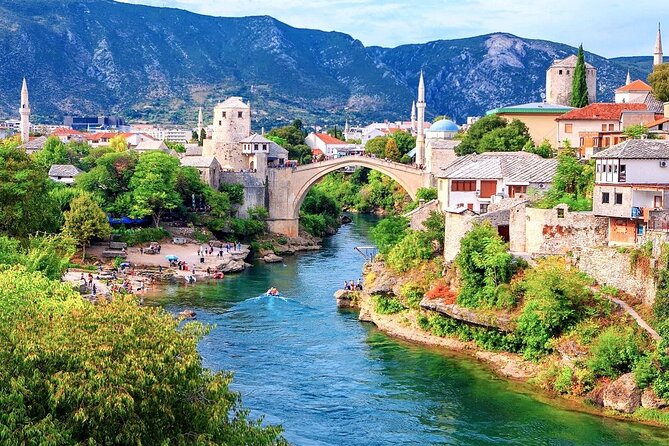
The first major stop is Mostar. The Stari Most, or Old Bridge, is the visual centerpiece. Built in the 16th century in an Islamic architectural style, the bridge crosses the Neretva River and forms part of the UNESCO-listed old town. You get about an hour here, followed by time in the old bazaar.
Mostar’s appeal is not limited to the bridge. Cobbled lanes, old mosques, Turkish-style market streets, and reminders of the city’s wartime past give the center an emotional weight. The schedule allows another hour of free time, but that is not enough for an in-depth museum visit. Think of this as a strong first look rather than a full Mostar stay.
You then drive to Blagaj, a short distance outside Mostar. The Blagaj tekija sits below a cliff beside the striking spring of the Buna River. The blue-green water and dramatic setting make this a worthwhile stop, especially after the busy streets of Mostar. An entry ticket is included.
The first day packs several sights into a short period. I like the range, from a famous bridge to a religious site beside a spring. The trade-off is time: border formalities and road conditions can affect how much free time you actually have.
Day 2: Sarajevo and the story of the Latin Bridge
After breakfast, you head to Sarajevo. The walking portion covers the city’s Ottoman and Austro-Hungarian quarters, with mosques, churches, synagogues, bazaars, and market streets showing how different traditions shaped the city.
Sarajevo is also a place where recent history is impossible to ignore. Bullet holes and cannon marks remain visible in parts of the city, and the tour includes discussion of the Yugoslav War. This gives the walking tour more substance than a simple architectural circuit.
At the Latin Bridge, you learn how the assassination of Archduke Franz Ferdinand helped trigger World War I. The bridge connected the Miljacka River’s banks near the Catholic quarter, known historically as Latinluk. It is a compact sight, but its importance makes it one of Sarajevo’s essential stops.
You have free time for a meal in the old town. Sarajevo is known for meat dishes and desserts, so this is one of the better opportunities to make your own food choice rather than follow a fixed group meal. The schedule allows about an hour at each listed stop, so you should not expect a relaxed, multi-day exploration of Sarajevo.
The tour notes uneven ground and visits to ruins. You need a moderate level of fitness and comfortable walking shoes. This is not a strenuous hiking trip, but it is not ideal if uneven streets are difficult for you.
Day 3: Zvornik and Belgrade’s river views
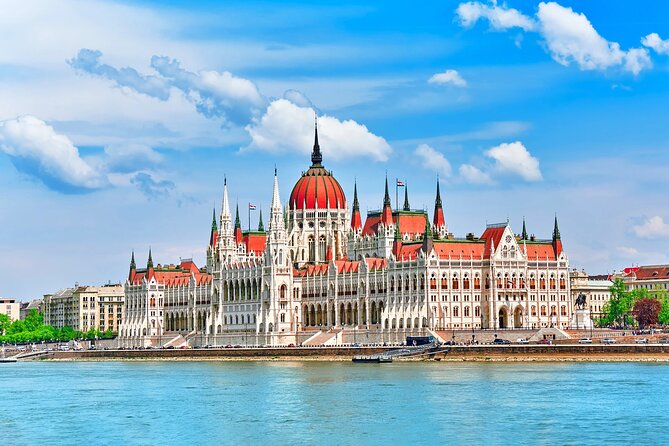
The route continues toward Serbia, with a pause in Zvornik beside the Drina River. You have free time for lunch or a short walk through town. Zvornik is a quieter stop than the capital cities, and that is part of its value. It breaks up the drive and gives you a look at a smaller Serbian town instead of only the headline sights.
In Belgrade, the tour heads to the fortress and Kalemegdan Park at the meeting point of the Sava and Danube rivers. The elevated views are among the best on the trip. The park also offers paths and trees, giving you some breathing room after the day on the road.
The walk continues along Knez Mihailova, Belgrade’s main pedestrian meeting place, toward Republic Square. You have about two hours for the fortress, park, and central streets. That is enough for orientation and photographs, but the capital deserves far more time if you want museums, nightlife, or a close look at its neighborhoods.
Same base, a different kind of day out:
- Dubrovnik: Elaphiti Islands Full-Day Cruise with Lunch
★ 5.0 · 5,938 reviews - Dubrovnik: Old Town Walking Tour
★ 4.8 · 5,174 reviews - Dubrovnik: The Original Game of Thrones Tour & Lokrum Option
★ 4.8 · 5,064 reviews - Dubrovnik Game of Thrones Tour & Optional Lokrum Island Visit
★ 5.0 · 4,702 reviews
Day 4: Wine traditions in Sremski Karlovci
Sremski Karlovci is one of the tour’s more distinctive stops. The small town has a Baroque center and a long connection with Serbian culture, religion, and wine production. Its streets and buildings feel more intimate than those of Belgrade or Budapest.
You have about three hours here, including free time to sample regional wines. The Four Lions fountain has a local legend attached to it: drink from it and you are said to return to Karlovci and marry there. You do not need to take the story literally to enjoy the town’s relaxed pace.
This stop is particularly useful for you if you prefer local character to a checklist of major monuments. Wine tasting is not listed as an included meal or separate package feature, so budget for anything you choose to buy. As with the rest of the tour, personal spending is your responsibility.
Day 5: Novi Sad and Petrovaradin Fortress
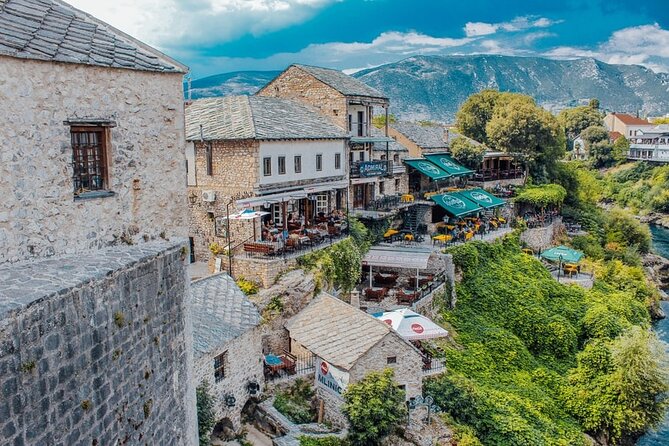
Novi Sad is presented as the cultural capital of northern Serbia. Its position between former Ottoman and Austro-Hungarian spheres helps explain the mix of architectural styles and cultural influences.
The old town walk follows pedestrian streets such as Zmaj Jovina and Dunavska. You also visit Petrovaradin Fortress, often called the Gibraltar on the Danube. The fortress provides a strong visual link between the city and the river, while the central streets give you time to pause at cafés or browse independently.
You spend the night in Novi Sad, which makes this day less rushed than a simple transit stop. Three hours are set aside for the city tour and free time. That is enough to get your bearings, but you should choose your priorities in advance if you want both the fortress and a leisurely meal.
Day 6: Subotica and the border into Hungary
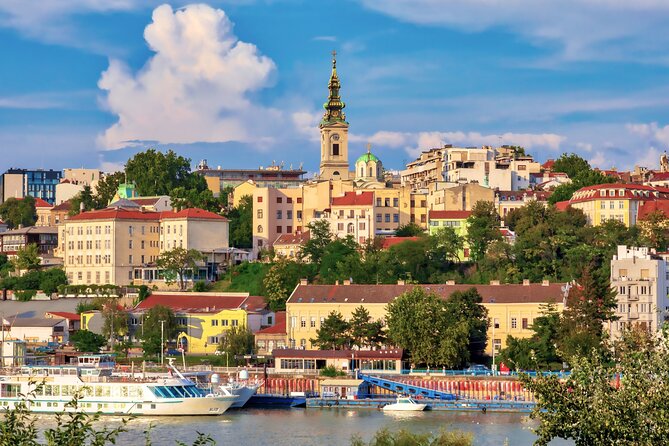
Subotica brings another change of mood. The city is known for colorful buildings and architecture from the Austro-Hungarian period. The City Hall dominates the central square, with a park, fountains, and open space around it.
The visit includes the Cathedral of St. Teresa of Avila and the synagogue. The synagogue is a particularly notable architectural stop, and the city’s mix of cultural traditions gives the walk a wider Central European feel.
You have free time for coffee, food, and independent wandering. Subotica is also associated with local wines and a relaxed café culture. Later, you cross into Hungary and reach Budapest. The schedule lists only about 30 minutes for the transfer portion in Budapest, so most sightseeing comes on the following day.
Border crossings are a normal part of this trip. Keep your passport accessible, allow extra time for delays, and avoid scheduling an important independent appointment immediately after the listed arrival.
Day 7: Budapest from both sides of the Danube
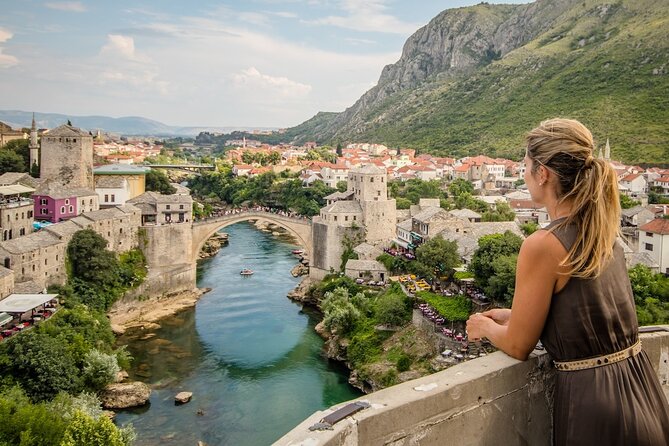
Budapest receives the fullest city treatment so far. The tour introduces both Buda and Pest, the two sides divided by the Danube. You pass St. Stephen’s Basilica, the Opera, Parliament, Heroes’ Square, and Fisherman’s Bastion.
The architecture ranges from Baroque and Neoclassical buildings to Art Nouveau details. Fisherman’s Bastion offers broad views across the river, while Buda Castle gives the historical center its main hilltop focus. Entry to Buda Castle is included.
The guided sightseeing takes about three hours in total, followed by free time in the evening. That free evening is useful because Budapest changes character after dark, and you can choose your own restaurant, café, or riverside walk. Food, drinks, and evening activities are not included.
The drawback is the schedule. Budapest is too large to cover thoroughly in one day, even with an efficient route. This tour works best if you want a first orientation and plan to return later, not if Budapest is your main reason for booking.
Day 8: Győr and the road to Bratislava
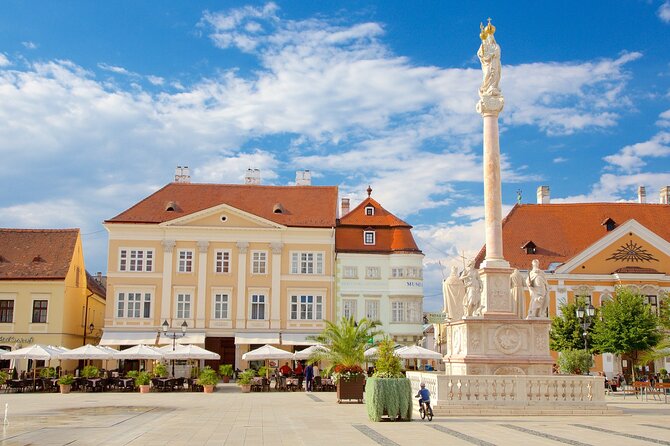
Győr, known as the City of Rivers, offers a quieter Central European interlude. The center has Baroque buildings, churches, and multicolored houses. The Town Hall’s 59-meter tower is an easy landmark, while the Cathedral of the Virgin Mary reflects the city’s older religious traditions.
The route also includes the former synagogue, recognizable by its large gray dome. Baross Gábor Way provides time for cafés, shops, and restaurants. The itinerary specifically mentions Hungarian food and blueberry beer as options to try, though neither is included.
You spend roughly three hours exploring before continuing to Bratislava. Győr is a good fit for you if you enjoy compact historic centers and a slower walking pace. It is less satisfying if you prefer long museum visits or extensive time in one major city.
Day 9: Bratislava Castle and the Old Town
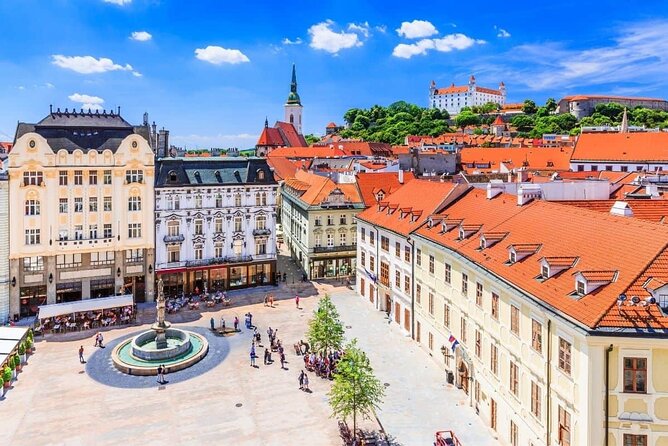
Bratislava’s Old Town is compact enough for a useful walking tour. You see the Old Town Hall, churches, cultural institutions, and foreign embassies before continuing to Michael’s Gate, the only preserved gate from the medieval fortifications.
The climb to Bratislava Castle is one of the day’s key moments. The castle sits above the Danube and gives you a clear view of the city. Entry is included, although the schedule allows only about an hour for the castle visit.
Back in the center, you have time for Bratislava’s traditional coffee culture. This is a pleasant final afternoon because it gives you room to sit down rather than rush from monument to monument.
As on earlier days, the walk may include slopes and uneven streets. Wear shoes that can handle city walking, and keep some cash or a card ready for coffee and meals.
What the $3,773.83 price includes
The listed price is $3,773.83 per person, calculated on double, twin, or shared triple or quadruple occupancy in three-star hotels. That price is not a bargain in the usual budget-tour sense, but it covers a large amount of coordination.
Included items are:
- Three-star accommodation
- Breakfast
- Professional tour leader
- Dubrovnik hotel pickup
- Vienna hotel drop-off
- Listed entry tickets
- Tourist taxes
- Road taxes and petrol
- International car insurance
Lunch, dinner, drinks, snacks, souvenirs, and personal spending are extra. The value is strongest if you want one company to handle transport, hotels, border logistics, and a broad route through several countries.
The value is weaker if you prefer to stay several nights in each city, choose your own hotels, or travel independently by train and bus. You are paying for convenience and structure, not luxury or long stays.
Who will enjoy this route most
I would recommend this tour to you if you want to see a wide slice of the Balkans and Central Europe in one organized trip. It suits people who enjoy guided context, compact city walks, shared transport, and a small social group.
It is less suitable if you want a dedicated hiking holiday, substantial time in Albania, or a slow trip with unplanned afternoons. The supplied overview focuses on a two-day Albanian Alps hike, meals, and overnight stays in that region, but none of those features appears in the detailed Dubrovnik to Vienna schedule. Ask the operator to clarify whether two different tour descriptions have been combined.
The physical demand is moderate. Expect walking on uneven ground, city streets, hills, and ruins, but no detailed hiking mileage is given for this route.
Should you book it?
Book this trip if your priority is efficient regional sightseeing with a maximum of ten people, included transport, breakfast, and a guide who can help shape your free time. The positive guide feedback, including repeated praise for Bilbil, Mira, Sokol, Armando, and Ani, supports the idea that the human side of the trip can be a real strength.
Before booking, confirm three things in writing: the exact itinerary, the identity of the guide, and whether the Albanian Alps material belongs to your departure. The experience is non-refundable and cannot be changed after booking, so that check matters. If the Dubrovnik to Vienna route is what you want, this is a practical way to cover a lot of ground. If you are booking specifically for Komani Lake and Valbona Valley, do not proceed until the mismatch is resolved.
FAQ
Where does the tour begin?
The tour begins in Dubrovnik, Croatia, with hotel pickup scheduled for 7:00 a.m.
Where does the tour end?
The tour ends in Vienna, Austria, with drop-off at your hotel.
How long is the experience?
The tour lasts approximately 10 days.
How many people can join the group?
The maximum group size is 10 travelers.
What accommodation is included?
Accommodation is provided in three-star hotels, based on double, twin, triple, or quadruple room occupancy.
Is breakfast included?
Yes. Breakfast is included for the overnight stays.
Are lunch and dinner included?
No. Lunch, dinner, drinks, snacks, souvenirs, and personal spending are not included.
What entry tickets are included?
Entry tickets for the sites marked for visitation are included. The itinerary specifically lists included admission at Blagaj tekija, Buda Castle, and Bratislava Castle.
Is the tour refundable if I cancel?
No. The experience is non-refundable and cannot be changed for any reason after booking.
Just added in Dubrovnik
- Full- Day Private Speedboat Tour in Dubrovnik on Elaphiti Islands★ 5.0 · 21 reviews
- Elaphiti Islands Private Dubrovnik Boat Unique Experience★ 5.0 · 10 reviews
- Wine tour peninsula Pelješac★ 5.0 · 3 reviews
- PRIVATE Wine Tour to Konavle country side★ 5.0 · 11 reviews
- Dubrovnik at War 1991-1992 Private Walking Tour★ 5.0 · 4 reviews
- Welcome to Dubrovnik Walking Tour★ 5.0 · 36 reviews
- City Walls of Dubrovnik★ 5.0 · 70 reviews
- Walls of Liberty: A Self-Guided Audio Tour of Dubrovnik★ 3.5 · 3 reviews
Tours in Dubrovnik, compared.
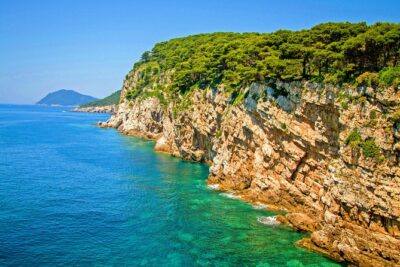
Blue Cave Small-Group Boat Tour from Dubrovnik
Read our review →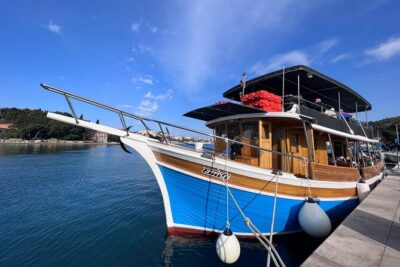
Full-Day Dubrovnik Elaphite Islands Cruise with Lunch and Drinks
Read our review →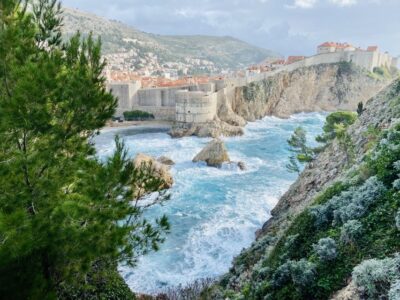
Epic Game of Thrones Tour + Lokrum & Saver Option
Read our review →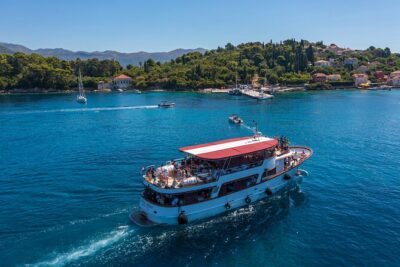
The Original Game of Thrones Tour & Lokrum Option
Read our review →
Dubrovnik Game of Thrones Tour & Optional Lokrum Island Visit
Read our review →