Reviewed · TOURS IN DUBROVNIK
Eight beautiful locations just outside of Dubrovnik
The best part of this experience is how quickly Dubrovnik’s packed Old Town gives way to quiet roads, forest shade, village life, and wide views over the countryside. Roberto takes you to places that are easy to miss without local help, including a tiny Roman cave at Mocici and old stone mills at Ljuta.
I especially like the small private format, limited to your own group of up to three, and the personal touch of a sandwich made with Dalmatian smoked prosciutto, homemade cow cheese, garden vegetables, and a local drink. The main thing to consider is the short timing: several stops last only 10 to 25 minutes, and two museum visits cost extra.
Key points at a glance
- Park Orsula opens the tour with a broad Dubrovnik view and a look at one of the area’s best-known summer performance settings.
- Mocici’s open Roman cave is a brief but unusual stop, suited to curious history fans rather than anyone expecting a large archaeological site.
- Ljuta combines old stone mills, waterfalls, forest shade, and a short history talk in one of the tour’s most pleasant pauses.
- Konavle County Museum and the Franciscan monastery at Pridvorje show local life, not just famous coastal sights.
- Homemade lunch and drinks are included, with a vegetarian sandwich available if requested.
- The Gray Falcon viewpoint near Cavtat provides the grand finale, with what is described as the finest view across the surrounding region.
Why leave Dubrovnik for the Konavle countryside
Dubrovnik is full of grand sights, but its Old Town can feel crowded and tightly packed, especially during the busiest part of the day. This outing gives you a useful change of pace without requiring a full-day commitment.
The Konavle area lies beyond the city, near the airport and Cavtat. Here, the focus shifts from stone walls and polished viewpoints to farm cottages, water-powered mills, village traditions, religious buildings, and small historical sites. You get a better sense of the area as a lived-in place, not only as a postcard destination.
The tour lasts about three to four hours. That makes it easy to fit around other plans, though you should not expect long walks or extended museum visits. This is a moving tour with many short stops, so its appeal lies in variety and local access rather than in spending an hour at one major attraction.
Because the activity is private, you can ask Roberto to give more attention to the subjects that interest you most. One of the strongest features described by past customers is his willingness to adapt the conversation to local customs, family life, and personal stories. That sort of exchange can add more than a standard guidebook explanation.
Other trips people book in Dubrovnik:
- Blue Cave Small-Group Boat Tour from Dubrovnik
★ 5.0 · 9,360 reviews - Full-Day Dubrovnik Elaphite Islands Cruise with Lunch and Drinks
★ 5.0 · 8,823 reviews - Dubrovnik: Epic Game of Thrones Tour + Lokrum & Saver Option
★ 4.9 · 5,995 reviews
Park Orsula gives you Dubrovnik from above
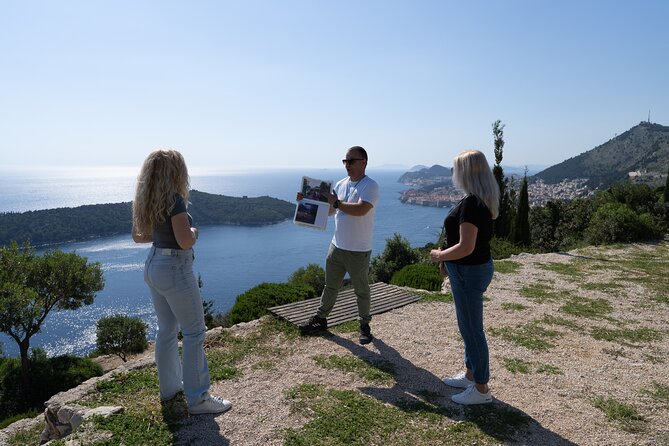
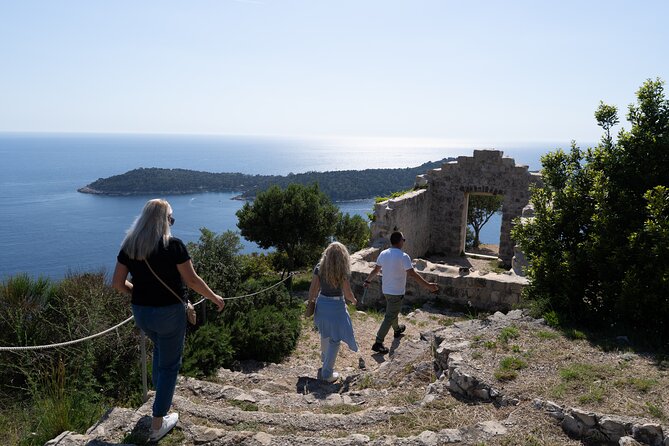
Your first stop is Park Orsula, an archaeological site with a panoramic view and a summer stage used for performances. You have about 15 minutes here, enough for photographs and a quick look around.
This is a smart opening stop. It places Dubrovnik in context before you move farther into the countryside. From a high point, you can take in the city and the coast, then compare that busy urban setting with the quieter places later in the morning or afternoon.
Do not treat this as a long archaeological visit. The stop is brief, and the main reward is the view. If photography matters to you, have your phone or camera ready before getting out of the vehicle. The tour includes admission here.
Mocici offers a small Roman-era surprise
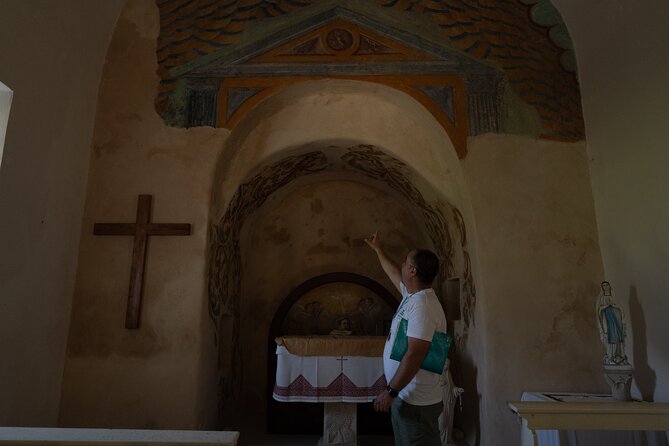
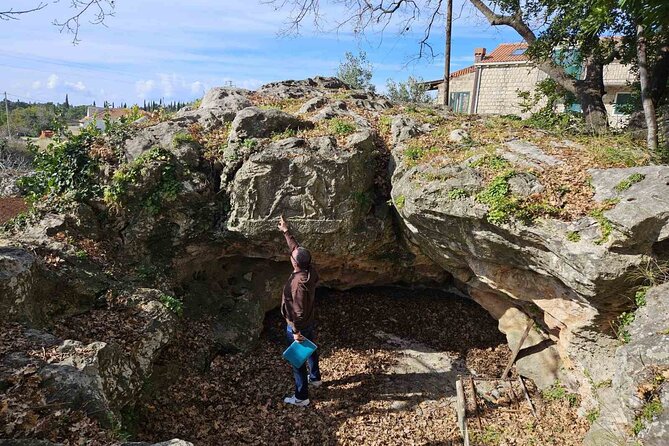
At Mocici, you visit the Mitrej, a small open cave connected with the Roman Empire. The site is free to enter and takes about 15 minutes.
Its scale is part of the appeal. You are not being taken to a major ruin with reconstructed buildings and long explanatory displays. Instead, this is a compact historical place that rewards attention. Roberto can help explain why the cave matters and how it fits into the area’s Roman past.
I would set your expectations correctly: this is a quick stop, not a full archaeological excursion. It works best for people who enjoy unusual fragments of history, especially when those fragments are found outside the standard sightseeing route. If you prefer large monuments, this may feel modest, but its unusual setting gives the tour character.
Konavle County Museum explains local life
The Konavle County Museum occupies a typical Konavle house and displays objects provided by people from the region. The collection focuses on local history, customs, and tradition. You have about 25 minutes here, and admission costs 3.50 euros.
This is one of the most useful stops if you want to understand how people in the area lived, worked, and maintained local customs. A traditional house can explain more about daily life than a grand church or fortress. Household objects and regional items make the past easier to picture.
The museum visit also gives needed context to the other stops. When you later see rural cottages, stone construction, or old agricultural buildings, you have a better idea of how these places fit into Konavle life.
The extra ticket is small, but remember that it is not included in the tour price. Since your stay is limited to 25 minutes, the museum is best for a focused visit rather than a slow examination of every display.
Same base, a different kind of day out:
- Dubrovnik: Elaphiti Islands Full-Day Cruise with Lunch
★ 5.0 · 5,938 reviews - Dubrovnik: Old Town Walking Tour
★ 4.8 · 5,174 reviews - Dubrovnik: The Original Game of Thrones Tour & Lokrum Option
★ 4.8 · 5,064 reviews - Dubrovnik Game of Thrones Tour & Optional Lokrum Island Visit
★ 5.0 · 4,702 reviews
Ljuta brings together mills, waterfalls, and shade
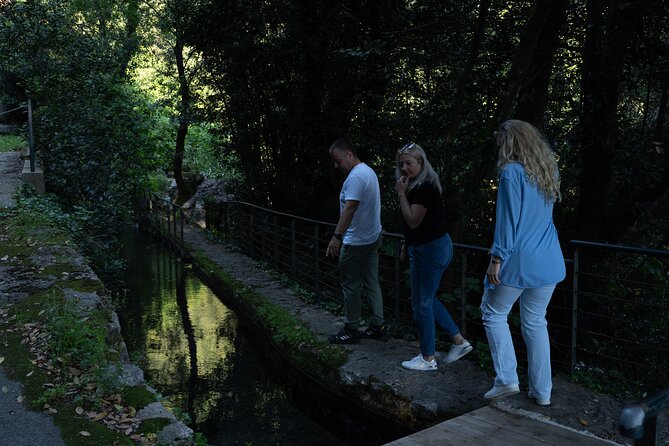
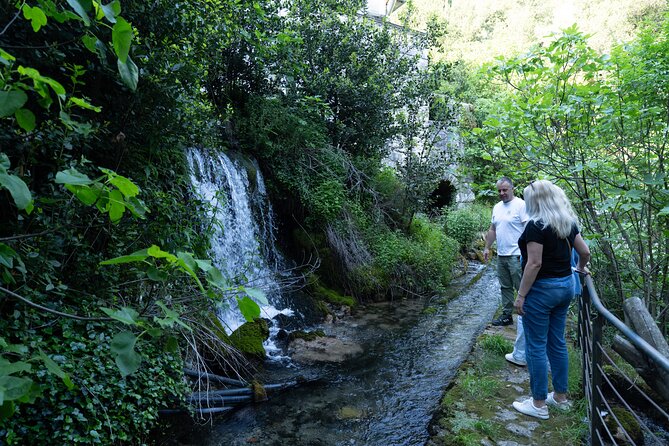
Ljuta is likely to be one of the most relaxing portions of the outing. You walk near old stone mills and waterfalls, with a promenade passing through dense forest shade. The stop lasts about 20 minutes and includes a history talk.
This is a good contrast with Dubrovnik’s bright stone streets and exposed viewpoints. The sound and movement of water, the old masonry, and the shade make the setting feel cooler and calmer. You do not need a long hike to enjoy it, since the visit is built around a short promenade.
The mills also show how natural water power supported local work. The buildings are not just attractive ruins. They point to an older rural economy and give you a practical connection to the history discussed at the museum.
Wear shoes you can walk comfortably in, though the information provided does not describe a demanding trail. The time is still limited, so you will get an introduction rather than a long nature walk.
Pridvorje adds a religious and archaeological layer
At Pridvorje, you visit a Franciscan monastery and its archaeological museum. The planned stop is about 25 minutes. Museum admission costs 3.50 euros, and the ticket is not included in the tour price.
The monastery gives the day another point of view. After the household objects at the Konavle museum and the working history suggested by the mills, you see the area through its religious and archaeological past.
The visit is especially useful if you like small museums that sit inside historic settings. The building itself forms part of the experience, rather than serving only as a container for exhibits.
Again, keep the short timing in mind. Twenty-five minutes gives you a concise look, not a slow museum visit. Add the 3.50 euro admission to your budget, along with the same fee for the Konavle County Museum if you plan to enter both.
Gabrili shows traditional rural construction
Gabrili is a quick 10-minute stop to see traditional agricultural cottages built with drywall construction. Here, the interest is architectural and practical.
These small structures help explain the working countryside. They are not grand homes or formal monuments. Their value is in showing how local building methods responded to rural needs and available materials.
The stop is short, so you will probably spend most of the time looking, taking photographs, and listening to Roberto’s explanation. It is a useful pause between larger stops, but it may feel too brief if traditional architecture is your main interest.
Cavtat and the Gray Falcon viewpoint finish the route
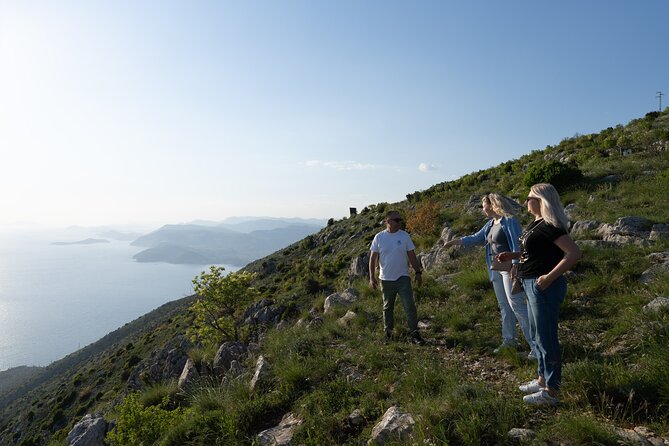
The final stop is near Cavtat, at the Gray Falcon viewpoint. You have about 15 minutes here, and admission is free.
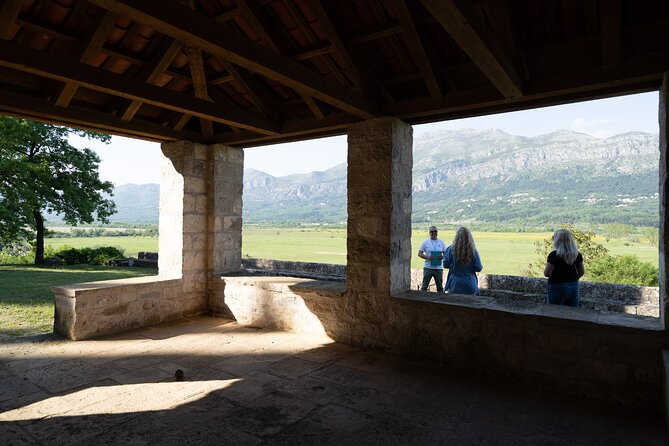
This is presented as the finest view across the surrounding countryside, so it provides a fitting finish to the route. By this point, you have moved through archaeological, religious, agricultural, and natural settings. The viewpoint lets you see the wider area as one connected region.
The stop is made for photographs and a final look rather than a long stay. If the weather is clear, this should be one of the most memorable moments of the tour. Since the activity requires good weather, conditions matter here as well as for the other outdoor stops.
Cavtat itself is not listed as a separate extended visit, so do not book this expecting free time to explore the town. The focus is the viewpoint.
A homemade lunch makes the short tour feel personal
The included food is more substantial than a token snack. You receive a sandwich with Dalmatian smoked prosciutto, homemade cow cheese, lettuce, and tomatoes grown in the guide’s gardens. A vegetarian option is available on request.
You also try homemade liqueur and organic juice made from sage blooms. Soda or pop is included as well. The food adds practical value, especially since the tour moves through several places where you may not have time to stop for a meal.
It also gives the experience a local feel. A sandwich made with regional ingredients and food prepared by the guide’s family says more about hospitality than a packaged snack. One account specifically notes that the lunch was made by Roberto’s mother, which helps explain why this part of the outing feels personal.
Tell the provider about a vegetarian preference when booking. The supplied details confirm that an option is available on request, but they do not specify other dietary arrangements.
What the $215.69 group price means
The listed price is $215.69 for a private group of up to three people. That is not a per-person price. For three people, it works out to roughly $72 per person before the two small museum fees. For one person, the cost is much higher per head, though the private format remains the same.
The price includes pickup, transportation during the activity, the guide, the food and drinks, and admission where included. You also avoid the need to plan a separate route to scattered countryside sites. That matters because the attraction of this outing comes from the combination of small stops, not from one place that is easy to reach on its own.
You should add 7 euros per person if you enter both the Konavle County Museum and the archaeological museum at Pridvorje. The other listed stops have free admission or included entry.
For a group of three, I think the value is strongest if you want a private outing and would otherwise need to arrange your own transport. The value is less clear if you mainly want Dubrovnik’s famous sights or prefer long, unhurried visits at one or two locations.
Who will get the most from this experience
I would choose this for someone who has already allowed time for Dubrovnik’s main sights and wants to see a quieter side of the region. It also suits repeat visitors who have no need to spend another morning inside the Old Town.
You are likely to enjoy it most if you like:
- Short historical stops with a local explanation
- Rural architecture and traditional customs
- Scenic viewpoints and gentle walks
- Small museums rather than major attractions
- Private tours with room for personal questions
- Homemade regional food
- A flexible conversation about local life
Families and small groups may appreciate the private setup, since only your party takes part. The activity says most people can participate, but no detailed accessibility information is provided. Ask before booking if you need specific arrangements.
This is less suitable if you want a hiking day, a long museum session, or a single major archaeological site. The schedule moves along, and some stops last only 10 or 15 minutes.
Pickup, timing, and practical details
Pickup is offered in front of your accommodation, and the tour begins at Motoparking Peline ul. 4 in Dubrovnik. The activity returns to the meeting point at the end.
One past booking included airport drop-off, but that detail is not part of the standard end point provided here. Treat airport transfer as something to confirm directly rather than something automatically included.
The tour is offered in English and uses a mobile ticket. Confirmation arrives at booking. Since the experience depends on good weather, you can be offered another date or a full refund if conditions force cancellation. The same applies if the minimum number of participants is not met.
You can cancel for a full refund up to 24 hours before the start time. Changes or cancellations made inside that window are not accepted for a refund.
Should you book this Dubrovnik countryside tour?
Book it if you want quiet roads, local stories, small historical places, and a personal guide instead of another crowded city attraction. The combination of Park Orsula, the Roman cave, Ljuta’s mills, the Konavle museum, Pridvorje, Gabrili, and the Gray Falcon viewpoint gives you a broad sample of the region in only a few hours.
The strongest reasons to go are the private group format, Roberto’s personal connection to the area, the homemade food, and the chance to see places that are difficult to combine on your own. The main limits are the short visits and the two extra museum fees.
For three people sharing the cost, this is a practical way to add a half-day of countryside to a Dubrovnik stay. For a solo visitor, the price is harder to justify unless privacy, pickup, and local conversation matter more to you than keeping costs low. If that tradeoff suits your plans, this is a thoughtful alternative to staying within the city walls.
FAQ
How long does the tour last?
The experience lasts approximately three to four hours.
How much does the tour cost?
The price is $215.69 per group of up to three people.
Is hotel pickup available?
Yes. Pickup is offered in front of your accommodation.
Where does the activity end?
The activity ends back at the meeting point in Dubrovnik.
Are entrance fees included?
Admission is included at Park Orsula. The Konavle County Museum costs 3.50 euros, and the archaeological museum at Pridvorje costs 3.50 euros. Those two fees are not included.
Is food included?
Yes. The tour includes a sandwich with Dalmatian smoked prosciutto, homemade cow cheese, lettuce, and tomatoes. A vegetarian option is available on request. Drinks include soda or pop, homemade liqueur, and organic sage-bloom juice.
What happens if the weather is poor?
The experience requires good weather. If it is canceled because of poor weather, you will be offered another date or a full refund.
Just added in Dubrovnik
- Elaphiti Islands Private Dubrovnik Boat Unique Experience★ 5.0 · 10 reviews
- Full- Day Private Speedboat Tour in Dubrovnik on Elaphiti Islands★ 5.0 · 21 reviews
- Wine tour peninsula Pelješac★ 5.0 · 3 reviews
- PRIVATE Wine Tour to Konavle country side★ 5.0 · 11 reviews
- Dubrovnik at War 1991-1992 Private Walking Tour★ 5.0 · 4 reviews
- Welcome to Dubrovnik Walking Tour★ 5.0 · 36 reviews
- City Walls of Dubrovnik★ 5.0 · 70 reviews
- Walls of Liberty: A Self-Guided Audio Tour of Dubrovnik★ 3.5 · 3 reviews
Tours in Dubrovnik, compared.
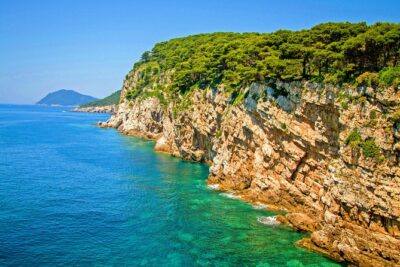
Blue Cave Small-Group Boat Tour from Dubrovnik
Read our review →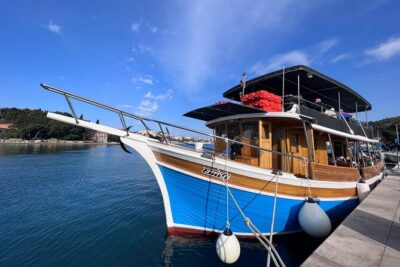
Full-Day Dubrovnik Elaphite Islands Cruise with Lunch and Drinks
Read our review →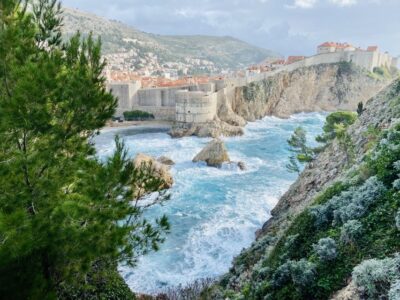
Epic Game of Thrones Tour + Lokrum & Saver Option
Read our review →
The Original Game of Thrones Tour & Lokrum Option
Read our review →
Dubrovnik Game of Thrones Tour & Optional Lokrum Island Visit
Read our review →