
Reviewed · CROATIA
Meet and feel ancient town of Nin
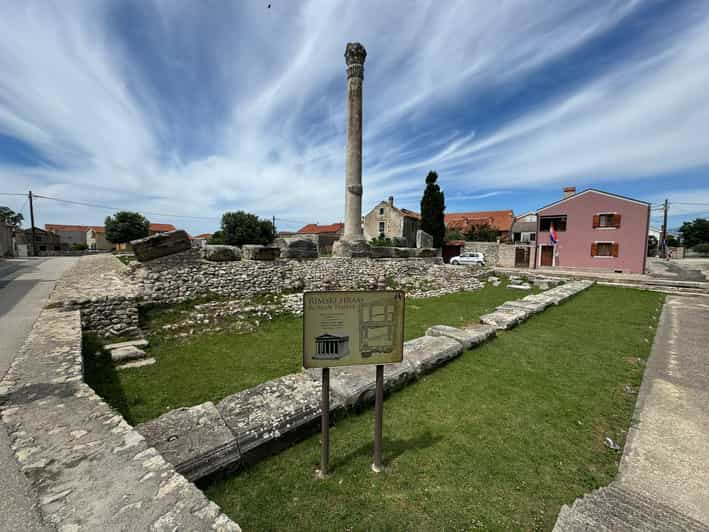
Nin packs Roman ruins, early medieval churches, and a sandy bay into a tiny island joined to the mainland by two bridges. The most striking part is the way you move from the Roman town of Aenona to Croatia’s early royal center in a single 90-minute walk.
I like the visit for two clear reasons: you get both the main outdoor ruins and the small churches, and your guide is paired with a local museum curator. The main consideration is time. Nin has more history than a short walk can fully cover, and museum admission, food, and drinks cost extra.
Key points
- Roman Aenona in the middle of modern Nin: See remains linked to one of the largest Roman temples on the eastern Adriatic and a Roman-era house.
- A compact heart-shaped island: Two bridges lead you into a small historic center where the sights are close together.
- Small churches with a big story: Visit the Church of St. Cross and the Cathedral of St. Anselmo while learning about Nin’s early medieval role.
- Historic Croatian figures in stone: Look for sculptures of Duke Branimir and Archbishop Gregory of Nin.
- A guide and museum curator together: The combination gives you both an outdoor walk and local museum knowledge.
- Good value at $21: For 90 minutes of guided history in English or Croatian, the price is modest, though museum tickets are separate.
Why Nin Makes a Strong Short Historical Walk
Nin is not a place you visit for grand city streets or a long list of major monuments. Its appeal is more intimate. The town sits on a small, heart-shaped island, connected to the mainland by two bridges, and the compact setting lets you cross centuries in a few minutes.
Roman Aenona came first in the story presented on this walk. Later, Nin became an important early medieval Croatian center, with small churches and monuments tied to the country’s rulers and church leaders. That mix gives the tour a useful rhythm. You are not looking at one ruin after another. You are seeing how the same small town changed hands, purpose, and character over time.
I especially like this kind of visit early in a Dalmatian trip. A guide helps you understand that Nin is not simply an attractive old town near the coast. Its importance comes from the layers under your feet and the people represented in its public art.
The town’s bay and sandy beaches add another side to the experience. The walk is historical, but Nin is also known for leisure and outdoor fun. If you have extra time after the tour, you can use the town as more than a quick photo stop.
Other trips people book in Croatia:
- Split: Krka Waterfalls Trip with Boat Cruise and Swimming
★ 4.8 · 10,519 reviews - Blue Cave Small-Group Boat Tour from Dubrovnik
★ 5.0 · 9,360 reviews - From Split: Krka Waterfalls, Food & Wine Tasting Tour
★ 5.0 · 9,326 reviews
Starting Beside Duke Branimir’s Statue
The meeting point is the statue of Duke Branimir by the Lower Bridge. This is a practical starting place because it puts you at one of Nin’s entrances rather than asking you to search through narrow streets for a meeting spot.
Duke Branimir is one of the historical figures connected with Nin, so the statue is more than a convenient landmark. It gives the guide a natural way to begin explaining the town’s medieval importance before leading you toward its churches and older remains.
Allow enough time to reach the statue without rushing. The tour lasts 90 minutes, and losing the first few minutes matters in a compact visit. The supplied details do not give a group size, so you should not assume this is a private walk or a very small group.
The tour is offered in English and Croatian. A named guide from the experience is Ines, and the guide works with a curator from the local museum. That pairing is one of the strongest features here. You get a person leading you through the streets and a local museum specialist who can add context to the objects and sites.
St. Cross Church and the Small Churches of Medieval Nin
The Church of St. Cross is one of the main stops. It is described as a famous and beautiful church, but the real value of seeing it with a guide is the setting around it. Nin’s early medieval story is easier to grasp when you visit the small religious buildings in the same town where that story unfolded.
Do not expect a huge cathedral complex. The character here is small-scale. These churches fit the town’s size and help explain why Nin is often presented as one of Croatia’s romantic small towns. The atmosphere comes from the combination of quiet lanes, old stone, and a concentrated group of historic sites.
The tour also visits the local Cathedral of St. Anselmo. Having both St. Cross and St. Anselmo in the same walk gives you a better sense of Nin’s religious importance than seeing either one alone.
The information provided does not promise interior access to every church or a detailed architectural lecture at each stop. Your experience may depend on opening conditions and the guide’s pacing. Still, the itinerary gives these churches a central role, not a passing glance.
For families, this section should work well because it breaks up the history into visible places. A Croatian family booking the tour specifically found the visit well suited to children aged 10 and 13 as well as adults. That makes the guide’s ability to adjust explanations especially useful for mixed-age groups.
Roman Aenona and the Temple Remains
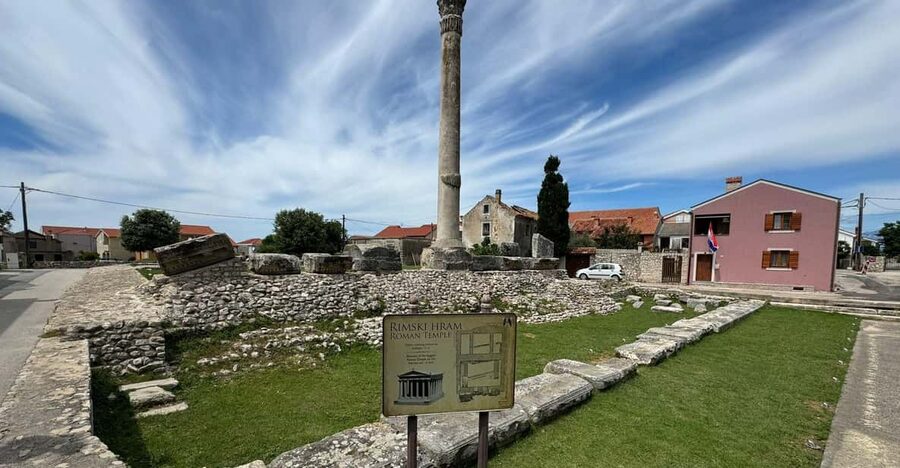
The Roman section gives the walk its strongest archaeological punch. You will see remains of Aenona, the Roman town that once flourished here, including the remains of what is described as the largest Roman temple on the eastern coast of the Adriatic Sea.
That claim gives the site real weight, but keep your expectations in check. The experience is a walking tour of remains, not a full archaeological park with a long museum route and extensive reconstruction. The value comes from learning what the fragments meant and how they fit into the former Roman settlement.
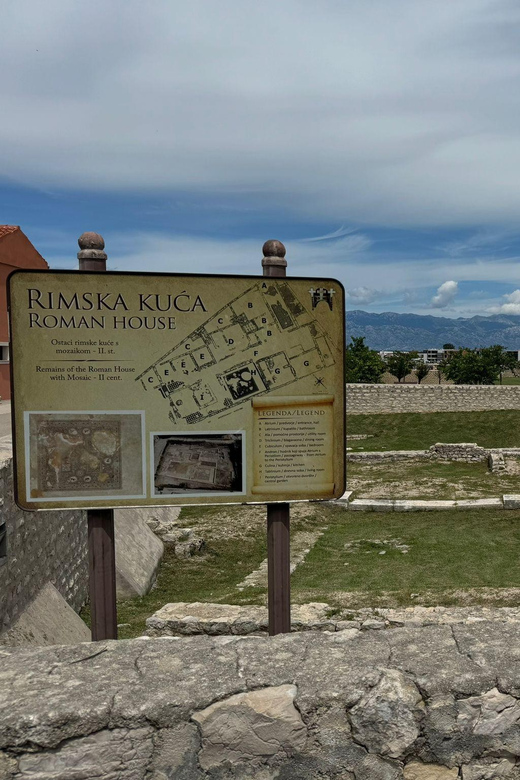
You will also see remains of a Roman house. This is a useful counterpoint to the temple. A large religious structure tells you about public life and power, while a house gives you a smaller glimpse of everyday Roman settlement.
The presence of a museum curator should help here. Roman ruins can be hard to read on your own. Without explanation, a partial wall or foundation may look like just another piece of old stone. With context, you can picture the town that once occupied the island and understand why Nin’s location mattered.
Museum tickets are not included. That matters if you want to continue the story indoors after the walk. The tour itself includes the guide and curator, but you should budget separately for any museum entry and for food or drinks.
Same base, a different kind of day out:
- Full-Day Dubrovnik Elaphite Islands Cruise with Lunch and Drinks
★ 5.0 · 8,823 reviews - Blue cave, Mamma Mia and Hvar, 5 islands speedboat tour
★ 5.0 · 7,150 reviews - From Split: Krka Waterfalls, Food & Wine Tasting Tour
★ 4.9 · 6,598 reviews - Split/Trogir: Blue Cave, Mamma Mia, Hvar and 5 Island Tour
★ 4.6 · 6,320 reviews
Sculptures of Branimir and Gregory of Nin
Nin’s public art keeps the historical story personal. Along with Duke Branimir, the tour discusses Archbishop Gregory of Nin and other historic figures.
These sculptures help you connect names to the town rather than treating medieval Croatia as a list of dates. Duke Branimir represents the political side of Nin’s story. Gregory of Nin brings in the church and the wider question of Croatian religious and cultural identity.
The information does not specify the exact number of sculptures or how long the group spends at each one. That is sensible for a 90-minute walk. The statues are part of the route, not a separate sculpture tour.
I find this sort of stop useful because it gives you fixed points to remember after the visit. You may forget a date, but a statue beside a bridge or an imposing local figure often brings the town back to mind.
The Bay, Sandy Beaches, and Nin’s Romantic Side
Nin’s historic center is only part of the appeal. The town is also known for its beautiful bay and sandy beaches, along with a range of fun activities.
That combination explains the town’s reputation as one of Croatia’s most romantic small towns. Romance here is not about grand boulevards or dramatic evening shows. It is the simple pairing of a small island setting, bridges, old stone buildings, water, and a slower pace.
The tour focuses on history, so it does not include beach time or organized activities in the bay. Think of the walk as an introduction. Afterward, you can decide if you want to stay for the coastal side of Nin.
This is also where the $21 price becomes easier to judge. You are paying for 90 minutes of guided interpretation, not a full-day outing with transport, meals, or beach equipment. If you want a focused introduction before exploring on your own, the price is reasonable. If you are looking for a full activity package, you will need to add other plans.
How Much Can You Cover in 90 Minutes?
Nin’s compact layout makes a 90-minute walk practical. The main locations are close enough to connect on foot, and there is no transport segment taking time away from the historic center.
Still, 90 minutes is a brisk introduction. You should expect a carefully selected route through the Roman and medieval highlights rather than a complete study of every church, sculpture, and archaeological detail.
The tour includes:
- The Roman remains of Aenona
- The Roman temple remains
- A Roman-era house
- The Church of St. Cross
- The Cathedral of St. Anselmo
- Discussion of Duke Branimir, Gregory of Nin, and other historic figures
- The bay and the town’s wider character as part of the explanation of Nin
The exact order may vary, and the supplied details do not provide a minute-by-minute schedule. Your guide’s pacing will determine how much time goes to each stop.
The strongest approach is to treat the tour as your orientation to Nin. Listen for the places you want to revisit, then use any spare time afterward to look more closely or visit the museum.
Is the Tour Suitable for Children and Wheelchair Users?
The tour is wheelchair accessible, which is important in a historic town where old paving and narrow routes can otherwise cause trouble. The information does not describe the surface at every stop, so you may still want to confirm any personal mobility concerns before booking.
For families, the format has several advantages. The walk is only 90 minutes, the main sights are close together, and the guide can connect buildings, statues, and ruins instead of relying on a long talk in one place.
A family visit with children aged 10 and 13 was especially successful, with the tour adjusted for both children and adults. That suggests the experience can work well for school-age children who enjoy stories about rulers, Romans, churches, and old towns.
Younger children may find the archaeological explanations less engaging if they are not interested in history. The bay and sandy beaches provide a useful reason to combine the tour with unstructured time afterward.
What the $21 Price Includes
At $21 per person, this is a modestly priced cultural activity. The fee includes a walking tour with a licensed guide and a curator from the local museum. You are paying for interpretation, not just access to a place.
That distinction matters in Nin. Roman remains and medieval churches do not always explain themselves, and the guide can connect them to Aenona, early medieval Croatia, and the people represented by the statues.
The price does not include museum tickets, food, or drinks. There is no transport listed, so plan to reach the Lower Bridge and the statue of Duke Branimir on your own.
For a short visit, I would call the value good if you want historical context. You may find it less useful if you prefer to wander independently and read at your own pace. The paid tour earns its keep through the guide’s explanations and the curator’s local perspective.
Language, Booking Flexibility, and Practical Details
The live tour is offered in English and Croatian. If you need another language, the supplied information does not list one.
You can cancel up to 24 hours before the activity for a full refund. The reserve-now-and-pay-later option lets you hold a place without paying immediately, which is helpful if your Dalmatian schedule is still changing.
The duration is fixed at 90 minutes, but starting times depend on availability. Check the available time before booking, especially if you are fitting Nin between other stops.
The meeting point is specific: the statue of Duke Branimir by the Lower Bridge. Look for that statue rather than simply heading toward the town center. The tour provider is 3NDY.
Who Should Book This Nin Walking Tour?
I would recommend this experience to you if you want a short, guided introduction to Nin and prefer a mix of archaeology, churches, public art, and local stories.
It is a good match for:
- First-time visitors to Nin
- Families with school-age children
- History-minded visitors who want Roman and medieval sites in one walk
- Visitors who appreciate a guide and museum curator working together
- Anyone looking for a reasonably priced 90-minute activity
- Visitors using a wheelchair who want an accessible tour option
You may want to skip it if you have already spent substantial time studying Nin’s ruins and churches, or if you only want beach time. The tour does not include museum admission, meals, drinks, transport, or a separate beach activity.
Should You Book Meet and Feel Ancient Town of Nin?
Book it if you want Nin to make sense, not just look pretty. For $21, you get a focused walk through Roman Aenona, early medieval churches, historic sculptures, and the town’s coastal setting.
The best reason to choose this tour is the combination of a licensed guide and a local museum curator. The most important limitation is its short length. Nin’s story is larger than 90 minutes, so use the walk as your foundation and leave time afterward for the museum, bay, or sandy beaches.
For families, the confirmed success with children aged 10 and 13 is a useful sign. For independent explorers, the tour is still worthwhile if you want the key context before wandering alone. I would book it for a first visit, especially when your schedule allows a little extra time after the guided walk.
FAQ
Where does the tour meet?
The meeting point is the statue of Duke Branimir by the Lower Bridge.
How long does the tour last?
The guided walking tour lasts 90 minutes.
How much does the tour cost?
The listed price is $21 per person.
Which languages are available?
The live tour is available in English and Croatian.
Is the tour wheelchair accessible?
Yes, the activity is listed as wheelchair accessible.
Are museum tickets included?
No. Museum tickets are not included in the tour price.
Are food and drinks included?
No. Food and drinks are not included.
What can you see during the walk?
The route includes Roman remains from Aenona, remains of a large Roman temple, a Roman-era house, the Church of St. Cross, the Cathedral of St. Anselmo, and sculptures connected with Duke Branimir and Archbishop Gregory of Nin.
Can you cancel the booking?
Yes. You can cancel up to 24 hours in advance for a full refund. You can also reserve now and pay later.
Just added in Croatia
- 5 hours Private Kamenjak and Medulin Archipelago Tour★ 5.0 · 14 reviews
- Pula: Private Golden Hour Sail – Dolphins, Drinks & Brijuni Views★ 5.0 · 5 reviews
- Transfer Poreč – Pula★ 5.0 · 5 reviews
- Walking Tour of Poreč★ 4.5 · 5 reviews
- Poreč sunset sea kayaking tour★ 5.0 · 59 reviews
- City Local: Weekly rental (7 days)★ 5.0 · 5 reviews
- Boat trip to Rovinj and Vrsar from Poreč with lunch★ 4.0 · 17 reviews
- Romantic Boat Trip with Dolphin Watching★ 4.0 · 8 reviews